Wine tours from Seville: sherry, Jerez, and Andalusian wine experiences
From Seville: Jerez wine and sherry day tour
What wine tours are available from Seville?
Options range from in-city sherry tastings (€20-40, 90-120 min) to full-day Jerez day trips combining bodega tours, sherry tasting, and optional horse show (€60-100 organised, or self-arranged with train and bodega tickets booked directly). There is no significant wine production in Seville itself — all tours drawing on the Sherry Triangle reach into the province of Cádiz.
Wine tourism from Seville means, almost entirely, sherry tourism. The Sherry Triangle — Jerez de la Frontera, Sanlúcar de Barrameda, El Puerto de Santa María — sits 60-90 kilometres south of Seville in the province of Cádiz. This is where the only wine of global significance produced in this part of Andalusia comes from, and it is one of the most distinctive wine experiences in Europe.
This guide covers the full range of options: in-Seville tastings, day trips to Jerez, and the lesser-visited but arguably more atmospheric Sanlúcar.
| Where | Jerez, Sanlúcar de Barrameda, El Puerto de Santa María (Cádiz province) |
| Cost | around €20-40 for in-Seville tastings, €35-100 for a Jerez day trip |
| Time needed | 90-120 min for a Seville tasting, a full day for Jerez or Sanlúcar |
| Getting there | train or bus from Seville Santa Justa, or an organised tour |
| Best time | year-round; book bodega tours ahead around the May Feria de Jerez |
Starting in Seville: tastings before you leave
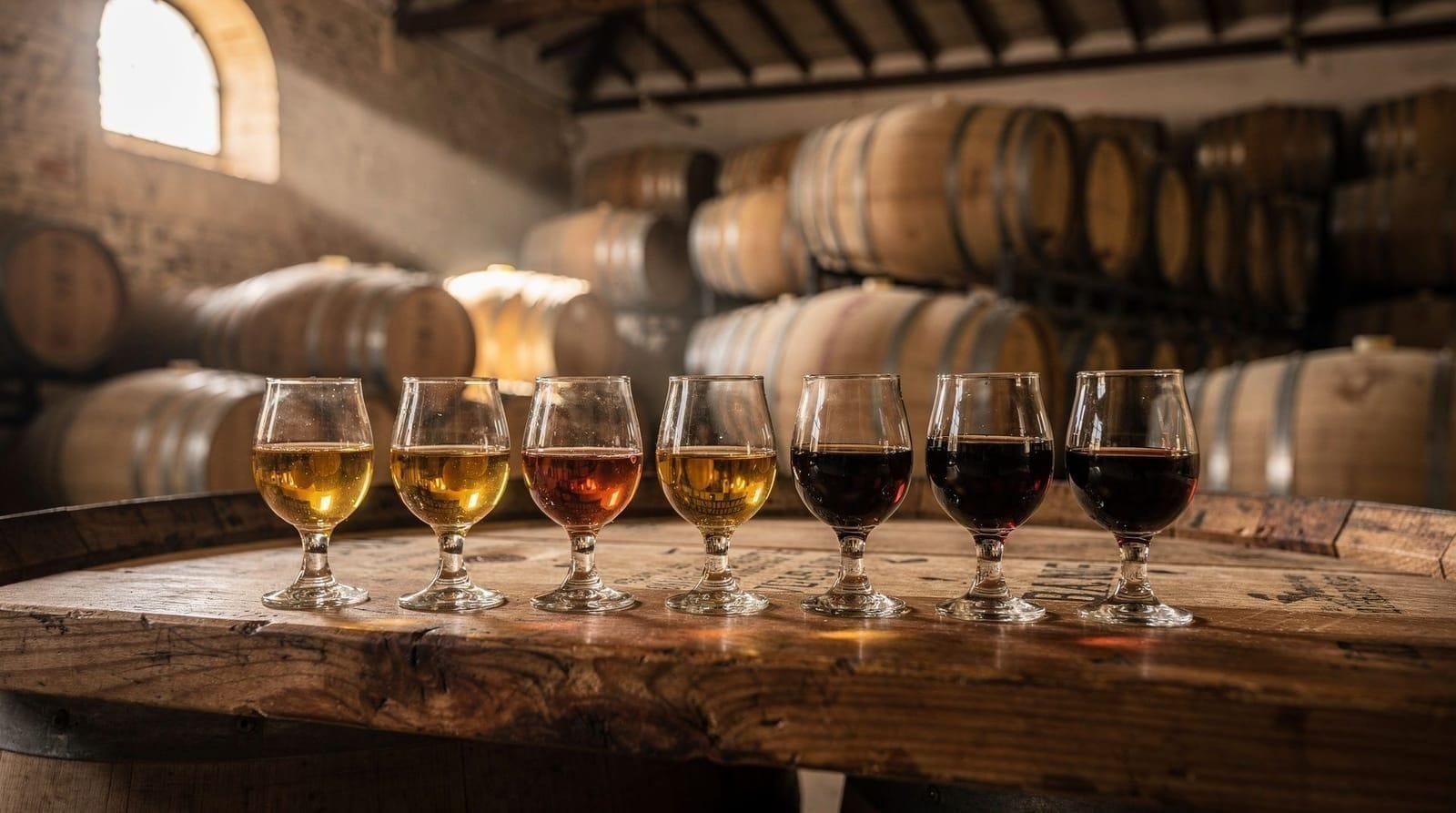
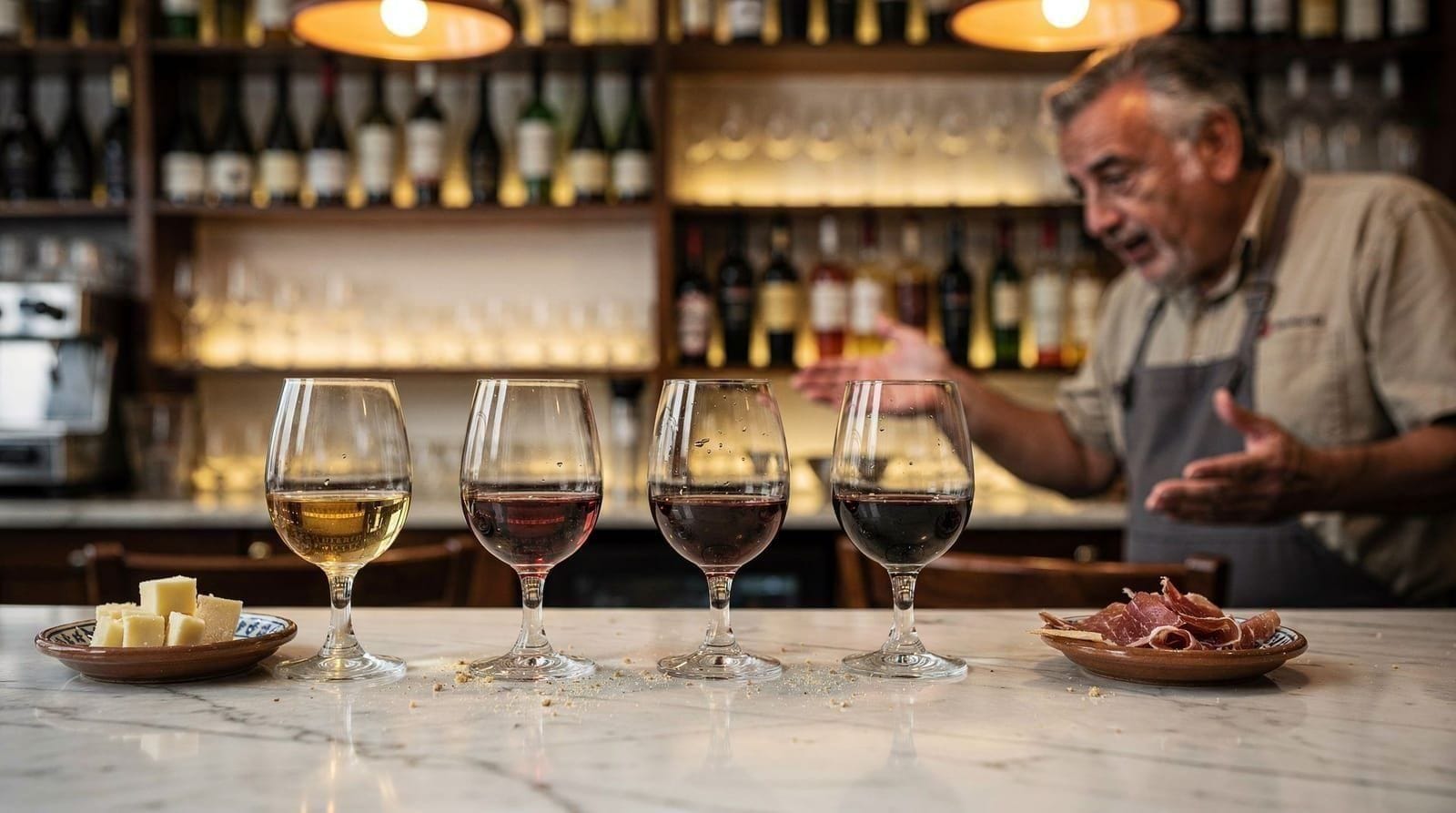
The most efficient first step is understanding the sherry styles in Seville before visiting the production area. A structured tasting in Seville covers six styles in sequence with food pairing in 90-120 minutes — giving you the vocabulary and palate context to make a Jerez bodega visit significantly more interesting.
Book a sherry and tapas tasting in SevilleRooftop wine tastings combine the wine experience with Seville’s cityscape — less educational but more scenic. Good option as an evening aperitivo.
Book rooftop wine tasting in SevilleDay trip to Jerez: the central wine experience
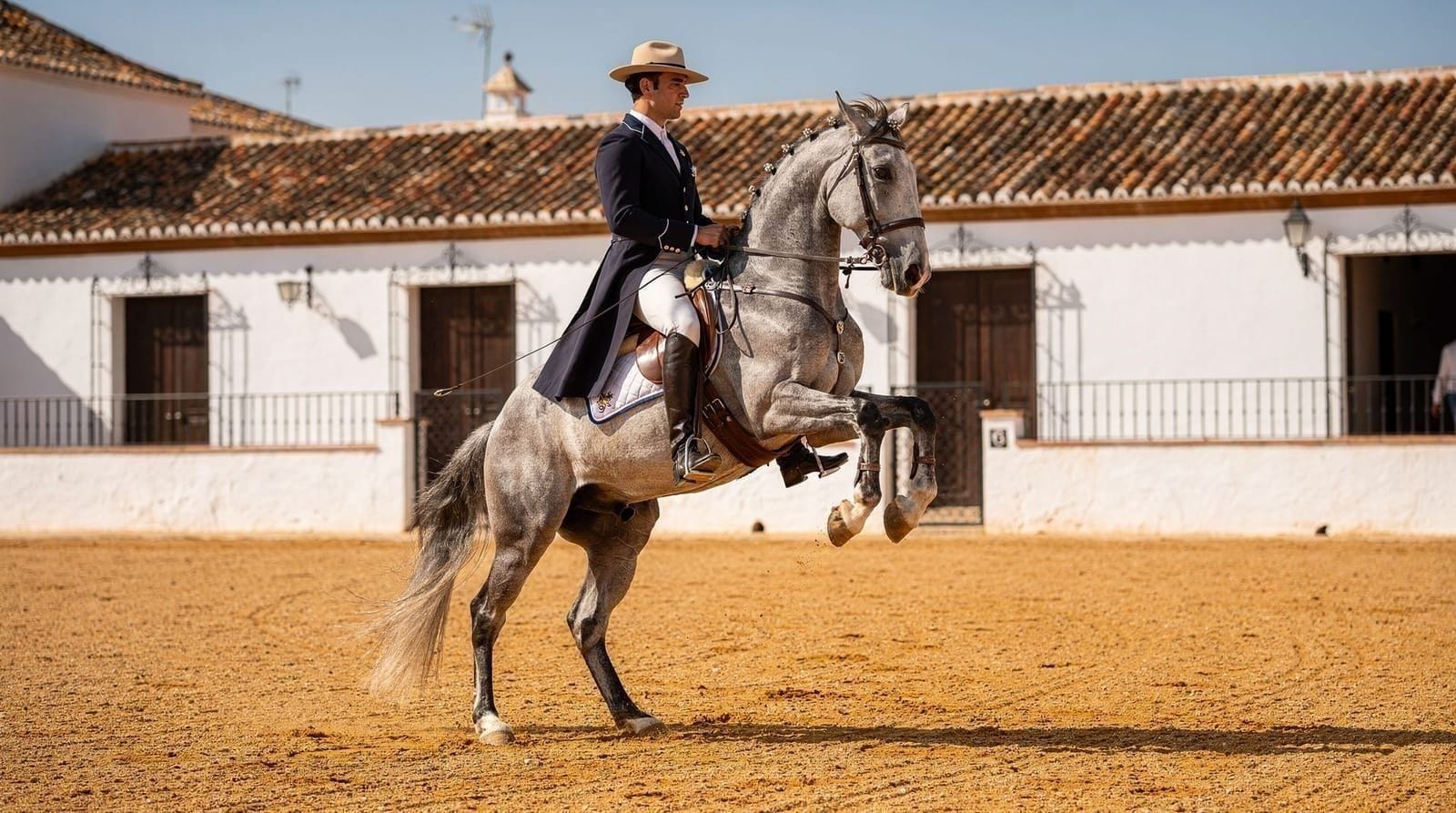
Jerez is the natural centrepiece of any wine tour from Seville. The city contains the largest sherry bodegas, the most visitor-developed bodega tourism infrastructure, and the additional attraction of the Real Escuela Andaluza del Arte Ecuestre (horse dancing school). A day here is one of the better full-day experiences within range of Seville.
Self-organised route:
- Train from Seville Santa Justa (~1 hour)
- González Byass tour (90 minutes, from €26.90)
- Lunch in Jerez centre (€12-18 for menú del día)
- Optional: Real Escuela horse show (Tuesday/Thursday, check times) or second bodega visit (Lustau, Tradición)
- Return train by 18:00-19:00
Organised tour options: Book organised Jerez sherry tasting from Seville Book Jerez horse show and wine tour from Seville
For visitors who want a private vehicle and customised access (better for groups of 3+):
Book private Jerez wine and equestrian day tripThe Jerez bodegas guide covers specific bodega comparisons in detail. The Jerez day trip guide covers the city’s full range of attractions beyond wine.
Sanlúcar de Barrameda: the manzanilla source
Sanlúcar is less visited than Jerez but arguably more distinctive for wine lovers — this is the only town in the world where manzanilla can be produced, and the reason for manzanilla’s specific character (saltier, more coastal than jerez fino) becomes obvious when you sit on the riverbank in Sanlúcar eating langostinos with a chilled glass.
The town sits at the mouth of the Guadalquivir estuary — the same river that runs through Seville. The Atlantic influence here is stronger than in Jerez, the atmosphere is more relaxed, and the tourist infrastructure is less developed. For visitors who want to experience the authentic Andalusian coastal wine culture rather than the polished bodega tour experience, Sanlúcar is the more honest choice.
Getting there: Bus from Seville to Sanlúcar takes approximately 1.5-2 hours. No direct train service.
Bodegas to visit: Bodegas Barbadillo (the largest manzanilla producer, good visitor experience), La Gitana/Hidalgo (another major producer), and smaller almacenistas.
What to eat: Langostinos de Sanlúcar are genuinely exceptional — among the best prawns in Spain. Eating them alongside manzanilla in a riverside bar looking across the estuary is one of the better simple food-and-wine experiences available within reach of Seville.
El Puerto de Santa María: lesser-visited but worth knowing
El Puerto de Santa María is the third corner of the Sherry Triangle and historically the most important shipping port for sherry exports. The town is a pleasant small city on the Bay of Cádiz, with a ferry connection to Cádiz proper. Bodegas Osborne and Terry are located here.
Getting to El Puerto involves train or bus from Jerez (20 minutes) or direct from Seville (1.5-2 hours). Most visitors who go to El Puerto are combining it with a visit to Cádiz. The Cádiz day trip guide covers the logistics.
El Puerto’s bodega tours are generally less crowded than Jerez’s biggest names, which suits visitors who want a slower, more conversational tasting rather than a large-group circuit. The town’s Ribera del Marisco (a strip of seafood bars along the river) pairs naturally with an afternoon of tasting — fried fish and manzanilla is a standard, unpretentious combination here. Given the extra travel time, El Puerto works best as an add-on for wine specialists with a car or a full day to spend, rather than a first-time visitor’s only sherry stop.
Budgeting a wine day trip
For planning purposes, a realistic self-organised Jerez day adds up from train tickets (see the Renfe website), one bodega tour with tasting (from €26.90), and lunch (€12-18). An organised tour bundling transport, one or two bodega visits, and sometimes lunch runs €60-100 but removes the logistics entirely, which matters if it’s your only full free day in the region. Factor in the langostinos — they are not a budget lunch, and worth the splurge.
What to buy and bring home
The best sherries to bring back as souvenirs or gifts are Pedro Ximénez (robust, travels well, impressive flavour profile), quality amontillado from producers like Lustau or Valdespino, and palo cortado if you can find a bottle (rare and genuinely exceptional).
Fino is not worth buying to take home — it deteriorates quickly and lacks the concentrated flavour that makes the other styles memorable across borders. The best fino memories are the ones consumed at a Jerez bodega bar or a Sanlúcar riverside table.
Major Jerez bodegas have shops at their visitor entrances. In Seville, the best wine shops carrying a serious sherry selection are in the Nervión district and around the Mercado de Triana.
Pairing sherry with food: a practical guide for Seville
Understanding which sherry style pairs with which food transforms how you use sherry throughout a Seville trip. This is not theoretical — it is directly applicable to ordering at tapas bars.
Fino with jamón: This is the canonical Andalusian pairing and one of the most symbiotic food-wine combinations in European gastronomy. The bone-dry salinity and nuttiness of fino amplifies the fat and umami of jamón ibérico in a way that neither element achieves alone. Order a glass of fino, a ration of jamón ibérico, and eat them slowly.
Manzanilla with seafood: The salty, coastal character of manzanilla echoes the sea. Gambas al ajillo (prawns in olive oil and garlic), fried anchovies (boquerones fritos), and calamares all work. In Sanlúcar specifically, the local langostinos and manzanilla combination is one of the great regional food experiences.
Amontillado with aged cheese: The complexity and dried-fruit character of a good amontillado meets the crystalline, savoury intensity of aged manchego or a three-year payoyo (a Cádiz province goat-sheep cheese) with a kind of matching intensity. Both are strong enough not to overwhelm each other.
Oloroso with meat dishes: Dry oloroso, full-bodied and walnut-forward, handles the heaviness of estofado (beef stew), game dishes, and rabo de toro (bull’s tail stew — a Córdoba and Seville speciality) without being overwhelmed. Serving it as a glass alongside a meat course rather than as an aperitivo is an underappreciated use of the style.
Pedro Ximénez as dessert: A small pour of PX alongside or over vanilla ice cream. Alternatively, PX with dark chocolate — the bitterness of the chocolate and the concentrated sweetness of the wine complement rather than compound each other.
Wine beyond sherry: what else to drink in Seville
Sherry is the dominant wine story in the region, but it is not the only one.
Ribera del Guadiana and Condado de Huelva: The Huelva province to the west of Seville produces white wines from Zalema and Moscatel grapes that are fresher and less complex than sherry but appropriate for summer drinking. Not widely exported; found in Huelva province restaurants.
Manzanilla de Sanlúcar vs Fino de Jerez: Worth reiterating as a practical tasting exercise. Order both at the same bar and drink them side by side to understand what the Atlantic microclimate actually does to the wine. The manzanilla will be more saline, more yeasty, slightly lighter in body. The fino will be slightly fuller, nuttier, less salty. Both should be bone-cold.
Cava: Not Andalusian (Cava is from Catalonia and other denominations), but widely available in Seville as a celebratory sparkling wine. Not sherry and not particularly local, but present at most bars and restaurants.
Sangria: Served throughout tourist-facing bars in Seville. Sangria is not Andalusian in origin (it developed in various forms across Spain and is not associated specifically with any region). It is a summer drink — red wine, brandy, fruit, sugar — and fine as such. Ordering it at a serious wine bar instead of something local is a slightly missed opportunity, but it is not a tourist trap in the way some things are.
The sherry glass: what you drink it from matters
Fino and manzanilla are traditionally served in a copita — a narrow, tulip-shaped glass of approximately 100ml. The narrow opening concentrates the aromas; the small volume ensures the wine stays cold through a single serving. Some bars serve fino in a small standard wine glass, which is acceptable if chilled properly.
In casual bars, fino sometimes arrives in a caña (the same small glass used for beer). This is authentic to how locals drink it; the glass is unpretentious but the wine is not.
Amontillado, oloroso, and palo cortado are best in a slightly larger glass — a standard white wine glass with a narrower opening than a red wine glass. Pedro Ximénez is served in small dessert wine portions in whatever glass the bar has; volume is the main consideration (50-75ml is appropriate).
Fitting a wine day into the rest of your trip
A wine day works best when the other days are planned around it rather than squeezed in afterwards. If you are still deciding how long to stay, the how many days in Seville guide helps you see where a full day south of the city fits, and the Seville day trips itinerary shows how Jerez sits alongside the other excursions. For a wider comparison of what else competes for that free day, the best day trips from Seville is the place to start.
Food-minded travellers can pair a bodega day with the Seville 3 days for foodies itinerary, which keeps the tapas and tasting thread running through the whole stay. Our Jerez sherry and horses blog post gives a first-hand account of how the day actually unfolds, including what we would do differently.
Sherry also makes much more sense once you know how to order around it. The best tapas in Seville guide and the barra vs terrace pricing guide explain where to drink a glass of fino without overpaying, and the Seville tapas tours compared guide covers guided options if you would rather have someone else choose the bars.
If you are travelling in summer, plan the Jerez or Sanlúcar day around the heat: the Seville in summer heat guide explains how to pace long days outdoors, and bodega interiors are a welcome break from the sun. For getting between towns, the Sanlúcar de Barrameda destination page and the Jerez de la Frontera destination page cover what else is worth seeing once the tasting is done.
Building sherry vocabulary before you go
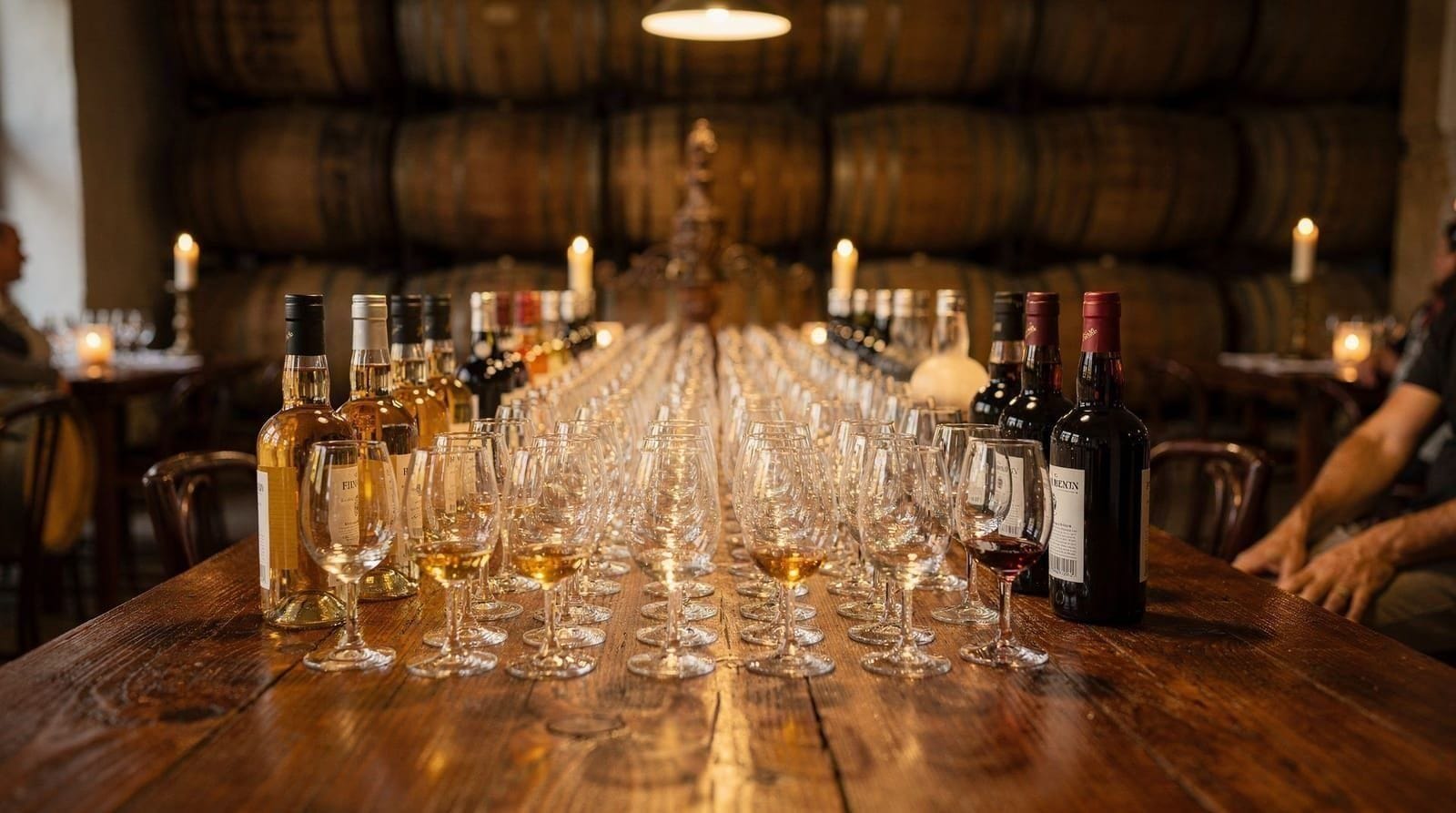
If you want a deeper grounding before booking anything, the sherry guide to Andalusia covers the styles, ageing methods (the solera system), and regional distinctions in more depth than fits here, and the sherry tasting in Seville guide rounds up specific venues in the city itself. Reading either before a Jerez bodega tour makes the guide’s explanations click faster, since you already recognise the vocabulary.
Planning a sherry-focused Seville trip
A focused wine trip from Seville across 3-4 days could cover:
Day 1: Arrive in Seville. Tasting at a sherry wine bar in Triana (fino, manzanilla, amontillado with tapas). Evening walk along Calle Betis with further glasses.
Day 2: Day trip to Jerez. Morning bodega tour at González Byass. Lunch in the Barrio de Santiago. Afternoon: Real Escuela horse show (Tuesday/Thursday) or second bodega (Lustau). Return to Seville for dinner.
Day 3: Day trip to Sanlúcar de Barrameda. Morning walk to the river mouth (where Columbus departed for his third voyage in 1498). Bodega Barbadillo tour. Lunch: langostinos and manzanilla on Calle Bajo de Guía. Optional: take the ferry across the estuary to the edge of the Doñana National Park and back.
Day 4: Deeper Seville exploration. Guided sherry tasting in the afternoon. Visit the Triana market for wine shopping.
This is a deliberately wine-focused itinerary. For visitors adding wine as one element of a broader Seville trip, a single Jerez day trip plus several Seville tasting sessions covers the essentials.
Frequently asked questions about Wine tours from Seville
Is there wine produced near Seville?
Not in significant quality or quantity for tourist purposes. The province of Seville has some wine production (particularly around Montilla-Moriles to the east), but the world-famous wines accessible from Seville are all in the province of Cádiz: sherry from the Sherry Triangle (Jerez, Sanlúcar, El Puerto de Santa María) and table wines from the Condado de Huelva to the west. Sherry is the main wine reason to leave Seville.What is the difference between an organised wine tour and going to Jerez independently?
Organised tours handle transport (sometimes private vehicle), bodega access, and guide interpretation. They typically cost €60-100 per person. Going independently by train and booking bodega tours directly (from €26.90 at González Byass) gives more flexibility. The advantage of organised tours is convenience and the guide context; the disadvantage is fixed scheduling and group dynamics.Can I visit Sanlúcar de Barrameda for manzanilla?
Yes, and it is worth doing. Sanlúcar is 80km from Seville (about 1.5 hours by bus, since the train requires changing). The town is quieter than Jerez, the manzanilla character is distinct (saltier, more coastal), and the town has excellent fresh seafood (particularly langostinos) to pair with the wine. A full day in Sanlúcar is rewarding for serious wine visitors.Do I need to book bodega tours in advance?
Yes, for the well-known bodegas like González Byass and Bodegas Barbadillo, especially in high season (spring and autumn) and around the Feria de Jerez in May. Smaller almacenistas are more flexible but can also have limited slots. Booking a day or two ahead is usually enough outside peak weekends, but organised tours handle this reservation for you.Is a wine tour worth it if I don't normally drink sherry?
Yes — sherry is unlike most wine people have tried, and a guided tasting (in Seville or at a Jerez bodega) is specifically designed to walk newcomers through the styles from dry fino to sweet Pedro Ximénez. Most visitors leave with a clearer sense of what they actually like. If you strongly dislike fortified wine, the food, horse show, and town itself still make Jerez worth the trip.
Top experiences
Bookable activities with verified prices and instant confirmation on GetYourGuide.