Cádiz day trip from Seville: the Atlantic city guide 2026
From Seville: Cádiz full-day guided excursion
How long does it take to get from Seville to Cádiz by train?
The AVANT regional train from Santa Justa station takes 1 hour 40 minutes to Cádiz (check current fares on the Renfe website). Trains run regularly (roughly every hour). Cádiz train station is at the tip of the peninsula, close to the old city.
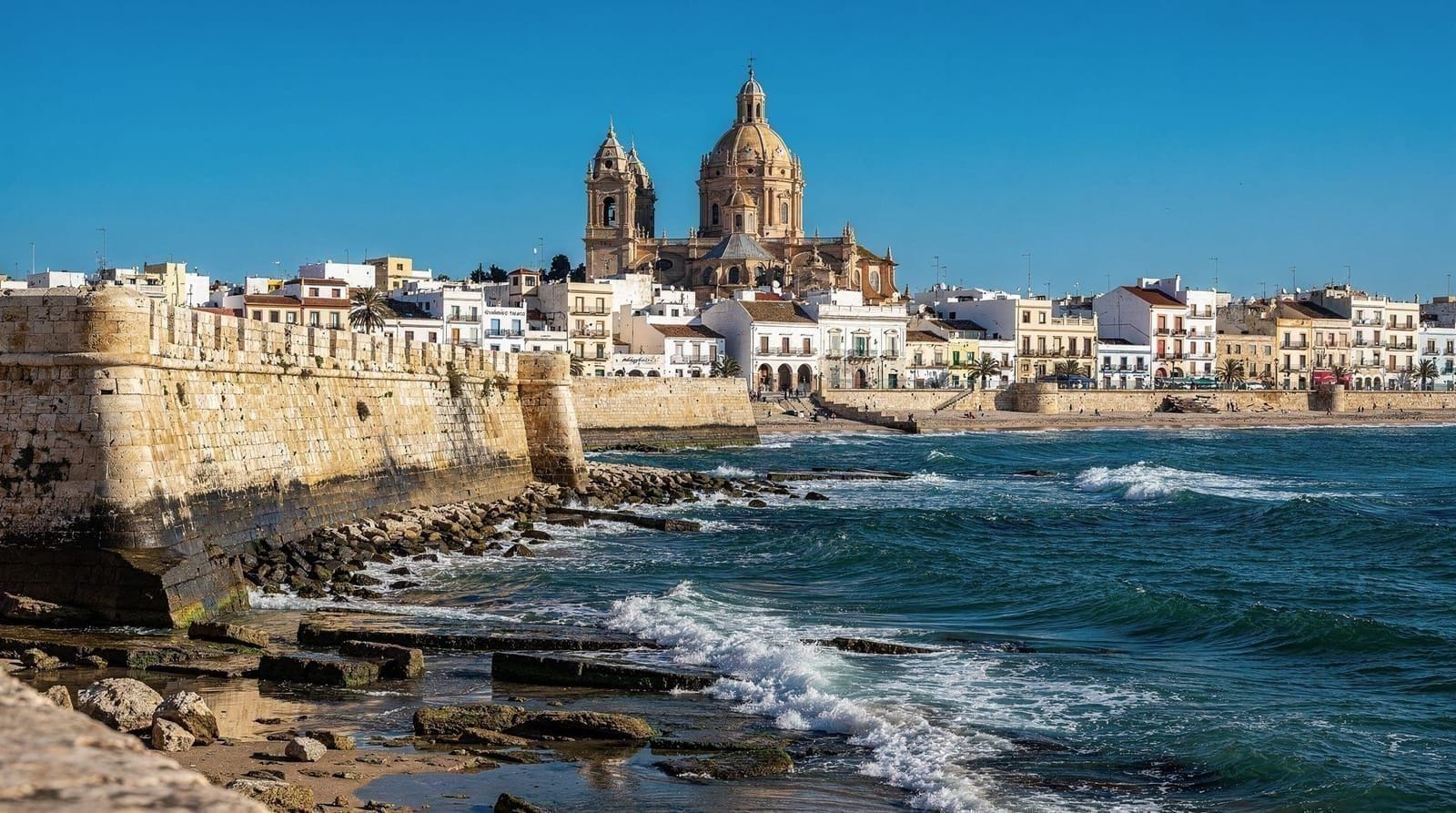
Cádiz occupies a narrow peninsula jutting into the Atlantic Ocean and claims to be the oldest continuously inhabited city in Western Europe — founded by Phoenician traders around 1100 BC. Its relationship with the sea is complete: the old city is surrounded by water on three sides, the Atlantic light is unlike anything in inland Andalusia, and the smell of salt air and grilled fish is constant. For Seville visitors who want a complete change of atmosphere, Cádiz delivers.
| Where | Atlantic coast, Cádiz province, tip of a narrow peninsula |
| Getting there | Train from Santa Justa, around 1h40 |
| Cost of the day | Roughly €40-60 per person incl. transport, market lunch, entries |
| Best time | Spring and autumn; also mild in winter, breezy in summer |
| Pairs well with | Jerez de la Frontera (30 min away) |
Getting from Seville to Cádiz
By train (recommended): AVANT regional trains from Santa Justa station reach Cádiz in 1h40. Check renfe.com for current prices and availability. Trains run roughly every hour from early morning. The journey passes through Jerez de la Frontera — you can stop there on the way back if you want to combine both cities.
By bus: Transportes Generales Comes runs coaches from Plaza de Armas bus station in Seville to Cádiz in approximately 1h45-2h. Price comparable to the train.
By car: Approximately 1h30 via A-4 autopista. Parking in the old city is difficult; better to use the car parks near the station at Puertas de Tierra.
Organized tour: Combined Cádiz and Jerez tours from Seville are available and cover both cities in a structured day. Useful if you want guided historical context and don’t want to manage logistics independently.
From Seville: Cádiz and Jerez de la Frontera combined day tripTrain, bus or tour: choosing your format
The right format depends on how much you want to organise. The train suits independent travellers: you set your own pace, you can linger at the market, and you can decide on the spot whether to stop in Jerez on the way back. The bus is a sensible fallback if the train times don’t fit your morning. A guided excursion makes sense if you’d rather hand over the logistics and hear the history explained as you go, and a private guide is the most flexible way to see the city if you’re travelling as a family or a small group.
If you’re still deciding between day trips, the Córdoba day trip and the Granada day trip are the other big names from Seville, and which Andalusian city to visit helps you pick according to what you enjoy. Cádiz is the one for sea air and seafood rather than palaces and mosques.
Whatever you choose, getting to the station in Seville is straightforward; the guide to getting around Seville and the public transport guide explain how to reach Santa Justa or the bus station from your hotel.
What to see in Cádiz
The cathedral and Plaza de la Catedral
Cádiz Cathedral (Catedral de la Santa Cruz) was built between 1722 and 1838 — a Baroque and Neoclassical structure funded by trade revenues from the Americas. Its golden dome, covered in yellow glazed tiles, is visible from ships approaching the bay and is one of Cádiz’s defining images. The interior is large and relatively plain; the crypt contains the tomb of Manuel de Falla, the composer.
Admission includes the tower, from which the panoramic view over the rooftops and ocean is exceptional. Entry €12. Allow 45 minutes to 1 hour.
Mercado Central de Cádiz
The indoor market on Plaza de la Libertad is an excellent late-morning destination. Two floors of fresh produce, with an upper gallery of seafood and fish stalls where you can eat at counter seats. Chipirones, puntillitas, ortiguillas de mar (sea anemones, a Cádiz specialty) — order directly from the fishmongers who cook to order, or go to one of the bars around the market for a more organized experience. Open Monday-Saturday from approximately 8 AM to 3 PM.
Barrio del Pópulo
The oldest residential neighbourhood in Cádiz, south of the cathedral. Medieval arches (Arco de los Blancas, Arco del Pópulo), narrow streets, and the remains of the Roman theatre (Teatro Romano, partially excavated and visible from street level). The Pópulo is quieter than the tourist-dense cathedral area and gives a better sense of the city’s medieval texture.
Playa de la Caleta and Playa de la Victoria
La Caleta is a small horseshoe beach facing the inner bay — the one visible in the James Bond film Die Another Day (standing in for Havana). Atmospheric for a swim or a walk along the malecón. Playa de la Victoria is the long Atlantic-facing beach on the landward side of the peninsula — 3 km of sand that get genuinely rough Atlantic waves, completely different from Costa del Sol-style beaches.
Torre Tavira
A 45-metre watchtower dating from the 18th century, originally used by merchants to spot their ships arriving in the bay. The highlight is the camera obscura at the top — a rotating lens that projects a real-time panoramic image of the city onto a concave screen. Entry €8. Opens at 10 AM.
Plazas and old quarter
The old quarter (Barrio del Mentidero, Barrio de la Viña, Barrio de Santa María) is worth wandering without a specific agenda. The Barrio de la Viña is the neighbourhood where the famous Cádiz carnival (Carnaval de Cádiz, usually February, one of Spain’s best) is concentrated. The Plaza de San Juan de Dios, the main civic square, has outdoor café terraces and a Baroque town hall.
How to read the city as you walk
Cádiz rewards a slow, unplanned pace. The old town sits on a narrow peninsula, so you are never far from the water: when you lose your bearings, walk until you reach the sea wall and follow it round. The streets are tight and the buildings tall, which keeps many lanes shaded and breezy, and the light changes constantly as you move between narrow alleys and open plazas facing the ocean.
Many visitors treat the sights as a checklist and then feel the day was rushed. A better approach is to choose two or three anchors, such as the cathedral, the market and one viewpoint, and leave generous gaps between them for coffee stops, wandering, and the occasional detour down a side street that catches your eye. The city’s character lives in those gaps: laundry hanging from balconies, neighbours chatting in doorways, and small bars that fill up with locals at lunchtime.
It also helps to remember that Cádiz is a working city and not a museum. Shops and bars follow a local rhythm, and some places close in the afternoon, so plan your main meal around the market and keep the later hours for strolling. If you have read the blog account Cádiz, the oldest city, you will recognise this feeling of a place that is lived in rather than staged.
Where to eat
El Faro de Cádiz (Calle San Félix 15): One of Cádiz’s most respected restaurants, focusing on local seafood with careful preparation. Not cheap but far from tourist-trap pricing — a set lunch around €35-45. Book in advance.
Freiduría Las Flores (Plaza del Topete): Classic Cádiz freidería — a frying house selling cones of mixed fried fish. The pescaíto frito tradition here is different from Seville’s; smaller fish, lighter batter, eaten standing up or on a nearby bench. Prices very low.
La Candela (Calle Feduchy): Tapas bar in the old quarter with good local wines (Manzanilla from nearby Sanlúcar is the natural pairing for Cádiz seafood).
Avoid: The tourist restaurants with laminated menus around the cathedral have predictable markup-for-location pricing. Walk one or two streets away.
Ordering like a local
If fried fish is new to you, the dishes on the menu can be a puzzle. Ask what is freshest that day and order a mixed portion to share, rather than committing to a single plate. Pair it with a glass of something dry and chilled, and finish with a coffee at a counter. The same instincts that help you in Seville apply here: the barra versus terrace pricing guide explains why standing at the bar is usually cheaper than sitting outside, and the advice on avoiding tourist-trap restaurants works just as well on the Atlantic coast.
For a wider picture of what you will meet on Andalusian menus, the traditional Andalusian dishes guide is a useful primer, and where to eat in Seville covers the evening you will want when you get back.
Suggested itinerary for a Cádiz day trip
08:30 — Train from Santa Justa, Seville
10:10 — Arrive Cádiz station
10:30 — Walk to Barrio del Pópulo and Plaza de la Catedral
11:00 — Cathedral and tower
12:30 — Mercado Central for market lunch (seafood counter)
14:00 — Barrio de la Viña walk, Playa de la Caleta
15:30 — Torre Tavira
17:00 — Walk along the sea wall (Paseo de Canalejas)
18:00 — Tapas at La Candela or nearby
19:30 — Return train to Seville (arrives 21:10)
Making the most of a single day
The itinerary above is a template and not a contract. If the morning runs long at the cathedral or the market, drop the last item rather than rushing everything. The two things worth protecting are the market lunch and unhurried time by the water; the rest can flex. Keep an eye on the return train from the start of the day, and decide in the late afternoon, not at the last minute, when to head back to the station.
Travelling light makes the day easier. A small bag, comfortable shoes, a layer for the sea breeze and sun protection cover most situations. Because the old town is so walkable, there is little need for taxis once you arrive.
If you are visiting in the hotter months, the guide to Seville in summer heat explains why a coastal escape is such an attractive break from the city, and Seville in spring is worth reading if you are planning around the best season.
Combining Cádiz with Jerez
Jerez de la Frontera is 30 minutes from Cádiz by train or bus. If you’re doing a long day from Seville, you can visit Jerez in the morning (bodega tour + Real Escuela equestrian performance if booked in advance) and continue to Cádiz for the afternoon. Alternatively, the combined Cádiz-Jerez tour from Seville covers both in a guided format. See the Jerez day trip guide for details on the sherry bodegas and Real Escuela.
Practical information
Best time to visit Cádiz: Spring and autumn. Summer is warm but the Atlantic breeze tempers the heat — Cádiz in July is significantly more bearable than Seville at 42°C. Winter is mild but the Atlantic-facing seafront can be cold and windy.
Carnival: If you’re visiting in February and Cádiz Carnival falls during your trip, go. It is one of Spain’s best carnivals — satirical choirs (chirigotas) singing original compositions, costumes, parties in the streets. The energy is electric and unlike anything in Seville.
Walking shoes: Cádiz’s old quarter is compact and entirely walkable. Good shoes are essential — the cobblestones are worn smooth.
For an overview of all day trips, see best day trips from Seville. For the Cádiz destination page with accommodation and further details, see Cádiz.
Cádiz by season
| Season | Weather | Crowds | Notes |
|---|---|---|---|
| Spring (Mar-May) | Mild, breezy, 16-22°C | Moderate | Best combination of comfort and light |
| Summer (Jun-Aug) | Warm but tempered by Atlantic wind | High, especially August | Beaches busy; old town still comfortable |
| Autumn (Sep-Nov) | Mild, 18-24°C | Lower | Excellent light, fewer crowds than spring |
| Winter (Dec-Feb) | Mild but windy, 12-17°C | Low | Seafront can feel cold; old town still worth it |
Sherry and wine in Cádiz province
Cádiz province is sherry country, and if the day trip whets your appetite for it, a dedicated wine detour is worth planning separately. The sherry guide to Andalusia covers the bodegas of Jerez de la Frontera and the coastal town of Sanlúcar de Barrameda, both within reach of a longer Cádiz-area itinerary. Manzanilla, the pale, saline sherry style made specifically in Sanlúcar, pairs particularly well with the fried fish you’ll find in Cádiz’s freidurías.
Other towns on the coast
If Cádiz leaves you wanting more of the Atlantic side of Andalusia, several neighbouring places are worth knowing about. Sanlúcar de Barrameda is the home of manzanilla and a natural fit for anyone interested in wine and seafood. El Puerto de Santa María sits across the bay and shares the same relaxed, food-focused character. The wider Costa de la Luz is the place to look for beaches and open coastline, and the Jerez bodegas guide goes deeper into the sherry houses if that is what draws you.
Further afield, Gibraltar and Tangier make for more ambitious excursions, but they are better treated as separate days rather than add-ons to Cádiz.
If you have more than a day
A single day trip only scratches the surface of Cádiz province. For visitors planning a longer Andalusia trip that includes the Atlantic coast, Tarifa (windsurfing, beaches, views to Africa) and Jerez de la Frontera (sherry bodegas, equestrian shows) both extend naturally from a Cádiz visit. The Seville day trips itinerary has suggestions for sequencing multiple excursions across a longer stay.
Private guided Cádiz day trip from SevilleFrequently asked questions about Cádiz day trip from Seville
Is Cádiz worth visiting as a day trip from Seville?
Yes, especially if you want a contrast to Seville's inland heat. Cádiz is surrounded by water on three sides — the Atlantic Ocean light is distinctive, the seafood is excellent, and the old quarter has a compact, lived-in quality different from Seville's more touristy centre. Best in spring and autumn.What is the best way to get from Seville to Cádiz?
The AVANT train from Santa Justa is the most comfortable option at 1h40. Alternatively, the bus from Plaza de Armas (Transportes Generales Comes) takes 1h45-2h and is comparable in time and price. The train is preferable for the journey experience.Is Cádiz good for seafood?
Cádiz has excellent seafood, particularly fresh fish fried in the Andalusian style (pescaíto frito) — chipirones (baby squid), puntillitas (tiny squid), langostinos, and urta (a local sea bream). The Mercado Central de Cádiz is the best place for a market lunch, and the freidurías (fried fish stalls) on the streets are a local institution.Can I combine Cádiz and Jerez in one day?
Yes, and it's a popular combination. The 30-minute train or bus between Cádiz and Jerez makes them naturally paired. Visit Jerez in the morning (bodega tour + Real Escuela if you've booked) and continue to Cádiz for the afternoon and seafood. Or reverse for an afternoon sunset on Cádiz's Atlantic-facing beach.Is Cádiz better than Tarifa for a coastal day trip from Seville?
They offer different things. Cádiz is a historic walled city with markets, monuments, and old-quarter atmosphere — better if you want culture and seafood. Tarifa, further south, is a windsurfing and beach town with a laid-back, Atlantic-Africa-facing character and views to Morocco. If you want history and food, choose Cádiz; if you want beach and wind sports, choose Tarifa.
Top experiences
Bookable activities with verified prices and instant confirmation on GetYourGuide.