Learn Spanish cuisine in Seville: authentic Andalusian dishes and where to cook them
Seville: Spanish cooking class with dinner
What are the authentic Andalusian dishes to learn in Seville?
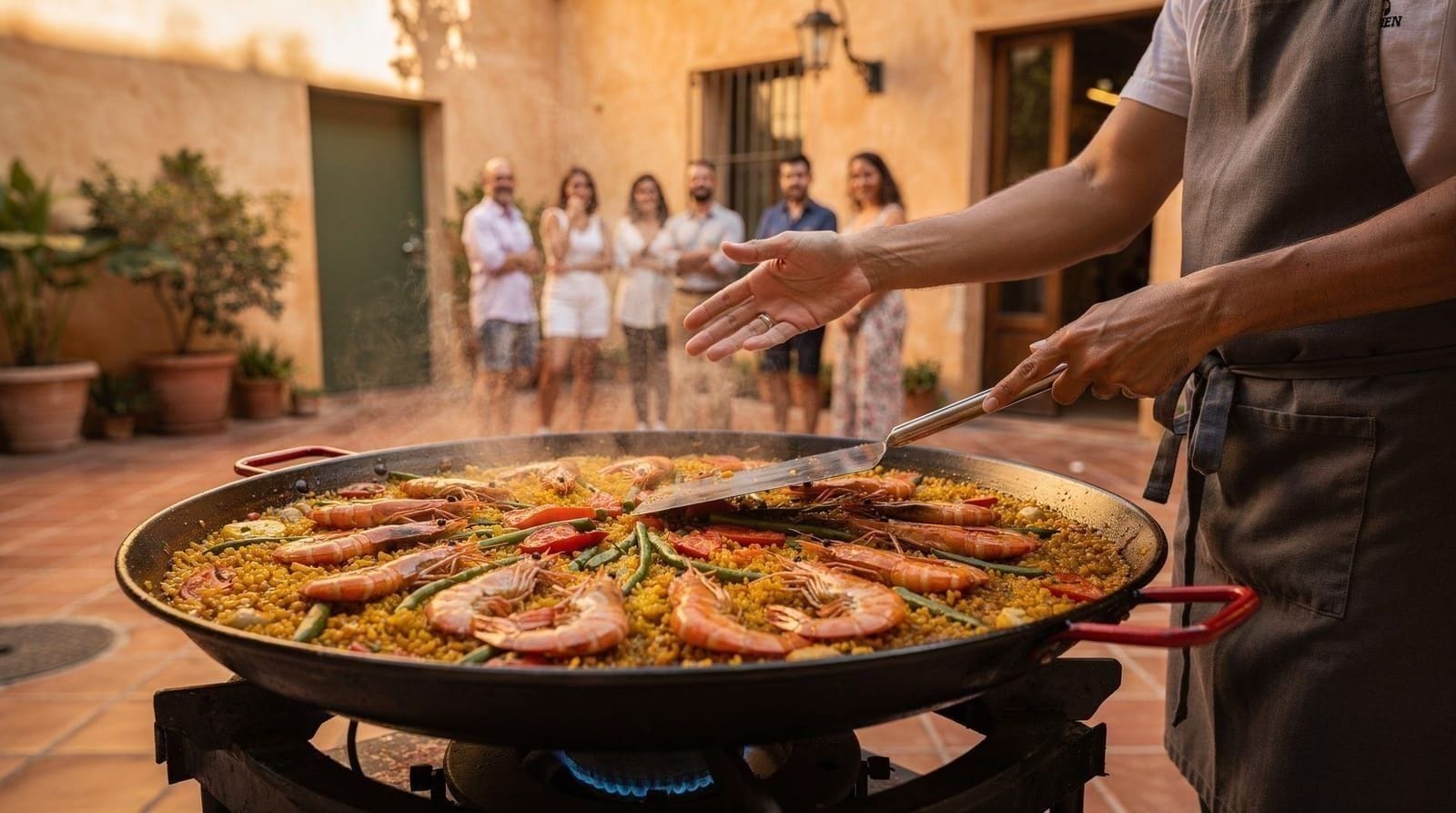
The most authentic Sevillano and Andalusian dishes to learn are: gazpacho, salmorejo, tortilla española, espinacas con garbanzos (spinach and chickpeas, a Seville signature), pescaíto frito (battered fried fish), patatas aliñás (dressed potato salad), and various tapas. Paella is consistently popular in cooking classes but is Valencian in origin, not Sevillano.
Spanish cuisine is not one thing. The food of Seville and Andalusia reflects a specific geography, history, and climate that differs fundamentally from the food of San Sebastián, Valencia, or Madrid. Understanding this before you eat — or before you learn to cook — makes the experience significantly richer.
This guide covers the key dishes that define authentic Sevillano and Andalusian cooking, where to eat and cook them, and how to get beyond the tourist restaurant circuit.
| Where | Cooking classes across Seville; Triana market for the food-shopping format |
| Cost | around €55-95 per person depending on format |
| Time needed | 3-4 hours for most classes |
| Best for | Anyone who wants to understand Andalusian food, not just eat it |
| Booking | Advance booking recommended, especially for the Triana market format |
The building blocks of Andalusian cuisine
Olive oil: Andalusia produces around 80% of Spain’s olive oil. In Seville and the surrounding area, olive oil is not a condiment or a cooking medium — it is a fundamental flavour element present in virtually every dish. The extra virgin olive oil from the Sierra de Segura and Baena (both within reach of Seville) is among Europe’s finest. In a traditional Sevillano breakfast, toasted bread rubbed with tomato and drizzled with olive oil (pan con tomate, or pan con aceite y sal) is consumed daily.
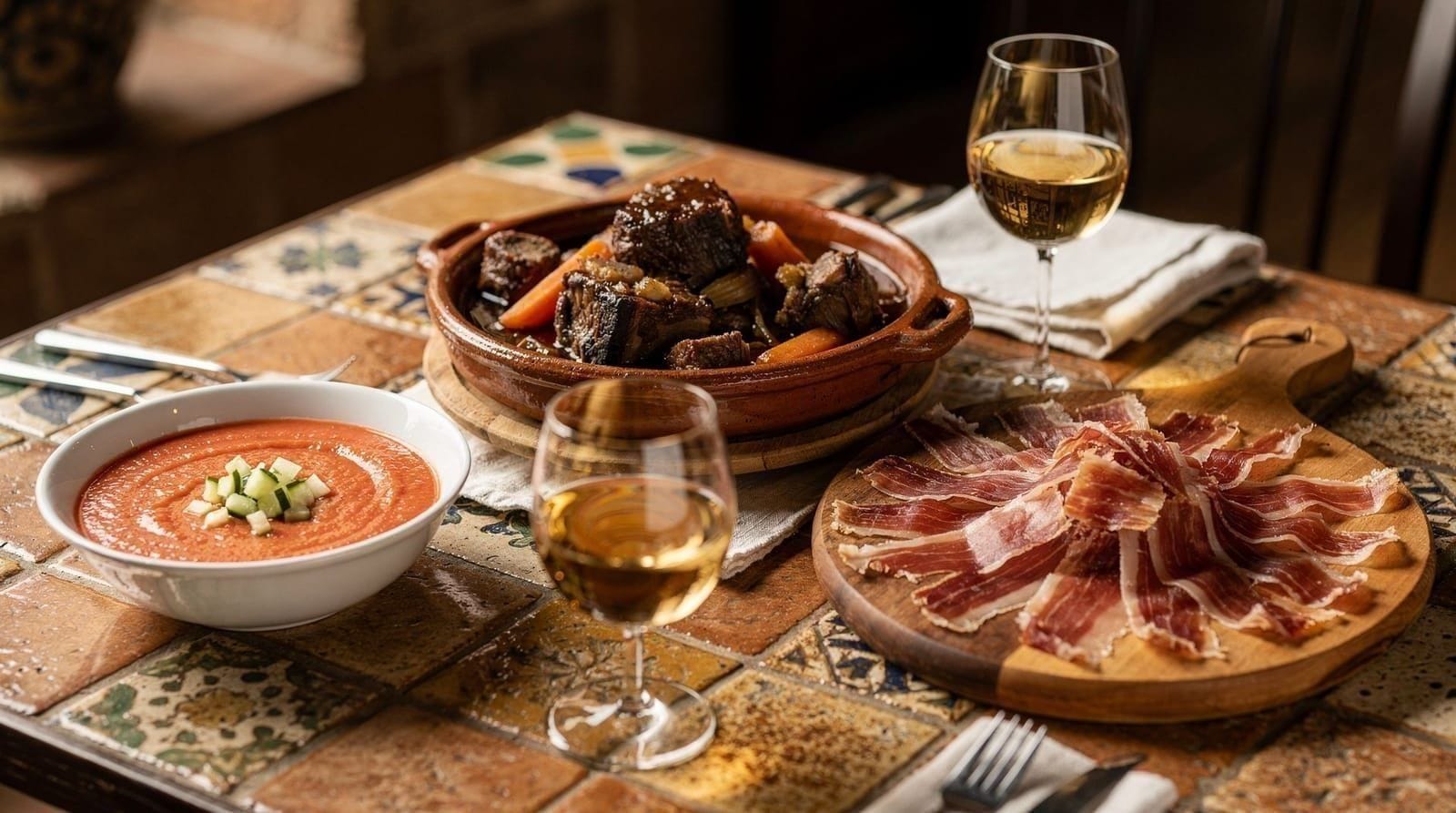
Jamón ibérico: Iberian cured ham from free-ranging black-hoofed pigs fed on acorns (bellota) in the dehesa landscapes of Extremadura and western Andalusia. Jamón ibérico de bellota — the highest classification — is one of the more extraordinary food products in the world. Seville has no specific production but is a major consumption centre. Understanding the difference between jamón ibérico de bellota, jamón ibérico de cebo, and jamón serrano (a broader category from white pigs) is practical knowledge for both eating and shopping.
Sherry vinegar: Jerez-produced vinegar aged in the same solera system as sherry. Andalusian cooks use sherry vinegar where other cuisines would use lemon juice — in gazpacho, in pickling, as a dressing element. The acidity is sharper and more complex than wine vinegar. If the sherry side of the story interests you, the sherry guide for Andalusia and the Jerez bodegas guide show where it comes from.
The Moorish ingredient tradition: Eight centuries of Moorish rule (711-1492) left permanent imprints on Andalusian cooking. Cumin appears in meatballs, sausages, and bean dishes in ways uncommon in northern Spain. Almonds appear in cold soups (ajo blanco), sauces, and pastries. The use of honey on savoury dishes (berenjenas con miel — fried aubergine with cane sugar honey) reflects Moorish influence. Saffron — while associated with paella — is more extensively used in Andalusian cooking than in most Spanish regional cuisines.
The essential dishes: a cooking guide
Gazpacho
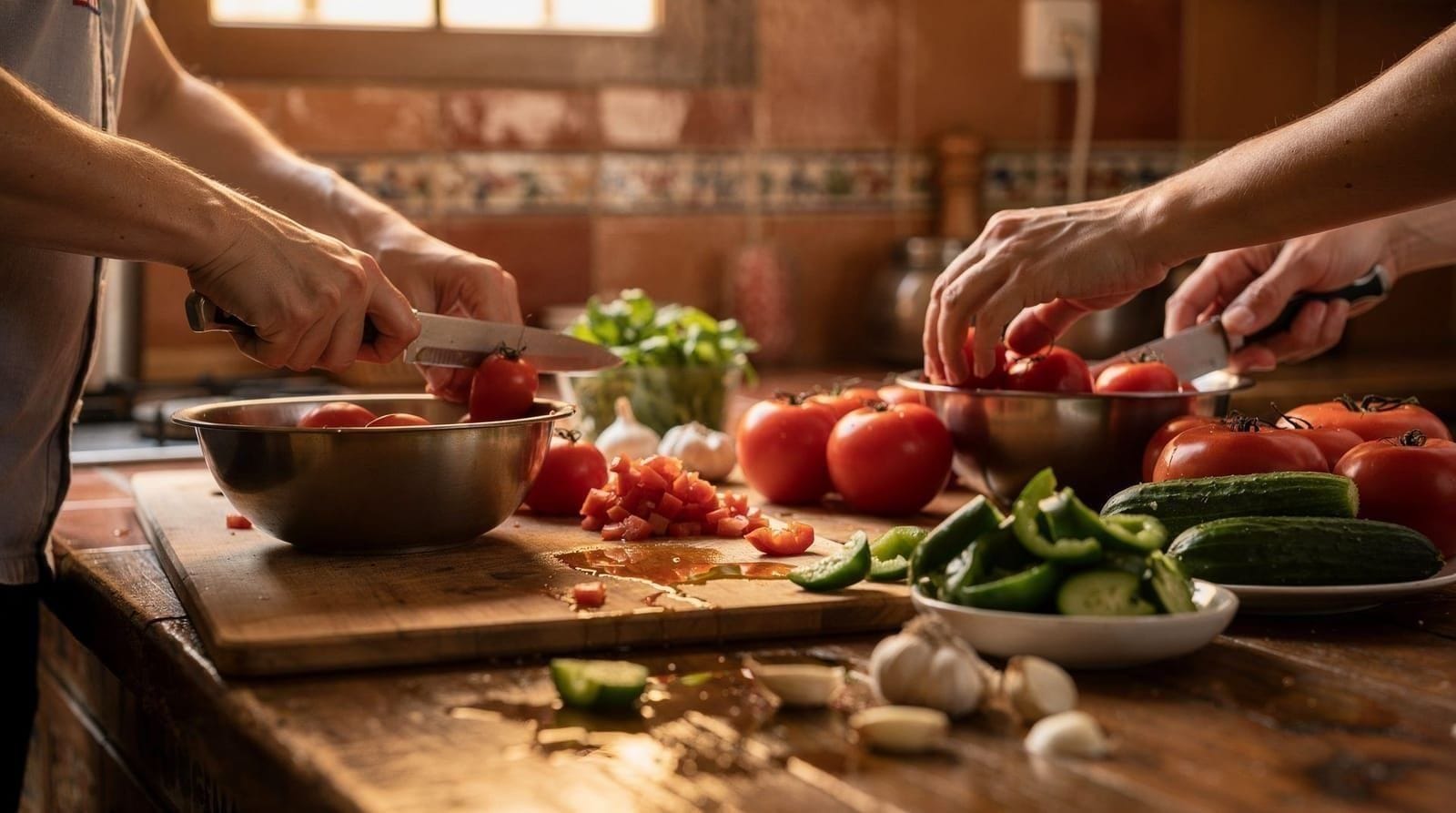
Cold tomato soup consumed throughout Andalusia during summer as a refresher, starter, and light meal. The basic formula — blended raw tomatoes, cucumber, green pepper, garlic, day-old bread, sherry vinegar, olive oil, water — sounds simple. Getting the balance right requires understanding how ripe tomatoes interact with vinegar, how much garlic is appropriate (most recipes over-garlic; the flavour should be present but not dominant), and how fine to blend (completely smooth is the goal for restaurant service; slightly textured is acceptable at home).
Gazpacho is served cold — deeply chilled, often over ice. The toppings (diced cucumber, pepper, onion, croutons) are served separately and added at the table.
Salmorejo
The Córdoba counterpart to gazpacho: thicker, richer, made primarily from very ripe tomatoes, stale bread, garlic, and olive oil with no cucumber or pepper. The texture should be close to a light mayonnaise. The colour is a vivid orange-red from well-ripened tomatoes. Served in a shallow bowl with a drizzle of olive oil and toppings of hard-boiled egg and jamón ibérico.
Salmorejo is technically simpler than gazpacho (fewer variables) but has less margin for error — tomato quality and ripeness are critical, and the bread quantity directly controls the texture.
Espinacas con garbanzos
Spinach with chickpeas: one of the most genuinely Sevillano dishes and a reflection of the city’s Moorish culinary heritage. The dish is a slow stew of chickpeas in a sauce made from fried bread, cumin, paprika, and vinegar, with cooked spinach added. The result is earthy, savoury, and complex — nothing like the pale spinach-and-chickpea dishes found in tourist restaurants.
This dish is available at traditional tapas bars throughout Seville; it is less commonly covered in tourist cooking classes despite being far more locally authentic than paella.
Pescaíto frito
The Andalusian tradition of frying small fish — boquerones (anchovies), salmonetes (red mullet), puntillitas (tiny squid) — in a light coating of rice flour or fine wheat flour. The technique is simple but the execution requires hot, clean oil at the correct temperature. Properly fried pescaíto is not greasy — the coating is thin and crisp, the fish inside cooked through but not dry.
The best pescaíto in Seville is found in the traditional fried-fish shops (freidurías) that operate as takeaway venues, not at tourist restaurants. Eating it in paper from a frying shop is more authentic than ordering it at a table with table service.
Tortilla española
The Spanish potato omelette is one of the most reproduced and most frequently made badly dishes in Spain. The correct technique — cooking the potatoes slowly in abundant olive oil until they are soft but not fried-crisp, mixing with beaten egg and allowing to rest before cooking, then flipping with the plate-over-pan method — is the reliable subject of cooking class instruction everywhere in Spain.
Ajo blanco and other cold soups
Beyond gazpacho and salmorejo, Andalusia has a smaller family of cold soups worth knowing. Ajo blanco — a Moorish-descended blend of almonds, garlic, bread, olive oil, and water — is paler, nuttier, and less acidic than gazpacho, traditionally served with a few grapes or melon cubes floating on top for sweetness. It appears less often on tourist menus than gazpacho but is arguably the more historically interesting dish, since it predates the arrival of tomatoes in Spain by centuries. Some cooking classes include it as an alternative to gazpacho for visitors who want something less familiar.
Cola de toro and other slow-cooked classics
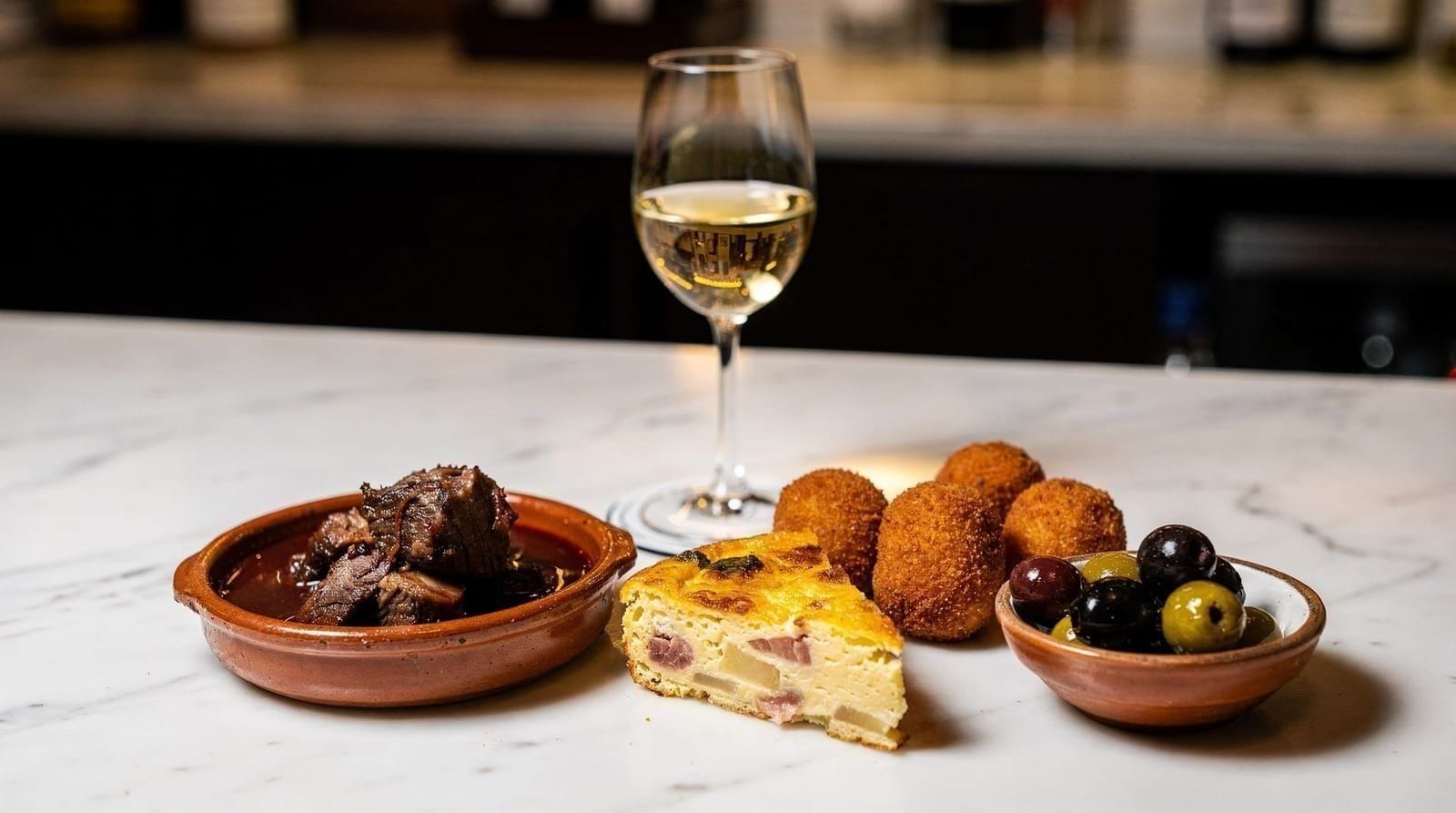
Rabo de toro (oxtail or bull’s tail stew) is one of the dishes most associated with Seville, alongside Córdoba. Traditionally slow-braised for several hours in red wine, sometimes with a splash of oloroso sherry, until the meat falls cleanly from the bone. It is a winter dish more than a summer one, and it rarely appears in cooking classes because of the long cooking time — but it is worth ordering at a traditional restaurant if you visit between November and March, when it is most commonly on the menu.
Taking a class: formats for authentic cuisine
The cooking class most oriented toward authentic Sevillano cuisine is the tapas format — classes that focus on the dishes locals actually eat rather than the dishes tourists expect.
Book a tapas-focused cooking class in SevilleThe full dinner-format class is more comprehensive and includes the meal as a proper dinner rather than a tapas spread — better for evenings.
Book Spanish cooking class with dinner in SevilleThe Triana market class is the most contextually complete — market shopping, local ingredient context, and cooking in a neighbourhood setting.
Book cooking class at Triana marketComparing the three formats:
| Format | Best for | Includes market visit | Meal style |
|---|---|---|---|
| Tapas-focused | Understanding everyday Sevillano eating | No | Shared small plates |
| Dinner-format | A full evening, more comprehensive | No | Sit-down multi-course dinner |
| Triana market | The most complete context | Yes | Cook-and-eat, market-sourced |
For the general landscape of cooking classes in the city, including formats not covered here in depth, see the cooking classes in Seville guide. If paella specifically is what you want to learn — worth doing consciously, since it isn’t a Sevillano dish — see the paella cooking class guide.
Eating to learn: restaurants and bars worth knowing
Taking a cooking class is one education. Eating widely across Seville’s less tourist-oriented bars and restaurants is another. The two reinforce each other.
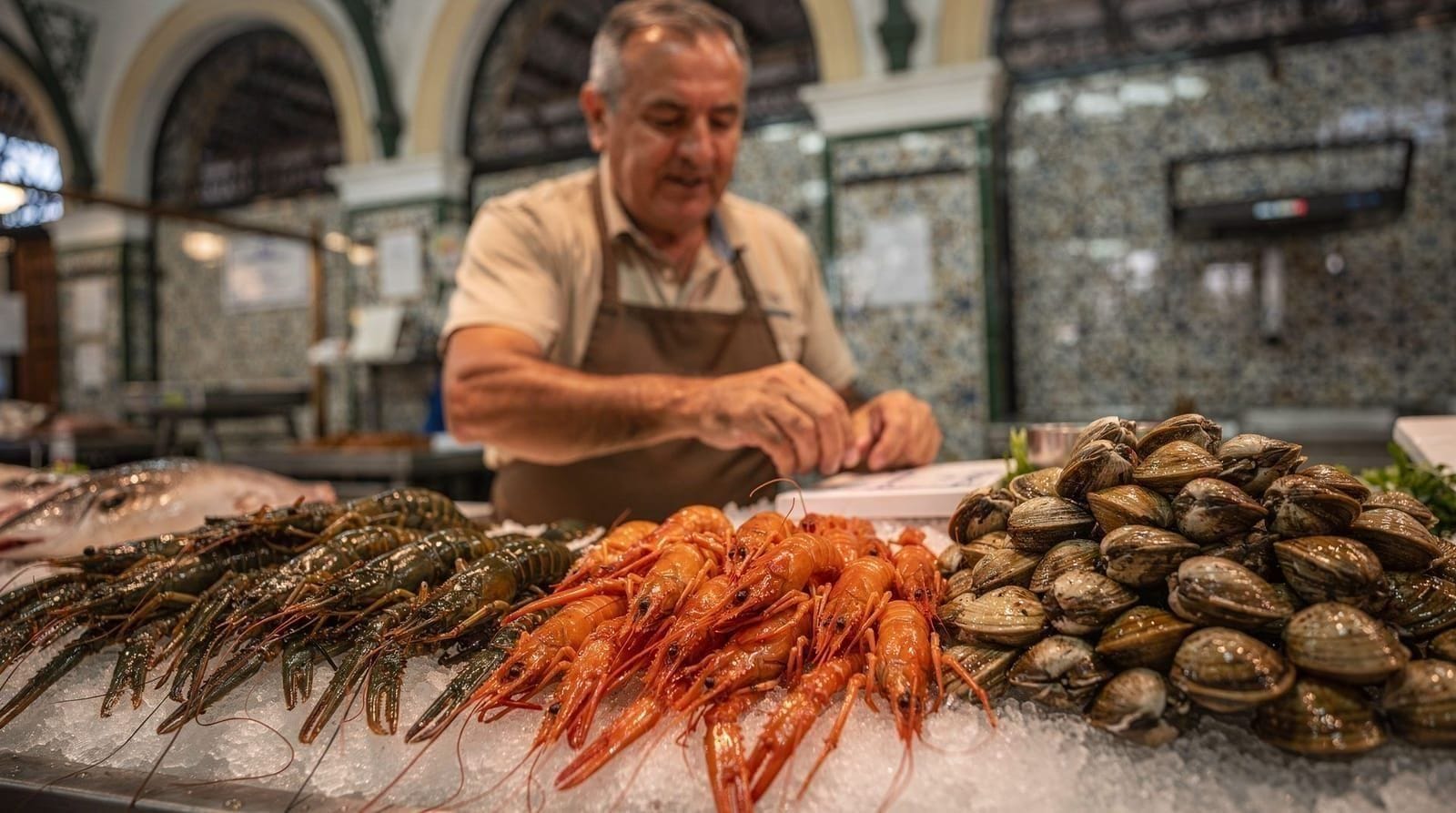
The bars around the Mercado de Triana serve dishes that reflect local cooking at its most unperformed — espinacas con garbanzos, tagarninas (thistle stew), callos (tripe stew in winter), the cold salads of summer. The guide at Triana market food guide: eating well at the Mercado de Triana covers this.
For a broader picture of what to order and where, Traditional Andalusian dishes: what to eat in Seville and why covers the full range of Andalusian culinary traditions worth seeking out during your time in Seville and on day trips. For where to eat across the city more generally, see where to eat in Seville, and for dietary needs, the vegetarian and vegan Seville guide and best tapas bars in Seville cover specifics not repeated here.
The olive oil dimension of Andalusian cooking
No guide to Andalusian food is complete without a serious treatment of olive oil. Andalusia produces approximately 80% of Spain’s olive oil and a significant share of the world’s supply. The landscape from Seville southeast through Jaén is the largest olive grove in the world.
Varieties: The principal olive variety in Andalusia is Picual (particularly in Jaén province), which produces an oil with high oleic acid content, pronounced bitterness, and strong peppery finish. Hojiblanca (from the Málaga and Córdoba area) produces a milder oil with a more balanced flavour. Arbequina (common in Catalonia but also present in Andalusia) produces a lighter, more delicate oil.
How Sevillanos use it: Olive oil in Seville is used in quantities that shock visitors from butter-cooking cultures. Pan frying in Seville means genuinely submerging food in hot oil — the pescaíto frito (fried fish) tradition requires deep frying in abundant oil at high temperature. The crunchiness of properly fried Seville food depends on this.
Where to buy: The Triana market has several stalls selling extra virgin olive oil from producers in the surrounding region. Buying a half-litre bottle of good local Picual oil to take home is one of the more useful food souvenirs from Seville — it will be fresher and cheaper than the equivalent in your home country.
In cooking classes: The oil used in Seville cooking classes is generally supermarket quality for cost reasons. Ask if the class uses artisan local olive oil; some do, some don’t. The difference in the finished dishes is perceptible, particularly in dishes served with raw or barely-cooked oil on top — gazpacho, salmorejo, and tostadas depend on oil quality far more than a dish where the oil is only used for frying.
The breakfast culture: learning through morning eating
A simple but effective way to understand Seville food culture is to eat breakfast at a traditional bar for several consecutive mornings. Seville’s bar breakfast culture is distinct:
Tostada: Toasted bread (a larger slice than in northern Spain, from the distinctive Seville bread that has a thick crust and soft interior) served with olive oil and either tomato (tomato rubbed on the bread and then oil drizzled over) or mantequilla (butter). The tomato option (tostada con tomate) is the most common.
Desayuno completo: A full breakfast including tostada, orange juice (freshly squeezed from Seville’s bitter oranges in season — October through February), and coffee. This is the working-class morning meal in Seville, eaten at the barra of a bar before work.
Churros con chocolate: The festive version, eaten at weekends and on special occasions. Long fried dough sticks with a thick, nearly solid hot chocolate for dipping. Available at churrerías in the Macarena, Santa Cruz, and Triana.
If you want a fuller picture of the first meal of the day, the breakfast in Seville guide goes through what to order and where.
The morning bar context teaches you several things: the pace of Sevillano mornings (slow, social, standing at the barra), the price structure (desayuno completo for €3-4 at a local bar, double at a tourist café), and the way olive oil is treated as a default condiment rather than a special ingredient.
The tapas economy: understanding what you are eating
Tapas in Seville are not just a food format — they are a social institution. Understanding their structure helps you navigate what to order and where.
Tapa vs ración vs media: A tapa is a small portion, traditionally served as an accompaniment to a drink (in some Seville bars, one tapa comes free with each drink order). A media is a half-portion. A ración is a full portion intended to be shared. Knowing which you are ordering — and being clear about it with the bar staff — avoids confusion about both quantity and price.
The barra vs the table price differential: As noted in the CLAUDE.md site guidelines, eating at the counter (barra) is consistently cheaper than at a table (mesa) and significantly cheaper than on the terrace (terraza). The same patatas bravas might cost €2.50 at the barra and €4.50 on the terrace. At a bar outside the Catedral, the terrace premium can be 100% or more. Eating at the barra is the economically correct choice in Seville. The barra vs terrace pricing guide explains the difference in detail, and the guide to avoiding tourist-trap restaurants helps you spot the places where it matters most.
What “traditional” tapas bars actually look like: The bars most worth seeking out do not look designed. They have tile or marble bar counters, hand-written daily specials on a small blackboard, and are predominantly populated by locals. The bars that look visually spectacular, with elaborate displays and a design aesthetic — these are often the most tourist-oriented and the least interesting culinarily.
Learning from a menú del día
The menú del día — a fixed-price lunch including three courses, bread, wine or water, and sometimes coffee — is the best education in Sevillano cooking available at low cost. Lunch menus at traditional bars cost €12-14 and include dishes that restaurants would not risk on a tourist-facing à la carte menu: tripe stew, tagarninas with eggs, slow-cooked chickpea dishes, seasonal fish preparations.
Ordering a menú del día at a non-tourist bar in the Macarena, the Nervión, or the working-class streets of Triana for three or four consecutive lunches will teach you more about Seville’s actual food culture than any cooking class. It will also leave you with a calibrated sense of what good Sevillano cooking tastes like, which makes the cooking classes and market visits more meaningful in context.
If you would rather have someone lead you through the bars, a guided format is a good alternative to a class. The Seville food tour guide and the comparison of tapas tours lay out the options, and a tour such as a tapas tour through the Triana market with drinks pairs naturally with a cooking class. For a ready-made plan that builds meals around the city’s food, the three days for foodies itinerary is a good starting point, and the Seville cooking class guide helps you choose where to fit a class in.
Food is only one part of a trip, so once you have chosen your classes it is worth looking at the Seville first-time travel tips, the Seville city guide and the Triana neighbourhood guide to plan the rest of your days around them. A reader’s account of a foodie weekend is also available in a foodie weekend in Seville.
Frequently asked questions about Learn Spanish cuisine in Seville
What makes Andalusian cuisine different from other Spanish cooking?
Andalusian cuisine reflects the region's 800 years of Moorish influence (use of spices, almonds, cumin, and complex vegetable dishes), Atlantic and Mediterranean seafood access, the hot dry climate (leading to cold soups, fresh vegetables, and preserved foods), and poverty-born inventiveness (dishes like berenjenas con miel — battered aubergine with honey — reflect Moorish influence and working-class ingenuity). The olive oil is definitive: Andalusia produces around 80% of Spain's olive oil, and it is used lavishly in all cooking.Where can I eat authentic local Sevillano dishes (not tourist restaurants)?
The bars around the Mercado de Triana, the working-class tapas bars in Macarena and Alameda de Hércules, and any bar where you see more locals than tourists. The key signal: a menu del día at €12-14 indicates local pricing. A three-course set lunch at a tourist restaurant near the Catedral for €20+ is the tourist premium. See /guides/best-tapas-in-seville/ for specific recommendations.Can I learn to cook vegetarian or vegan Spanish dishes?
Yes. Several Seville cooking classes accommodate vegetarian participants with minor menu adjustments. Some operators offer specifically vegetarian programmes. Andalusian cuisine has a strong vegetable tradition — espinacas con garbanzos, gazpacho, ajo blanco (cold almond soup), berenjenas con miel, and various pisto (vegetable stew) dishes are all naturally vegetarian. The vegan guide at /guides/vegetarian-vegan-seville/ covers eating options in more detail.How far ahead should I book a Seville cooking class?
A few days ahead is usually enough outside peak season (Semana Santa, Feria de Abril, and July-August). The Triana market format sells out faster than the tapas or dinner formats because group sizes are smaller and market timing is fixed. If a specific date matters, book at least a week ahead.
Top experiences
Bookable activities with verified prices and instant confirmation on GetYourGuide.