Seville in winter: the honest guide to November, December, January, and February
Seville: Royal Alcázar entry ticket
Is Seville worth visiting in winter?
Yes — more than most guides suggest. Winter temperatures in Seville are mild by European standards (11-16°C), all major attractions are open, crowds are small, and accommodation is cheap. December has the added draw of Christmas belén displays. The risk is occasional cold grey days, but Seville gets significantly more winter sun than northern Europe.
Most travel content on Seville concludes, correctly, that spring and autumn are the best seasons. This does not mean winter is bad — it means the competition is high. In absolute terms, Seville in January or February is a pleasant city break that would be considered excellent weather in most of northern Europe.
| Temperature range | around 5-20°C depending on month and time of day |
| Cheapest months | January and February |
| Highlight | December belén displays and Christmas lights |
| Crowds | Low, except around Christmas week |
| Booking lead time | A few weeks is usually enough outside Christmas week |
What the weather is actually like
Seville has a humid subtropical climate (Koppen Csa), which means mild winters and very hot summers. The winter pattern:
| Month | Avg high | Avg low | Rain days | Sunshine hours/day |
|---|---|---|---|---|
| November | 20°C | 9°C | 7 | 5.5 |
| December | 16°C | 7°C | 9 | 4.5 |
| January | 15°C | 5°C | 8 | 5 |
| February | 17°C | 6°C | 7 | 6 |
These numbers mean: a typical January day in Seville is a high of 15°C and 5 hours of sunshine. For context, London in July averages 23°C and 6.5 sunshine hours — Seville in winter is not dramatically different from a British summer day. For visitors from Germany, Scandinavia, or Northern France, it is genuinely warm.
What the averages obscure: Seville can have cold spells where temperatures drop below 5°C at night and stay below 12°C all day. These occur perhaps a dozen days per winter. They are not the norm, but they happen. Packing a proper warm jacket and layer strategy is sensible.
How to plan a winter day in Seville
The practical rhythm of a winter day differs from the rest of the year. In summer, the city is organised around escaping the heat; in winter, it is organised around catching the sun. Plan outdoor sightseeing for the middle of the day, when the light is warmest, and keep museums, churches and long lunches for the grey or wet hours. Mornings and late afternoons are cool enough that you will want your jacket on, then off, then on again, which is exactly why layers matter.
A good winter pattern is to start slowly with a proper Spanish breakfast, walk the Santa Cruz neighbourhood while the lanes are quiet, and keep the Alcázar gardens for the sunniest part of the day. Afternoons suit a long lunch, and evenings suit tapas bars where the heat of a crowded room does the work of a heater. If you are building a longer stay, the how many days in Seville guide and the 3-day itinerary both work well with winter’s gentler pace, since nothing needs to be rushed to beat queues or heat.
November: the optimal budget month
November occupies a strange position in Seville’s calendar: the summer heat is definitively over, the Bienal de Flamenco has ended (in odd-numbered years it doesn’t run), and the Christmas season hasn’t started yet. This creates a quiet, uncrowded, and genuinely pleasant city.
What November offers:
- All major attractions open normal hours with minimal queuing
- Alcázar, Cathedral, Casa de Pilatos, Metropol Parasol: walkable on a Tuesday morning without the usual wait
- Accommodation at reasonable prices (significantly below April levels)
- Restaurant tables available without reservation at most places
- The Guadalquivir riverfront is pleasant for walking in afternoon sun
- Día de los Muertos (November 1) and Día de Todos los Santos: Seville’s cemeteries hold traditional flower-laying ceremonies; the San Fernando Cemetery is particularly atmospheric
November downside: It can be the driest damp month. Rain showers — usually brief — occur more frequently than in October. The city is quiet; if you want animation and street life, come in spring.
December: Christmas and belén culture
December is the winter month that offers the most to visitors, partly because of Seville’s genuine Christmas traditions.
Christmas lights: The city centre is elaborately lit from late November through January 6 (Three Kings Day). Calle Sierpes, Calle Tetuán, the Avenida de la Constitución, and the Plaza Nueva have particularly striking installations. Unlike some Spanish cities where Christmas lights are perfunctory, Seville takes them seriously.
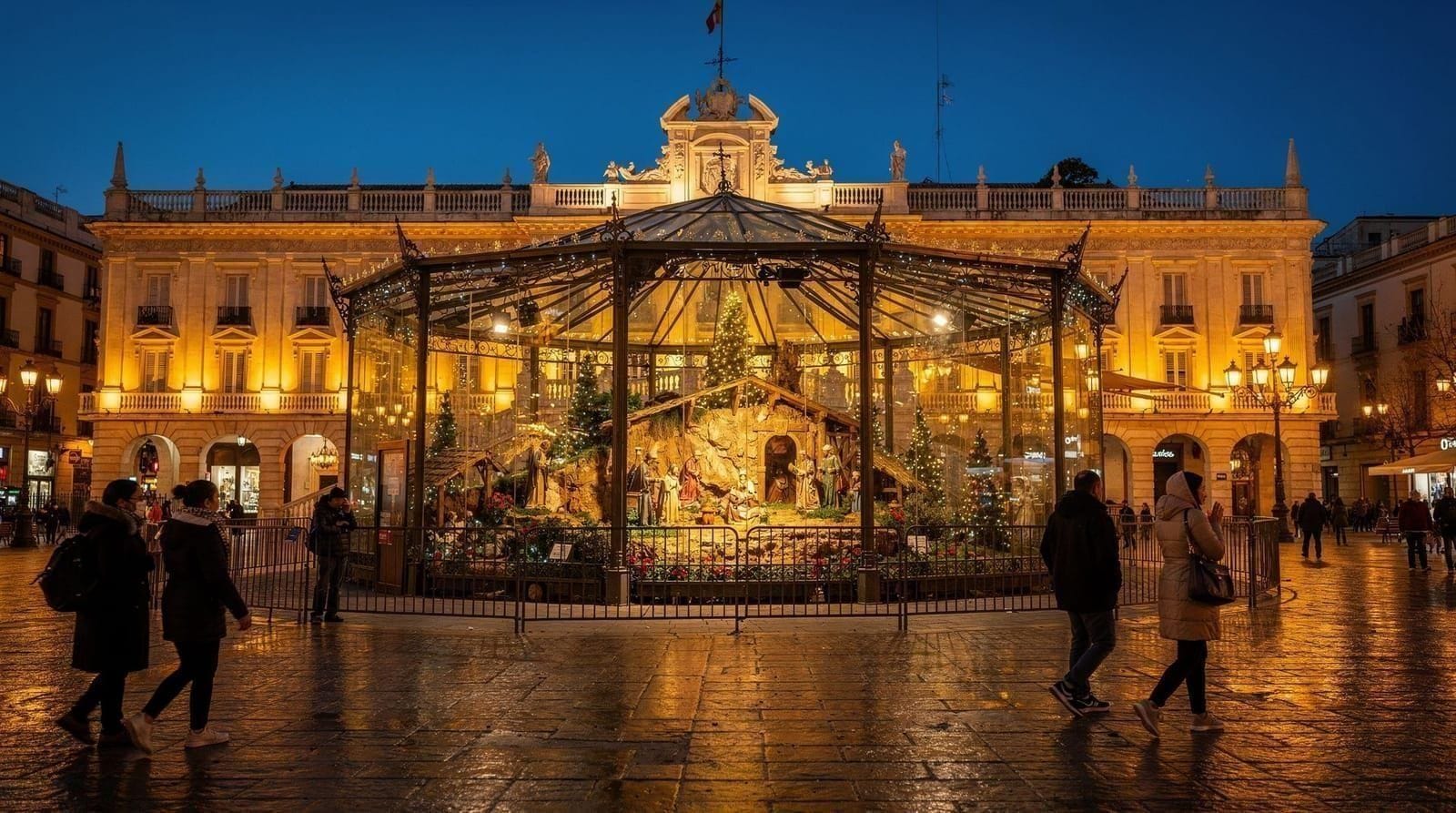
Belén tradition: The belén (nativity scene) is central to Sevillian Christmas culture in a way that has no direct parallel in northern Europe. Every church, public building, cultural institution, and many private businesses display a belén — some extremely elaborate, spanning entire rooms with miniaturised Andalusian villages, moving water features, and hundreds of figurines. The city holds a competition. The belén in the Cathedral, at the Ayuntamiento (town hall), and at the Alcázar are the most impressive. Walking through the city to see the belén displays is a genuine and free cultural activity.
Christmas markets (mercadillos): Seville has several temporary Christmas markets; their locations and dates change every year and can be checked on the official tourist office site (visitasevilla.es). These are not on the scale of German Christmas markets — they’re smaller, with a focus on Spanish nativity figurines (figuras de belén), traditional sweets, and crafts rather than mulled wine and food stalls. Worth a browse rather than a destination in themselves.
Three Kings parade (Cabalgata de Reyes Magos, January 5): One of Spain’s most beloved traditions. Three elaborate floats representing the Three Kings parade through the city centre, throwing sweets (caramelos) to the crowd. The Seville version is one of the largest in Spain.
December weather: Averages 16°C high, 7°C low. Evenings are cold by Seville standards — bring a proper jacket for outdoor dining. Most outdoor café terraces have patio heaters, and Sevillanos use them on evenings below 12°C (which is most December evenings).
January and February: the quiet months
January and February are the least visited months in Seville and the cheapest. For visitors who don’t need spring warmth or summer swimming, they offer the city in a mode that long-term residents often prefer: unhurried, uncrowded, and functioning entirely for local life rather than tourism.
Practical advantages:
- Alcázar tickets available on the day, often without queue
- Restaurants fully booked by locals (a good sign), not tourists — better food, better prices
- Accommodation at annual low rates; some boutique hotels offer genuinely excellent deals
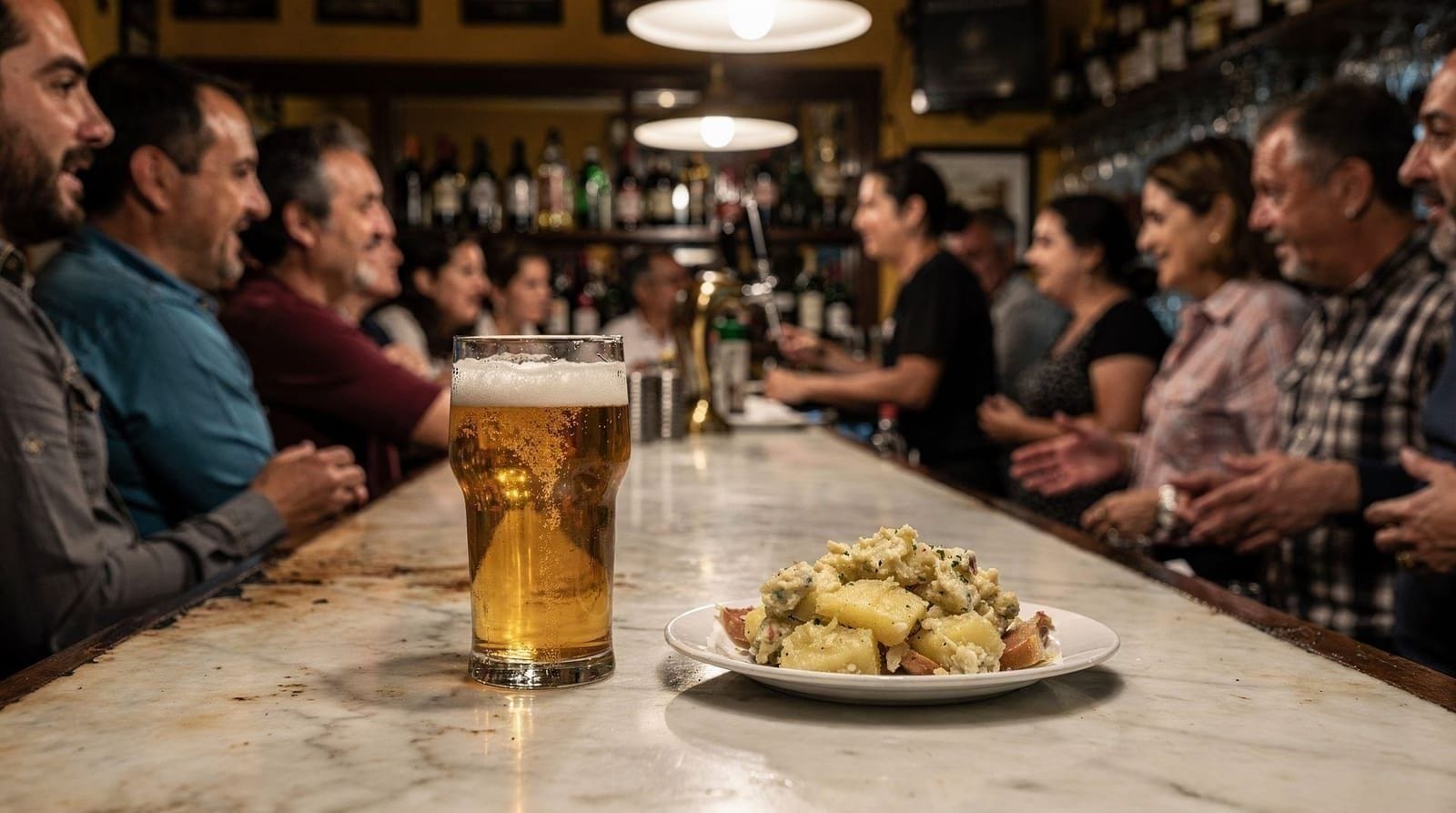
- The tapas scene operates for Sevillanos, not for tourists — the barra culture is at its most authentic
- Metropol Parasol at sunrise with no one else on the walkway
January disadvantages:
- Some smaller restaurants and attractions close for annual holidays in early-to-mid January
- Shorter daylight hours (sunset around 6:15pm)
- Outdoor activities limited by occasional cold and rain
- The city is quiet — if social buzz is important to your travel experience, winter Seville will feel subdued
February: Slightly better than January as temperatures creep up (17°C average high). Carnival (Carnaval) usually falls in February — Seville’s version is smaller than Cádiz’s famous extravaganza but has a local character, particularly in the Alameda de Hércules neighbourhood.
What’s open in winter
All major monuments operate normal winter hours (slightly reduced compared to summer): Alcázar (9:30am-5pm, closed only on 1 and 6 January, Good Friday and 25 December), Cathedral (10:45am-7pm, ticket office closes at 6pm), Casa de Pilatos (9am-6pm), Metropol Parasol (9:30am-midnight). The Archivo de Indias and all city museums maintain regular hours year-round.
The flamenco tablaos maintain schedules year-round, though with fewer weekly shows than summer. Casa de la Memoria operates nightly — the intimate venue is particularly atmospheric in winter. See the best flamenco shows guide.
Day trips to Córdoba and Italica are completely viable in winter — the cooler temperatures actually make the Mezquita and Roman ruins more comfortable to explore than in summer heat. Granada in winter has the extra reward of snow-capped Sierra Nevada as backdrop to the Alhambra. For the full range of options by season, see best day trips from Seville.
Seeing the big monuments in the cooler months
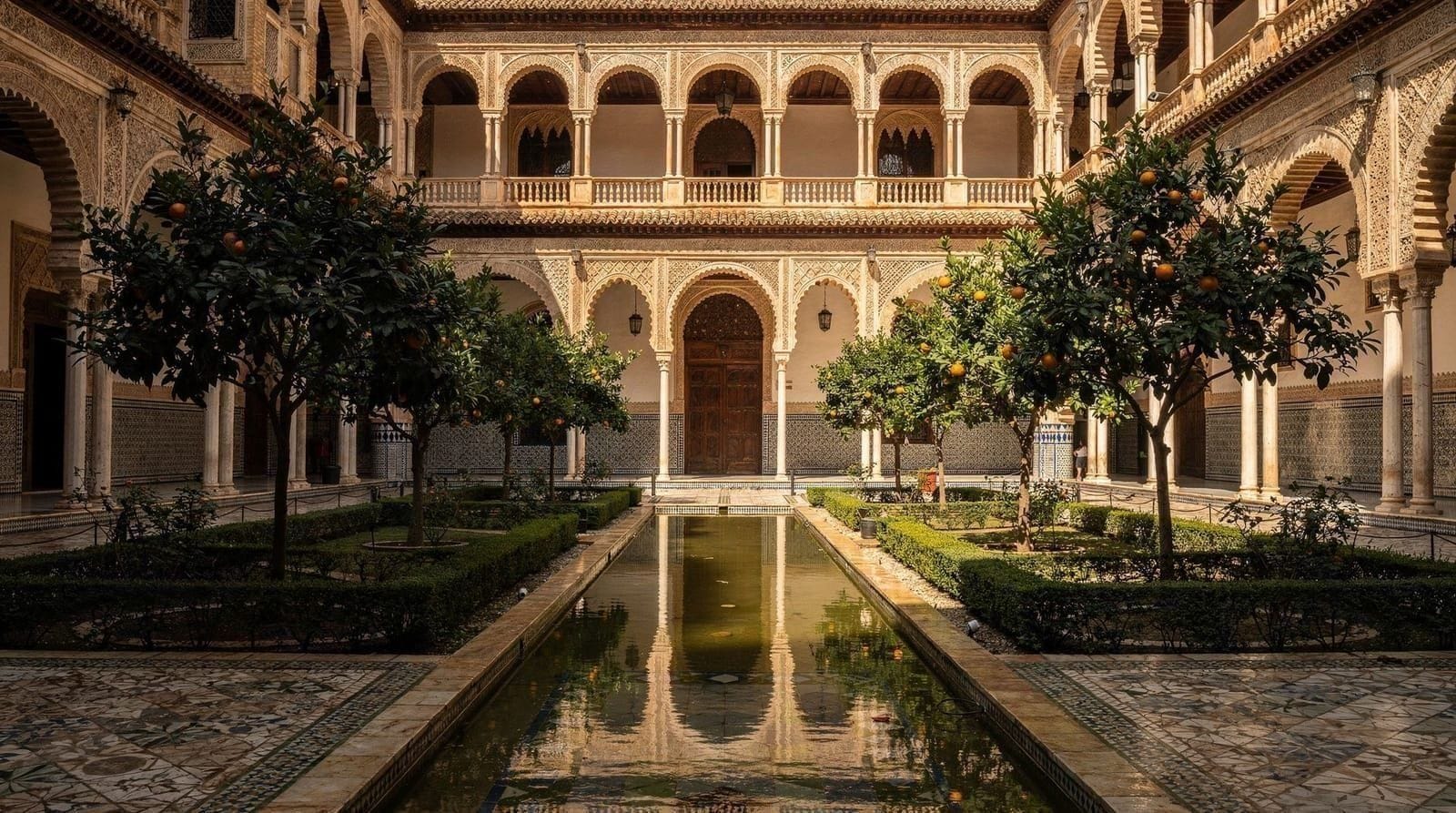
Winter is the easiest season to see the Alcázar well. With fewer people moving through the rooms, the Mudéjar plaster work and tilework can be looked at slowly, and the gardens are pleasant rather than punishing. Many visitors still prefer a guide to make sense of the royal history, and a guided Alcázar visit with skip-the-line access is a sensible choice if you want context without worrying about timing. If you simply want to wander at your own pace, an entry ticket to the Royal Alcázar is enough, and the complete Alcázar guide explains what to look for room by room. For deciding between the palace and the great church, see which to visit first.
The Cathedral is a good rainy-day anchor. Its interior is large enough to fill a wet morning, and a ticket covering the Cathedral and the Giralda tower lets you add the view over the rooftops if the sky clears. Read the Seville Cathedral complete guide before you go, and check the combined Alcázar and Cathedral tickets guide if you want to cover both in one plan.
Eating well when it is cold
Winter is when Sevillian food feels most at home. Warm, hearty dishes and bar-counter tapas make more sense on a cool evening than they do in August, and the city’s cooking has a strong repertoire of stews and fried specialities. The traditional Andalusian dishes guide is a good primer on what to order, and where to eat in Seville covers the wider picture. To avoid paying more than you need to, remember the barra versus terrace pricing rule: standing at the counter is the local way, and in winter you will not miss the terrace anyway.
If you would rather have someone lead the way, a guided food tour through the old town’s tapas bars is an easy way to taste several places in one evening, and it suits the quieter season when bars are full of locals rather than tourists. For a comparison of options, see the tapas tours compared guide, and for a neighbourhood-based approach the best tapas bars in Triana are a rewarding walk across the river on a clear afternoon.
Indoor options for rainy days
Not every winter day is bright, so it helps to have a shortlist. The museums in Seville guide covers the main galleries, the Archivo de Indias is a calm, free-flowing visit, and Casa de Pilatos and the Palacio de las Dueñas are both rewarding when you want to be out of the rain but still among beautiful things. A flamenco evening is another reliable plan: read flamenco 101 first so you know what you are watching, and use the authentic flamenco versus tourist show guide to choose well. If you are travelling with children, Seville with kids has ideas that work in any weather.
What to pack for winter
Layers are the key strategy: a base layer, a jumper or fleece, and a proper mid-weight jacket for evenings, rather than a single heavy winter coat. Daytime temperatures are usually comfortable enough for a light jacket, but evenings — particularly December and January — can drop into single digits. An umbrella or light rain layer is worth packing, since November and December see the most rain days of the year. Comfortable walking shoes remain the priority, as cobbled historic-centre streets don’t change with the season. See the packing list guide for a full seasonal breakdown.
Budget comparison with the rest of the year
Winter, especially January and February, is Seville’s genuine low season for both flights and accommodation — a meaningful contrast to the 3-5x price spikes of Semana Santa and Feria de Abril in spring. December is a partial exception, since Christmas week and the run-up to Three Kings Day bring a smaller but real bump in both prices and visitor numbers. For the fuller year-round cost comparison, see the Seville on a budget guide and best time to visit Seville.
The honest verdict on Seville in winter
Winter is a genuinely good option for visitors who prioritise budget, dislike crowds, are comfortable with the occasional cold, grey day, and do not need beach time or festival atmosphere. It is the most underrated season in Seville’s calendar.
For the Christmas-specific guide with belén locations and the Christmas event schedule, see Christmas in Seville.
Where you stay matters more in winter than in summer, because you will walk home in the cold and want to be close to the action. The where to stay in Seville guide and the best neighbourhoods overview help you choose a base. Getting around is simple on foot, and getting around Seville explains the options for longer distances. If you want a reality check on the season from people who have been, the Christmas markets in Seville trip write-up and is Seville worth visiting give a first-hand view.
For the Christmas-specific guide with belén locations and Christmas event schedule, see Christmas in Seville.
Frequently asked questions about Seville in winter
Is it cold enough in Seville winter to need a heavy coat?
Not usually a heavy winter coat, but a proper mid-weight jacket is needed, especially for evenings when temperatures can drop to 5-9°C. Cold spells below 5°C at night do happen for perhaps a dozen days per winter, so pack layers you can add rather than assuming mild-all-the-time weather.Which winter month is cheapest to visit Seville?
January and February are typically the cheapest months for both flights and accommodation, since they fall after the Christmas season and well before the spring festival premium of Semana Santa and Feria de Abril. See the Seville on a budget guide for how winter compares to the rest of the year.