Christmas in Seville: belén, lights, and the Three Kings tradition
Seville: Alcázar skip-the-line tickets and guided tour
What is Christmas like in Seville?
Christmas in Seville runs from late November through January 6 (Three Kings Day). The defining tradition is the belén — elaborate nativity scenes displayed publicly throughout the city. The Christmas lights on Calle Sierpes and Plaza Nueva are impressive, the Three Kings parade (January 5) is a major event, and the mild weather (12-16°C) makes it genuinely pleasant.
Christmas in Seville has a character quite distinct from the Christmas markets of Central Europe or the consumerist version familiar in the UK and US. It is rooted in religious tradition — particularly the belén (nativity scene) — and in Andalusian folk custom. Understanding the difference makes a winter visit considerably richer.
| When | Late November through January 6 (Three Kings Day) |
| Weather | Mild, 12-16°C |
| Highlight | Belén nativity scenes across the city, Cabalgata de Reyes (Jan 5) |
| Markets | Modest compared to Central Europe; more a nice extra than a destination |
| Book ahead | Santa Cruz hotels for Dec 20-Jan 6, 6-8 weeks ahead |
The belén tradition: Seville’s defining Christmas custom
The word belén literally means Bethlehem, and a belén is a nativity scene — but describing it that way undersells what Sevillano belenes actually look like. These are not a small figurine set on a mantlepiece. The most elaborate belenes are room-sized installations: miniaturised entire Andalusian landscapes, villages built to scale from papier-mâché and cork bark, with running water from miniature rivers, working windmills, tiny bakeries with painted loaves, and hundreds of hand-painted clay figurines ranging from the Holy Family through shepherds, Wise Men, Roman soldiers, and — uniquely Spanish addition — the caganer, a shepherd figurine in the act of defecation, a tradition dating from 18th-century Catalonia that has spread across Spain.
Where to find the best belenes:
The most important public belenes are in the Cathedral (Patio de los Naranjos), the Ayuntamiento (town hall, Plaza Nueva — usually one of the most elaborate in the city, with moving figures and sound), the Alcázar (when open to view), and the Diputación Provincial building. Many church porticos display their own belenes, and walking through the centre in December means encountering them throughout.
The Seville city government holds an annual belén competition — details published on the Ayuntamiento website in November. The winning entries are usually on public display through January 6.
Figuras de belén: Street stalls selling traditional figuras appear in the city centre in the weeks before Christmas; check locations and dates with the Seville tourist office (Visitasevilla). If you want to bring a piece of the tradition home, look for a hand-painted clay figure from a local ceramicist.
Christmas lights
The city’s Christmas illuminations go up in late November or early December. The main spectacle:
Calle Sierpes and Calle Tetuán: Seville’s main shopping street (no vehicles) is transformed with an overhead canopy of lights. The switching-on ceremony (the date changes every year; check it with the Seville tourist office, Visitasevilla) draws large crowds.
Avenida de la Constitución: The wide boulevard between the Cathedral and the Puerta de Jerez gets elaborate hanging installations. The combination of Cathedral Giralda lit at night + Christmas light canopy overhead is the most photographed December image in Seville.
Plaza Nueva: The central municipal square has a large Christmas tree and lighting displays. The surrounding Calle Tetuán is illuminated to match.
Triana: The neighbourhood across the river puts up its own Christmas lights on Calle Betis and the main shopping street — more local in character, less tourist-focused.
Free, no schedule required: All the Christmas lights are visible whenever you walk through the centre after dark (which falls around 6pm in December). Evening walks through the lit streets are the most atmospheric way to experience Christmas in Seville.
Christmas markets (mercadillos navideños)
Seville’s Christmas markets are not on the scale of German or Austrian Christmas markets and should be approached with that calibrated expectation. They are more correctly described as outdoor stalls selling:
- Figuras de belén (nativity figurines, hand-painted and mass-produced)
- Traditional Andalusian Christmas sweets: polvorones (crumbly almond shortbread), mantecados (lard-based shortbread), turrón (nougat), and pestiños (fried dough with honey and sesame)
- Christmas tree decorations (Spanish-style, including belén accessories)
- Crafts and artisanal goods
Locations and dates of the mercadillos change from year to year; check them with the Seville tourist office (Visitasevilla).
Honest assessment: Worth a wander on your way past, but not worth a special trip across the city. The food items (polvorones from a quality confitería like El Horno de San Buenaventura, just south of the Cathedral) are genuinely good.
Traditional Christmas foods
The classic Andalusian Christmas table has several items worth knowing:
Turrón: Spain’s Christmas nougat — available in hard (Alicante, with whole almonds) and soft (Jijona, ground almond paste) varieties. The premium brands (1880, Delaviuda, El Almendro) are genuinely different from the cheap supermarket versions. Available at confiterías and supermarkets from November.
Polvorones and mantecados: Crumbly shortbread-style biscuits made with lard (manteca), almonds, and spices. They are wrapped in individual tissue paper twists and come in boxes. The best in Seville come from Estepa (a town 85 km east of Seville and the production capital of polvorones). La Estepeña brand is widely available.
Cava: Spain’s festive sparkling wine is cava (from Catalonia) rather than champagne. Seco (dry) or brut is the best quality; semi-seco is sweeter and more common at Christmas meals.
Nochebuena (Christmas Eve) and Nochevieja (New Year’s Eve): Both are family dinner occasions. Most restaurants in Seville are either closed or running fixed festive menus on these dates — if you’re visiting over the holidays, book restaurant dinners weeks ahead or accept that you’ll be eating at the hotel.
Three Kings Day (January 5-6)
Spanish Christmas culminates on January 5-6 (Epiphany), not December 25. The Three Kings — los Reyes Magos — are the gift-givers of the Spanish Christmas tradition (Father Christmas is a relatively recent import, not the traditional figure). Children write letters to the Kings, not to Santa Claus.
Cabalgata de Reyes Magos (January 5, evening): The Three Kings parade through the city centre on elaborate floats, throwing sweets (caramelos) to the crowd. Seville’s version is one of the largest in Spain. Route and start time change from year to year: check them with the Seville tourist office (Visitasevilla). Arrive early (an hour before the stated start time) to get a good street position, particularly if you have children who want to catch sweets.
January 6 (Epiphany): A public holiday. Banks, offices, and many shops are closed. Children open their presents from the Kings. Some restaurants hold special Día de Reyes lunches. The city returns to its January pace from January 7 onwards.
Planning a winter visit
Best hotels for December: Boutique hotels in the Santa Cruz neighbourhood fill even in December for the Christmas period (December 20-January 6). Book at least 6-8 weeks ahead for those dates. January 7 onwards is genuinely uncrowded and cheap.
What’s closed: Some smaller museums and attractions take annual closure in early January (typically the first two weeks). Check specific venues before planning a visit. Major monuments (Alcázar, Cathedral, Metropol Parasol) stay open for most of the season, but check their hours for 25 December, 1 January and 6 January; the Real Alcázar is closed on all three.
Outdoor activities: December and January are the most practical months for outdoor activities like river walks and bike tours — the same activities that are dangerously hot in summer. The Guadalquivir riverfront walk from the Torre del Oro to Triana is particularly pleasant on a December afternoon.
For the complete winter season guide with weather details and cost expectations, see Seville in winter.
Fitting the monuments around the festive calendar
A Christmas visit works best when you split your days between the seasonal events, which happen mostly in the evening, and the big sights, which suit the daylight hours. The Alcázar and the Cathedral stay open through the season, so mornings are the natural slot for them, leaving the late afternoon and night for the lights and the belenes. If the palace is on your list, a pre-booked ticket spares you the queue on a cool, short winter day; one option is a skip-the-line guided visit of the palace, and our Alcázar skip-the-line guide explains how the different ticket types compare. For timing across the year, see the best time to visit the Alcázar.
The Cathedral is the other anchor of a Christmas itinerary, since its Patio de los Naranjos holds one of the public belenes. Pairing the building with the Giralda tower gives you a morning’s worth of sightseeing, and a timed entry to the Cathedral and the Giralda lets you walk straight in rather than wait outside. Our Seville Cathedral complete guide covers what to look at inside, and the Cathedral and Giralda tickets guide sets out the options.
A sample Christmas-week rhythm
Seville in December rewards a slow pace. A workable pattern is to spend the morning on one major monument, lunch late in the Spanish manner, rest in the middle of the day, and then go out again once the lights come on. The belenes are best seen in daylight, when the detail of the miniature landscapes is easiest to appreciate, while the illuminated streets are a night-time pleasure. Because everything central is walkable, you rarely need transport; the getting around Seville guide lists the options if you do.
If you have only a short stay, our Seville in 3 days itinerary is a good skeleton to which you can add an evening of lights each night and the Cabalgata on January 5. For a first visit in any season, the first-time travel tips cover the basics that apply at Christmas too.
Eating and drinking during the festive season
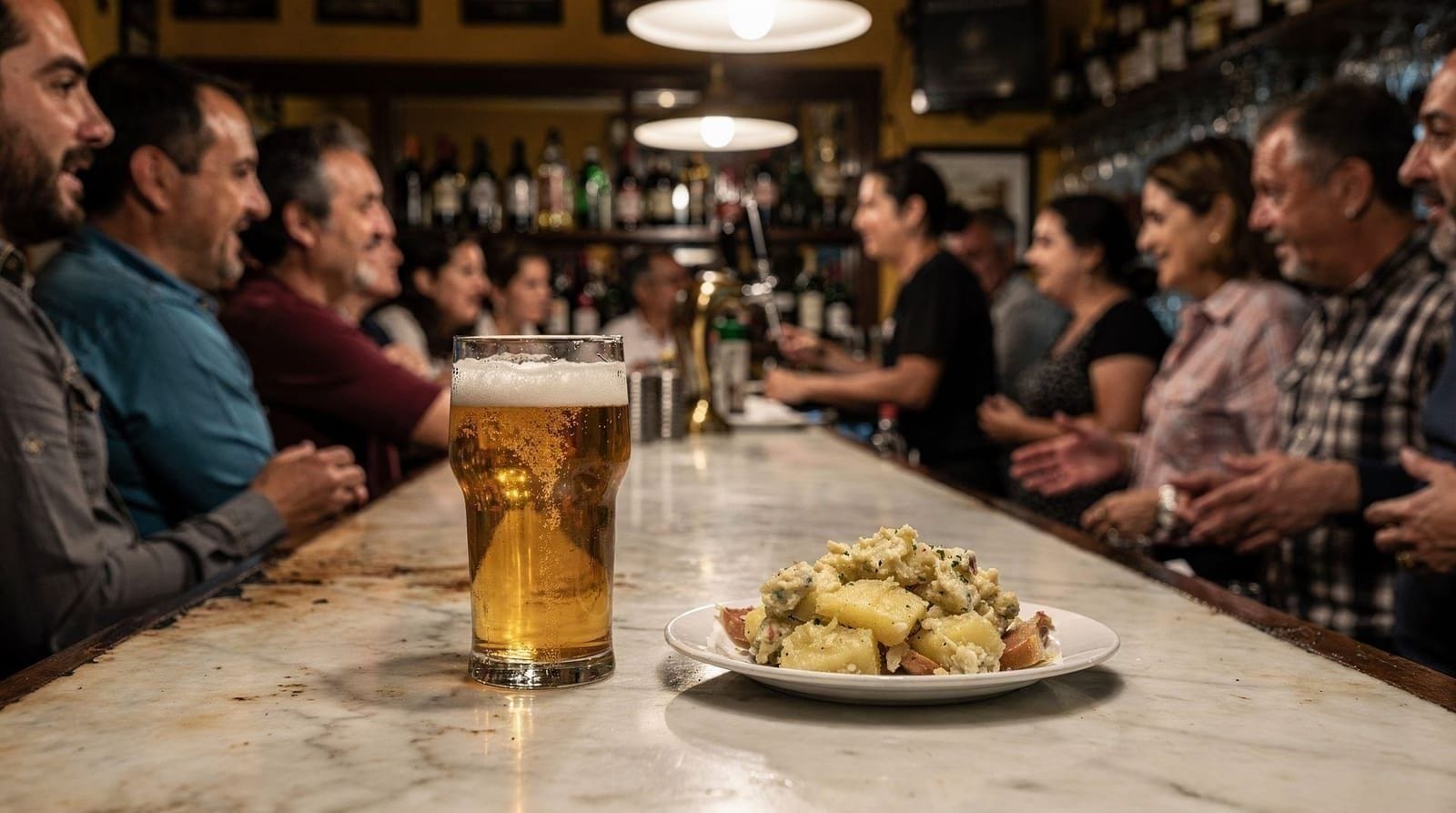
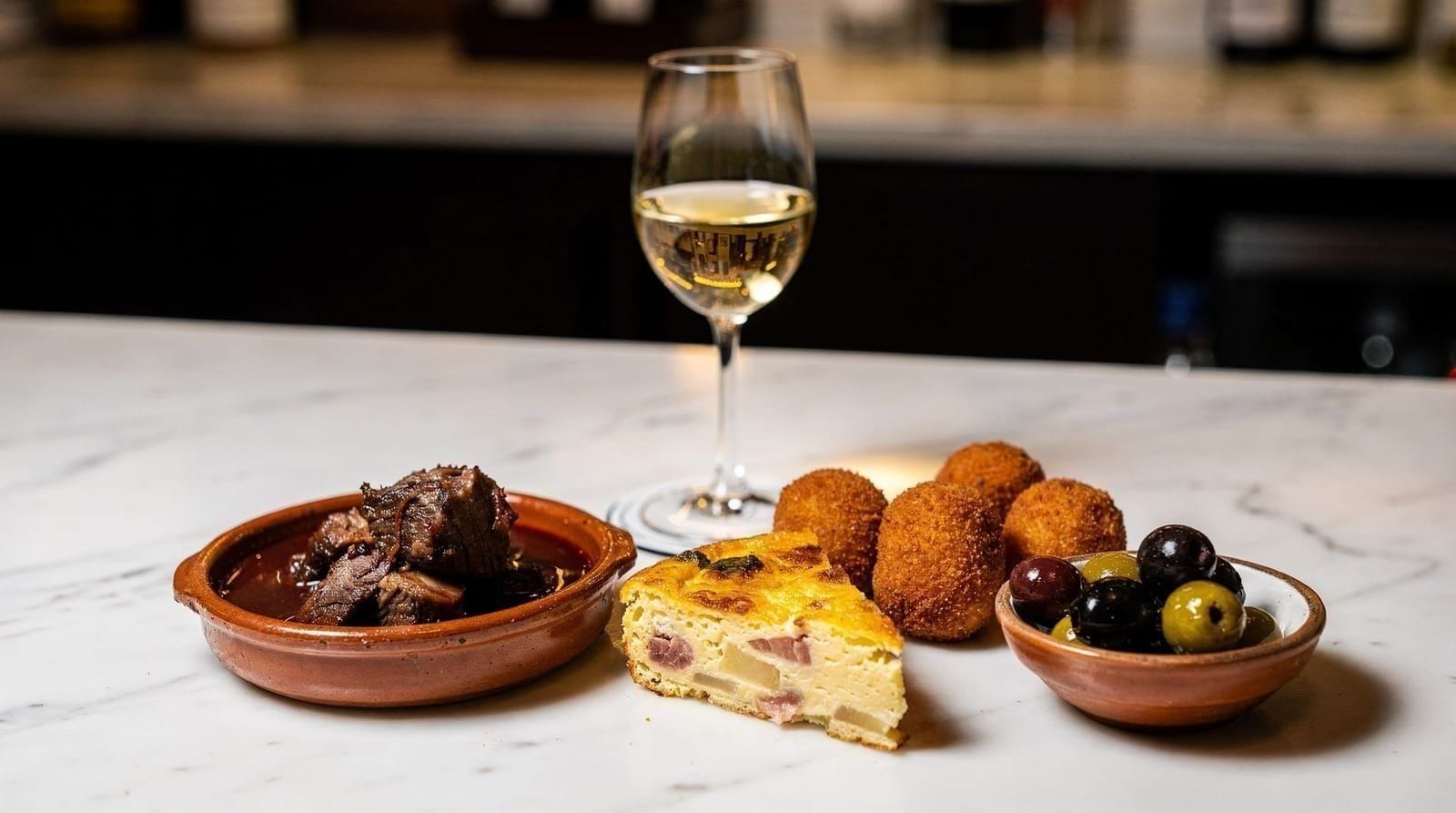
Beyond the sweets mentioned above, December is a good time to eat the way locals do: warm dishes in the bars, small plates at the counter, and a sweet something from a confitería on the way home. The counter-versus-terrace logic still applies in winter, although fewer people sit outside, so check the barra vs terrace pricing guide before you order. For ideas on what to order, traditional Andalusian dishes and the best tapas in Seville are useful companions. Read the real trip reports too: Christmas markets in Seville describes how the stalls feel in person.
Packing and expectations for a winter trip
Evenings feel cooler than the daytime figures suggest, particularly once you stand still in a crowd waiting for a parade, so bring a warm layer and comfortable shoes for long walks on stone streets. Our Seville packing list helps you decide what to bring. Rain is possible in winter, so a light waterproof is sensible, and it is worth keeping a flexible plan so that you can swap an outdoor afternoon for a museum if the weather turns. The museums in Seville guide gives you indoor alternatives. Above all, treat Christmas here as a season of small, local pleasures rather than a single headline event: a belén discovered in a church portico, a paper twist of polvorones, a walk along a lit street. That is where the city’s festive character really lives.
Comparing Seville’s Christmas to other Andalusian cities
Seville’s Christmas season isn’t the only option in the region. Córdoba has its own strong belén tradition and generally lower crowds and prices than Seville over the holidays; Cádiz offers a milder, coastal winter Christmas with far fewer visitors. If Seville’s December hotel prices are a concern, basing yourself in a smaller Andalusian city and day-tripping in for the lights and belenes is a reasonable budget alternative — see Seville on a budget for further cost-cutting strategies applicable across the season.
Christmas with children
The Cabalgata de Reyes Magos on January 5 is the standout Christmas event for families — the sweet-throwing floats and general spectacle work well for children of most ages, though the 2-3 hour parade length can test patience for very young kids. Arriving early to claim a spot on the barrier is worth it precisely because children benefit most from being close enough to catch the caramelos. The belén displays, especially the animated one at the Ayuntamiento, are also genuinely engaging for children rather than being an adults-only cultural stop.
Practical booking notes
Restaurant bookings for Nochebuena (24 December) and Nochevieja (31 December) fill weeks in advance at the venues that stay open for festive dinners; if a special Christmas Eve or New Year’s Eve meal matters to your trip, book as soon as your dates are confirmed. For everyday dining across the rest of the season, the normal rules from where to eat in Seville apply, with reduced hours only around December 25 and January 1 itself.
Frequently asked questions about Christmas in Seville
Is Seville a good Christmas destination compared to Northern Europe?
It depends what you want. Seville has no large-scale Christmas markets like Germany or Austria, but it offers mild weather (12-16°C), genuine religious and folk tradition centred on the belén, impressive street lighting, and a distinctly Andalusian Three Kings celebration on January 5-6. Choose Seville for atmosphere and warmth rather than market shopping.Are restaurants open in Seville over Christmas?
Most restaurants operate close to normal hours through the season, but Nochebuena (24 December) and Nochevieja (31 December) evenings are largely family occasions — many restaurants close or offer fixed festive menus only, and those that stay open get booked out weeks ahead. December 25 and January 1 also see reduced opening hours citywide.