The truth about Seville tourist traps — and how to avoid them
None of this is dangerous, and none of it should colour your view of Seville — but knowing the patterns saves real money and hassle. Quick reference before the full list.
| Most active scam | Rosemary (romero) near Cathedral/Alcázar |
| Biggest overspend risk | Tourist-facing restaurants in Santa Cruz |
| Easy fix | Stand at the bar (barra), not the terrace |
| Walk 2–3 blocks from | Cathedral/Alcázar for local prices |
| Response to unwanted “gifts” | Firm “No, gracias,” don’t take it |
Why tourist traps concentrate in Seville
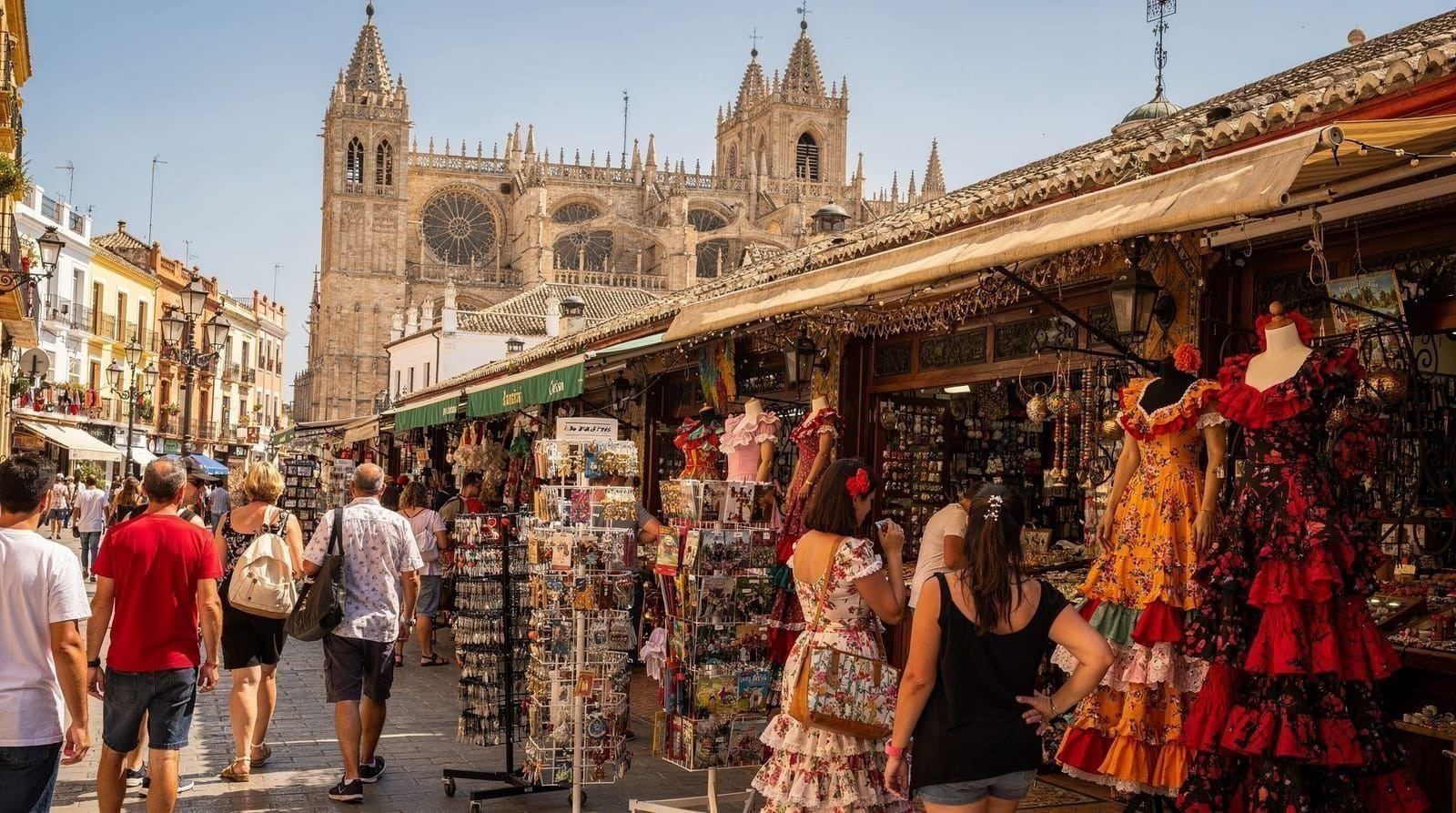
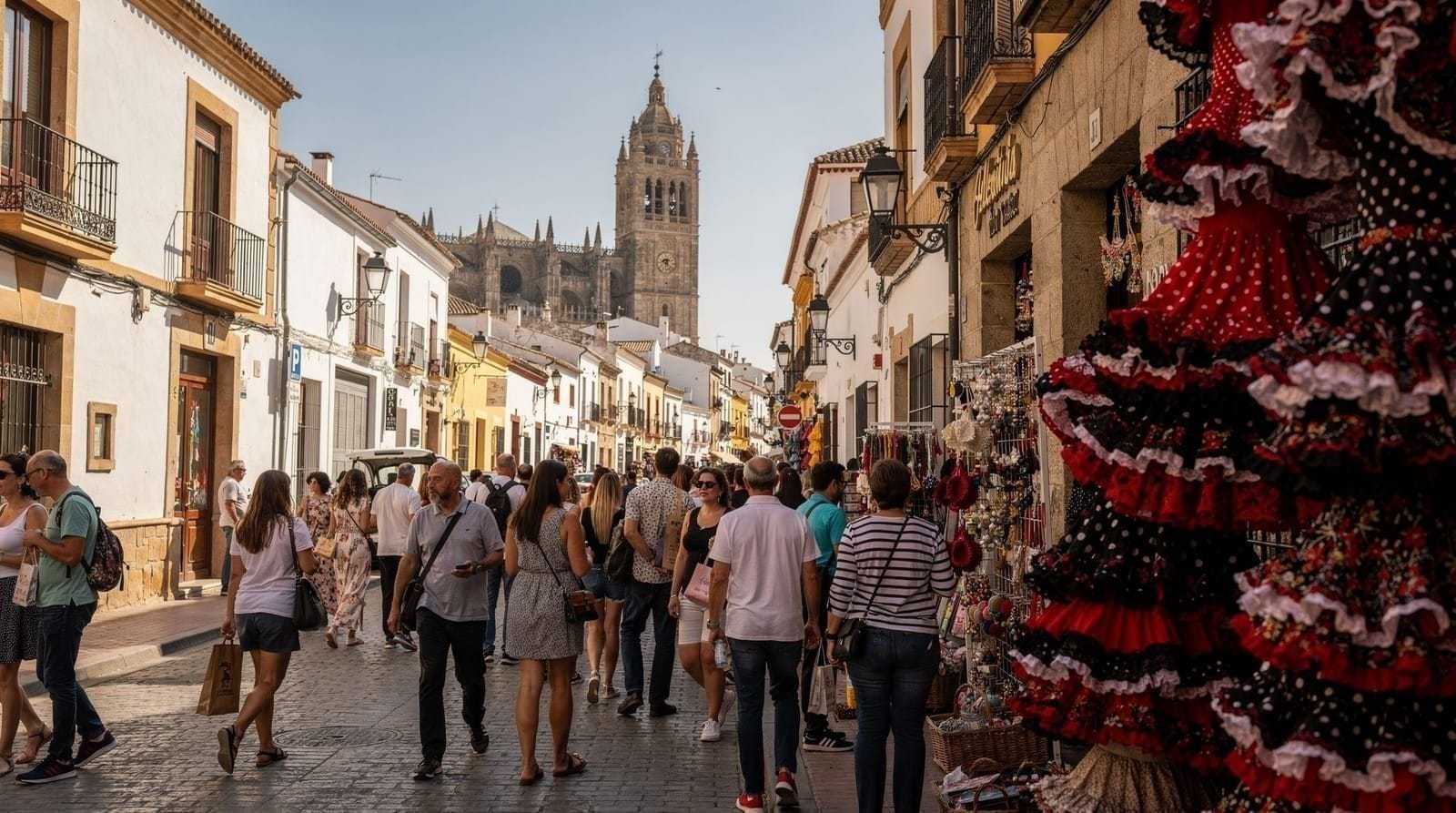
Seville receives around 3.5 million tourists per year, the vast majority of whom pass through two or three specific geographic zones: the area around the Cathedral, the Alcázar, and the Barrio de Santa Cruz. This geographic concentration — combined with the fact that many visitors have limited time and are making quick decisions under information stress — creates ideal conditions for tourist-trap economics.
Nothing here is illegal. Nothing will harm you physically. But the difference between what you spend in a tourist-facing restaurant versus a local bar, or between the price of something you’re handed that you didn’t ask for versus something you sought out — these differences add up to real money across a trip.
Here is every trap I’ve documented across multiple Seville visits, with specific advice on each.
The rosemary scam (romero)
This is the most famous Seville-specific scam and remains active in 2025 near the main entrance to the Cathedral on Avenida de la Constitución and around the Alcázar walls.
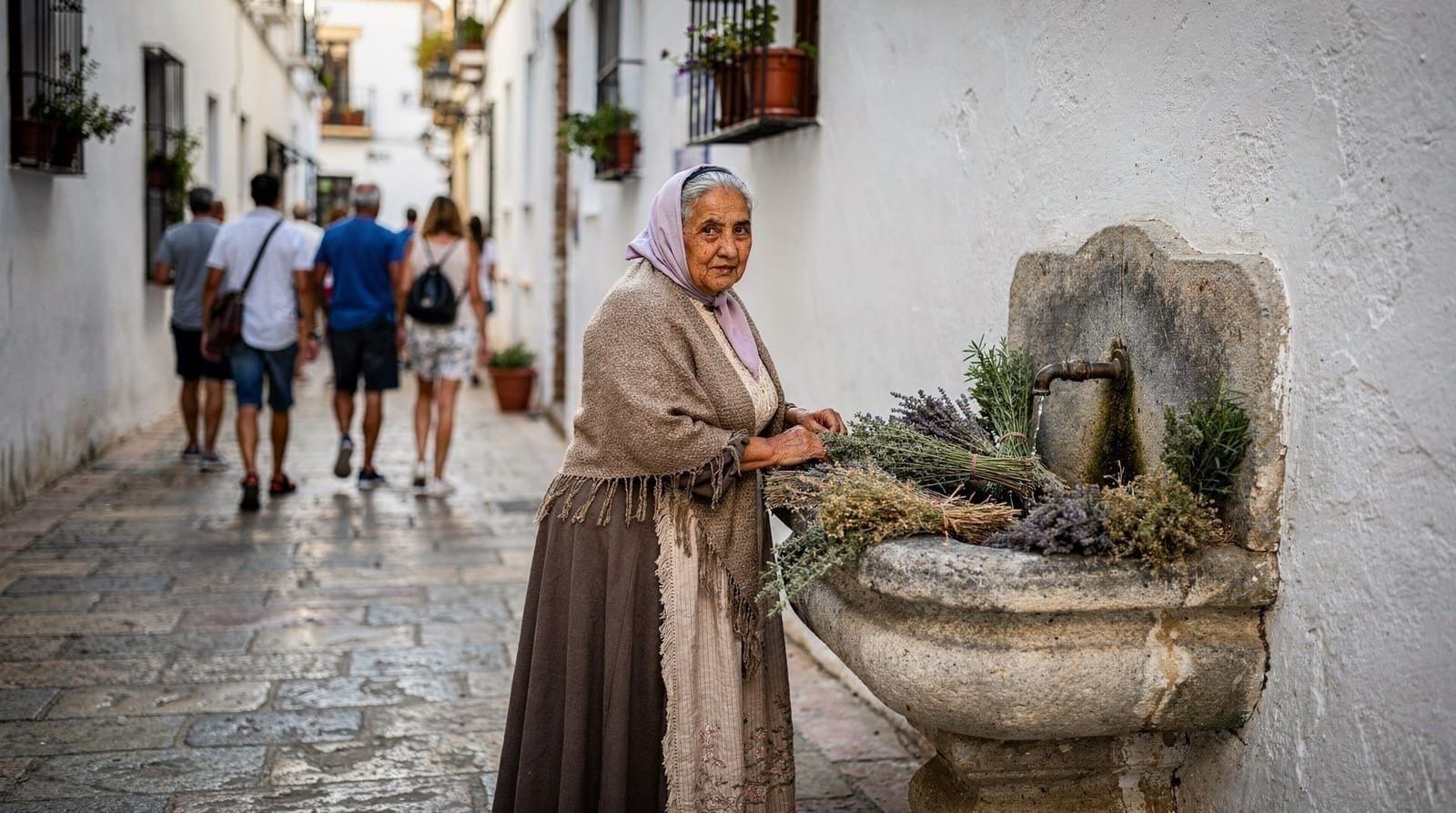
A woman (almost always a woman) approaches you holding a sprig of rosemary. She may hand it to you saying it’s a gift or for good luck. Once you’re holding it, she will ask for money or begin reading your fortune. You did not ask for this. You are now in a social manipulation designed to make you feel obligated.
The response: Do not take anything. If something is placed in your hand, return it immediately. A firm “No, gracias” and eye contact are sufficient. Do not feel rude. This is not a gift economy. There is no cultural expectation in Spain that you accept plants from strangers. The rosemary has no spiritual significance; it is a prop.
This practice is not representative of Seville or of Andalusia. The vast majority of people in this city are not trying to extract money from you in this way.
Restaurants with photographs in the menus and someone at the door
The inverse relationship between the quality of a Seville restaurant and the prominence of its menu displays outside the door is highly reliable.
The specific warning signs:
- Menu boards in four or more languages
- A person stationed outside to attract customers
- Photographs of food on the menu
- “Typical Seville cuisine” signs
- Paella prominently featured as a local speciality (paella is Valencian; a restaurant in Seville that leads with paella is targeting tourists who don’t know this)
The price premium for dining in these restaurants is not subtle. I have seen albóndigas (meatballs) for €13 at a Santa Cruz tourist-facing restaurant; the same dish at Bar Buhón near the Macarena costs €6 and is better.
The alternative: Walk two to three blocks from the Cathedral or Alcázar in any direction. The tourist-trap zone has a clear geographic boundary. Outside it, the restaurants are priced for locals and the quality is consistently higher.
Terrace pricing vs bar pricing
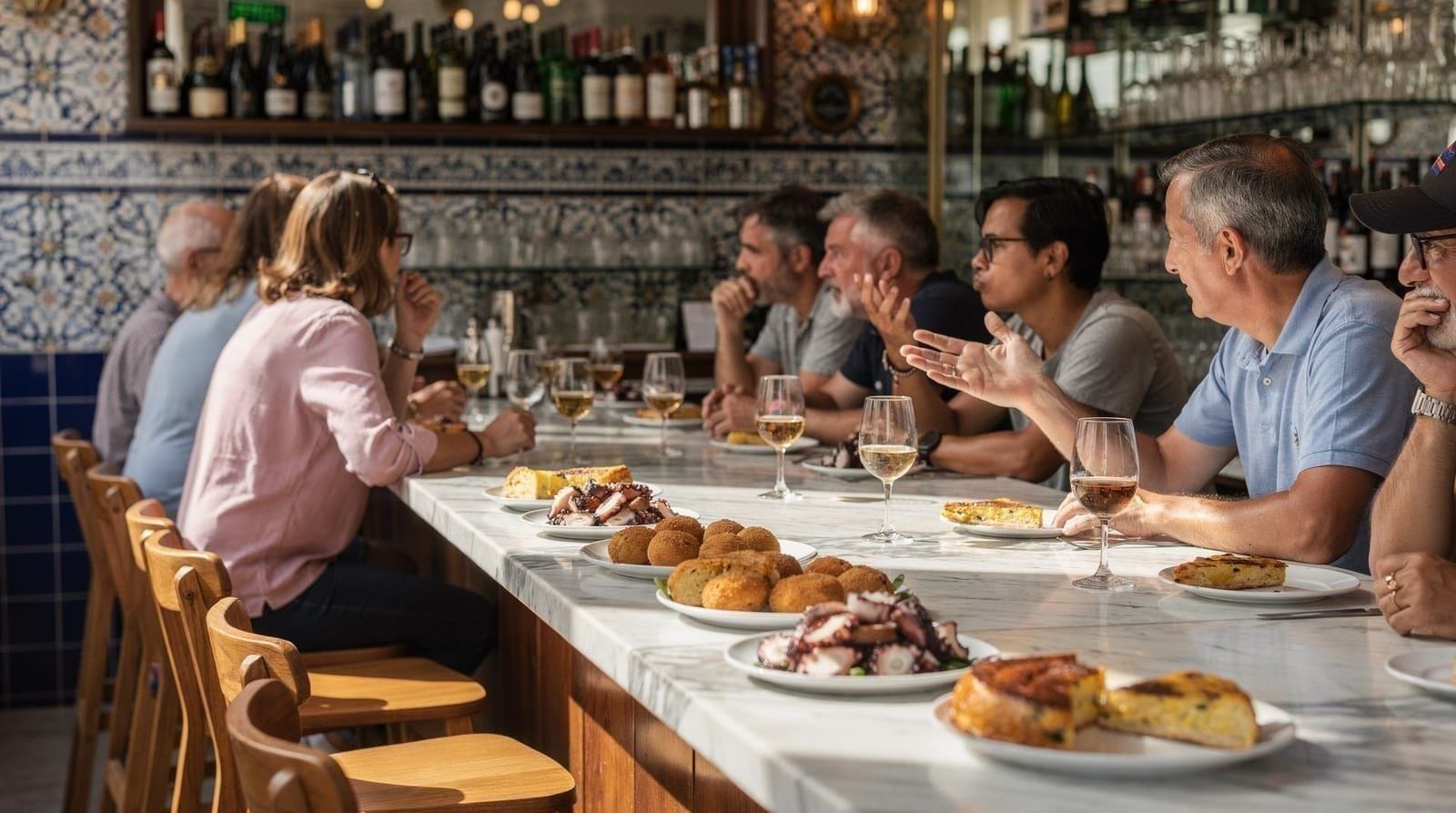
This is not a scam — it’s a legal and disclosed price differential that most tourists don’t know exists. In many Seville bars, there are two prices for the same item: the barra (bar counter) price and the terraza (outdoor terrace) price. The difference is typically 10–30% and sometimes more.
Some establishments post both prices. Many don’t. If you see a price list that specifies “barra” and “terraza” columns, this is what’s happening. If you don’t see it and you sit on a terrace, you may be paying the higher price without realising it.
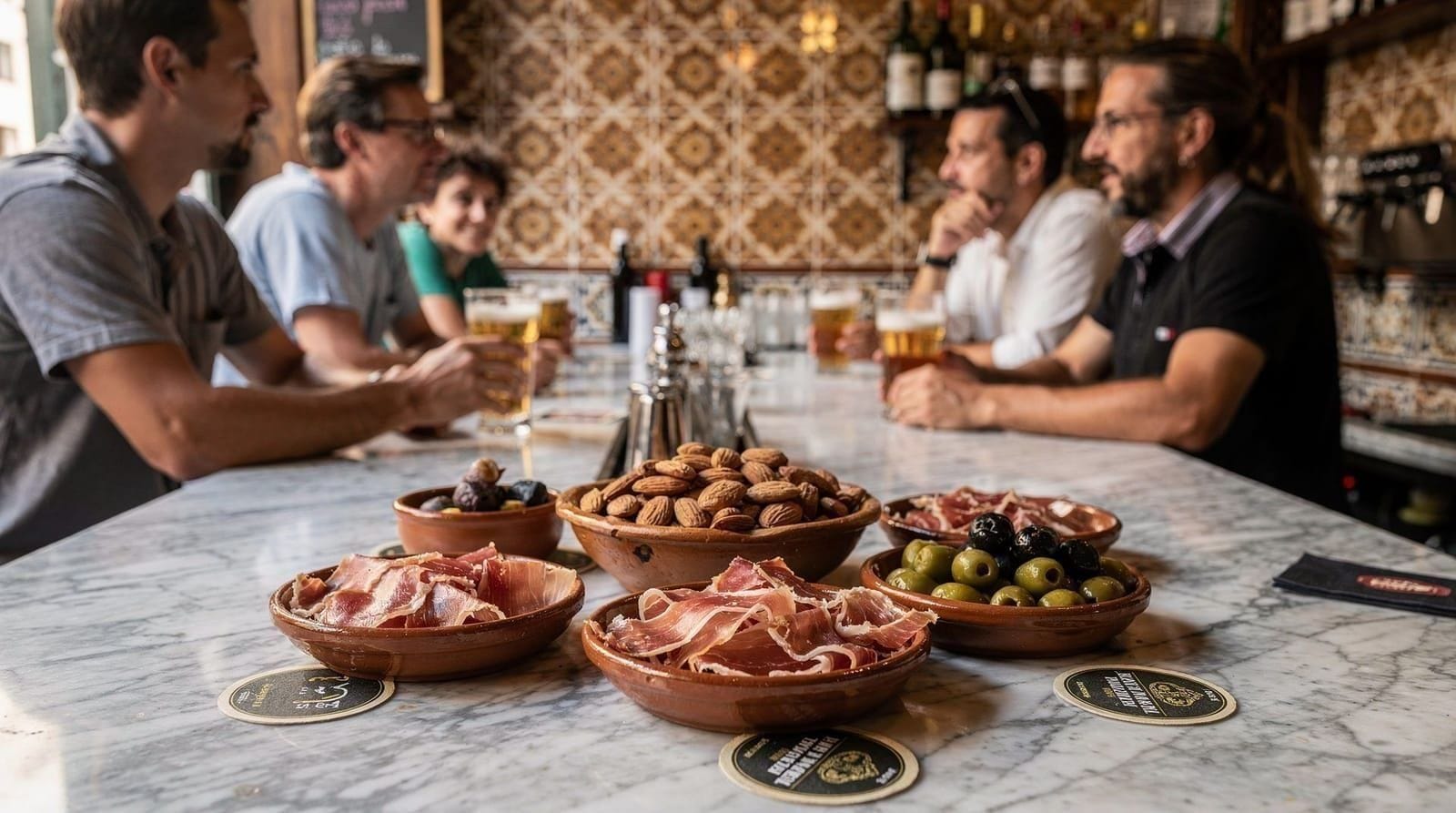
The alternative: Stand at the bar. In Seville, standing at the bar is not a second-class experience — it is the primary local experience. You’ll eat the same food, drink the same wine, and pay significantly less.
Overpriced flamenco shows
Not all tourist flamenco shows are poor quality, but the correlation between tourist infrastructure (multilingual website, dinner package, multiple shows per night, large venue) and mediocre performance is real.
The specific issue with large tablao shows is seat positioning. A venue with 150–200 seats has bad seats at the back and sides where the sightlines are poor and the connection to the performance is attenuated. You won’t know which seats you’re getting until you arrive. Smaller venues have no bad seats.
The other issue is volume: performers doing three shows a night six nights a week are not at the same level as performers doing one show, five nights a week, in a venue where they’ve built a personal relationship with the audience expectations.
The alternative: Casa de la Memoria (Calle Cuna), a small venue that books out regularly. Flamenco Triana on Calle Pureza in the Triana barrio. Both require advance booking. Our authentic flamenco vs tourist show guide breaks this down in full.
The “city pass” misdirection
Various third-party vendors sell “Seville city passes” that bundle entry to multiple sites at a supposedly discounted price. Some of these are genuinely useful; many are not.
The specific trap: passes that include entry to minor sites you wouldn’t otherwise visit, padded to make the arithmetic look favourable. You’re only getting value from a pass if you were actually going to visit all the included sites.
The alternative: Check our Seville city pass guide which does the actual arithmetic for different visitor profiles. For most 2–3 day visits to Seville, the individual ticket approach is cheaper than the pass unless you’re visiting both the Alcázar and Cathedral in the first two days and plan additional sites.
Horse carriages near the Cathedral
The horse carriages (coches de caballos) that operate near the Cathedral and Alcázar are a legitimate historical feature of Seville’s tourism. They are also significantly overpriced for what they are. A 30-minute carriage ride typically costs €40–50 per carriage, and the areas they cover are entirely walkable in the same time.
Carriage rides are an experience, not a transport method. If you want the experience, negotiate the price before you get in (prices are technically regulated but vary). If you want to see the same areas efficiently, walk. Our horse carriage rides guide goes into what to expect, and the Seville tourist traps to avoid and overpriced things in Seville guides list the other spots where the price rarely matches the experience.
Pickpockets: the locations
This is a practical safety note rather than a tourist trap per se. Pickpockets are most active in specific locations:
- The queue for the Cathedral (long waits, crowded, distracted tourists)
- La Campana (the main shopping street intersection in the centro)
- The MetroCentro tram (crowded, mobile)
- The Alameda de Hércules at night in peak season
Standard precautions apply: front pockets or zipped bags, no phone in back pocket, awareness at crowded attractions. For a calmer, more complete picture of how safe the city feels day to day, see is Seville safe, and for the mistakes first-timers repeat most often, Seville common mistakes and first-time travel tips are worth ten minutes before you fly.
Our honest-planner resources
For the full treatment, our site has a dedicated honest-Seville hub that aggregates all these guides. Specific articles on the rosemary scam, overpriced restaurants in Santa Cruz, and the barra vs terrace pricing difference cover each topic in depth.
Seville is not an especially dangerous or exploitative city. The traps documented here are avoidable, non-violent, and well understood by anyone who does ten minutes of research before arriving. The city itself — the Alcázar at dawn, the tapas at a local bar, the smell of azahar in March — is extraordinary. Don’t let the scam ecosystem around the main sights colour your experience of a place that, once you step two blocks off the tourist path, is genuinely special.
Unofficial “guides” and ticket sellers near the monuments
A less-discussed pattern: people near the Alcázar and Cathedral queues who approach individually with offers to “skip the line” or sell tickets directly, sometimes wearing something that vaguely resembles an official lanyard. Official skip-the-line access is booked online through the monument’s own site or a recognised tour platform, never bought from someone approaching you in the street. If a ticket is offered at a discount for cash, walk away — legitimate discounted tickets are not sold this way, and there’s no reliable recourse if the ticket turns out to be invalid at the gate. Our Alcázar tickets skip-the-line guide covers the actual official routes.
If you would rather settle the question before you leave home, the simplest fix is to book in advance on a platform with a clear cancellation policy. For the Cathedral, that can be as plain as a Cathedral and Giralda entry ticket booked ahead, or, if you want some context while you walk round, a guided visit of the Cathedral and Giralda with tickets included. Our Cathedral and Giralda tickets guide and the skip-the-line decoder explain the differences between the formats.
Visitors who want both big monuments in one go can look at combined skip-the-line tickets for the Alcázar and the Cathedral; see also the combined Alcázar and Cathedral tickets guide before choosing. Booking this way removes the one situation where a stranger’s “special offer” can sound tempting: standing in a long queue with no plan.
Quick reference: trap signals vs genuine signals
| Signal | Likely a trap | Likely genuine |
|---|---|---|
| Menu language | 4+ languages, photos of food | Spanish only or Spanish + one other |
| Location | Directly facing Cathedral/Alcázar | 2–3 blocks back |
| Staff behaviour | Someone stationed outside to attract you | You have to walk in to be noticed |
| Pricing | Same price barra and terraza, high overall | Lower barra price clearly posted |
| Speciality claim | ”Typical Seville paella” | Local Andalusian dishes, no paella claim |
What locals actually do differently
Sevillanos avoid the geographic core almost entirely for daily life — the Cathedral/Alcázar/Santa Cruz triangle is, for residents, a place you take visitors, not somewhere you eat lunch. Neighbourhoods like Nervión, La Macarena, and the streets behind the Alameda de Hércules carry the actual local price level and, honestly, better food. If you’re staying more than two or three days, spend at least one lunch or dinner outside the historic centre entirely; the where to eat in Seville guide has neighbourhood-by-neighbourhood recommendations that skew toward where locals actually go. Our tapas bars in Triana and hidden tapas bars locals love are good places to start, and the flamenco tourist traps guide does the same job for the evening show.
Frequently asked questions about Seville tourist traps
Is Seville dangerous for tourists?
No. The traps documented here are financial nuisances, not safety threats. Standard city precautions against pickpockets in crowded areas are the main safety consideration.
How do I know if a restaurant is a tourist trap before sitting down?
Check the menu board: multiple languages, food photos, and a prominent paella listing are the clearest signals. Location matters too — anything with outdoor seating directly facing the Cathedral or Alcázar walls is priced for one-time visitors, not repeat local customers.