The best time we visited the Alcázar — and what we did wrong the first time
Three visits, three different experiences
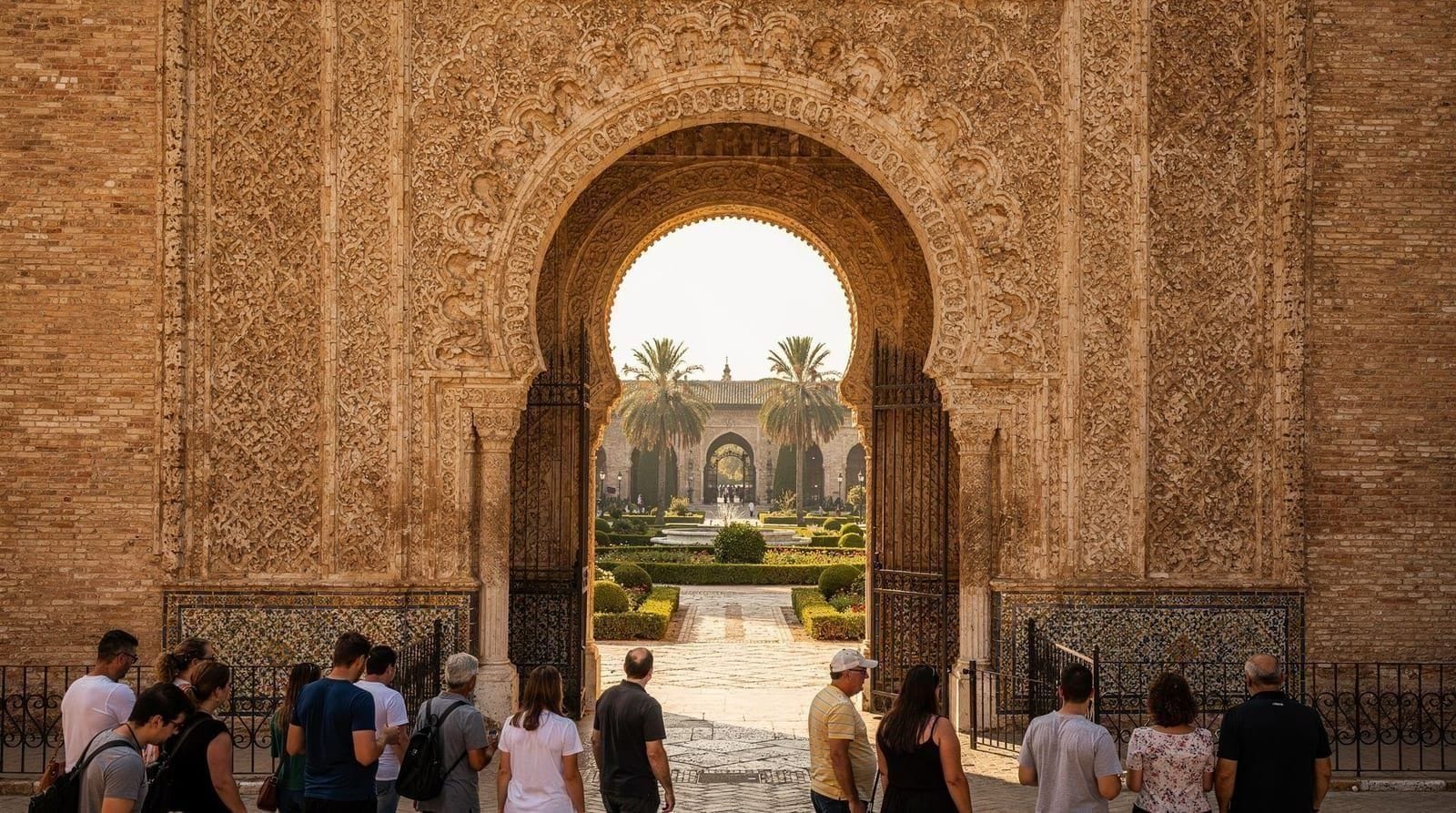
The first time I visited the Real Alcázar, I queued for 90 minutes in direct sun on a Tuesday in April. The queue didn’t move for the first 45 minutes; I later learned this was because the morning’s quota of walk-up tickets had sold out and the attendants were waiting for the first timed-entry batch to clear before releasing a second. The temperature was 28°C and there is no shade on the Calle Romero stretch where the queue extended.
I saw the Alcázar that day, and it was magnificent, and I was too depleted to give it the attention it deserved.
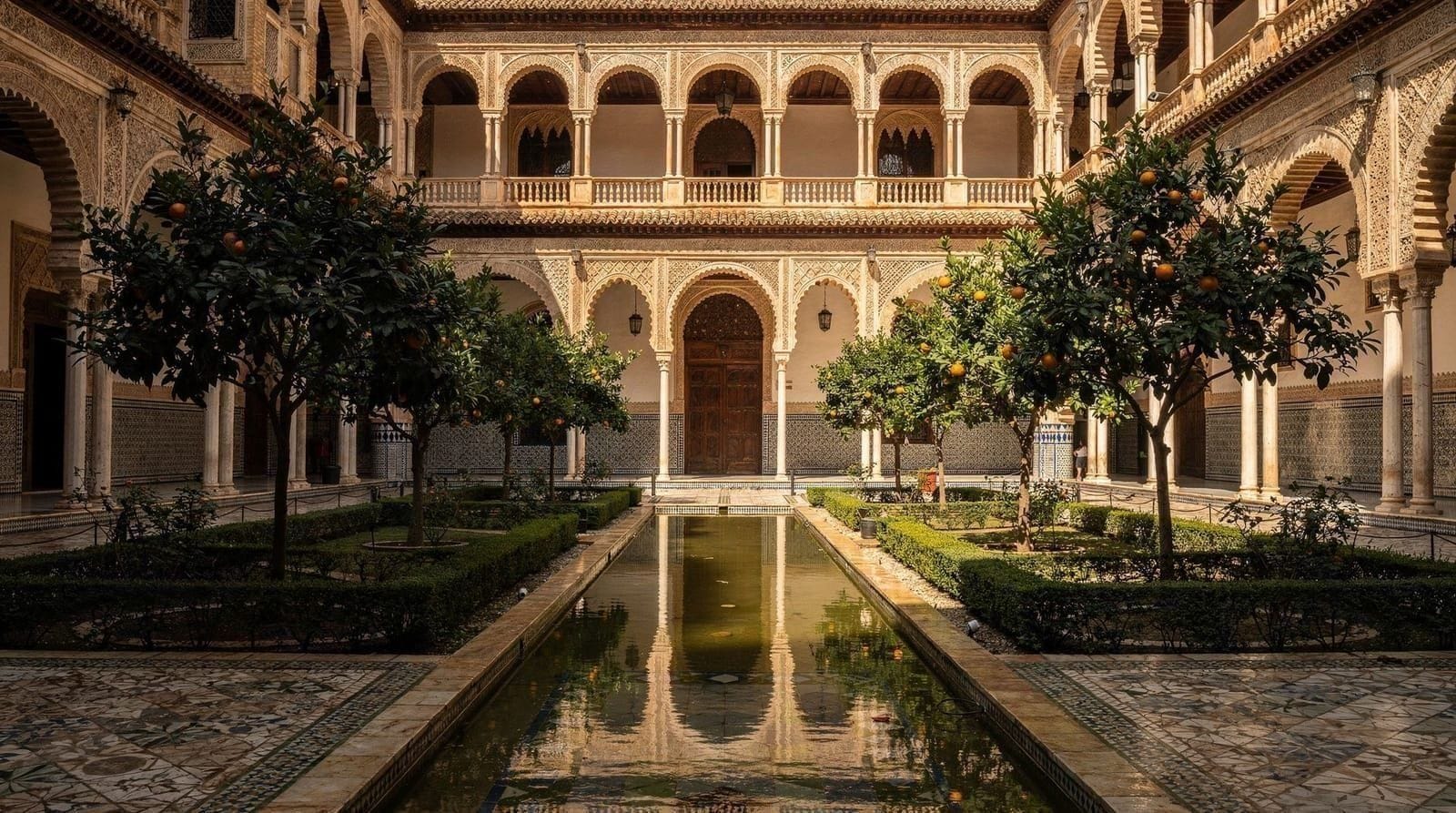
The second time I visited — two years later, same month — I had a 9:30 am timed-entry ticket booked a week in advance. I walked straight in, the palace was in morning shadow, and I had the Salón de Embajadores almost entirely to myself for 15 minutes. The difference was significant.
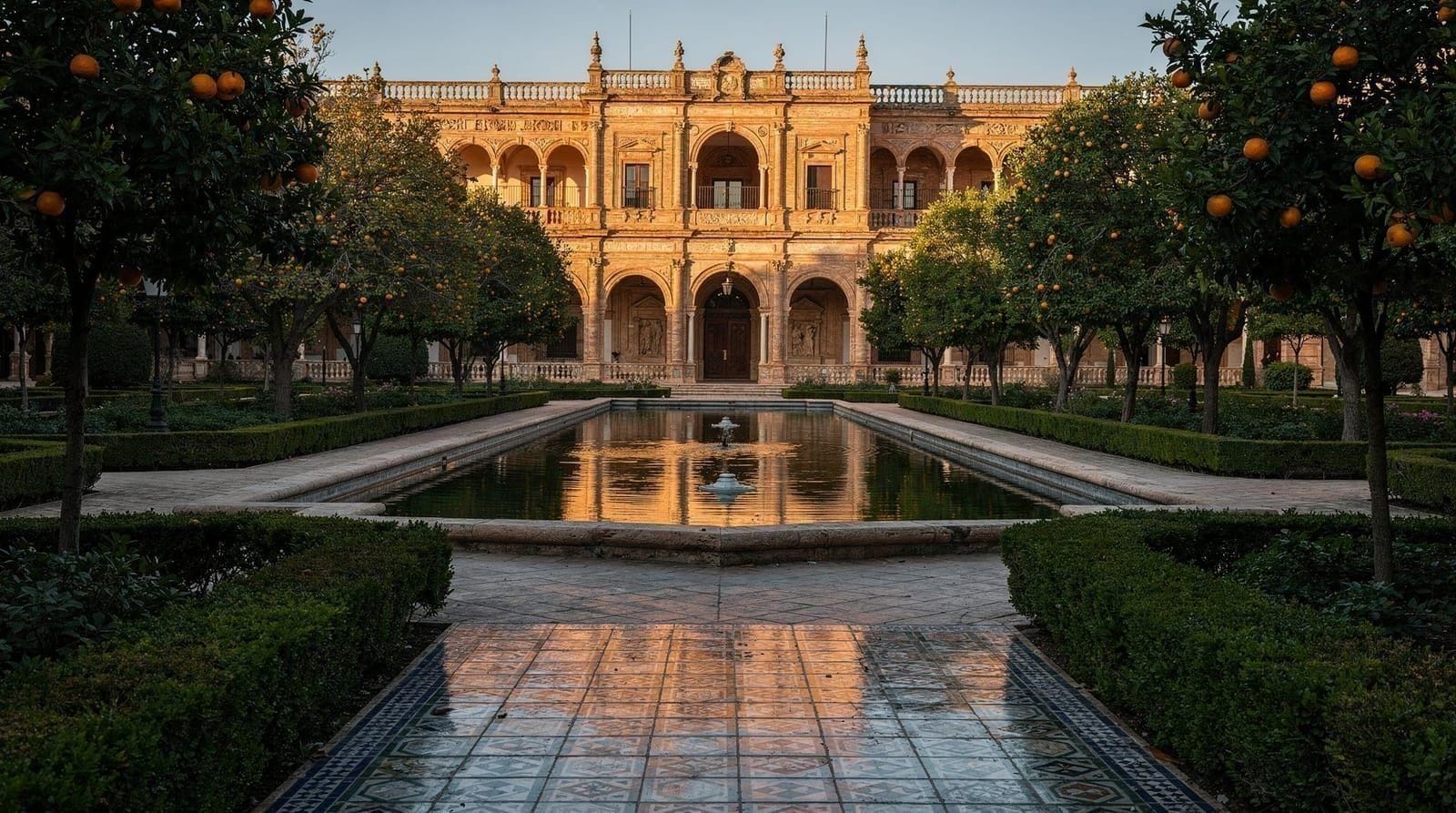
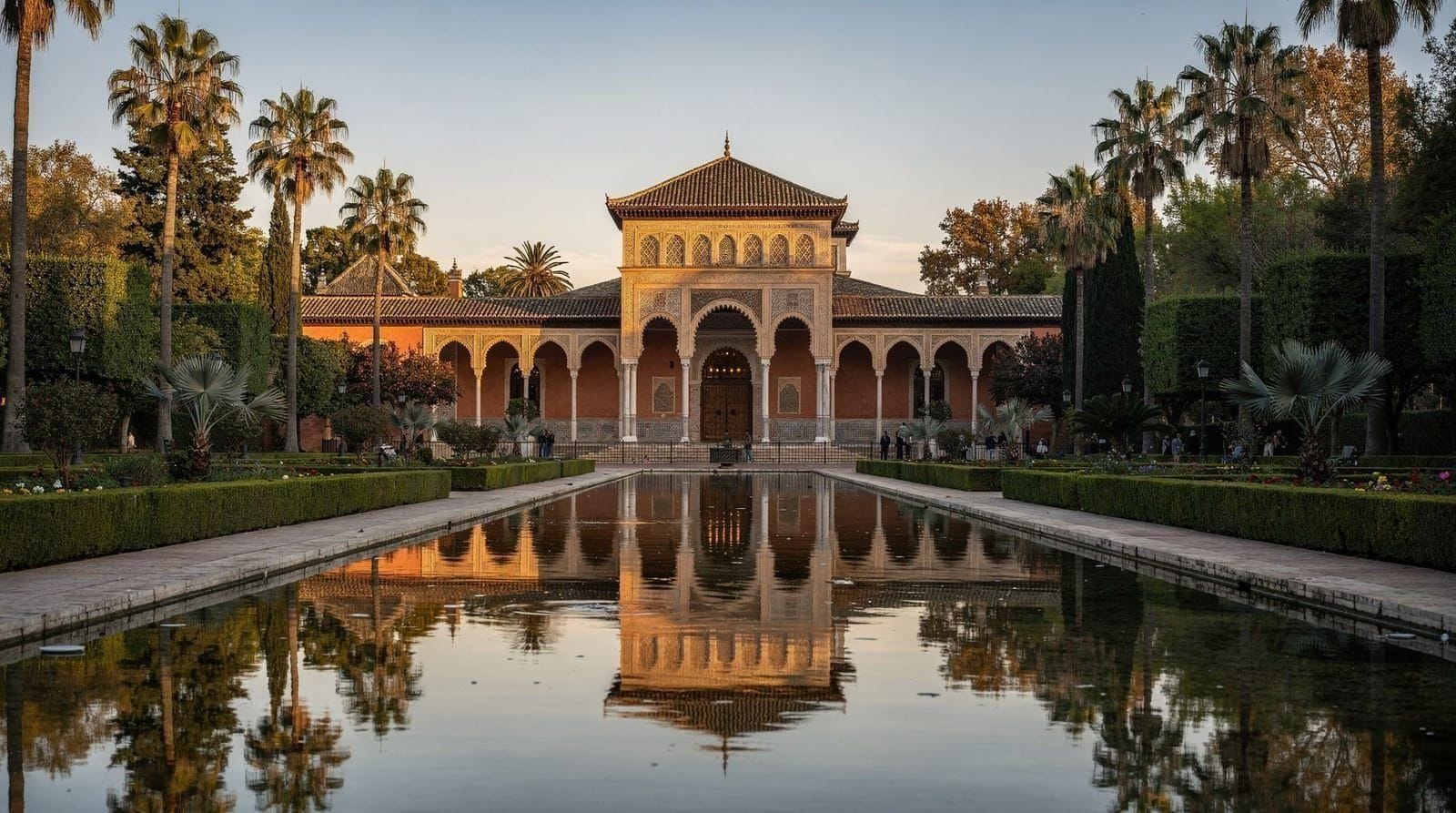
The third time, I went on a Wednesday evening in late April (the Alcázar has extended hours on certain evenings in spring and summer — check the current schedule). The gardens at 7 pm in golden light, with the fountains running and the heat dissipated, was the best of the three.
Here’s what I learned across these three attempts. If you are still deciding how to fit the palace into a wider trip, the Seville first-timer travel tips and the first-timers itinerary show where a morning at the Alcázar sits best in the day.
| Best slot | 9:30 am opening, or evening entry in spring/summer |
| Worst approach | Walk-up entry, March–October |
| Time needed | 2–2.5 hours minimum, 3 hours to go slowly |
| Price | Around €15.50 general admission |
| Booking window | Several days ahead in peak season |
Seasonal timing: month by month
Time of day is only half the picture — the month you visit changes the experience almost as much. Here’s how the visit compares by season, based on our three trips plus conversations with other visitors:
| Season | Crowd level | Notes |
|---|---|---|
| Winter (Dec–Feb) | Low | Shortest queues, cooler gardens, good light |
| Spring (Mar–May) | Very high | Orange blossom, best light, book furthest ahead |
| Summer (Jun–Aug) | High | Brutal midday heat; mornings and evenings essential |
| Autumn (Sep–Nov) | Moderate–high | Good compromise of light and crowds |
For the fuller month-by-month breakdown of crowd levels across the year, the best time to visit the Alcázar guide goes deeper than this trip report can.
The worst approach: walk-up tickets in spring or summer
Between March and October, walk-up tickets to the Alcázar regularly sell out by mid-morning. If you arrive at 11 am without a reservation on a spring or summer day, you may be told the next available entry is two hours away — or that same-day walk-up tickets are fully sold.
The queue itself, even before you reach the ticket window, is exposed. The Alcázar walls don’t provide shade on the south side (the main entrance side), and the narrow street between the wall and the Cathedral is a heat trap.
Book timed Alcázar entry before you arriveIf the whole idea of a pre-booked slot feels confusing, our skip-the-line decoder explains what each kind of ticket actually gets you, and the Alcázar skip-the-line tickets guide compares the options for this palace in particular. Summer visitors should also read the Seville in summer heat guide, because the exposed queue is only one part of the problem in July and August.
The best approach: first slot of the morning
The Alcázar opens at 9:30 am. Book this slot.
At 9:30 am in spring (April is the peak of the orange-blossom season), the palace is still in shadow, the stone floors are cool, and the number of visitors inside has not yet reached the level where you’re navigating through crowds in the Patio de las Doncellas. By 11 am, this changes.
The light in the morning is also better for photography, if that matters to you — the coloured tiles in the Mudéjar apartments catch low-angle light in a way they don’t in the flat overhead light of midday.
Plan two to two-and-a-half hours. You can see the main state rooms, the Alcázar gardens, and the lower palace (the older pre-Reconquista sections) in this time without rushing. Three hours gives you space to go slowly and sit in the gardens at the end.
What most people miss in the Alcázar
The lower palace (Palacio de la Reina/lower levels): Many visitors see the upper Mudéjar palace built by Pedro I in the 14th century and spend their whole visit there. The lower levels — the older Almohad sections — are significantly less crowded and architecturally just as interesting.
The gardens in detail: The Alcázar gardens occupy 7 hectares and most visitors walk through them in 20 minutes without reading any of the historical context. The Jardín de las Flores, the Jardín del Laberinto, and the Galería del Grutesco (the covered gallery built along the original Moorish wall) reward slower exploration.
The Sala de Audiencias in the Alcázar chapel: Contains a 15th-century altarpiece of the Virgin of the Navigators — she holds the cloak under which Columbus and the indigenous peoples of the Americas are depicted sheltering, in what is one of the stranger pieces of colonial-era iconography you’ll see anywhere. It’s in a side room that a significant number of visitors walk past.
The Appartamenti Reali (Royal Apartments): Still used by the Spanish royal family when in Seville. Access is separate from the main palace and included in a premium ticket. I’ve done it once and found the content (18th–20th century royal furniture and paintings) less interesting than the older sections, but the access itself has novelty value.
Evening visits: underrated
In spring and summer, the Alcázar opens for evening visits on some weekdays (regular opening hours end at 7 pm from April to September; evening sessions are special openings, so check the official Alcázar website for dates, hours and prices). These evening sessions are less crowded than morning or afternoon, and the gardens at golden hour — with the fountain water catching the low light — are extraordinarily photogenic.
They’re not widely advertised in the same way, which is why they tend to be less fully booked.
An evening slot also pairs well with the rest of the night. After the gardens, the streets of Santa Cruz are a short walk away, so you can carry straight on to dinner — our Santa Cruz neighbourhood guide and the best tapas bars in Santa Cruz are good places to start. If you would rather watch the sunset from above, the rooftop sunset trip notes cover where we went afterwards.
Combining the Alcázar with the Cathedral
If you’re doing both the Alcázar and the Seville Cathedral in the same trip — most visitors do — the order matters less than the timing. We’d recommend the Alcázar first thing in the morning (9:30 am slot) and the Cathedral and Giralda afterward, once the morning crowds have thinned at the palace but before the Cathedral gets its own midday rush. A combined skip-the-line ticket removes the need to plan two separate booking windows:
Book combined Alcázar, Cathedral and Giralda skip-the-line ticketsFor a longer stay where you’re not rushing between the two, our 3-day Seville itinerary sequences the Alcázar, Cathedral and neighbourhood time across a realistic schedule, and the Alcázar vs Cathedral, which first guide goes deeper into the ordering question specifically.
Practical notes
Price: €15.50 general admission. Audio guides and guided tours cost extra: see the official Alcázar website for current prices.
Booking: Official Alcázar website (alcazarsevilla.org) or via authorised resellers. Book as far in advance as your travel dates allow — spring slots fill several days ahead during peak season.
What to bring: Comfortable walking shoes (some surfaces are uneven), water (especially for garden sections), and a hat for the summer months.
What not to do: Arrive without a reservation in April–September and expect to walk straight in. You won’t.
Getting there: The palace sits right beside the Cathedral in the historic centre, so most visitors arrive on foot. If you are landing in the city and heading straight to the palace with luggage in tow, the airport to city centre guide lays out the options, and a simple bus transfer between the airport and the city centre is the easy way to be settled in before your booked slot. Once in town, the getting around Seville guide explains how little transport you need.
Planning around the visit: The Alcázar fits neatly into a short stay — see the one-day Seville itinerary if you only have a day, or our 48 hours in Seville trip report for how we squeezed it in alongside everything else.
Our full Real Alcázar complete guide covers the history, the architecture in detail, and the ticketing options including the difference between self-entry, audio guide, and guided tours. The best time to visit the Alcázar guide goes deeper into the monthly variation in crowd levels and how to plan around it.
Frequently asked questions about visiting the Alcázar
How far in advance should I book Alcázar tickets?
At least a few days ahead for most of the year; a week or more during April, May, Semana Santa, and the height of summer, when slots fill fastest.
Is the evening Alcázar visit as good as the morning?
In our experience, yes, and for a different reason — the light and heat, not the crowd levels, are the deciding factors. Mornings give you cool stone and low-angle photography light; evenings give you golden hour in the gardens.
How long should I plan for an Alcázar visit?
Two to two-and-a-half hours covers the main state rooms, gardens and lower palace without rushing. Add a third hour if you want to sit in the gardens or linger over the Mudéjar tilework.