Best time to visit the Alcázar: crowds, heat, and booking windows
Seville: Royal Alcázar entry ticket
When is the best time to visit the Alcázar of Seville?
Late February to early March or November offer the best combination: comfortable temperatures (15–22°C), shorter booking lead times, and lower crowds. April and October have ideal weather but require booking 1–2 weeks ahead. July–August is the least crowded but genuinely hot (35–42°C).
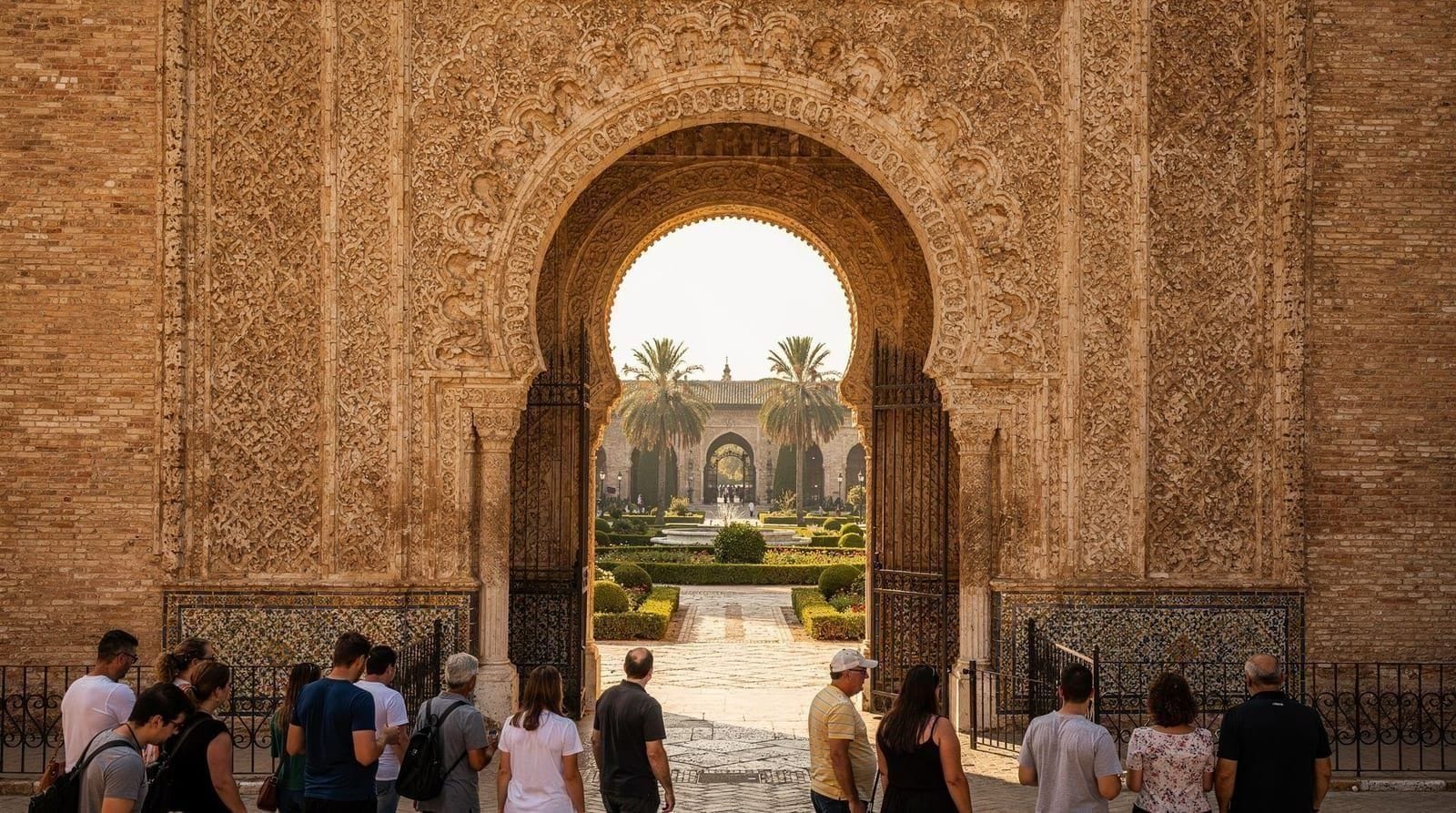
The Alcázar of Seville is open year-round, but the experience of visiting it varies enormously depending on month and time of day. The difference between the 9:30 AM first slot in November and a midday walk-in during a busy April weekend is not just a matter of queuing — it affects what you see, how long you spend in the gardens, and whether the visit feels contemplative or chaotic.
| Sweet spot | Late Feb-early March or November — 15-22°C, low crowds |
| Beautiful but packed | April, October — book 1-2 weeks ahead |
| Least crowded | July-August — hot (35-42°C), book 2-5 days ahead |
| Best time of day | First entry, 09:30 |
| Booking window | 1-3 days (winter) up to 2-3 weeks (Semana Santa) |
Month-by-month crowd and temperature guide
January–February Low season. Temperatures 12–18°C. Booking lead time: 1–3 days or same-day. Crowds: minimal on weekdays, moderate on weekends. The gardens are less verdant but there are fewer people in the rooms. The Salon de los Embajadores is possible to photograph without a crowd of 30 people in the frame. February is arguably the least-appreciated month to visit.
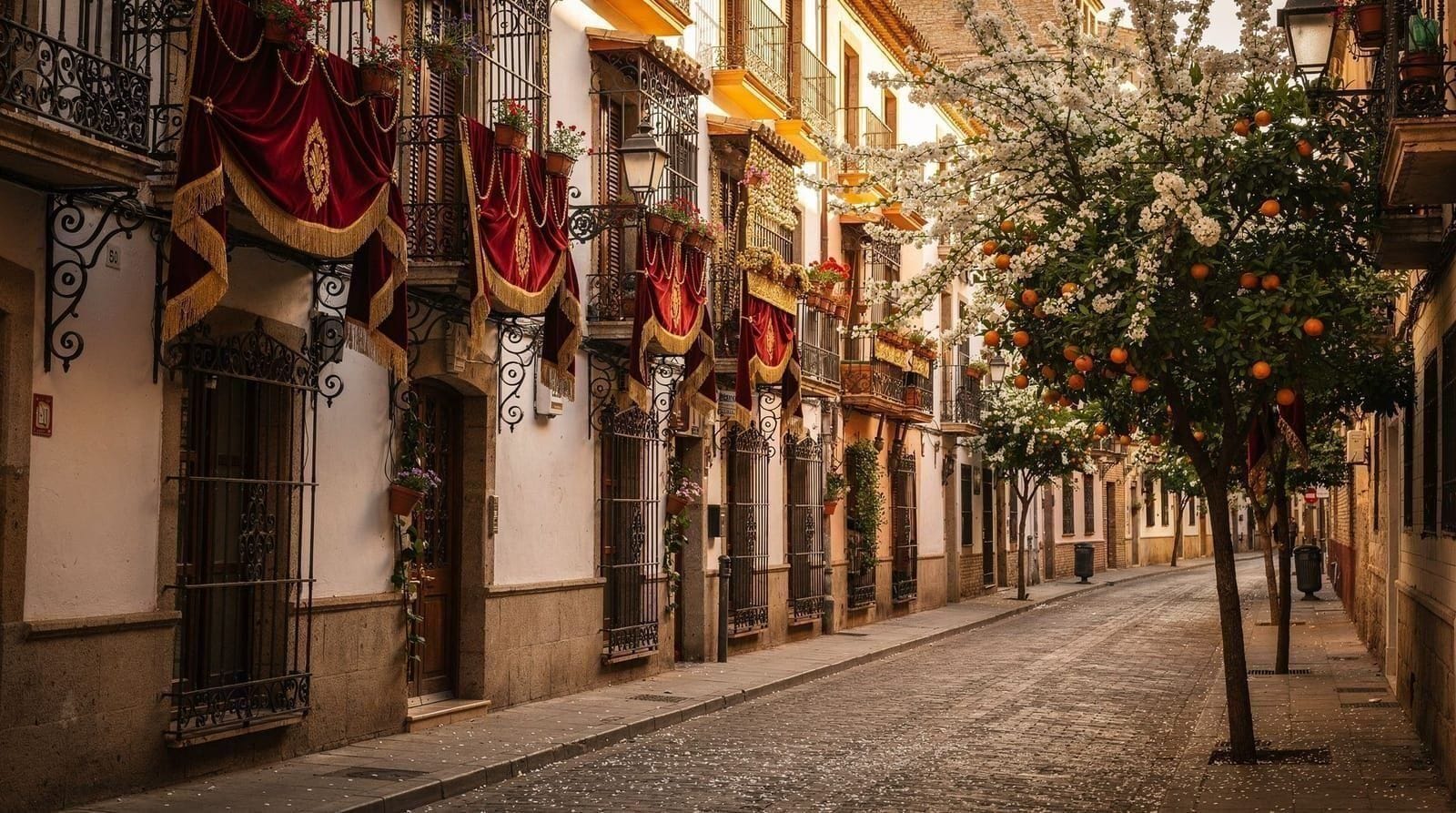
March The shoulder season is beginning. Temperatures 14–22°C. Crowds start building in the second half of March as European school holidays begin. Still manageable with 3–5 days advance booking. The orange trees in the gardens are often in blossom — one of the more memorable sensory experiences the palace offers.
April Peak season begins. Semana Santa falls in late March or April (date varies by year). The week before and after Semana Santa brings the highest demand of the year. Book 2–3 weeks ahead. Temperatures 18–26°C. The weather is genuinely perfect. The crowds are genuinely heavy.
May Sustained high demand through early May, tapering in the second half. Book 1–2 weeks ahead. Temperatures 20–28°C. The gardens are at their most lush. The Feria de Abril (typically late April–early May) brings the city’s overall visitor numbers to a peak, though many visitors are focused on the fairground rather than monuments.
June Crowds begin to drop in the second half of June. Temperatures 25–35°C. Book 3–7 days ahead. Early morning visits are still comfortable; by noon the gardens are uncomfortably warm. The late-afternoon closing time (7 PM in summer) enables a 4 PM visit in relative quiet.
July–August The least crowded months of the year at the Alcázar. This is counterintuitive to many visitors but consistent: extreme heat (35–42°C regularly) puts off many tourists. The rooms are cool — the Alcázar’s architecture was designed precisely to manage Andalusian heat — but the gardens are brutally exposed between 10 AM and 5 PM. Book 2–5 days ahead. The 9:30 AM slot is the clear best option.
September Temperatures begin to drop in the second half (to 28–32°C). Crowds are still manageable — this is one of the most underrated times to visit. Book 3–7 days ahead. The evening visits (Alcázar closes at 7 PM) in September are pleasant: the heat is tolerable and the light quality in the courtyards is excellent.
October Second peak season. Temperatures 20–26°C. Book 1–2 weeks ahead. The Bienal de Flamenco (biennial, even years) attracts additional visitors. October weekends are particularly competitive for timed slots.
November The best combination of accessibility and pleasant conditions. Temperatures 15–22°C. Book 3–5 days ahead. The gardens have less colour but the rooms are uncrowded and unhurried. Early November is arguably the best single week of the year for an Alcázar visit.
December Pre-Christmas period sees moderate visitor numbers. Temperatures 12–18°C. Opening hours shorter (closes 5 PM). A peaceful visit is achievable with minimal advance booking. Navidad decorations in the adjacent plaza add visual interest.
Best time of day: the data behind the advice
The timed-entry system creates predictable crowd patterns. Each entry window starts with a surge of visitors arriving at the gate, then disperses through the palace over 30–60 minutes. The first slot of the day (9:30 AM) starts fresh: no accumulated crowd from a previous window.
By 11 AM, visitors from both the 9:30 and 10:30 windows are present simultaneously in the main courtyards. By noon, the palace is at maximum occupancy across multiple overlapping windows.
The 9:30 AM slot is empirically the best. Not because it is secret — it is the first and most bookable slot — but because the compounding effect of multiple hour-windows has not yet occurred.
Book the 9:30 AM Alcázar slot — first entry of the dayHeat and the gardens: a practical warning
The Alcázar’s gardens are one of the most beautiful aspects of the palace, but they are genuinely dangerous in peak summer without preparation. There is limited shade in several sections. The Estanque de Mercurio (Mercury Pool) area and the Galeria del Grutesco exposed walkway have almost no tree cover.
In July and August, spend the first 30–45 minutes on the gardens immediately after entering (while temperatures are still under 30°C), then retreat to the interior rooms for the heat of the day. The rooms — particularly the Palacio Mudéjar — are architecturally ventilated and noticeably cooler than outside.
Carry water. There is no water fountain inside the palace gardens.
Visiting during Semana Santa
Semana Santa (Holy Week, the week before Easter) is Seville’s most famous annual event. The city is full. The Alcázar is at maximum demand. Processions pass through streets close to the palace, which creates additional foot traffic in the area.
The Alcázar does not have a special Semana Santa programme, but the atmosphere of the city is heightened and the visit takes on a different character from the normal tourist experience. If you plan to be in Seville for Semana Santa, book the Alcázar 3 weeks ahead without exception.
For the full context on Semana Santa planning, see the Semana Santa Seville guide.
Game of Thrones visitors: does timing matter?
The Alcázar served as the Water Gardens of Dorne in Game of Thrones seasons 5 and 6. The specific locations (the Patio de la Montería, the gardens near the Pabellón de Carlos V) are fixed and visible on any visit. The filming locations do not become more accessible or more dramatic at particular times. However, the light quality for photography in the Patio de la Montería is best in morning (9:30–11 AM) when the sun enters from the east.
See the Real Alcázar complete guide for a full breakdown of the palace including the filming locations and architectural context.
Special access windows and events
Free visits: the official Alcázar website only mentions free public visits on days and times set by the visiting commission. Check the official website for any free sessions before planning around one.
Navidad and holiday periods: The Alcázar stays open through most Spanish public holidays. Christmas Day (December 25) and New Year’s Day (January 1) are exceptions — check the official website before planning a holiday-period visit.
Royal family visits: The Spanish royal family uses the Alcázar’s upper apartments, primarily during Semana Santa and state visits. During these periods, some public areas may be closed without advance notice. There is no public schedule for royal visits — check the official website in the week before your visit if you are travelling in peak royal-use periods (Holy Week, late September for the International Flamenco Biennial in even years).
Planning around Seville’s annual events
The timing of your Alcázar visit interacts with the city’s annual event calendar in specific ways:
Semana Santa (Holy Week): The week before Easter is the most intense period in Seville’s calendar. Processions begin the Sunday before Holy Week and run through Easter Sunday. The city fills significantly. Alcázar demand peaks. The area around the Cathedral and Alcázar is affected by processional routes in the evenings — access to the Alcázar entrance area can be complicated by crowds. Book 2–3 weeks ahead. Start very early (9:30 AM first slot) to avoid the peak afternoon crowds that build around the processions.
Feria de Abril: The April Fair runs approximately two weeks after Easter. It is a week-long festival held in the Real de la Feria fairground in Los Remedios — outside the historic centre and some distance from the Alcázar. Alcázar demand is elevated during Feria week but not at the same level as Semana Santa. Book 1 week ahead.
Bienal de Flamenco (even years): The biennial flamenco festival in September and October of even-numbered years (2026 is an even year) brings significant additional visitors to the city. Alcázar demand in October 2026 will be higher than in October 2025. Book 10–14 days ahead for the Bienal period.
Photography timing in detail
The Alcázar is one of the most photographed buildings in Spain, which means the question of when to visit for photography receives more attention here than at most monuments.
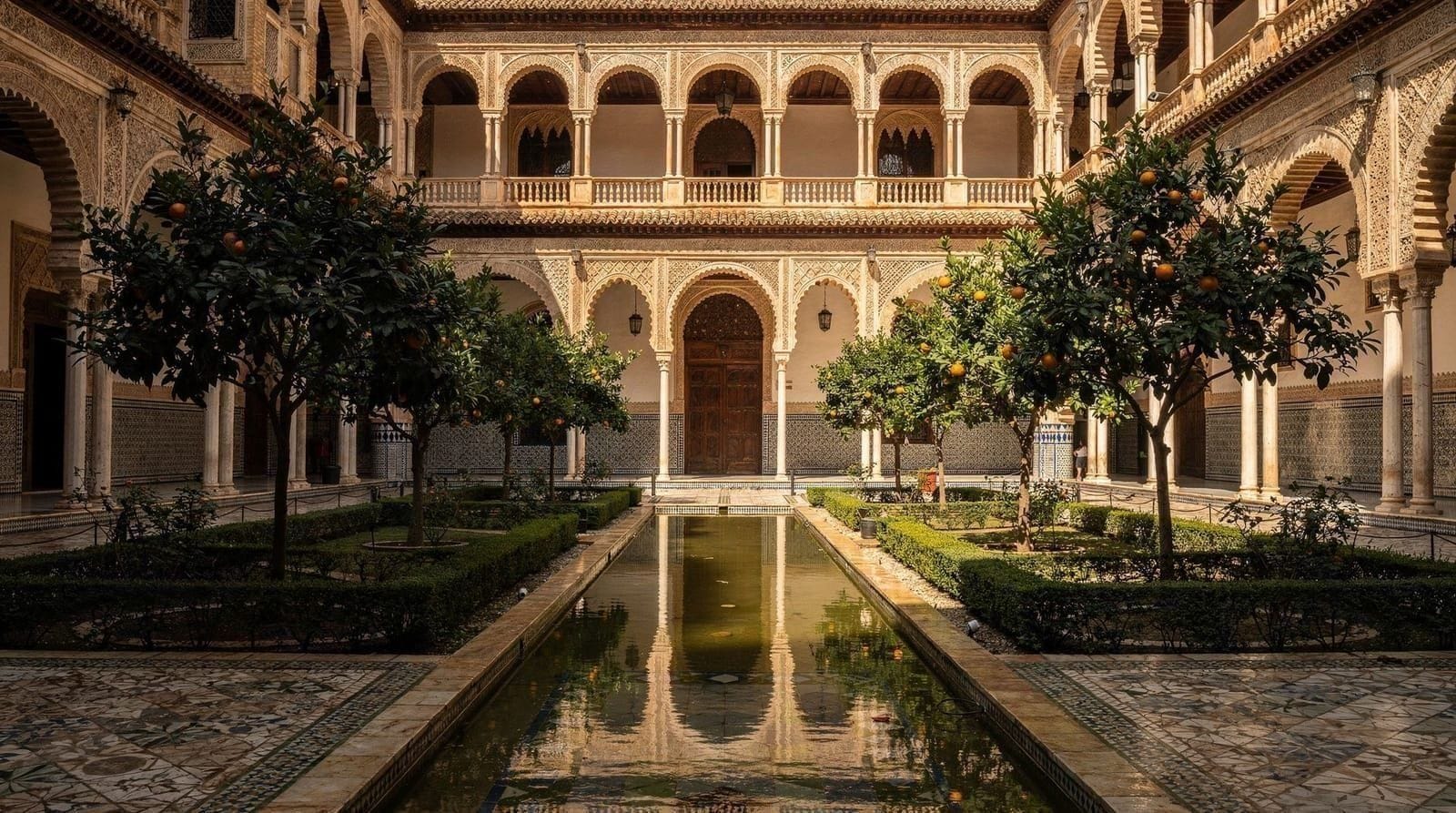
Patio de las Doncellas: Direct sunlight enters the courtyard from above from approximately 10 AM onwards. Before 10 AM, the courtyard is in even shade — better for photography without harsh contrasts. After 11 AM, bright sunlight on some sections and deep shadow on others creates contrast that most cameras handle poorly.
Salon de los Embajadores: The dome receives direct light from its surrounding windows in the late morning. Before 11 AM, the light is more diffuse. Midday is the best time for the interior of this room in terms of light, which creates a conflict with the exterior crowds.
Gardens: Morning light is dramatic on the Galeria del Grutesco raised walkway. The Estanque de Mercurio (Mercury Pool) reflects the surrounding walls best in the morning when the surface is calm before foot traffic creates ripples.
General principle: 9:30–11 AM offers the best compromise of good light and low crowds across the entire site.
How crowd density affects the visit experience
The Alcázar’s timed-entry system creates a specific dynamic: at any given moment, the palace contains visitors from multiple overlapping time windows. By 10:30 AM, you have visitors from the 9:30, 10:00, and 10:30 AM windows simultaneously in the palace (since timed entry only restricts when you arrive, not how long you stay).
The result is that crowd density in the main rooms increases progressively throughout the morning regardless of when you enter. The 9:30 AM visitor who spends 2 hours in the palace leaves at 11:30 AM; by that point they have experienced the building getting progressively busier. The 11:30 AM visitor enters into the peak.
This is a compelling argument for the earliest possible entry rather than the “off-peak” midday or afternoon visits that some guides recommend. There is no low-crowd time in the middle of the day in peak season. The only genuinely quiet window is first thing in the morning.
Month-by-month at a glance
| Month | Temp | Crowds | Book ahead |
|---|---|---|---|
| Jan-Feb | 12-18°C | Minimal-moderate | 1-3 days |
| March | 14-22°C | Building | 3-5 days |
| April | 18-26°C | Peak (Semana Santa) | 2-3 weeks |
| May | 20-28°C | High, tapering | 1-2 weeks |
| June | 25-35°C | Dropping | 3-7 days |
| Jul-Aug | 35-42°C | Lowest of the year | 2-5 days |
| September | 28-32°C | Manageable, underrated | 3-7 days |
| October | 20-26°C | Second peak | 1-2 weeks |
| November | 15-22°C | Best balance | 3-5 days |
| December | 12-18°C | Moderate | 1-3 days |
Combining the Alcázar with the rest of a monument day
Most visitors pair the Alcázar with the Cathedral and Giralda on the same day, since both are within a five-minute walk of each other in Santa Cruz. Deciding which to see first affects your queue exposure at both — see Alcázar vs Cathedral, which first for the reasoning, or consider a combined Alcázar and Cathedral ticket that locks in both entry windows at once. If your Alcázar slot is early, the Cathedral’s quieter late-afternoon window (covered in the Cathedral and Giralda tickets guide) makes a natural second stop. For a broader sense of how the Alcázar visit fits your overall trip length, see how many days in Seville.
Alcázar, Cathedral and Giralda priority access — both monuments, one bookingFitting your timing into the wider trip
Choosing the month is only half the decision; the other half is how the Alcázar sits inside the rest of your plan. If you are still deciding when to travel at all, the best time to visit Seville guide looks at the whole city across the year, while best time to avoid crowds in Seville focuses on the quieter windows beyond this one monument. Anyone heading out in high summer should read the Seville in summer heat guide before settling on a plan, and spring visitors will find useful context in Seville in spring.
On the ticket side, the Alcázar tickets and skip-the-line guide explains how the different entry options differ, and skip-the-line Seville decoded puts them alongside the other major monuments. If you like having the history explained as you walk, a ticket that includes an audio guide for the palace rooms pairs well with an early slot, when the courtyards are calm enough to listen properly.
Once you know your dates, the Seville in 3 days itinerary and the Seville first-timer’s itinerary show where an early Alcázar entry fits among the other sights. A reader’s account of the same question is in our blog post on the best time we visited the Alcázar, and the Santa Cruz neighbourhood guide covers what to do in the streets around the palace before or after your visit.
Frequently asked questions about Best time to visit the Alcázar
What time of day is the Alcázar least crowded?
The 9:30 AM and 10:00 AM opening slots are the least crowded. Crowds build significantly after 11 AM and peak between noon and 2 PM. Late afternoon (after 4 PM) is quieter but the gardens are less enjoyable in high summer heat.How far ahead do I need to book the Alcázar?
In April and May: 1–2 weeks ahead. In October: 5–10 days ahead. In peak summer (July–August): 2–5 days ahead (less crowded than spring). In winter (December–February): 1–3 days, often same-day.Is it worth visiting the Alcázar in summer?
Yes, but plan around the heat. The interior rooms are cooler than outside. The gardens should be done in the first hour of the visit (cooler) or avoided if arriving after 11 AM in July and August. Carry water — there are no fountains with drinking water inside the gardens.When does the Alcázar close for royal family use?
The Spanish royal family uses the upper floors during the Easter/Semana Santa period and occasionally for state events. The main visitor areas are rarely fully closed, but some rooms may be inaccessible during royal visits. Check the official website for any temporary closures before travel.Is the Alcázar open during Semana Santa and Feria de Abril?
Yes, but with high demand and reduced availability during Semana Santa (Holy Week). Book 2–3 weeks ahead for the Semana Santa period. During Feria de Abril (two weeks after Easter), the city is busy but Alcázar crowds are moderate — many visitors are focused on the fairground.What are the Alcázar opening hours in winter vs summer?
April–September: 9:30 AM–7:00 PM. October–March: 9:30 AM–5:00 PM. Last entry is one hour before closing. Winter visits are constrained by the earlier closing time but morning temperatures are very pleasant (14–18°C).Should I visit the Alcázar or the Cathedral first?
There's no fixed rule, but booking the Alcázar for the earliest slot (09:30) and the Cathedral for late afternoon (15:30-17:30) uses the quiet windows of both monuments rather than hitting either at its peak. A combined ticket locks in both entry windows in one booking. See the full comparison at /guides/alcazar-vs-cathedral-which-first/.Does the Alcázar get less crowded later in the afternoon?
Somewhat, but not as much as the morning first slot. Crowd density builds through the morning as multiple overlapping entry windows accumulate visitors, then eases gradually after about 3pm as earlier arrivals leave. Late afternoon is a reasonable second-best option if the 09:30 slot isn't available, but it's still busier than first entry.
Top experiences
Bookable activities with verified prices and instant confirmation on GetYourGuide.