Tangier day trip from Seville: Morocco across the Strait
From Seville: Tangier day trip with local guide and lunch
How do you get from Seville to Tangier?
Organized tours drive from Seville to Tarifa (1h30-2h), then take the FRS or Baleàrea ferry to Tangier Med or Tangier Ville (about 1 hour to Tangier Ville). A full round trip from Seville is a long day (5 hours total travel). Bring your passport — Morocco is not EU territory.
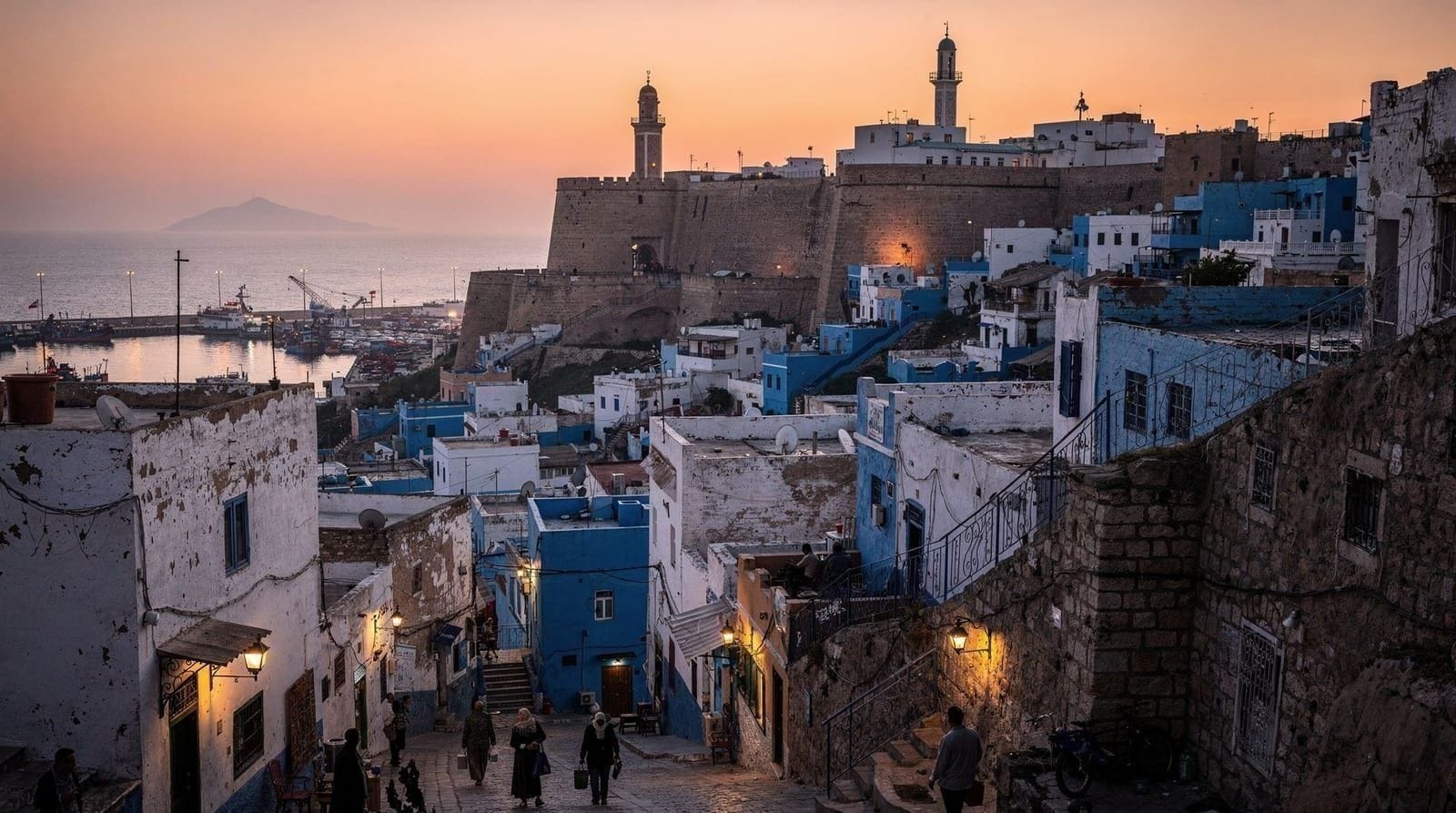
From Seville’s Alcázar garden, on the right day, you can see the mountains of Morocco across the Strait of Gibraltar. The crossing takes about 1 hour by fast ferry. Tangier is a city of 1 million, and the medina — the old walled city — is a world of covered markets, spice stalls, and Moroccan domestic architecture that feels genuinely different from anything in Spain. This is the most ambitious day trip from Seville, and the honest assessment: a day trip gives you a taste, not a full experience. But a taste of Tangier is still remarkable.
| Total travel time | Around 5-7 hours round trip |
| Time on the ground | Around 4-5 hours |
| Cost (independent) | Ferry fare varies by operator (FRS, Baleària), plus transport to Tarifa |
| Bring | Full passport (not an ID card), valid 6+ months |
| Best for | A first taste of Morocco, not a deep dive |
Getting from Seville to Tangier
By organized tour (recommended for a day trip): Tours depart from central Seville hotels by coach. The drive to Tarifa takes approximately 1h30-2h. From Tarifa, the fast ferry (FRS or Baleàrea) crosses the Strait of Gibraltar to Tangier Ville port in about 1 hour. Some tours use Algeciras as the crossing point — the slower ferry to Tangier Med port takes 1.5-2 hours but the crossing is similar in experience.
Total transport time from Seville hotel to Tangier: 2.5-3.5 hours each way. On the ground time in Tangier: approximately 4-5 hours on a standard day trip.
By your own transport: Take the bus or drive to Tarifa (1h30 from Seville). FRS fast ferry from Tarifa to Tangier Ville runs multiple crossings per day; fares vary by operator and season. Book at frs.es. In summer, pre-book — crossings fill with Moroccan diaspora returning home.
From Seville: Tangier day trip with local guide and lunch includedPassport and entry requirements
Passport: Required. EU national ID cards are not accepted for Morocco. Your passport must have at least 6 months’ remaining validity.
Visas: EU, UK, and US passport holders do not need a visa for Morocco for stays under 90 days. Verify your country’s specific situation before travel.
Border control: Spanish exit at Tarifa port, Moroccan entry at Tangier Ville or Tangier Med. The crossing is an active international border — you are entering an African country, not crossing a Schengen internal border. Allow 30-45 minutes for the port and border formalities.
Return crossing: Same process in reverse. Do not miss your return ferry — organized tours handle this, but independent travellers need to be at the port at the right time.
What to see in Tangier
The medina
The medina is the reason to visit. Enter through the Grand Socco (Great Square, officially Place du 9 Avril 1947) and descend into the covered souk streets. The Petit Socco (Souq el-Dakhel, Little Square) is the historic heart of the medina — a small square surrounded by traditional cafés where Mohammed V’s speech calling for independence was broadcast in 1947.
The medina streets divide into specialist sections: textiles, spices, metalwork, ceramics. The sensory experience — light filtering through covered markets, the sound of hammers on copper, the smell of cumin and leather — is unlike anything in Andalusia. This is not a performance for tourists; it is a functioning commercial district.
Without a guide, navigation in the medina is genuinely difficult. The organized tour guide handles navigation and prevents the persistent approaches from unofficial guides. If you’re going independently, use Google Maps offline (download the Tangier medina area before you arrive) and stay confident.
The Kasbah
The Kasbah (fortified citadel) occupies the highest point of the old city. The Kasbah Museum (Musée de la Kasbah, housed in the former sultan’s palace) has archaeological collections from the region — Roman mosaics from Volubilis, Phoenician artefacts, and an ethnographic collection. The courtyard is exceptional.
The Kasbah’s terrace lookout gives views over the Strait — on clear days, the Spanish coast and the Rock of Gibraltar are visible. The best viewpoint in Tangier.
The streets within the Kasbah are residential — the least commercial part of the medina, with quieter lanes and 18th-century architecture.
Café Hafa and the Marshan quarter
Café Hafa is a multi-terraced café on the cliff above the Atlantic, established in 1921 and serving mint tea and coffee to successive generations of Tangier’s intellectual life. The Rolling Stones, William Burroughs, Paul Bowles, and Cecil Beaton all passed through Tangier’s cafés in the mid-20th century; the Beat Generation writers in particular were drawn to the city’s relative openness and cheap living. Café Hafa is genuine, cheap, and has views over the Strait. Allow 30 minutes.
Hercules Caves (Grottes d’Hercule)
14 km southwest of Tangier (taxi required), the Hercules Caves are a coastal cave system at Cap Spartel where the Atlantic and Mediterranean meet. The main chamber has an opening on the sea side shaped like a silhouette of Africa — famous in photographs and genuinely striking in person. Admission minimal.
The caves are too far for a comfortable day trip unless you have your own transport or your tour includes them. Most organized day trips from Seville focus on the medina and Kasbah and may briefly visit Cap Spartel by minibus.
Lunch in Tangier
Moroccan cuisine is excellent and lunch in the medina is one of the day trip’s highlights. Organized tours typically include a traditional lunch in a riad restaurant — couscous, pastilla, tagine, and Moroccan pastries. Independent travellers should:
Restaurant Al Andalus (Petit Socco area): Traditional Moroccan dining, moderate prices, tourist-accessible.
El Morocco Club (Place du Grand Socco): More upmarket, good for a relaxed lunch away from the market bustle.
Medina street stalls: Sfenj (Moroccan doughnuts), harira (tomato and lentil soup), and fresh orange juice from the stalls in the Petit Socco area are excellent and cheap.
Note on prices: Everything in the medina is subject to negotiation in the market stalls. Fixed-price restaurants (clearly marked) are easier for day visitors who don’t want to negotiate every purchase. Most organized tour lunches are pre-paid and included.
Honest assessment of the day trip
The day trip from Seville to Tangier is the most culturally significant on this list — genuinely crossing into a different continent, language, and tradition. For many visitors it is the most memorable day of their Andalusia trip.
The drawbacks:
- The total transport time (5-7 hours round trip from Seville) is very high relative to time in Tangier
- The day trip version of Tangier is necessarily a surface experience — the souk circuit, Kasbah view, lunch
- Weather can cancel the crossing (unusual but possible)
- The persistent approach of unofficial guides and traders in the medina can be exhausting for some visitors
For those who want to go beyond a surface experience: one night in Tangier plus a visit to Chefchaouen (the blue-painted mountain city, 2 hours south) transforms Morocco from a day trip to a journey. But that’s for a different planning conversation.
From Seville: Full-day tour to Tangier with ferry crossingFor the Tangier destination page, see Tangier. For the Gibraltar day trip comparison, see Gibraltar day trip from Seville. For an overview of all day trips, see best day trips from Seville.
Tangier vs Gibraltar: which crossing to choose
Tangier and Gibraltar are the two “leave Spain entirely” day trips from Seville, and they deliver very different experiences. Gibraltar is a shorter, easier day (British territory, no passport border complications beyond a standard check, English-speaking) but culturally closer to Spain than genuinely different. Tangier requires more logistics — an international ferry crossing, a full passport, more travel time — but delivers a far bigger cultural shift for the effort. If you only have room for one non-Spain day trip and want maximum contrast with Andalusia, Tangier wins; if you want something lower-effort and quicker, Gibraltar is the easier choice. Both pale in ground-time compared to closer options — see the day trips from Seville itinerary for how to fit either into a wider week.
How to choose between the tour options
The tours listed on this page share the same basic shape: a coach from Seville, a ferry across the Strait, a guided walk through the medina and a sit-down lunch. The differences are in the details, so read each description before you book. If you want someone else to handle the border, the navigation and the meal, a guided option with lunch included, such as a day trip to Tangier with lunch built into the price, is the simplest way to go. Travellers who would rather keep their own pace in the medina can compare it with the full-day format above and decide how much structure they actually want.
If Tangier is only one stop on a bigger plan, look at a private day that combines Gibraltar and Tangier. A private format suits families, small groups and anyone who dislikes waiting for a full coach, though it asks more of the day than the single-destination tours do. Whatever you choose, book early in busy seasons, since a ferry-based excursion cannot easily add capacity at the last minute.
Planning the day from the Seville side
A trip like this starts the evening before. Lay out your passport, phone charger and a light layer, and decide in advance how you will get to the pickup point. Our getting around Seville guide covers the options for reaching the city centre early in the morning, and the Seville public transport guide explains what runs when you leave before the city has fully woken up. If your accommodation is far from the pickup, our where to stay in Seville page can help you choose a base that makes early departures painless.
Eat something before you leave and carry water. The coach ride is long, the ferry café is not the highlight of the day, and you will want to arrive in Tangier with energy for the medina rather than hungry and irritable. Wear comfortable shoes: the medina streets are uneven and steep in places, and the Kasbah is entirely on foot.
Etiquette and small habits inside the medina
Tangier is used to visitors, but a few habits make the day smoother. Dress modestly, with covered shoulders and knees, which is respectful in a Muslim-majority country and also keeps you comfortable in crowded lanes. Ask before photographing people, especially craftsmen and market sellers, and accept a polite refusal without argument. A friendly greeting in French or Arabic goes a long way, and a calm, unhurried “no, thank you” is the best answer to unsolicited offers.
When you do want to buy something, treat bargaining as a conversation rather than a fight. Decide what an item is worth to you, start lower, smile and be willing to walk away. There is no obligation to buy just because a seller has shown you something or offered tea. Keep small change handy so you are not fumbling with large notes in front of a stall.
Making the most of the time on the ground
With only a few hours in Tangier, order matters. Start with the medina while you are fresh, take lunch when the guide suggests it, and keep the Kasbah views and a mint tea for the end of the day, when the pace slows and you can sit down. Resist the urge to add every sight on the map; two or three places seen properly beat a rushed checklist. The Kasbah and Café Hafa both reward slowing down, and the light over the Strait is often at its best late in the day.
Leave a generous margin before the return crossing. Border formalities, a slow street and a last-minute purchase can all eat into the time you think you have, and the ferry will not wait. Follow your guide’s meeting time exactly, and if you are travelling independently, head back to the port earlier than feels necessary.
Pairing Tangier with the rest of your Andalusia trip
Because Tangier takes a full, tiring day, plan the days around it with care. Slot it between lighter sightseeing days rather than after a night of flamenco, and give yourself a quieter morning the day after. Our Seville day trips itinerary shows how to space excursions across a week, and the Andalusia week from Seville plan gives a wider frame if you are covering several cities. If you are still deciding how long to stay overall, the how many days in Seville guide will help you see where a Moroccan excursion fits.
Travellers who want to compare other long excursions can read the guides to Granada and Córdoba, both of which reward a full day without leaving the country. For a first-hand account of the crossing, read our trip report on crossing to Africa from Seville, and for a gentler alternative with a similar sense of travel, see Tarifa, the departure point itself, where the wind and the view of Africa across the water are part of the experience.
Should you skip Tangier and do Cádiz instead?
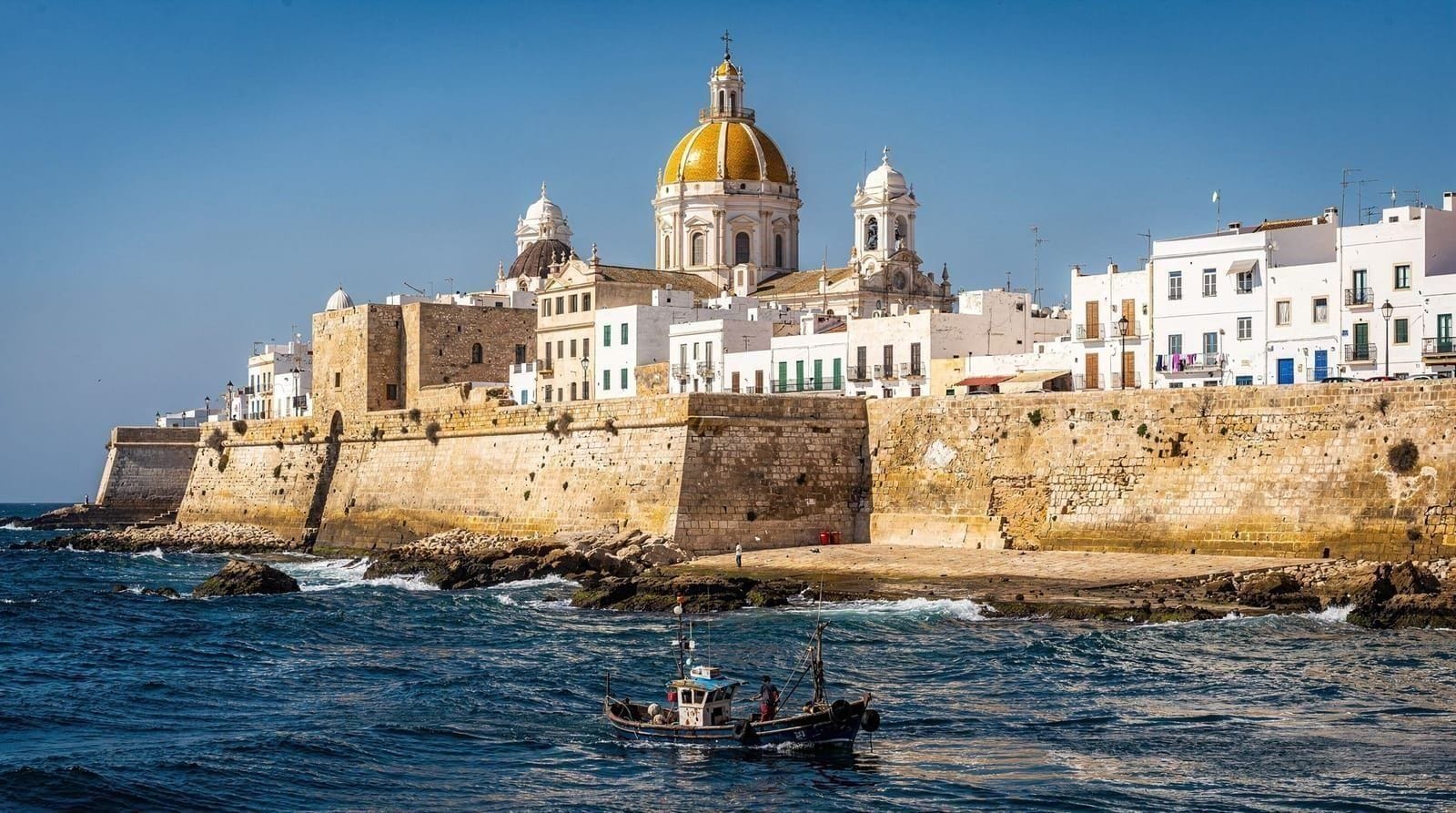
If the logistics of an international crossing feel like too much for your trip, it’s worth being honest that Tangier is optional in a way the closer Andalusian day trips are not. A day trip to Cádiz requires none of the passport, ferry, or border-crossing overhead and still delivers a genuinely different coastal atmosphere from Seville. Tangier is the right choice specifically for travellers who want to say they set foot in Africa and are comfortable with a long, logistically heavier day; it is not a mandatory stop on an Andalusia itinerary, and skipping it to spend that day properly in Ronda or Cádiz is a completely reasonable trade-off.
Frequently asked questions about Tangier day trip from Seville
Is Tangier doable as a day trip from Seville?
Technically yes, but it is genuinely long and tiring. You arrive in Tangier with 3-5 hours on the ground before the return crossing. The medina, Kasbah, and a local lunch are feasible. The Hercules Caves and Cap Spartel require more time. If you can add one night in Tangier, the experience is significantly richer.Do you need a visa for Morocco as a day tripper from Spain?
Most EU passport holders do not need a visa for Morocco for stays under 90 days. Check your country's specific requirements before travelling. A valid passport with at least 6 months' validity is required. An EU national ID card is NOT sufficient for Morocco — you need a full passport.Is Tangier safe for tourists?
Yes, for normal tourist activities. Tangier is a cosmopolitan city used to European visitors. Standard precautions apply: stay aware in the medina (pickpockets exist, as in any major tourist area), decline services from people who approach you unsolicited (unofficial 'guides'), and keep your bag in front of you in crowded streets. Organized tours from Seville include a local guide who handles navigation and most hassle.What currency is used in Morocco?
The Moroccan dirham (MAD). EUR and USD are accepted in tourist-facing businesses but at poor exchange rates. Get dirhams at a bank or ATM in Morocco. Most organized tours include a structured stop or the guide handles currency for the group.What should I expect in Tangier's medina?
The medina (old walled city) is a dense, atmospheric urban space — narrow covered streets, spice stalls, leather goods shops, and craftsmen working in traditional trades. It is designed to be confusing to outsiders (a feature, not a bug — it was a defensive quality). Without a guide, getting lost is certain and persistent. Unsolicited guides will approach you; the cleanest approach is to decline all and navigate by phone GPS.
Top experiences
Bookable activities with verified prices and instant confirmation on GetYourGuide.