Tangier
Cross to Africa from Seville via Tarifa ferry. The medina, the Grand Socco, and how to navigate the day trip without the common pitfalls.
From Seville: Tangier day trip with local guide and lunch
Quick facts
- Best for
- Morocco introduction, medina, culture contrast
- Days needed
- 1 (very long day)
- Getting there
- Bus to Tarifa + ferry, or guided tour from Seville ~3h total
- Currency
- MAD (Moroccan dirham)
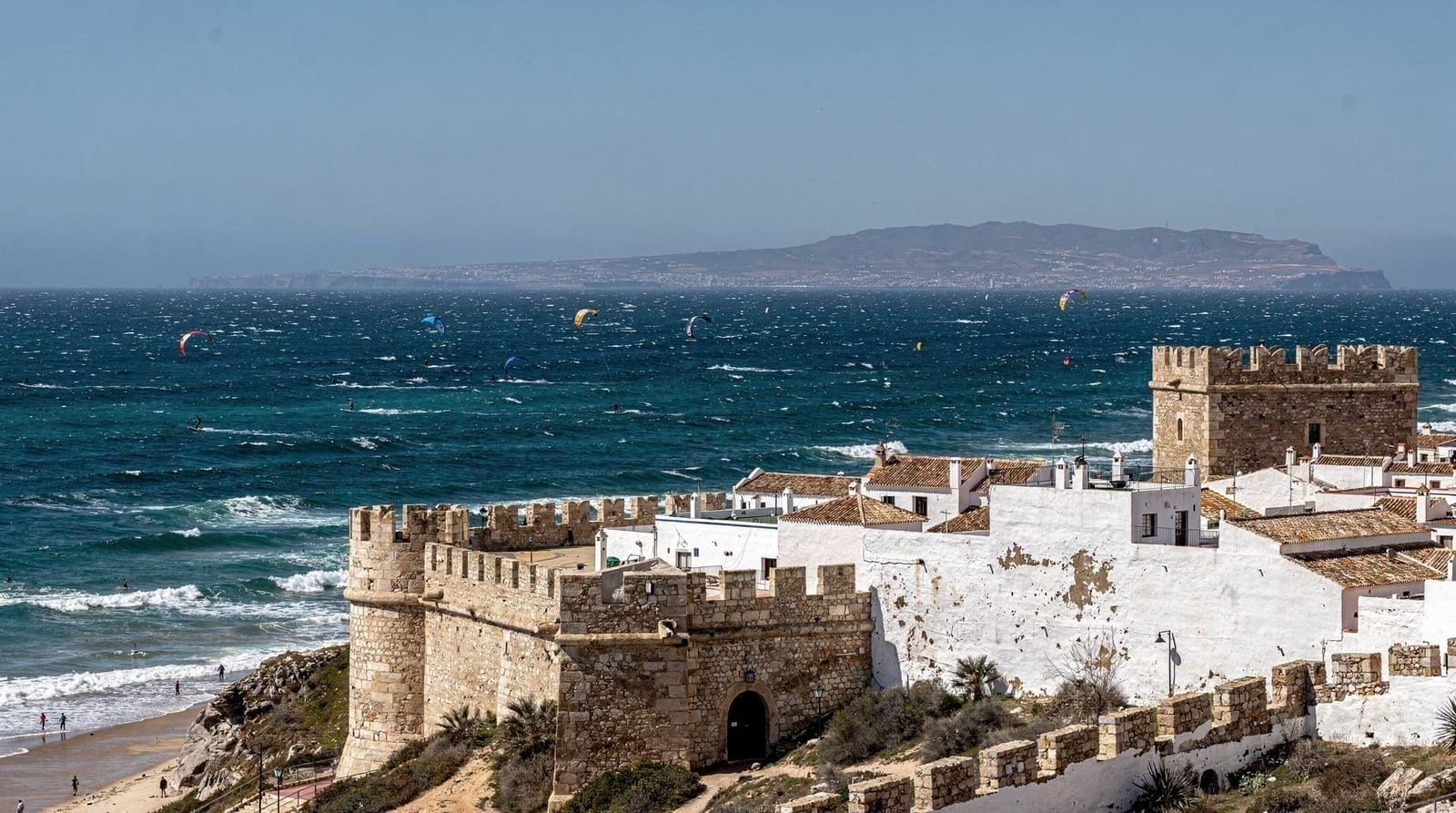
Tangier is 14 km across the Strait of Gibraltar from Tarifa — geographically closer to Seville than Granada. Yet crossing from Spain to Morocco is one of the more disorienting transitions available to a European traveller: an hour-long fast ferry and you are in Africa, in an Arabic-speaking city, paying in dirhams, navigating a medina designed to confuse outsiders.
| Where | Northern Morocco, across the Strait from Tarifa |
| Cost | Ferry fare varies by season and operator (check FRS or Baleària); day tour price varies; budget 300–400 MAD (~€30–40) for food/extras |
| Time needed | Full day, 12–14 hours door-to-door from Seville |
| Getting there | Bus to Tarifa (2h15) + fast ferry (about 1 hour), or guided day tour from Seville |
| Best time | March–May and September–November |
The day trip from Seville to Tangier is popular but not always done well. Most people who have a negative experience either go without a local guide (exposing themselves to aggressive touting and overpriced everything) or arrive with expectations calibrated to the sanitised package-tour version and find the real Tangier confronting. The approach matters. If you are still deciding whether Tangier is the right day trip for your itinerary, see the Tangier day trip from Seville guide and the best day trips from Seville guide for how it compares to Gibraltar, Córdoba, and the white villages.
Tangier as a destination
Tangier spent most of the 20th century as an International Zone — controlled jointly by Spain, France, the UK, and other powers from 1923 to 1956. This status attracted writers (Paul Bowles, William Burroughs, Allen Ginsberg, Tennessee Williams), artists, spies, criminals, and exiles. The city’s international bohemian period has left traces in the architecture of the old European quarter (ville nouvelle) and in the bookshops and cafés of the medina.
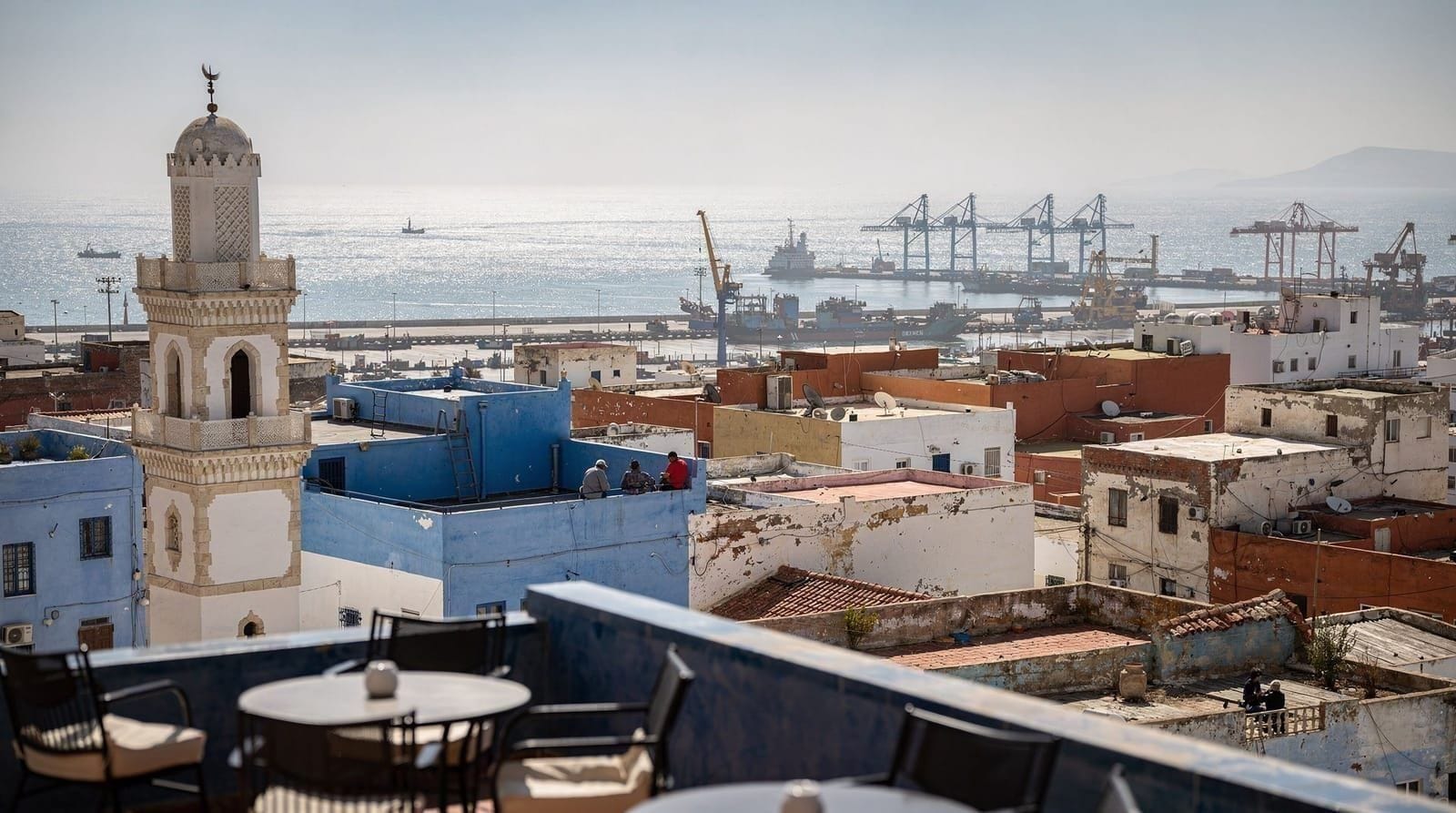
The modern Tangier has been significantly cleaned up and developed under King Mohammed VI — the port area, the Corniche, and several public spaces have been rebuilt in the 2010s. The older parts of the city — the medina, the Kasbah, the Grand Socco — retain more of the traditional character, though the touting of “unofficial guides” in the medina remains intense.
What to see
The Kasbah and Sultan’s Palace: At the top of the medina, the Kasbah quarter is the oldest part of Tangier. The Dar el Makhzen (Sultan’s Palace, now the Museum of Moroccan Art and Antiquities) is inside the Kasbah walls. The museum charges a small entry fee (check the current price and opening days on site). The Kasbah walls and the views over the Strait are the best in Tangier.
The medina: The medina is not large by Moroccan standards — you can walk through its main arteries in an hour. The tangle of side streets is where vendors sell leather goods, spices, and ceramics. The quality and pricing vary enormously; without a local guide or strong negotiating skills and some Moroccan market experience, you are likely to pay tourist prices.
Grand Socco (Place du 9 Avril 1947): The main market square at the medina entrance, named for the date a speech by Mohammed V here helped accelerate Moroccan independence. The square links the old and new cities and has cafés, street vendors, and constant activity.
Café de Paris (Boulevard Pasteur): A Belle Époque institution in the ville nouvelle, where Paul Bowles drank tea and various diplomats and writers met during the International Zone period. Still a café, still atmospheric, drinks at reasonable prices.
Cap Spartel and Caves of Hercules: 14 km west of Tangier, where the Atlantic meets the Mediterranean and the mythology says Hercules rested after completing his labours. The caves are open to visitors (check the entry fee on site). This is only practical with a car or taxi, and not usually included in one-day tours.
Fitting Tangier into a longer Andalusia stay
Because the day is so long, Tangier works best when the rest of your week is calm. Base yourself in Seville, and plan the crossing on a day when nothing else is booked. The Seville day trips itinerary shows how to space out the longer excursions, and the Andalusia week from Seville gives a rhythm in which a Moroccan day fits between slower days. If you only have a short stay, the how many days in Seville guide will help you decide whether a trip of this length is realistic at all.
Travellers who prefer something gentler on the same side of the Strait often choose Cádiz or Córdoba instead, both of which are covered in the Cádiz day trip guide and the Córdoba day trip guide.
Comparing Tangier with the other Strait crossing: Gibraltar
Tangier and Gibraltar are the two cross-border day trips commonly paired with a Seville base, and travellers often ask which to prioritise if they can only do one.
| Tangier | Gibraltar | |
|---|---|---|
| Culture shift | Major — different continent, language, currency | Minor — British territory, English spoken |
| Travel time from Seville | ~12–14 hours door-to-door | ~5–6 hours door-to-door |
| Passport needs | Passport or EU ID, check Moroccan entry rules | Passport required, UK-issued may apply |
| Best for | A real taste of Morocco | An easy half-day novelty stop |
Tangier requires more commitment but delivers a genuinely different experience; Gibraltar is easier logistically but comparatively thin as a destination in its own right. Some operators run combined itineraries.
Combined Gibraltar and Tangier private day trip from SevilleThe guide question
In Tangier, “unofficial guides” at the port and medina entrance will offer their services — often claiming to be official, often beginning helpfully and transitioning to pressure-selling situations at a carpet shop or restaurant where they receive commission. This is not unique to Tangier but it is concentrated there.
The honest advice: either hire an official licensed guide (book through your hotel or a reputable agency before arriving), join an organised tour from Seville that includes a local guide, or accept that you will spend energy declining approaches. Going completely independently without any local context is possible but is more stressful than rewarding for a first visit.
Tangier day trip from Seville with local guide and lunchGetting there from Seville
Option 1 — Organised tour from Seville (recommended for first-timers): Door-to-door, includes the bus to Tarifa, the FRS/Baleàlia fast ferry, and a licensed local guide in Tangier plus lunch. The full trip from Seville is 12+ hours. Most tours include lunch, which removes the restaurant-selection problem.
Full-day Tangier tour from SevilleOption 2 — Independent via Tarifa ferry: Bus from Seville to Tarifa (2h15), then FRS or Baleàlia fast ferry from Tarifa to Tangier Port (about 1 hour; fares vary by season and operator). You arrive at the Tanger-Ville ferry terminal in the city centre. This is cheaper and more flexible, but requires significantly more self-management on arrival.
Tangier day trip from Seville with lunchNote: there are two Tangier ports — Tanger-Ville (city centre, for the Tarifa ferry) and Tanger-Med (45 km east, for many car ferries from Spain). Make sure your ticket is for Tanger-Ville if doing a day trip on foot.
Practical logistics
Passport: Required. Gibraltar is also British territory and may require a UK-issued passport (see Gibraltar), but Tangier requires only your national passport or EU ID card (check current Moroccan entry requirements for your nationality before travelling).
Currency: Moroccan dirham (MAD). As of 2026, approximately 10.5 MAD per EUR. Cards are accepted at some restaurants and tourist shops in the medina but not universally. Bring cash — a few hundred dirhams for a day trip is sufficient (€40–50 equivalent). There is no point changing money at the port — rates are poor.
Timing: If doing the trip independently, take the first ferry of the day from Tarifa. You want maximum time in Tangier before the return. FRS runs up to 8 departures daily in summer; check current timetable at frs.es.
What to eat: The lunch included on organised tours is typically a set menu at a restaurant used to tourist groups — adequate but not remarkable. If going independently, eat in the medina at one of the restaurants around the Grand Socco (Café Central, Restaurant Mamounia) rather than at the port restaurants, which are overpriced.
Before you leave Seville
A little preparation makes the day smoother. Check your passport or ID the night before, load offline maps, and keep your cash split between pockets. If you are heading to the bus station early, the getting around Seville guide explains the local transport options, and the Seville packing list is a useful reference for comfortable shoes and layers, which matter more in a medina than you might expect. Read the common mistakes in Seville too, since several of the same habits, like accepting help from strangers, apply on the other side of the Strait.
Honest assessment
Tangier on a day trip is a real introduction to Morocco, not a facsimile. The medina is genuinely foreign, the touting is real, the Kasbah views are excellent, and the café culture has a particular atmosphere that the International Zone history layered over the Moroccan base.
It is also a tiring day: Seville to Tarifa, ferry, arriving in a foreign country, 4–5 hours of navigating an unfamiliar city, ferry back, return to Seville — often 14 hours door to door. For travellers who want more than a surface encounter with Morocco, it is worth planning a dedicated Moroccan trip. But as an introduction, or as a trip for travellers who cannot get to Morocco separately, the day trip works. One traveller’s first-hand account of crossing to Africa from Seville is worth reading before you book, for a sense of the pacing and what surprised them.
Frequently asked questions about the Tangier day trip from Seville
How long is the journey from Seville to Tangier?
Approximately 2h15 from Seville to Tarifa by bus, then about 1 hour by fast ferry. Total transit time each way is around 3 hours. A full day trip from Seville is 12–14 hours door to door.
Do I need a visa to visit Morocco from Spain?
EU, UK, US, and most western passport holders do not need a visa for Morocco for stays under 90 days. Check the official Moroccan government entry requirements for your specific nationality before travelling.
Is Tangier safe for tourists?
The medina and tourist areas are generally safe, though petty theft and aggressive touting are real issues. Pickpocketing is the main risk, concentrated around the port and medina entrances. Keeping valuables secure and firm but polite declinations of unsolicited guides eliminates most problems.
What currency should I bring to Tangier?
Moroccan dirham (MAD). Exchange euros to dirhams at a bureau de change in Tangier city (avoid port changers — poor rates). Bring cash for the medina; cards are accepted at fewer places than in Spain. Budget around 300–400 MAD (€30–40) for food, entry fees, and small purchases.
Can I visit Morocco from Gibraltar instead of Tarifa?
No. Gibraltar does not have a Morocco ferry service. The only crossing point for the Tarifa-Tangier route is from Tarifa port. There are other crossings further east (Algeciras to Ceuta, Almería to Nador) but these do not serve Tangier.
Is a day trip enough time for Tangier?
Barely adequate. A day gives you the Kasbah, a walk through the medina, the Grand Socco, and lunch. For a deeper experience of Morocco, even Tangier specifically, a night’s stay is better. But as an introduction to Morocco while based in Seville, the day trip format is workable.
Should I book an organised tour or go independently to Tangier?
For first-time visitors, an organised tour with a licensed local guide is the more reliable choice — it removes the touting problem, the ferry-timing logistics, and the restaurant-selection guesswork in one booking. Independent travel via the Tarifa ferry is cheaper and more flexible, but requires confidence navigating an unfamiliar city with limited Arabic or French and no local support.
Top experiences
Bookable activities with verified prices and instant confirmation on GetYourGuide.