Nervión neighborhood guide: Seville's modern business and shopping district
Seville: Alcázar skip-the-line tickets and guided tour
What is the Nervión neighborhood in Seville?
Nervión is Seville's modern business and residential district east of the historic center. It has the Ramón Sánchez-Pizjuán stadium (Sevilla FC), large shopping centers, and good transport links. It suits visitors who prefer a quieter, more modern base than Santa Cruz — but the major monuments require a 20-25 minute walk or metro ride.
Nervión is the neighborhood that most travel guides to Seville mention briefly and move on from quickly, because it does not have the visual drama of Santa Cruz or the local character of Triana. This is fair — Nervión is Seville’s business and residential east side, developed in the 20th century, without the architectural heritage or the tapas bar density of the historic neighborhoods.
| Where | East of the historic centre, across Parque de María Luisa |
| Cost | Lower accommodation prices than Santa Cruz |
| Getting there | Metro line L1 (Nervión station); 20-25 min walk through the park |
| Best for | Business travelers, football fans, budget-conscious families |
| Main draw | Ramón Sánchez-Pizjuán stadium (Sevilla FC) |
Understanding Nervión honestly is still useful for visitors: it is a legitimate base option for certain types of travelers, it is where the city’s main football stadium is located, and it is where local Sevillanos live and shop in a way that is completely different from the tourist city across the park.
What defines Nervión
Nervión developed in the early 20th century as Seville expanded eastward from the historic center. The neighborhood is separated from Santa Cruz and the old city by the Parque de María Luisa and the Plaza de España — a five-minute walk through the park bridges the gap, but the character changes immediately at the park’s edge.
The built environment is primarily mid-20th century residential: apartment blocks, wide avenues, grid-pattern streets. No winding medieval lanes, no hidden plazas, no orange-tree-lined alleys. This is a feature for visitors who find the historic center claustrophobic and overrun; it is a deficit for those seeking the visual texture of old Seville.
The Ramón Sánchez-Pizjuán stadium
Nervión’s most visited attraction is the Ramón Sánchez-Pizjuán stadium, home of Sevilla FC (one of Spain’s major clubs and a consistent European competition presence). The stadium seats approximately 43,000 and is a 20-minute walk from the historic center.
Attending a match: Sevilla FC plays in La Liga and regularly in European competition. Match tickets are available through the club website or through ticket agencies; home matches against major opponents sell out quickly. The atmosphere at a Sevilla match is intense — the club has a passionate supporter base and a history of European success that makes even routine league matches significant in the local imagination.
Stadium tours: When no match is scheduled, guided tours of the stadium are available (check the club website for current hours and prices). The tour covers the dressing rooms, the tunnel, the pitch, and the club museum.
Rivalry note: Seville has two major clubs — Sevilla FC and Real Betis (whose Estadio Benito Villamarín is in the Heliópolis district, south of the historic center). The Seville derby (Sevillano Derby) between them is one of the most intense rivalries in Spanish football.
Shopping in Nervión
The Nervión Plaza shopping center is the largest shopping center in central Seville. It contains the standard Spanish retail chains, a food court, a cinema, and a supermarket. Useful for practical shopping (the supermarket) and for wet-weather activities; not a destination for visitor shopping.
The Calle Luis de Morales and surrounding commercial streets have independent shops serving the local residential population: pharmacies, banks, local food shops, household goods. This is not tourist shopping but functional everyday retail.
Eating in Nervión
Nervión has a range of neighborhood restaurants serving the local population — office workers at lunch, residents in the evening. The food is competent and priced for the local market rather than tourists.
What Nervión does not have: the density of exceptional tapas bars that the historic center offers. The Alameda de Hércules area (with Eslava and El Rinconcillo) is 20-25 minutes’ walk from the heart of Nervión; Triana is 30 minutes’ walk.
For visitors staying in Nervión and eating nearby: neighborhood restaurants serving the menú del día (fixed lunch menu, typically €10-14) are the best-value food option. The side streets off Calle Porvenir and Avenida de Eduardo Dato have several options.
Transport from Nervión
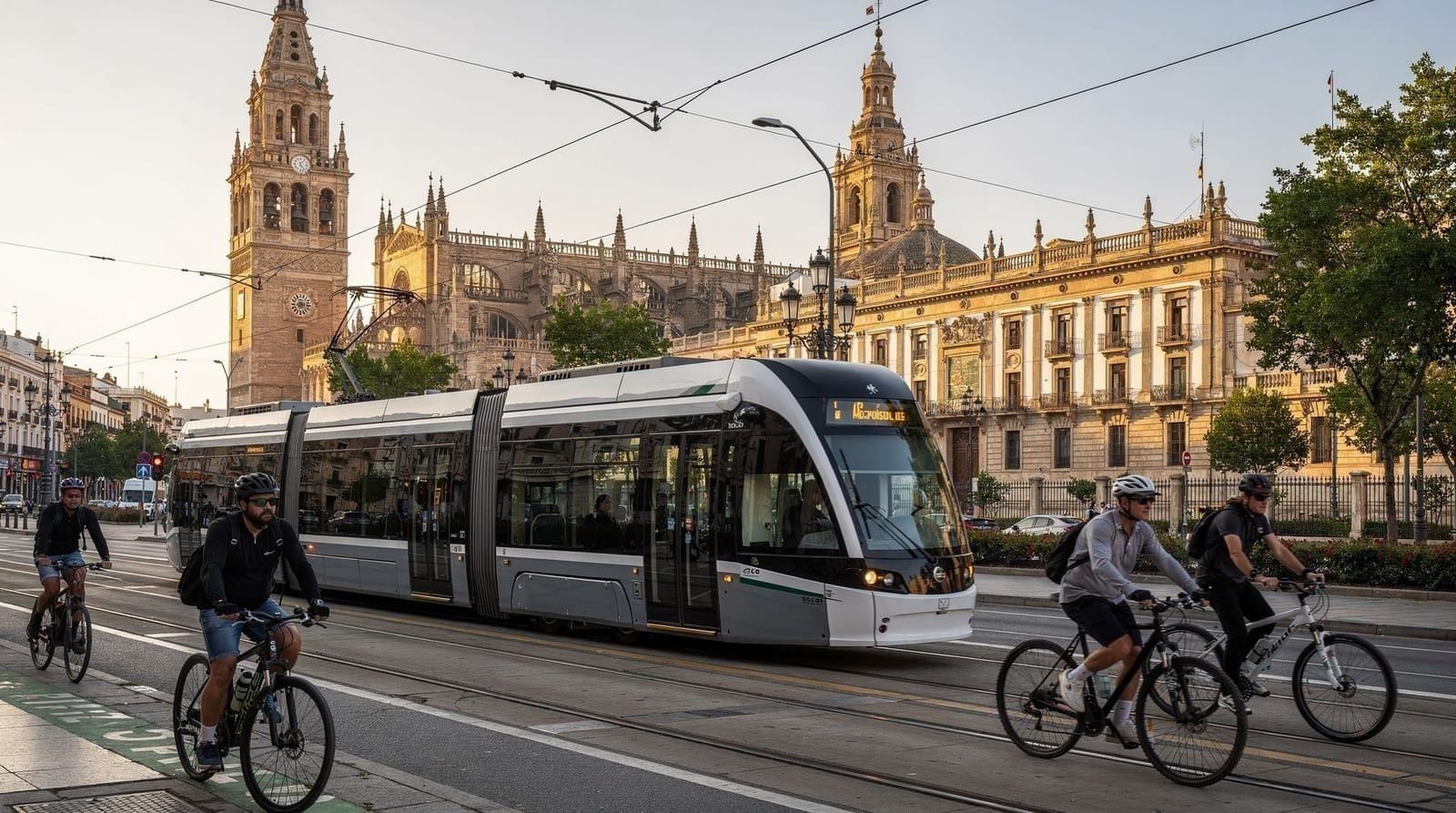
Nervión is on the metro line (L1), which connects to the historic center. The relevant station is Nervión, one stop from Puerta Jerez or two stops from the Prado de San Sebastián transport hub.
Bus connections are good; multiple lines run between Nervión and the Cathedral/Alcázar area. Walking to the historic center through the Parque de María Luisa takes 20-25 minutes and is a pleasant route through the park.
Who should stay in Nervión
Nervión suits:
- Business travelers whose meetings are in the modern business district east of the center
- Football fans attending matches at the Sánchez-Pizjuán
- Budget-conscious visitors who want lower accommodation prices than Santa Cruz and do not mind the 20-minute walk to the monuments
- Families who prefer the quieter atmosphere and larger apartment options available in this area
Nervión is less suitable for visitors whose primary interest is the historic city, tapas culture, or neighborhood character — for those visitors, Santa Cruz, El Arenal, or Triana are better bases. See the full analysis in where to stay in Seville and best neighborhoods in Seville.
Nervión as a base, compared:
| Nervión | Santa Cruz | Triana | |
|---|---|---|---|
| Character | Modern, residential | Historic, tourist-dense | Historic, local |
| Distance to monuments | 20-25 min walk/metro | Walking distance | 15-20 min walk |
| Accommodation cost | Lower | Higher | Mid-range |
| Best for | Football fans, business travellers, budget families | First-time visitors prioritising walkability | Visitors wanting local tapas culture without the premium |
For a neighbourhood with more of Nervión’s local, everyday character but closer to the historic quarter, see the Triana neighbourhood guide.
The Parque de María Luisa: the connection point
The most important fact about Nervión’s relationship to the historic center is the Parque de María Luisa — a 34-hectare park that sits between the neighborhood and the old city. Walking through the park to the Plaza de España (a 15-minute walk from Nervión) and then into the historic center is a genuinely pleasant route.
The Plaza de España is directly at the park’s northern end — an enormous semi-circular complex built for the 1929 Ibero-American Exhibition, with fountains, ceramic tile alcoves representing every Spanish province, and a moat with rowing boats. It is one of Seville’s most spectacular architectural set pieces and is on the route between Nervión and the historic center. See the Plaza de España guide.
For practical navigation in Seville beyond the neighborhoods, see getting around Seville.
Sevilla FC vs Real Betis: what a visitor should know
Nervión’s identity is bound up with Sevilla FC in a way that’s worth understanding even if you’re not attending a match. The club has a genuinely serious European pedigree — multiple UEFA Europa League titles among them — and the atmosphere at the Sánchez-Pizjuán on a big match night is one of the more intense experiences the city offers outside Semana Santa and Feria. Real Betis, based across town at the Benito Villamarín in Heliópolis, has a fiercely loyal but historically less trophy-laden following; the rivalry between the two clubs runs deep in local identity, and asking a Sevillano which side they support is a genuinely revealing question about which part of the city they consider home.
If you’re not attending a match but want a sense of the club without a ticket, the stadium tour (when no match is scheduled) covers the dressing rooms, tunnel, and pitch, and is a reasonable way to get a feel for the scale of the operation in under an hour.
A realistic day if you’re based in Nervión
Morning: Coffee and tostada at a local bar on Calle Luis de Morales — genuinely local prices, no tourist markup.
Midday: Walk through Parque de María Luisa toward the historic centre (20-25 minutes), stopping at the Plaza de España en route.
Afternoon/evening: Alcázar, Cathedral, or Santa Cruz as planned, then either return to Nervión for a quieter dinner or stay in the centre for the evening.
Match day exception: If Sevilla FC or Betis are playing, build the day around kick-off time rather than the historic centre — arrive at the stadium area at least an hour early, as the surrounding streets fill with supporters and traffic changes.
Making the commute work for you
The honest trade-off of staying in Nervión is that every sightseeing day starts with a commute. The way to make that painless is to plan days in clusters rather than zigzagging. Group the Alcázar, the Cathedral and Santa Cruz into one outing, and keep Triana and the river for another. That way you travel into the center once, stay out until the evening, and only come back to Nervión when you are ready to rest.
Timed entries matter more when you are commuting in. Turning up at the Alcázar without a plan and discovering a long queue is far more annoying when you have just spent a chunk of your morning getting there. Booking ahead, for example with a skip-the-line guided visit to the Royal Alcázar, lets you fix the one appointment of the day and build everything else around it. Our Alcázar tickets guide explains the differences between the ticket types, and the complete Real Alcázar guide covers what to see once you are inside.
If you would rather not decide the route yourself, a guided outing can replace the planning. Visitors who want local context on the other side of the river often enjoy a small-group walking tour of Triana, which pairs well with an evening back in a quieter base. For a broader comparison of formats, see the best walking tours in Seville.
Practical tips for a stay in Nervión
- Choose your corner carefully. The neighborhood is large, so check where a hotel or apartment sits relative to the metro station and the main avenues before booking. Being a short walk from the line makes the daily trips noticeably easier.
- Use the evening to your advantage. Nervión is calmer after dark than the center. If you want a lively dinner, travel in; if you want a quiet night, eat locally and sleep well.
- Keep the supermarket in mind. Having a large shopping center nearby is handy for water, snacks and basics, particularly for families or longer stays.
- Plan around the weather. In the hottest months, the walk through the park is best done early or late in the day. Our summer heat guide has strategies for pacing a day when it is very hot.
- Check the football calendar. Even if you are not a fan, a home match changes the feel of the streets, so look at the fixtures before you commit to dates.
Where Nervión fits in a longer trip
Nervión works best as one part of a wider plan rather than the whole story. A short stay of a night or two as a football-focused add-on can make sense, while a first-time visitor spending a few days usually gets more from sleeping closer to the old city. If you are still shaping your trip, the how many days in Seville guide and the three-day Seville itinerary help you decide how much time to give the center versus the edges.
Budget travelers can also look at the Seville on a budget guide, which puts accommodation savings from a base like Nervión in the context of everything else you spend on a trip. Families may find the Seville with kids guide useful for judging whether the extra space of a Nervión apartment outweighs the commute.
A final point: because Nervión is where locals live and shop, it gives a more everyday view of the city than the tourist core. Watching residents queue at the bakery, stop at a neighborhood bar before work, or gather before a match is a different kind of travel experience. It will not replace the monuments, but it adds a layer of context that many visitors never see.