Planning a week in Andalusia — how we structured ours
A week in Andalusia based in Seville works if you plan the intercity days around train and bus timetables rather than driving, and if you accept that some days will be long. Below is the exact structure we used, the budget, and what we’d change — but here’s the quick reference first.
| Base | Seville (single-base week) |
| Duration | 7 days / 6 nights |
| Day trips | Córdoba, Ronda, Doñana, Granada |
| Cost, 2 adults | around €1,600–1,700 total |
| Book first | Alhambra (3+ weeks ahead), Alcázar (2 weeks ahead) |
The core decision: Seville as base vs moving between cities
The first decision when planning a week in Andalusia is whether to base yourself in one city and do day trips, or to move between cities (Seville, Córdoba, Granada, Ronda). Both approaches work. Here’s the honest comparison:
Single base (Seville): You unpack once, save on check-in/check-out time, and Seville’s connections by high-speed train and bus make day trips to Córdoba (45 minutes), Granada (2.5 hours), and Ronda (2+ hours by bus) genuinely viable. The disadvantage is that some days are long — Granada as a day trip from Seville means 5+ hours in transport for a few hours in the city.
Moving between cities: You get to be in each city at night, which is genuinely different from the day-trip version (the Alhambra at dusk before the day-trippers arrive, Granada’s Albaicín neighbourhood in the evening quiet). The disadvantage is logistics — three or four hotel changes in a week is tiring, and the logistics of connecting trains and buses require careful planning.
We chose the single base in Seville for a family of four with children aged 7 and 11. The single-unpacking advantage was significant; the trade-off of longer day trips was manageable.
Our actual 7-day structure
Here’s the week at a glance before the day-by-day detail below:
| Day | Focus | Highlight |
|---|---|---|
| 1 | Arrival, Santa Cruz orientation | First tapas at Bar El Rinconcillo |
| 2 | Real Alcázar | Gardens before the crowds |
| 3 | Córdoba day trip | Mezquita-Catedral |
| 4 | Seville Cathedral + Triana | Giralda views, Mercado de Triana |
| 5 | Ronda day trip | Puente Nuevo over the Tajo gorge |
| 6 | Doñana National Park | Lynx sighting |
| 7 | Granada day trip | Alhambra Nasrid Palaces |
Day 1 (Thursday): Arriving in Seville, orientation
We arrived at Seville Santa Justa by AVE from Madrid at 11 am (2h40 from Atocha, booked six weeks in advance for €58/person). Hotel check-in at 2 pm. Afternoon: walked Santa Cruz without agenda — the narrow streets, the oranges on the trees, the first coffee at the barra of a neighbourhood bar.
Evening: Bar El Rinconcillo on Calle Gerona for dinner. Croquetas, espinacas con garbanzos, two rounds of Manzanilla. Total €34 for two adults and shared plates for the children. Bed by 10 pm.
Day 2 (Friday): The Alcázar
We booked the Alcázar online two weeks in advance, the 9 am opening slot. This is the most important logistical decision in Seville: the Alcázar fills up significantly by 10:30 am in May. The first hour of the day — palace rooms quiet, gardens with the peacocks before the crowds — justifies the early alarm.
We spent three hours in the Alcázar. Children managed the palace for 45 minutes, then we spent the remaining time in the gardens. Lunch in the El Arenal neighbourhood (menú del día at a barra, €11 per adult, children shared from the adult menus). Afternoon: Metropol Parasol for the views (from €16 entry). Evening: Plaza de España with the boats on the moat.
The Royal Alcázar guide is worth reading the night before to understand what you’re looking at.
Day 3 (Saturday): Córdoba by AVE
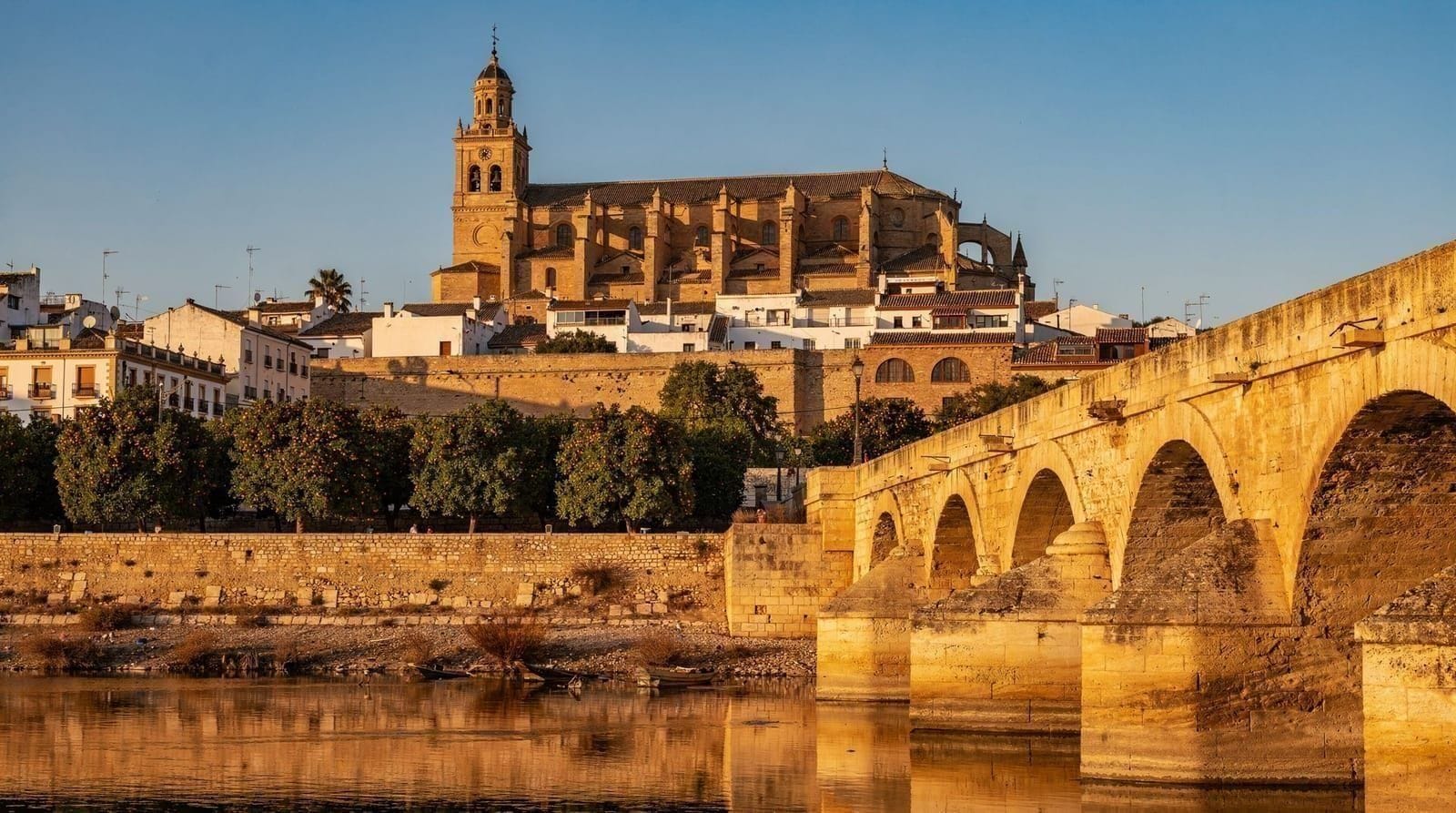
The Córdoba day trip is the most efficient day trip in Andalusia. The AVE from Seville to Córdoba takes 44 minutes, with fares listed on the Renfe website. We left at 8:30 am and were at the Mosque-Cathedral (Mezquita) by 10 am.
The Mezquita is genuinely one of the greatest buildings in Europe — 856 columns of marble, jasper, and granite arranged in forest-like rows, supporting doubled arches in alternating red brick and white stone. The 16th-century Catholic cathedral inserted into its centre is architecturally jarring to some; I find it historically fascinating as a physical record of the cultural collision.
Entry to the Mezquita: €15 adults. Booked in advance online; the queue for walk-up tickets was 40 minutes when we arrived.
After the Mezquita: the Judería (Jewish quarter), the old synagogue (free, one of three surviving medieval synagogues in Spain), and lunch at Bar Santos on Calle Magistral González Francés — a bar that’s been in the same family for decades and does a tortilla española that wins local competitions. €4.50 for a substantial portion.
Return train at 7 pm, back in Seville by 8:15 pm.
Day 4 (Sunday): Seville city focus — Cathedral and neighbourhood walks
We gave Day 4 entirely to Seville — the Cathedral in the morning (booked in advance, €13 adults, free for children under 13), the Giralda tower for the views, and then the afternoon free for wandering.
The Cathedral is genuinely extraordinary — the largest Gothic cathedral in the world by volume — but 90 minutes is enough for most visitors, including the Giralda climb. The tower climb is a ramp rather than stairs (horses used to carry provisions to the bell ringers), which makes it accessible to children but also means a long ramp walk up.
Afternoon: we crossed to Triana and spent three hours. The Mercado de Triana for produce and the market bar for vermouth. A ceramic workshop window (we looked but didn’t join a session on this visit). Bar La Plazuela for early evening drinks.
Day 5 (Monday): Ronda
Ronda is further than Córdoba and requires a different approach. The direct bus from Seville (Plaza de Armas station) takes 2–2.5 hours (€13 return). There’s no train that connects Seville to Ronda directly (you’d go via Málaga, which takes much longer).
Ronda sits on a dramatic cliff divided by the Tajo gorge, crossed by the 18th-century Puente Nuevo (New Bridge, despite being 240 years old). The view of the bridge from the gorge below is one of the most-photographed in Andalusia and is entirely justified — the bridge is 120 metres high and the gorge it spans is correspondingly vertiginous.
The town is small and can be covered in 4 hours: bridge, bullring (one of Spain’s oldest, very well done museum), old town streets, and the Arab baths in the lower town. The tourist area around the bridge is predictably expensive (€15 for a mediocre lunch at a terrace restaurant); walk five minutes back from the gorge viewpoint and prices normalise.
We were back in Seville by 8 pm.
Day 6 (Tuesday): Doñana National Park
We chose Doñana over Granada for Day 6 — a deliberate decision to prioritise the natural experience over the cultural one. May is excellent for Doñana: the spring rains have filled the marismas, the bird migration is in full swing, and the wildflowers on the coastal dunes are spectacular.
We booked the 4WD day trip from Seville, pickup at 8 am:
The tour covers 80 km of off-road territory through the wetlands, scrubland, and Atlantic dunes. What we saw in May: flamingos in the hundreds, white storks nesting on telegraph poles in El Rocío, a family of red deer at the treeline, wild boar tracks, and — the prize — a brief sighting of a Spanish lynx crossing a dirt track 50 metres ahead of the vehicle before disappearing into the matorral. The guide said it was the third sighting that month. We said nothing for about thirty seconds.
This was, on reflection, the best day of the week.
Day 7 (Wednesday): Granada
We saved Granada for the last full day — partially because it’s the furthest from Seville (2.5 hours by bus or direct bus), and partially because we wanted to end on the strongest note.
The bus from Seville to Granada (ALSA, Plaza de Armas) runs frequently and costs €12–18 return. We left at 7 am and arrived at 9:30 am, enough time to be at the Alhambra when it opened.
The Alhambra requires advance booking — full stop. In May 2025, all slots were sold out two weeks in advance. We booked online three weeks before arrival and paid €22.27 per adult for the general entry (Nasrid Palaces + Generalife gardens + Alcazaba). This is not optional in peak season.
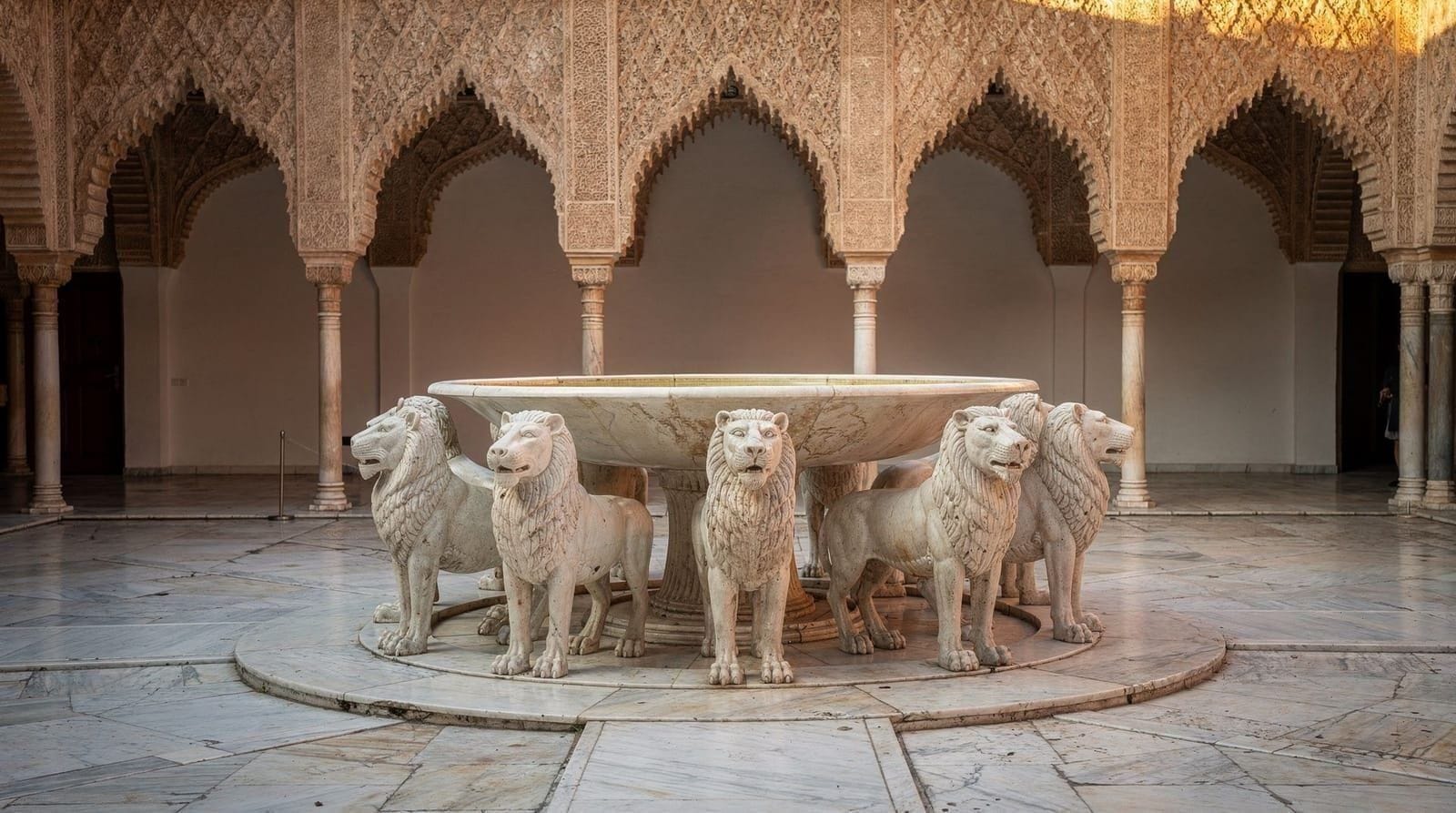
The Alhambra is the most visited monument in Spain and you will see why when you’re standing in the Court of the Lions watching the light on the muqarnas ceiling. It is genuinely one of the great architectural experiences in the world. The Generalife gardens above it are less famous and equally beautiful.
After the Alhambra: the Albaicín neighbourhood for lunch (Restaurante Arrayanes does excellent Moroccan-Andalusian food, around €14 per person for a full meal), then the viewpoint at Mirador de San Nicolás for the late afternoon view of the Alhambra across the valley.
Bus back to Seville at 7 pm, home by 9:30 pm.
What we’d change on a second trip
Overnight in Granada. The day trip to Granada is satisfying but leaves you wanting more time — specifically evening time in the Albaicín. If doing this again, we’d spend one night in Granada and structure it as a split between two cities.
Skip Ronda in peak season. The Ronda day trip was good but the bridge viewpoint area was very crowded (May is busy). If visiting Ronda in April–October, going on a weekday and arriving before 10 am makes a significant difference.
More time in Seville. We gave the city 3 full days out of 7, which in retrospect was not enough. Seville’s character reveals itself over time — the neighbourhood walks, the food culture, the evening light on the river — and I’d take an 8-day trip next time to allow 4 full days in the city itself.
The budget reality for a week
For two adults:
- Transport (AVE, buses, day trip): €220
- Accommodation (7 nights, mid-range): €700
- Food (Seville levels, mix of bars and one restaurant): €420
- Entry fees (Alcázar, Cathedral, Alhambra, Córdoba, Ronda bullring, Doñana): €180
- Incidentals: €120
- Total: approximately €1,640 for two adults (€820 each)
This is a comfortable mid-range week — not budget backpacker, not luxury hotel. The Seville on a budget guide and the 7-day Andalusia itinerary have detailed budget breakdowns if you want to plan more carefully.
The question of car vs train/bus
We did this trip without a car, entirely on public transport and guided day trips. The question of whether a car is necessary for an Andalusia week depends on what you want to see:
No car needed: Seville, Córdoba, Granada, Cádiz, Ronda, Jerez, Italica. All accessible by train or bus.
Car adds value: The white villages of Ronda (Setenil de las Bodegas, Zahara, Grazalema), the coast between Tarifa and Bolonia, the interior of Doñana, Aracena and the Sierra Morena.
For a first Andalusia week covering the major cities, public transport is genuinely sufficient and considerably less stressful than driving in Seville’s city centre.
Alternative week structures if ours doesn’t fit your trip
Our seven days were built around a family with school-age children, so it leaned toward one big day trip per day and an early Doñana wildlife detour instead of Granada’s rival, Córdoba, twice. A few adjustments worth considering:
Couples without kids: Swap Doñana for a second Seville evening plus a night in Cádiz — the oldest city in Western Europe and a genuinely different coastal mood after five days inland. The Seville for couples itinerary has a full romantic-pace version of this week.
Foodies: Replace the Ronda day with an extra day in Seville built around tapas crawls, a cooking class, and the Triana market, plus a Córdoba lunch that lingers past 3 pm. The 3-day foodie itinerary is a good template for stretching that focus across a full week.
Shorter attention spans for driving distance: If Granada and Ronda both feel like too much transport in one week, drop Ronda and add Italica (20 minutes from Seville, easy half-day) plus a second Córdoba-adjacent stop like Carmona.
Travellers who want two nights in Granada: Structure it as 4 nights Seville / 1 night en route (Antequera makes a good stopover) / 2 nights Granada, then bus back to Seville for the flight home. This solves the “not enough evening time in the Albaicín” complaint below.
Booking timeline: what to reserve and when
Andalusia’s big monuments sell out ahead of the date, especially April through June:
- 8+ weeks before: Flights, accommodation for the whole week, and — in spring — Alhambra tickets if your week falls near a public holiday.
- 3–4 weeks before: Alhambra tickets (essential in spring/summer; cutting it closer risks arriving to a sold-out week).
- 2 weeks before: Alcázar entry (book the earliest slot you can get), Mezquita-Catedral tickets for Córdoba.
- 1 week before: Doñana 4WD tour (smaller vehicle capacity than the big monuments, fills up faster than people expect), Ronda bus tickets if travelling on a weekend.
- Day before: Dinner reservations for anywhere you specifically want in Seville, Córdoba, or Granada — walk-in is fine at neighbourhood bars but not at destination restaurants.
Packing and practical prep for an Andalusia week
Andalusia’s climate swings hard by season, and a week that mixes city walking with a Doñana 4WD trip and a Ronda cliff walk needs a slightly different kit than a city-only visit. Comfortable, broken-in walking shoes matter more than anything else — Seville’s cobblestones and Ronda’s uneven old-town streets are unforgiving in new shoes. A refillable water bottle is essential from April onward; the region gets genuinely hot, and shade is scarce around the Alcázar walls and the Alhambra approach.
Layers matter more than most visitors expect, even outside summer — Andalusian nights can be surprisingly cool relative to daytime highs, especially in Ronda’s elevated old town and on the Doñana marshes at dawn. The Seville packing list guide breaks this down by month, and the Seville in spring guide is worth reading if your week lands in the busiest, most beautiful season.
Córdoba day trip from Seville with Mezquita-Catedral guideFrequently asked questions about planning a week in Andalusia
Should I base myself in Seville or split between cities?
For a first visit or with children, basing in Seville is simpler. For those who want evening access to Granada or Córdoba, an overnight in each city improves the experience significantly.
Do I need to book the Alhambra far in advance?
In spring and autumn: book at least 3 weeks in advance, ideally longer. In winter: 1 week may be sufficient. In summer: surprisingly, the crowds thin slightly (the heat discourages casual visitors), but advance booking is still essential.
Is a week enough for Andalusia?
A week covers the highlights (Seville, Córdoba, Granada, one other destination) comfortably but leaves you wanting more. Ten days is the sweet spot for a first comprehensive trip.
What’s the best order for the day trips?
No single right answer, but: Córdoba first (closest, easiest warm-up), Granada last (most distant, save for the climax), and the closer sites (Italica, Jerez, Doñana) on days when you’re less energetic.
Which day trip is most worth it?
Córdoba for culture, Doñana for nature, Granada for pure architectural experience. If forced to choose one: the Alhambra is the most irreplaceable experience in Andalusia.
Is it better to rent a car for the whole week?
For the itinerary above, no — trains and buses cover Seville, Córdoba, Ronda, and Granada efficiently and without parking stress. A car earns its cost only if you’re adding the white villages (Setenil de las Bodegas, Zahara, Grazalema) or driving deeper into Doñana or the Sierra Morena beyond a guided tour.
How much walking does a week like this involve?
A lot — expect 12,000–18,000 steps on Seville days and more on Córdoba and Granada day trips, where the old towns are hilly and cobbled. Comfortable, already-broken-in shoes are worth prioritising over almost anything else on the packing list.