Kayaking the Guadalquivir — what to expect in Seville
Getting on the water at 38 degrees
The thermometer at the Triana bridge read 38°C when we showed up at the kayak launch point at 9 am on a Saturday in mid-July 2023. The guy from the kayak company — a tall, sunburned Sevillano named Marco — looked mildly relieved that we’d arrived early rather than at the noon session that most tourists apparently preferred. “At noon you’re fighting the sun and the tourist boats,” he said, handing us paddles. “Now you have the river mostly to yourselves.”
| Where | Puente del Generalísimo, near the Triana end of the bridge |
| Cost | Around €35–45 per person for a 2-hour guided tour |
| Time needed | 2 hours on the water, 2.5 hours total with briefing |
| Experience needed | None — sit-on-top kayaks, brief tutorial included |
| Best time | 9 am session, especially June–August |
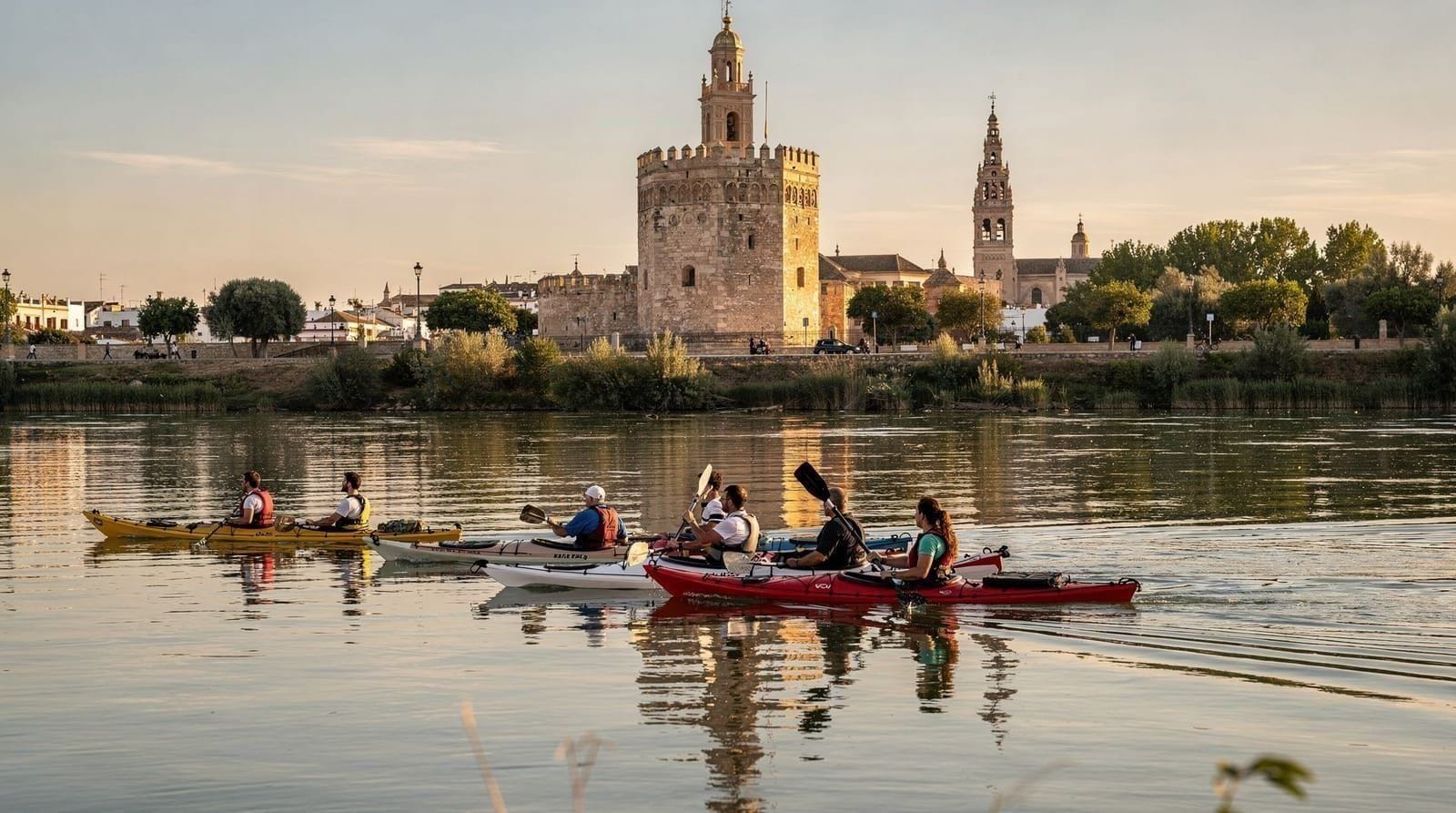
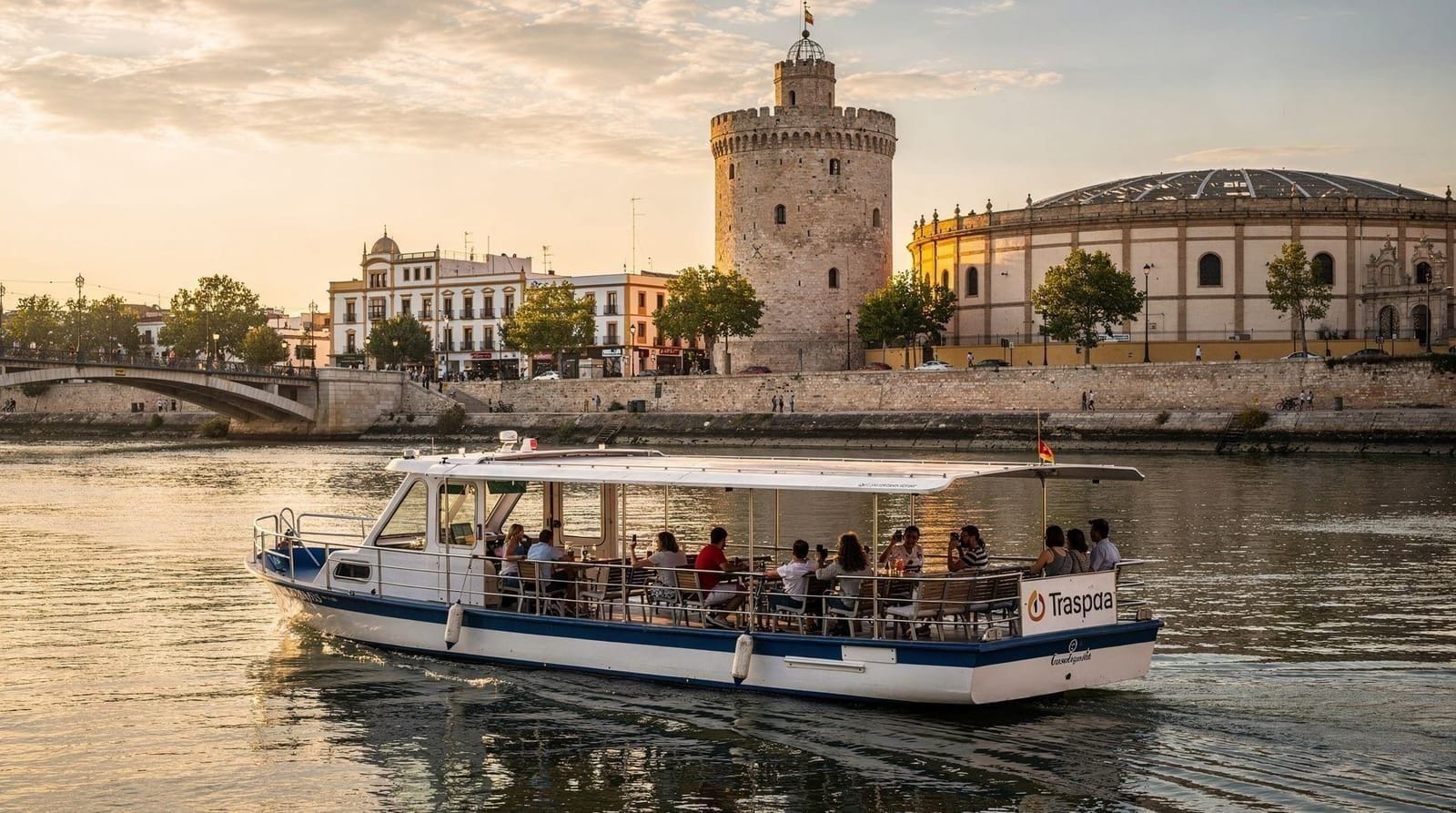
He was right. For the first thirty minutes of our two-hour tour, the main channel of the Guadalquivir was calm, the light was flat gold, and the only other thing on the water was a slow-moving eco-cruise boat heading downstream toward the Torre del Oro. We were in open sit-on-top kayaks — stable, easy to handle, no experience required — and even my partner, who’d never kayaked before, was comfortable within ten minutes.
The Guadalquivir runs through the heart of Seville in a way that the city doesn’t fully acknowledge on foot. From the riverbanks, you see the Torre del Oro, the Triana bridge, the modern bridges further south, and the green belt of the María Luisa park. From the water, you see all of that plus a different geometry: the city is taller than it looks from street level, the palm trees lining the Paseo de Colón more dramatic, the old tobacco factory (now a university) more imposing. There’s a reason the river was the artery of Spain’s empire for two centuries.
The tour logistics
We booked the 2-hour Guadalquivir kayaking tour through GetYourGuide about five days in advance, which was enough time in July (though I’d recommend booking earlier in April–May when Seville is at its busiest):
Seville: 2-hour Guadalquivir river kayaking tourThe meeting point is near the Puente del Generalísimo, a short walk from the Triana end of the main bridge. The company provides life jackets, paddles, and waterproof bags for phones and wallets. You wear whatever you came in — Marco suggested shorts, a t-shirt you don’t mind getting wet, and water shoes or old sneakers. Sun cream is essential; bring your own.
The group was small: just four of us plus Marco, who paddled alongside in his own kayak and gave a running commentary on what we were passing. The route goes upstream from the launch point, past the Torre del Oro and the Palacio de San Telmo, then turns around roughly level with the bridges near the Parque de María Luisa. On the return leg, you’re paddling with the current, which makes the back half noticeably easier.
Pricing in July 2023 was around €40 per person. Compared to the one-hour boat cruise (€18–22), it’s more expensive, but the experience is completely different: you’re active, you’re at water level rather than elevated on a boat deck, and the small group size means you actually interact with the guide.
What the Guadalquivir is like as a river
This is not a wild river. The Guadalquivir within Seville is channelled, managed, and considerably calmer than its pre-20th-century self (the great floods of 1892 prompted a major engineering project that rerouted the river and created the Corta de la Cartuja, the artificial island now used for the Expo 92 site). There are no rapids, no obstacles, no particularly demanding paddling conditions. In mid-July, the water level was low and the current gentle.
What makes it interesting is the history. The Torre del Oro — the 13th-century watchtower that once stretched a chain across the river to prevent unauthorised ships from entering Seville’s port — is considerably more impressive from ten metres away at water level than from the quayside. Marco told us about the shipyards that once occupied the Triana bank, about the silver that came upriver from Cádiz after the galleons returned from the Americas, about the 1755 Lisbon earthquake whose tsunami was felt as far inland as Seville.
The modern Guadalquivir also has egrets. Several of them. They stand in the shallows near the banks looking unimpressed by the kayakers and the tourist boats. This was a genuine surprise.
Practical notes for summer kayaking
Go early. The 9 am session in summer is meaningfully different from the 12 pm or 3 pm sessions. By noon, the sun on the water is relentless, the tourist boats are running at full frequency, and the experience is noisier and hotter. If you’re visiting in June–August, the early session is not optional — it’s the only sensible choice.
Don’t overestimate the difficulty. This is not technical paddling. If you can balance on a bicycle, you can manage a sit-on-top kayak on flat water. Marco spent about ten minutes at the start covering the basics, and our partner with zero experience was paddling competently within fifteen minutes.
Bring water. A lot of it. In July heat, two litres per person for a two-hour paddle is not excessive. The company doesn’t provide water.
The current helps on the way back. The outward leg is slightly harder (paddling upstream) and the return leg easier. If you start tiring, hang in — the second half takes care of itself.
For a calmer alternative that gives you the river views without the effort, the Guadalquivir river cruise guide covers the boat options in detail. And if you’re visiting in the peak of summer heat generally, not just for this activity, our Seville in summer heat guide has the scheduling logic that applies to sightseeing as much as it does to paddling.
Kayak vs cruise vs paddleboard: how the river options compare
| Kayak tour | Sightseeing cruise | Paddleboard tour | |
|---|---|---|---|
| Price | ~€35–45 | ~€18–22 | Similar to kayaking |
| Effort | Active, moderate | None (seated) | Active, more balance-dependent |
| Group size | Small (4–8 typical) | Larger boat groups | Small |
| Best for | Active travellers, history buffs | Relaxed sightseeing, all ages | Calmer pace, wider age range |
How kayaking compares to other river experiences in Seville
Seville has several ways to see the Guadalquivir. The most common is the one-hour sightseeing cruise, which departs roughly every hour from the Torre del Oro quayside. That gives you a comfortable view from a boat, with an audio guide narrating the landmarks. It’s good but passive.
The kayak tour is more physical, more intimate (small group), and gives you a different perspective — you’re lower on the water, closer to the banks, and interacting with a guide rather than listening to a recorded commentary. Whether that’s worth the extra cost (roughly double the cruise price) depends on how much you value active experiences.
If the kayak sounds like too much effort, a short sightseeing cruise on the river is the easy way to get the same skyline without lifting a paddle.
For families with younger children, the paddleboard tours are another option — calmer, no current to worry about, appropriate for a wider age range. The kayaking and paddleboarding in Seville guide covers all the water-based options if you want to compare before booking.
Fitting the river into a longer stay
A morning on the water leaves the rest of the day free, and it pairs well with the sights you can see from the kayak. The Torre del Oro and the riverfront sit on the edge of the old centre, so the Seville Cathedral complete guide and the Real Alcázar complete guide are natural afternoon follow-ups once you are dry and fed. If you are building a short trip around it, the Seville in 3 days itinerary shows where a river morning can slot in without crowding the rest of the schedule.
The riverbank also changes how you read the city on foot afterwards. Having seen the quays from below, the walk through María Luisa Park feels like a continuation of the same green belt, and getting around between the river and the main sights is simple; the getting around Seville guide explains the options if you would rather not walk everything in the heat.
If you are still deciding where to base yourself so the launch point is easy to reach, the where to stay in Seville guide compares the neighbourhoods, and our other trip notes on Seville in July cover how we handled the heat around the paddle.
After the paddle: breakfast in Triana
We finished at 11 am, slightly damp and very hungry. Marco pointed us toward Bar El Comercio on Calle Castilla, a Triana institution that’s been doing breakfast since 1904 and hasn’t changed much since. Tostada with tomato and olive oil, a café con leche, €3.20 total. It was precisely what we needed.
The river views from the Triana side of the bridge are good enough to justify the five-minute walk across after breakfast — particularly looking north toward the Alamillo bridge, Calatrava’s 1992 design that still looks improbable three decades later.
If you’re planning a full day, the Triana neighborhood guide gives you enough material for the afternoon, and the Seville on a budget guide is useful for managing the overall cost of a trip that can get expensive quickly if you’re not paying attention.
Frequently asked questions about kayaking the Guadalquivir
Do I need kayaking experience to join a Guadalquivir tour?
No. The sit-on-top kayaks used on the river are stable and easy to handle. Guides provide a brief tutorial at the start, and the water conditions on this stretch are consistently calm.
How long is the typical kayaking tour?
Two hours on the water, plus time for the briefing. Budget about 2.5 hours total.
What should I bring?
Sunscreen (essential in summer), water (at least one litre per person), water shoes or old sneakers, and clothes you don’t mind getting wet. Waterproof bags for phones are usually provided.
Is kayaking the Guadalquivir possible in winter?
Yes. Operators typically run year-round, and winter temperatures in Seville are mild (12–17°C in January). The light in autumn and winter is often better for photography than the harsh midday sun of summer.
How much does a Guadalquivir kayak tour cost?
Around €35–45 per person for a two-hour guided tour in 2023–2024. Prices may vary by season and operator.
How does it compare to the river cruise?
The cruise is passive and comfortable; the kayak tour is active and small-group. The cruise is about half the price. Both are legitimate ways to see the river — the choice depends on whether you’d rather sit back or paddle.