Jerez: sherry and horses in one day from Seville
Why Jerez deserves more of your attention
Most visitors to Andalusia treat Jerez de la Frontera as an afterthought — something to append to a Cádiz day trip, or a 45-minute stop on the way to the coast. This is a mistake. Jerez is a city with a genuinely distinct identity: it’s the birthplace of sherry (or jerez — the wine that gave the city its name), the home of the Cartuja horse breed, and a flamenco scene with deep historical roots that predate Seville’s tablao culture.
| Where | Jerez de la Frontera, 85 km south of Seville |
| Cost | From about €27 for a bodega tour, €24–31 for the horse show |
| Time needed | Full day, comfortably fits bodega + show + lunch |
| Getting there | Around 1 hour by train or guided coach |
| Best time | Late February–April, before summer heat and crowds |
We went in late February, which turned out to be ideal: the city was empty of tourists, the bodegas were running their standard morning tours for a handful of locals and a small group of wine professionals, and the famous Yeguada de la Cartuja horse fair was a week away (enough time that the city’s equestrian energy was tangible but the crowds hadn’t arrived). If you’re building this into a longer coastal loop, Cádiz sits close enough to pair with Jerez without much extra driving.
Jerez also works well as one chapter in a bigger plan. If you are still deciding how to spread your days, our Seville day trips itinerary and the best day trips from Seville show where it sits against Córdoba, Granada and Ronda, and the destination page for Jerez de la Frontera gives the city’s wider background.
Getting there from Seville
Jerez is 85 km from Seville — about an hour by road, with some of the journey on the A-4 motorway and the rest on smaller roads through wine country. The train runs from Seville Santa Justa to Jerez in about 1 hour 10 minutes (check fares and times on the Renfe website), but the station is 20 minutes from the city centre and the taxis queue badly at weekends.
The most convenient option for a packed day-trip is the guided tour from Seville that handles all the transport and gets you into the two main experiences (bodega and horse show) without individual booking:
From Seville: Jerez guided visit with horse show and wineThis tour runs on set days (check current schedule) and is worth it for the time it saves managing two separate bookings across different sides of the city. The guide also provides historical context that makes the horse show considerably more comprehensible if you’re coming to it cold.
If you would rather keep your Seville base and compare options first, our guide to getting around Seville explains how the main train station fits into the city, which helps when you plan an early start.
The sherry bodega: González Byass
We visited González Byass — the makers of Tío Pepe — which is both the most famous bodega in Jerez and the most tourist-oriented. The Tío Pepe tour (the basic Tío Pepe Experience is €26.90) takes you through the solera system: the stacked barrels of ageing sherry that give the style its characteristic oxidative flavour, with older wine drawn from the bottom rows and topped up with younger wine from above.
The highlight of the González Byass tour is the cathedral cellar — a vast, dark space filled with hundreds of barrels, the oldest dating from the 19th century. A small group of these barrels has been signed by visitors over the decades: the signatures of Orson Welles, Picasso, and various Spanish royals are visible if you look closely. It has the atmosphere of a secular church, which is probably intentional.
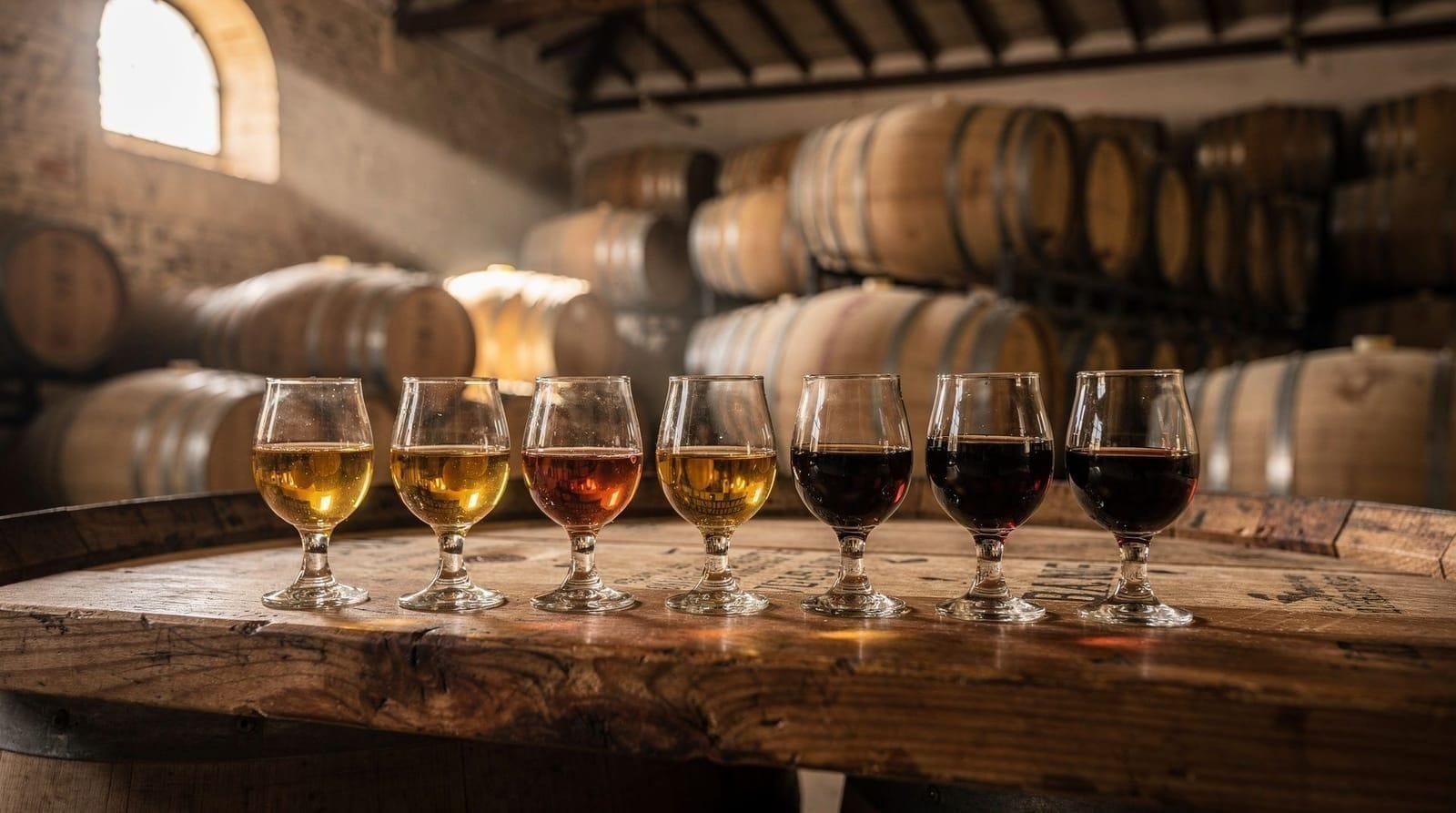
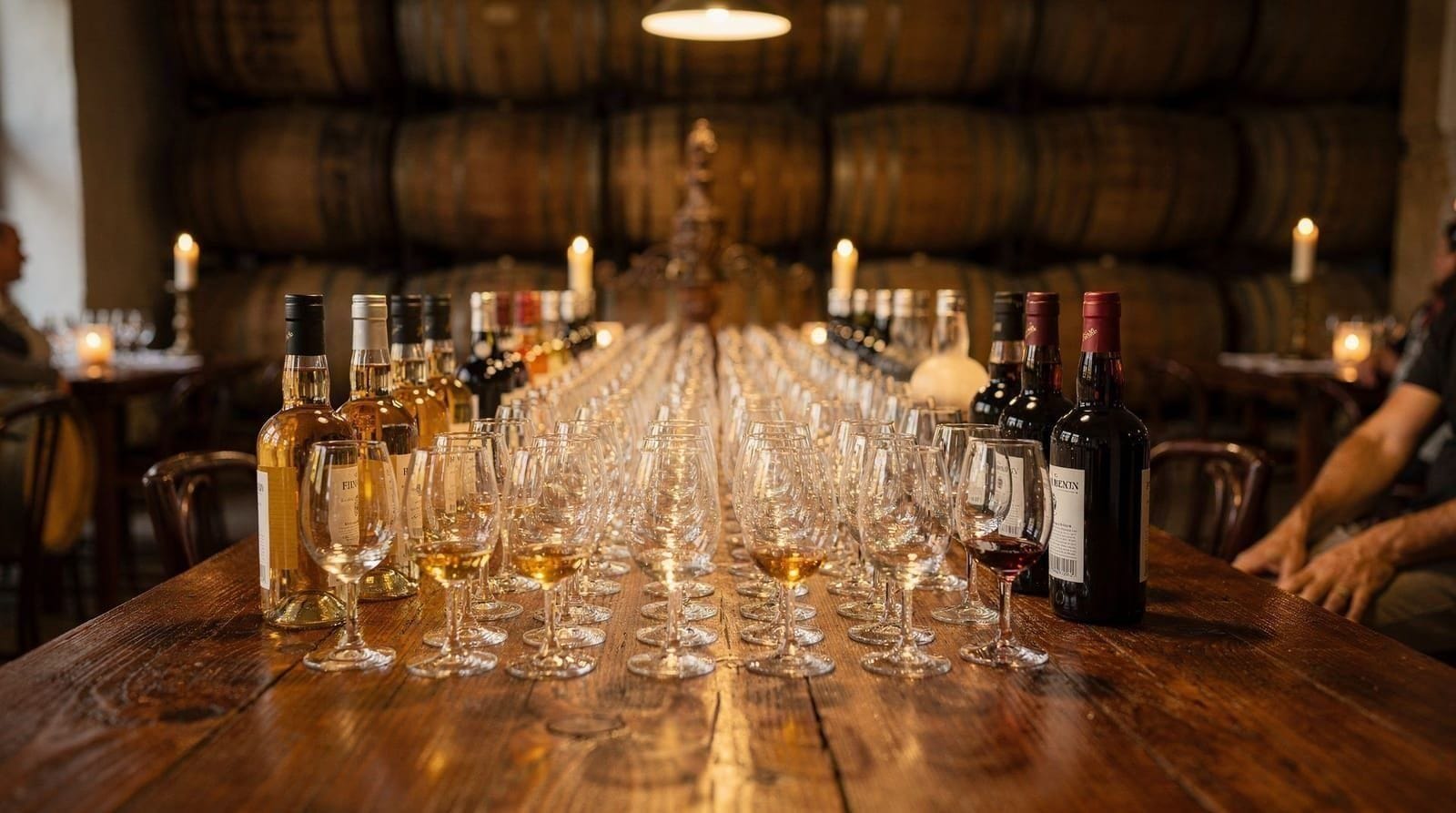
The tasting at the end depends on the tour you book (the basic one pours two wines, the longer ones more) and can run through a Fino, a light Amontillado, an Oloroso, a cream sherry, and a Pedro Ximénez poured over vanilla ice cream (this last one is the decadent move that converts people to PX). You can buy bottles at bodega pricing afterward — considerably less than retail in the UK or Germany.
For visitors who want a less commercial bodega experience, Bodegas Tradición is a smaller operation specialising in aged sherries (VOS and VORS wines, aged 20+ and 30+ years respectively) with a private art collection including works attributed to Velázquez and Goya. The standard visit (about 90 minutes, small groups of up to 10) costs €60 per person and requires advance booking.
The Royal Andalusian School of Equestrian Art
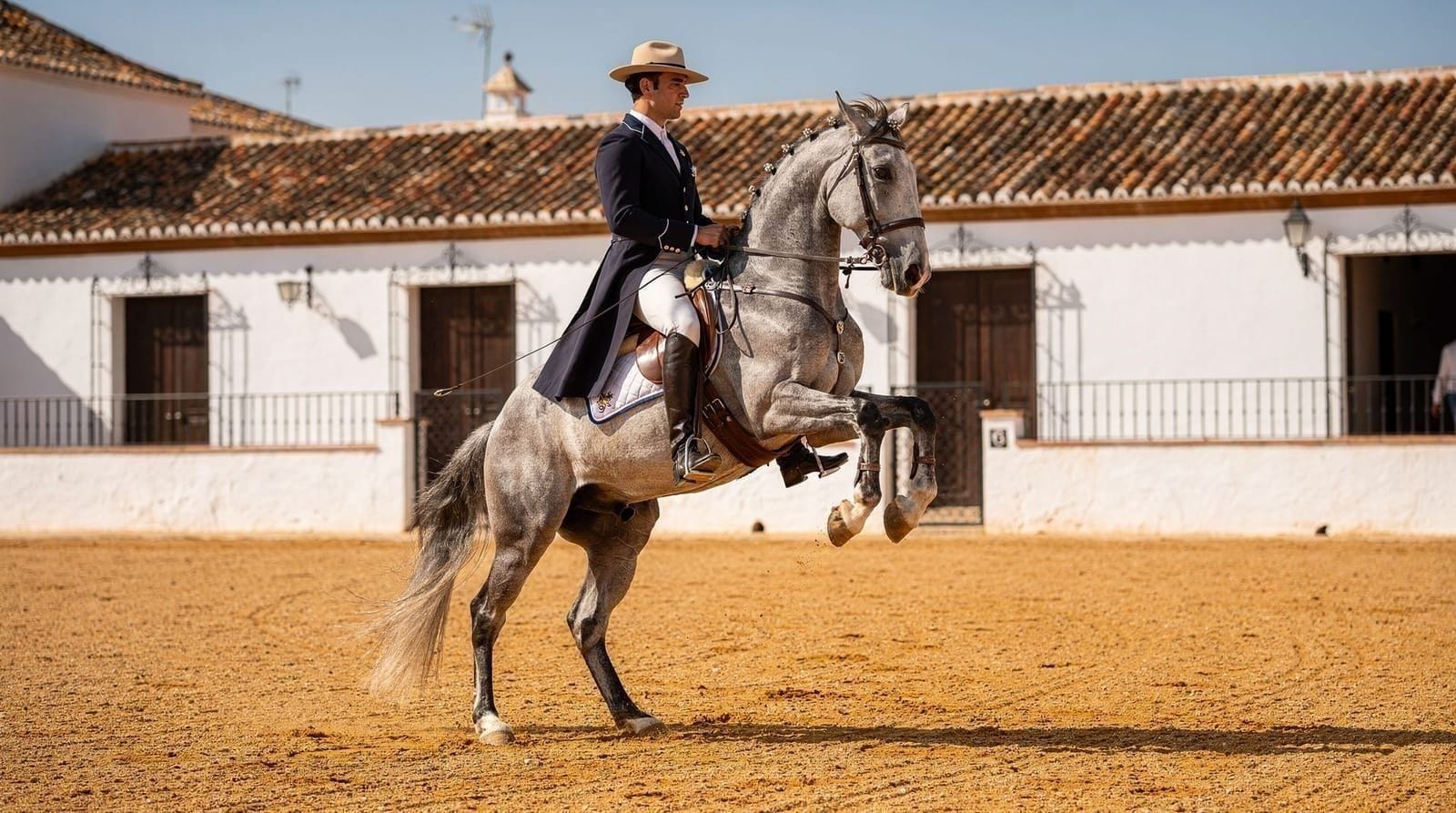
The Real Escuela Andaluza del Arte Ecuestre is one of those institutions that sounds like a tourist attraction but is in fact a working training centre for Spain’s most prestigious equestrian tradition. The Cartuja horses — a breed developed in the 15th century by monks at the Cartuja monastery near Jerez — are trained here in the “doma vaquera” style, which uses the horse’s natural gaits rather than the forceful methods of classical military dressage.
The main show (“Cómo bailan los caballos andaluces” — “How the Andalusian horses dance”) runs on set days that change through the year (check the calendar on the Real Escuela website). Admission is €24 (general) or €31 (preferential) for adults. The performance starts at 12:00 and lasts about 90 minutes including an interval and includes 12 horses ridden by riders in 18th-century costume, accompanied by live music. There’s also a carriage section.
I’ll be honest about one thing: if you know nothing about horses, the first fifteen minutes can feel slow. The movements — passages, piaffes, levades — require context to appreciate. The show program explains the movements, but in Spanish only. The guided tour from Seville includes a briefing before the show that significantly improves the experience.
The moment that changes everyone’s mind is when a horse performs a “capriole” — leaping from a levade (rearing position) while kicking out backwards with its hind legs, suspended horizontally in the air for a fraction of a second. This manoeuvre took years to train and is genuinely astonishing to watch. The crowd reacted with audible gasps, including ours.
On non-show days, training sessions may be open to visitors (ask the Real Escuela for current times and prices). The training sessions are less theatrical but often more technically interesting for anyone with an actual interest in horsemanship.
If the horses are what drew you here, it is worth knowing that Seville has its own, very different horse tradition. Our guide to horse carriage rides in Seville covers that side of the story, and it makes a pleasant contrast with the disciplined, trained movements you see in Jerez.
Lunch: the thing most day-trippers miss
Between the bodega and the horse show, we had two hours in Jerez city centre. Most visitors use this time to wander the cathedral area and buy souvenirs. The better use of those two hours is lunch at one of the city’s excellent traditional bars.
Bar Juanito on Calle Pescadería Vieja is the local institution: a long white bar, walls covered in wine-related ephemera, and a menu that changes slightly by season. In February we had: caldo de perrito (a local noodle broth), tortillitas de camarones (shrimp fritters, arguably better here than in Seville), and a half-bottle of Tío Pepe from the barrel. €28 for two with bread and water.
The wine culture in Jerez means that a glass of Fino at the bar is invariably €1.80–2.50, served cold and fresh in a straight-sided glass called a catavino. This is how sherry is meant to be drunk — not from a small decorative glass on a cream-covered dessert course, but with food, cold, as a working person’s lunchtime drink.
Jerez vs Cádiz as a day trip
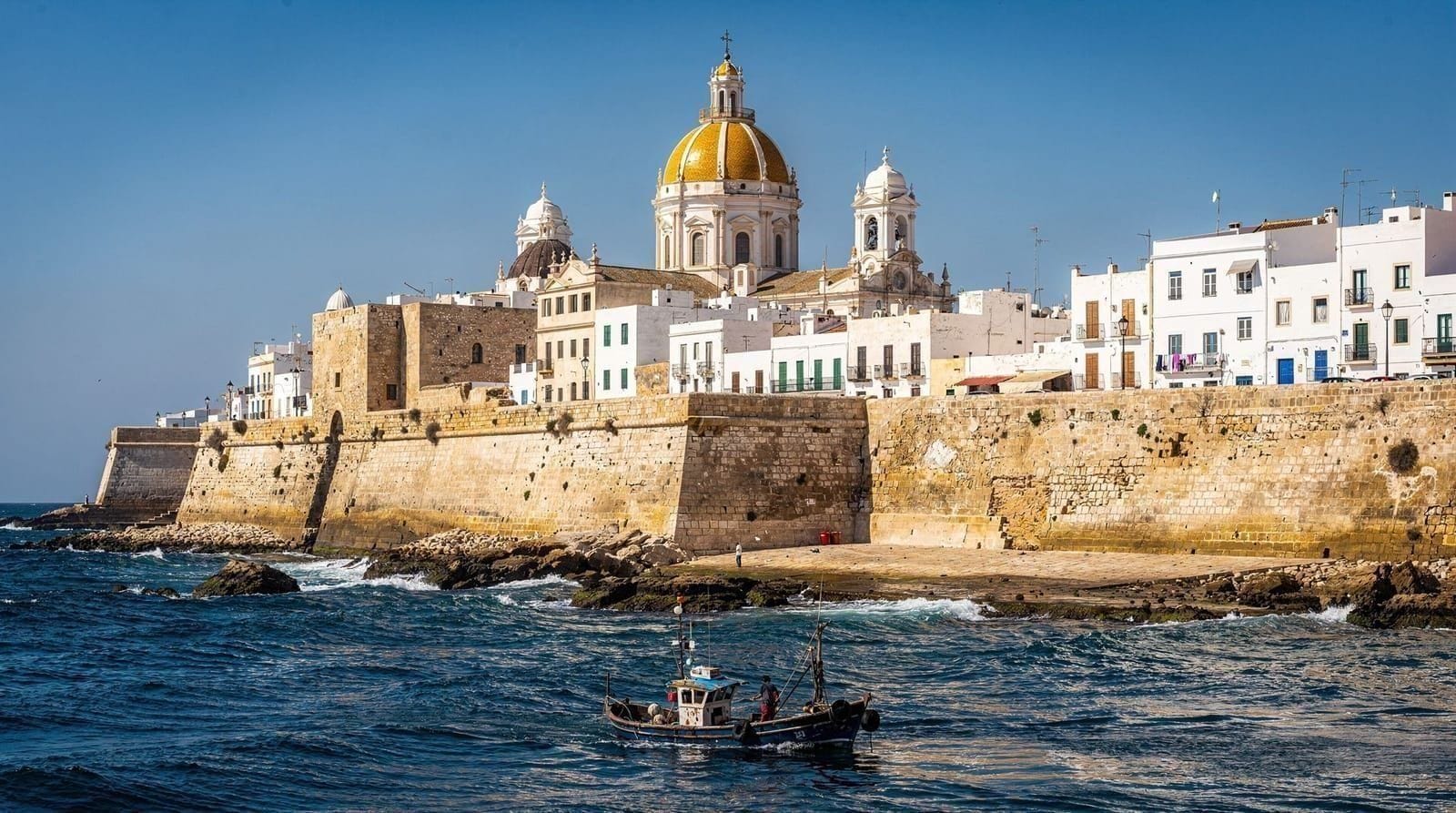
Both cities are about the same distance from Seville (Cádiz slightly further). Jerez is better for wine culture and equestrian history; Cádiz is better for beaches, seafood, and the experience of an ancient Atlantic port city. Several tours combine both in a single day (which I think is too much — you end up rushing both).
If I had to choose one: Jerez for something genuinely unusual and specific to this region, Cádiz for a more conventionally beautiful day trip with excellent food. The Jerez day trip guide and Cádiz day trip guide cover both in comparative detail.
Back in Seville, you do not have to wait for another trip south to keep tasting. Our sherry tasting in Seville guide points to places in the city where the same styles are poured, and our Seville food tour guide shows how sherry sits alongside the local tapas scene. For our own account of a food-focused weekend, see a foodie weekend in Seville.
Sherry styles compared
| Style | Character | Best for |
|---|---|---|
| Fino / Manzanilla | Dry, light, served cold | Beginners, lunch pairing |
| Amontillado | Nuttier, medium body | Stepping up from Fino |
| Oloroso | Rich, full-bodied, darker | Experienced sherry drinkers |
| Pedro Ximénez | Very sweet, molasses character | Dessert, poured over ice cream |
For the full picture of the region’s wine culture beyond what one bodega visit covers, our sherry guide to Andalusia and Jerez bodegas guide compare more producers than González Byass and Bodegas Tradición alone.
Practical notes for a Jerez day trip
Timing the horse show: The show runs on set days that change through the year. If you’re planning a specific day trip from Seville, check the day against the calendar on the Real Escuela website — most guided tours run on show days.
Bodega advance booking: González Byass books up in advance, especially at weekends. Book online through their website at least 3–4 days ahead. They also offer evening tours with a different atmosphere.
Sherry styles for beginners: Fino and Manzanilla are dry, light, and served cold — the gateway sherries. Amontillado and Oloroso are richer and more complex. Pedro Ximénez is a dessert wine with extreme sweetness and molasses character. All are made in the Jerez region under the Denominación de Origen “Jerez-Xérès-Sherry.”
The flamenco scene in Jerez: Jerez has its own distinct flamenco style, considered more conservative and serious than Seville’s. The Peña Flamenca Tío José de Paula on Calle Merced is the most authentic venue; performances are irregular but advertised on local notice boards. Less tourist-oriented than any Seville tablao.
If arranging the train and separate bodega and show bookings sounds like more coordination than you want for a day trip, a private guided option removes that friction entirely and adds a wine-focused itinerary tailored to your pace:
Book a private Jerez wine and equestrian day trip from SevilleOther first-hand reports on this blog make good companions to this one: our Cádiz story continues the coastal side of the region, and planning a week in Andalusia shows how a Jerez day can slot into a longer stay.
Frequently asked questions about Jerez
Can I visit Jerez as a day trip from Seville?
Yes. One hour by train or guided coach, and the city’s main experiences (bodega, horse show) fit comfortably into a full day with time for lunch and walking.
Do I need to like wine to enjoy a sherry bodega tour?
No, though it helps. The history and process of sherry production — the solera system, the climate’s role, the variety of styles — is interesting even for non-wine-drinkers. The architecture of the bodegas alone is worth seeing.
Is the horse show appropriate for children?
Yes, from about age 6 upward. The show is colourful, the horses are impressive, and the length (about 90 minutes including an interval) is manageable for most children. Younger children may find it too long.
What is the best time of year to visit Jerez?
Year-round, but April is exceptional: the Feria del Caballo (Horse Fair) fills the city with horses, riders in traditional Andalusian dress, and an atmosphere that’s unique in Spain. Book accommodation months in advance if visiting during the fair.
How much should I budget for a day in Jerez?
Bodega tour: from about €27. Horse show: €24–31. Lunch at a local bar: €15–20. Train from Seville: see the Renfe website.