The best neighbourhood to stay in Seville — our honest take
The short version for people in a hurry
Before diving into the detail: Santa Cruz is the most convenient but most tourist-saturated neighbourhood. Triana has the best local character but requires crossing the river. El Arenal is the sophisticated middle ground. The Alameda and Macarena are good for budget travellers and repeat visitors who want the city that Sevillanos actually live in.
If you’re spending two to three days and have no particular preference, the northern edge of the Barrio Santa Cruz or the Arenal neighbourhood give you the best balance of convenience and quality. If you’re spending five or more days, a base in Triana or the Alameda reveals a different city.
| Most convenient | Santa Cruz — walk to Alcázar/Cathedral |
| Best value | Alameda or La Macarena |
| Best local character | Triana |
| Sophisticated middle ground | El Arenal |
| Typical price gap, centre vs Alameda | Roughly 30–50% |
For accommodation specifics within each area — actual hotels and apartments rather than neighbourhood profiles — see the where to stay in Seville guide, and for how to move between them once you’ve picked a base, the getting around Seville guide covers walking distances, buses, and taxis.
Santa Cruz: the obvious choice and its limits
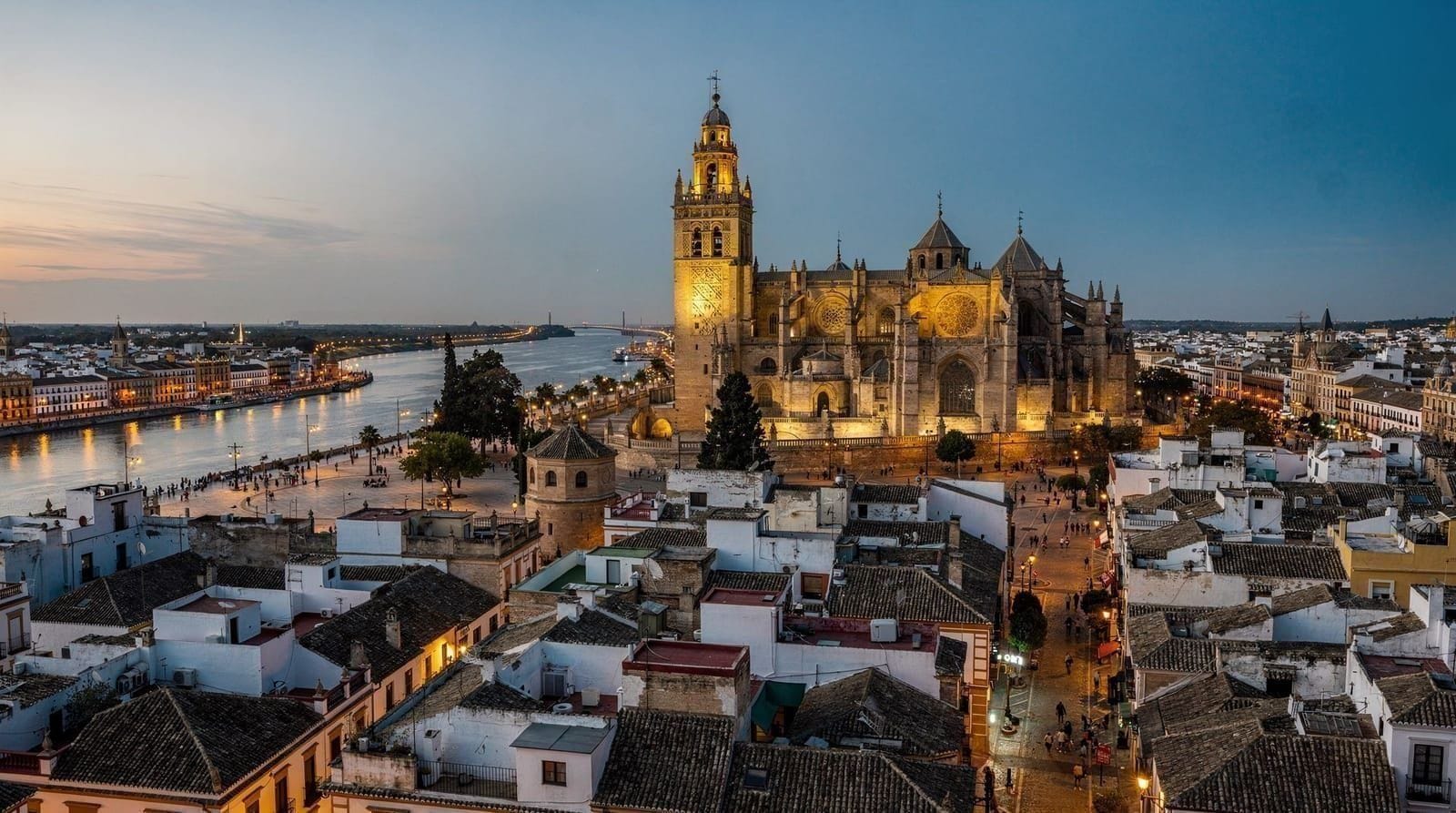
Barrio Santa Cruz — the narrow whitewashed lanes around the Cathedral and the old Jewish quarter — is where most first-time visitors stay, and I understand why. The Alcázar is a ten-minute walk. The Cathedral is visible from most of the neighbourhood’s streets. The concentration of restaurants (good and bad) and bars (good and bad) means you can eat without planning.
The problems with Santa Cruz are well-documented but worth stating directly: it is extremely tourist-saturated in a way that can feel claustrophobic. In April and October — peak months — the main lanes of Santa Cruz are genuinely difficult to navigate due to pedestrian traffic. Accommodation prices here are 30–50% higher than equivalent quality in neighbouring areas. And the neighbourhood has a tourist-ecosystem effect where the authentic bars get replaced by English-menu restaurants because the economics favour it.
The best part of Santa Cruz to stay in is the northern section, near Calle Águilas and Calle Mateos Gago — closer to the Alameda neighbourhood and slightly removed from the densest tourist concentration without sacrificing the central location. Hotels and apartments here tend to be 15–20% cheaper than equivalents in the Cathedral’s immediate shadow.
My honest recommendation for Santa Cruz: fine for a first visit of 2–3 days if you prioritise convenience. Not the right choice for a longer stay or a repeat visit.
If you do stay here, treat the lanes as a place to wander early in the morning or late in the evening, when the crowds thin and the neighbourhood feels like itself again. The Santa Cruz neighbourhood guide maps the quieter corners, and the best tapas bars in Santa Cruz separate the places worth a seat from the English-menu traps. A guided stroll can also make the maze of lanes easier to read: a small-group walking tour of the old Jewish quarter is a gentle way to get your bearings on the first morning, and the Alcázar vs Cathedral guide helps you decide what to see first from your doorstep.
El Arenal: the sophisticated compromise
El Arenal is the neighbourhood between the Cathedral and the Guadalquivir river — roughly the area around the Maestranza bullring, the Torre del Oro, and the Calle Adriano. It’s walkable to everything in the historic centre, it has excellent tapas bars that serve a genuine mix of locals and visitors, and the river views from its southern edge are some of the best in the city.
I stayed in El Arenal for three nights on my most recent visit and found it significantly more pleasant than my earlier Santa Cruz stays. The neighbourhood has the Tablaos (flamenco shows) concentrated along Calle Rodo, which is great if you want to go to a tablao and not have to cross the city, and slightly annoying if you don’t want nightly amplified music until midnight.
Accommodation in El Arenal tends to be mid-range hotel rather than boutique apartment, and it’s priced between Santa Cruz (expensive) and Triana (more affordable). For couples or solo travellers who want proximity to the main sights without the full tourist saturation of Santa Cruz, El Arenal is probably my first recommendation.
The El Arenal guide covers the neighbourhood in detail, including the best spots to eat.
Triana: the local’s choice
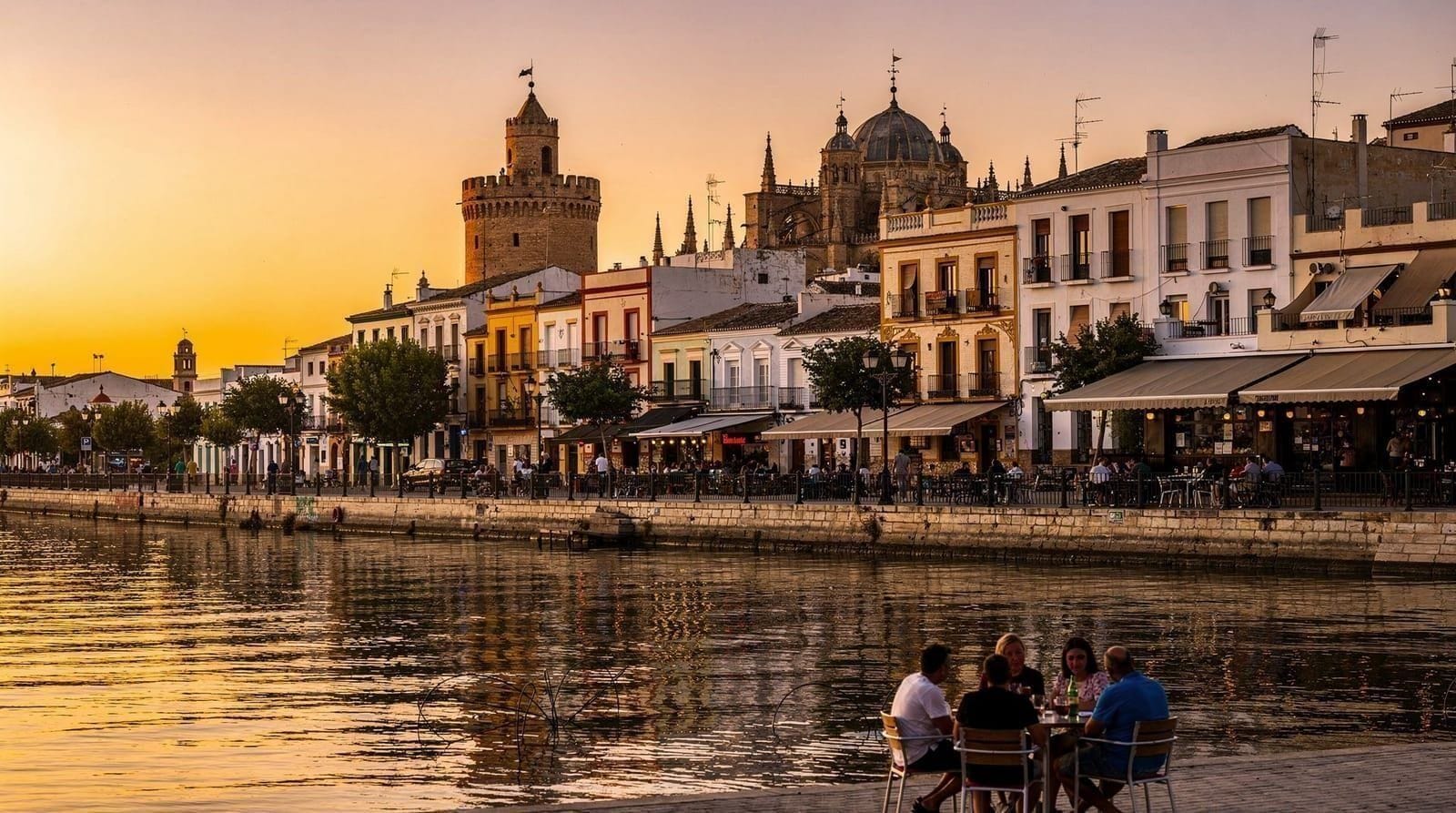
Triana is across the Guadalquivir from the historic centre — a five-minute walk across the Puente de Triana, or about 20 minutes from the Cathedral on foot. That crossing is the psychological barrier that keeps Triana significantly less tourist-saturated than the historic centre, despite it being one of the most interesting neighbourhoods in the city.
Triana has a distinct identity: it’s traditionally the neighbourhood of flamenco artists, ceramics workshops, fishermen, and the Roma community that contributed so much to the Andalusian musical tradition. The neighbourhood gentrifies slowly (the Mercado de Triana was renovated in the 2000s and now has an upscale food bar section), but the basic character — working-class, local, community-oriented — persists in ways that Santa Cruz’s equivalent has not.
Accommodation in Triana is notably cheaper than in the historic centre: comparable quality at 25–40% lower prices. The trade-off is the river crossing — every time you want to see the Cathedral or the Alcázar, you’re adding 20 minutes to your journey. For a short stay focused on the major monuments, this matters. For a longer stay where you’re treating Seville as a place to live rather than tick off, the distance is irrelevant and the neighbourhood character is worth having.
The other advantage of Triana: it’s on the right side of the river for the Parque de María Luisa, the Plaza de España, and the university area, all of which are south of the historic centre anyway.
Evenings are where Triana earns its reputation. You can have dinner at a neighbourhood bar, then walk to a flamenco show without leaving the barrio; the flamenco in Triana guide explains what to expect, and a traditional flamenco show in Triana is an easy way to see it if you would rather book ahead. For food, the best tapas bars in Triana and the wider Triana neighbourhood guide are the two pages we would open first. If ceramics interest you, our Triana ceramics workshop story shows what a morning in the barrio can look like.
Alameda de Hércules: for the independent traveller
The Alameda neighbourhood — centred on the long, tree-lined pedestrian boulevard called the Alameda de Hércules — is where younger Sevillanos go to drink, eat, and socialise. It’s been gentrifying for about fifteen years and has now reached the pleasant middle state where the interesting bars and restaurants have arrived but the process hasn’t completely homogenised the character.
The Alameda is 25 minutes from the Cathedral on foot — not central, but not far. Accommodation here is the cheapest of any central neighbourhood in Seville: good hostels with private rooms at €30–45/night, budget hotels at €60–80/night, and the occasional excellent apartment at prices that would be double in Santa Cruz.
The neighbourhood suits: solo travellers, couple travelling on a budget, people spending five or more days in Seville, and anyone interested in a bar and restaurant scene oriented toward locals rather than tourists.
For more on the boulevard itself, the Alameda de Hércules guide covers where to eat and drink, and the Seville on a budget guide shows how a cheaper base fits into a wider spending plan.
The disadvantage: at night, parts of the Alameda can be quite noisy (it’s a nightlife hub), and some streets between the Alameda and the city centre feel quiet and slightly empty after 11 pm. Neither of these is a safety concern — the neighbourhood is safe — but it affects the ambience.
La Macarena: the quiet neighbourhood with good connections
La Macarena, north of the Cathedral and Alameda, is the least tourist-oriented of the central neighbourhoods. It contains the Basilica de la Macarena (home of the most famous Virgin in Seville, whose procession during Semana Santa is one of the most intensely observed events in the city), the old city walls, and a strong residential character that has resisted tourist gentrification largely because it’s slightly further from the Cathedral than the other options.
Accommodation in La Macarena is similarly priced to the Alameda — cheaper than the historic centre — with a wider range of apartment options for families or groups.
The neighbourhood suits: people interested in the authentic city rather than tourist infrastructure, families looking for space and quiet, and visitors staying long enough to appreciate the excellent neighbourhood tapas bars (Bar El Rincón de Macarena, Bar El Patio de San Eloy, and several others that never appear on tourist lists because they’re not in walking distance of the Cathedral).
If this sounds like your kind of stay, the La Macarena guide goes deeper, and our first-timer’s itinerary shows how to plan sightseeing days around a base outside the centre.
What we’d actually book for different trip lengths
For a first visit of 2–3 days built around the Alcázar, Cathedral and Plaza de España, we’d book El Arenal or the northern edge of Santa Cruz without hesitation — the time saved not crossing the city adds up when your schedule is tight. For a food-focused trip, Triana or the Alameda win outright; both put you closer to the bars covered in the best tapas in Seville guide than any historic-centre hotel does. For a longer stay of five days or more, we’d choose Triana specifically — it has enough of its own restaurants, markets and evening life (see the Triana market food guide) that the daily river crossing stops feeling like a cost.
One pattern worth flagging: neighbourhood choice also affects your evening plans. If flamenco is a priority, El Arenal’s cluster of tablaos along Calle Rodo means you can walk home after a show rather than taxi across the city — the best flamenco shows in Seville guide and the flamenco for beginners guide are both worth reading before you book a hotel, not just a show.
Book Alcázar, Cathedral and Giralda skip-the-line ticketsThe verdict: matching neighbourhood to visitor type
| Visitor type | Recommended base |
|---|---|
| First visit, 2–3 days | El Arenal or northern Santa Cruz |
| Food-focused traveller | Triana or Alameda |
| Budget traveller | Alameda or La Macarena |
| Family with young children | El Arenal (central, manageable) or Triana (quieter evenings) |
| Flamenco enthusiast | Triana or El Arenal |
| Semana Santa/Feria visit | Near Santa Cruz for parades; Triana for Feria (Los Remedios area) |
| Long stay (5+ days) | Triana or Alameda |
The where to stay in Seville guide covers accommodation options within each neighbourhood with specific hotel and apartment recommendations.
A note on pricing patterns
Accommodation prices in Seville vary dramatically by season. The pattern:
- January–February: cheapest (30–40% off peak)
- March (except Semana Santa): moderate
- Semana Santa week: extreme premium — prices triple or quadruple in the historic centre
- April (Feria de Abril): premium
- May–June: moderate to high
- July–August: moderate (tourism drops in extreme heat)
- September–October: high — autumn sweet spot demand drives prices up
- November–December: moderate to cheap
The practical implication: if you’re flexible on timing, a January visit saves enough on accommodation to fund several extra days in Seville. If you must visit in spring, book accommodation as early as possible — particularly if your dates include Semana Santa, when the entire historic centre fills months in advance.
Frequently asked questions about where to stay in Seville
Is it safe to stay in all of these neighbourhoods?
Yes. Seville is a safe city for tourists by European standards. Normal city awareness applies (keep valuables secure, be aware of pickpockets in crowded tourist areas), but no neighbourhood mentioned here has significant safety concerns.
How far is Triana from the Cathedral?
About 20–25 minutes on foot, or 5 minutes by taxi. The river crossing (Puente de Triana) is the main visual barrier, but it’s not a practical problem.
Can I walk from Triana to the Alcázar?
Yes, in about 20 minutes. Most of Seville’s main sights are within 30–40 minutes walking of each other.
Is parking available in Seville?
Difficult and expensive in the historic centre. Underground car parks exist near the Cathedral and the Alameda but fill quickly and charge €20–30/day. If driving to Seville, leave the car outside the centre (the city has several Park and Ride options) or at the hotel if they provide parking.
What’s the best neighbourhood for the Feria de Abril?
The Feria takes place in Los Remedios, a residential neighbourhood on the west bank of the river (adjacent to Triana). Staying in Triana or the Arenal allows you to walk to the Feria site in 20–30 minutes.
Which neighbourhood is quietest for a family with young children?
Triana and La Macarena, both of which have a slower, more residential pace than Santa Cruz or the Alameda. El Arenal is a reasonable middle option if you also want central convenience.
Is it worth paying more to stay right next to the Cathedral?
Rarely. The premium in the immediate Cathedral shadow buys a few minutes of walking time and little else — the northern edge of Santa Cruz or El Arenal gets you almost the same convenience at a meaningfully lower price.