Sanlúcar de Barrameda
Manzanilla sherry, beach horse races, and the mouth of the Guadalquivir where Magellan set sail. 1h30 from Seville. The honest planner's guide.
From Seville: Jerez, Cádiz and Andalusian horses
Quick facts
- Best for
- Manzanilla, seafood, beach horse races (August), Doñana access
- Days needed
- ½–1
- Getting there
- Bus from Seville ~1h30
- Currency
- EUR
Sanlúcar de Barrameda sits at the mouth of the Guadalquivir, where the river that flows through Seville empties into the Atlantic. Magellan departed from here in 1519 for the first circumnavigation of the world. Columbus also used the port for his third voyage. Today it is a medium-sized Andalusian town with a disproportionate claim on two things: Manzanilla sherry and late summer horse races on the beach.
| Where | Mouth of the Guadalquivir, Cádiz province, ~1h30 from Seville |
| Cost | Bodega tour €22; lunch in Bajo de Guía around €20–35/person |
| Time needed | Half a day, or a full day with a Doñana boat trip |
| Getting there | Comes bus from Plaza de Armas (check current fares); no train |
| Best time | April–June and September–October; August for the beach horse races |
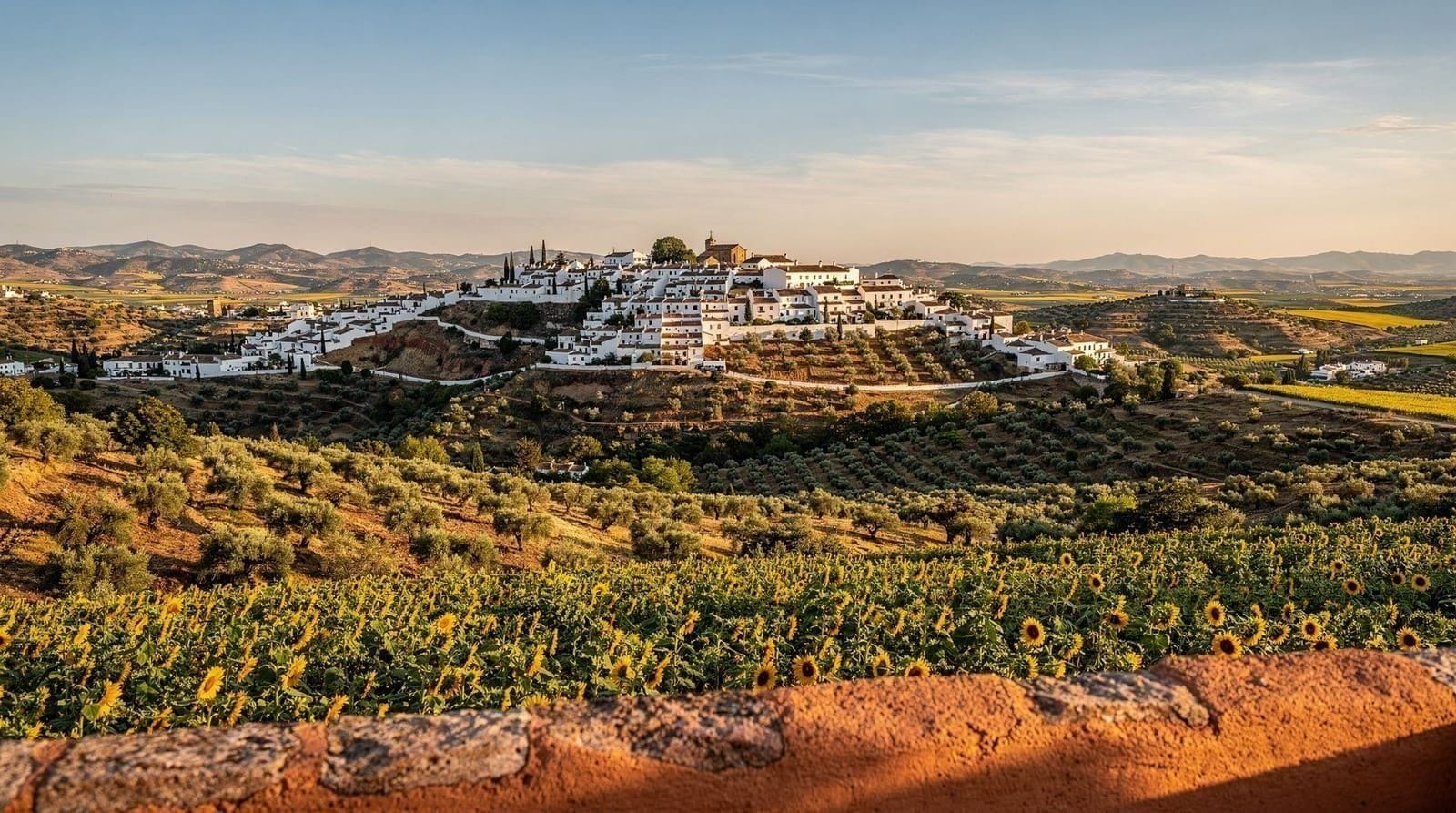
The town is less visited than Jerez or Cádiz, which keeps it honest: the bodegas are not primarily set up for tourism, the restaurants serve locals as much as visitors, and the beachfront Bajo de Guía neighbourhood still feels like a working fishing port rather than a tourist zone.
The Manzanilla distinction
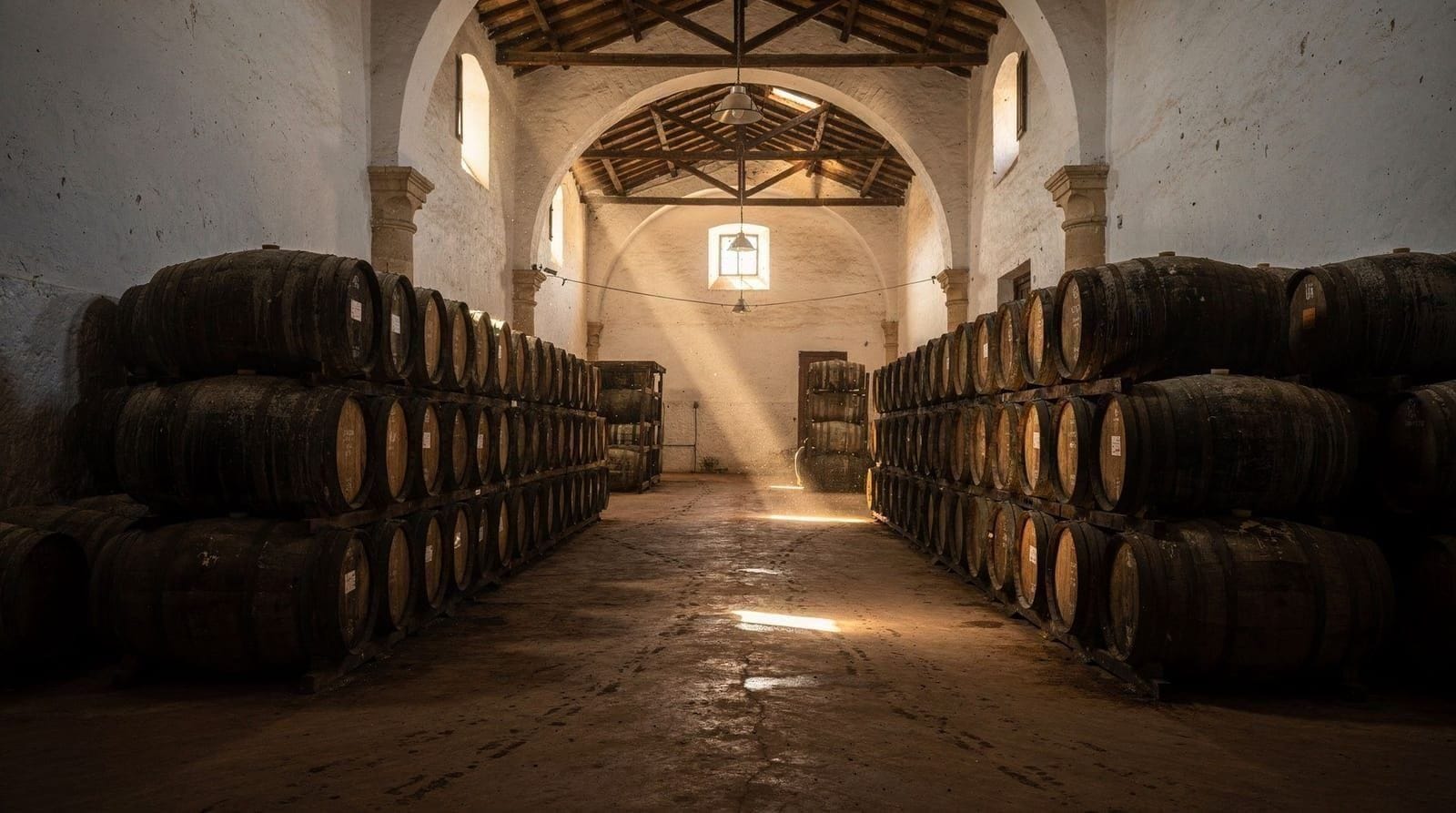
Manzanilla is a variety of Fino sherry that can legally only be produced in Sanlúcar — not in Jerez, not in El Puerto. The unique microclimate at the river mouth (humid Atlantic air, salt breezes) promotes a specific strain of flor yeast that gives Manzanilla its characteristic salty, slightly bitter character. It is drier and lighter than standard Fino, and arguably better with fresh seafood.
The town’s best-known Manzanilla bodegas include:
Barbadillo (Calle Sevilla 1): The largest producer in Sanlúcar, making Solear (their flagship) and several aged soleras. Guided tours run daily (Sundays at 12:00 only) and cost €22 for adults, with a tasting of three wines. The tour includes the historic cellars and a proper tasting.
Hidalgo-La Gitana: Producers of La Gitana, one of the most recognisable Manzanilla labels in Spain. Smaller and more personal than Barbadillo. The family has been making sherry here since 1792.
Bodegas Delgado Zuleta: Produces La Goya Manzanilla. One of the few bodegas that still does authentic horse-powered operations for some processes.
Most tastings pair Manzanilla with local seafood rather than the cured ham typical of a Jerez bodega tour, which is part of what makes Sanlúcar’s version of the Sherry Triangle circuit distinct. If you are trying to decide which sherry town deserves your time, our broader sherry tasting guide compares Jerez, Sanlúcar and El Puerto de Santa María side by side.
The beach horse races (Carreras de Caballos)
Every August, horse races take place on the hard-packed wet sand of Bajo de Guía beach during low tide. The dates shift annually (typically late July to late August, across three race days). This is not a sanitised tourist event: it is a working horse race with betting, crowds of Spaniards, and horses galloping at full speed along the waterline at sunset. It is genuinely spectacular.
The dates for 2026 will be announced by the Real Club de Fútbol Bahía de Cádiz (organisers). If this aligns with your trip, the races are worth planning around.
Arrive early if you want a spot near the water — the beach fills with locals from across the province, and the best viewing stretch of Bajo de Guía gets crowded well before the first race. Betting kiosks (apuestas) operate informally along the sand; you do not need to bet to enjoy the spectacle, but it adds to the local flavour. Combine race days with a bodega tour earlier in the day, since most races run in the late afternoon or early evening around low tide.
Getting there from Seville
By bus: Comes buses run from Seville’s Plaza de Armas to Sanlúcar de Barrameda, journey time approximately 1 hour 30 minutes (check current fares). Several departures daily. This is the only realistic public transport option (there is no train).
By car: Take the A-8058 / A-474 from Seville via Coria del Río and Lebrija, or the faster A-4 south to Jerez then the A-480 northwest to Sanlúcar. Either route is about 75 km and 1 hour 15 minutes.
By organised tour from Seville: Tours combining Jerez with Sanlúcar or the Sherry Triangle are available, though less common than the standard Cádiz-Jerez day trip.
Jerez, Cádiz and Andalusian horses day trip from SevilleSeafood and where to eat
Bajo de Guía — the beach strip at the base of the upper town — is lined with marisquerías and fish restaurants. The specialities are langostinos (giant prawns from the Guadalquivir mouth, genuinely excellent), tortillitas de camarones (prawn fritters from Cádiz province), and whatever is freshest from the Atlantic.
Casa Balbino (Plaza del Cabildo): The most famous tapas bar in Sanlúcar, with a long menu of locally produced tapas and reliably good Manzanilla. Gets busy on weekends.
El Espigón (Bajo de Guía): Reliable beachfront restaurant for grilled fish, strong on langostinos.
Mirador de Doñana (Bajo de Guía): Slightly more upmarket, with views over the river toward the Doñana marshes opposite.
Expect to pay around €20–35 per person for a seafood lunch with wine in Bajo de Guía, more if you order langostinos by weight (they are priced by the kilo and add up quickly, but are worth it). Tapas portions in the upper town, away from the beachfront, run noticeably cheaper than in central Seville.
Doñana access from Sanlúcar
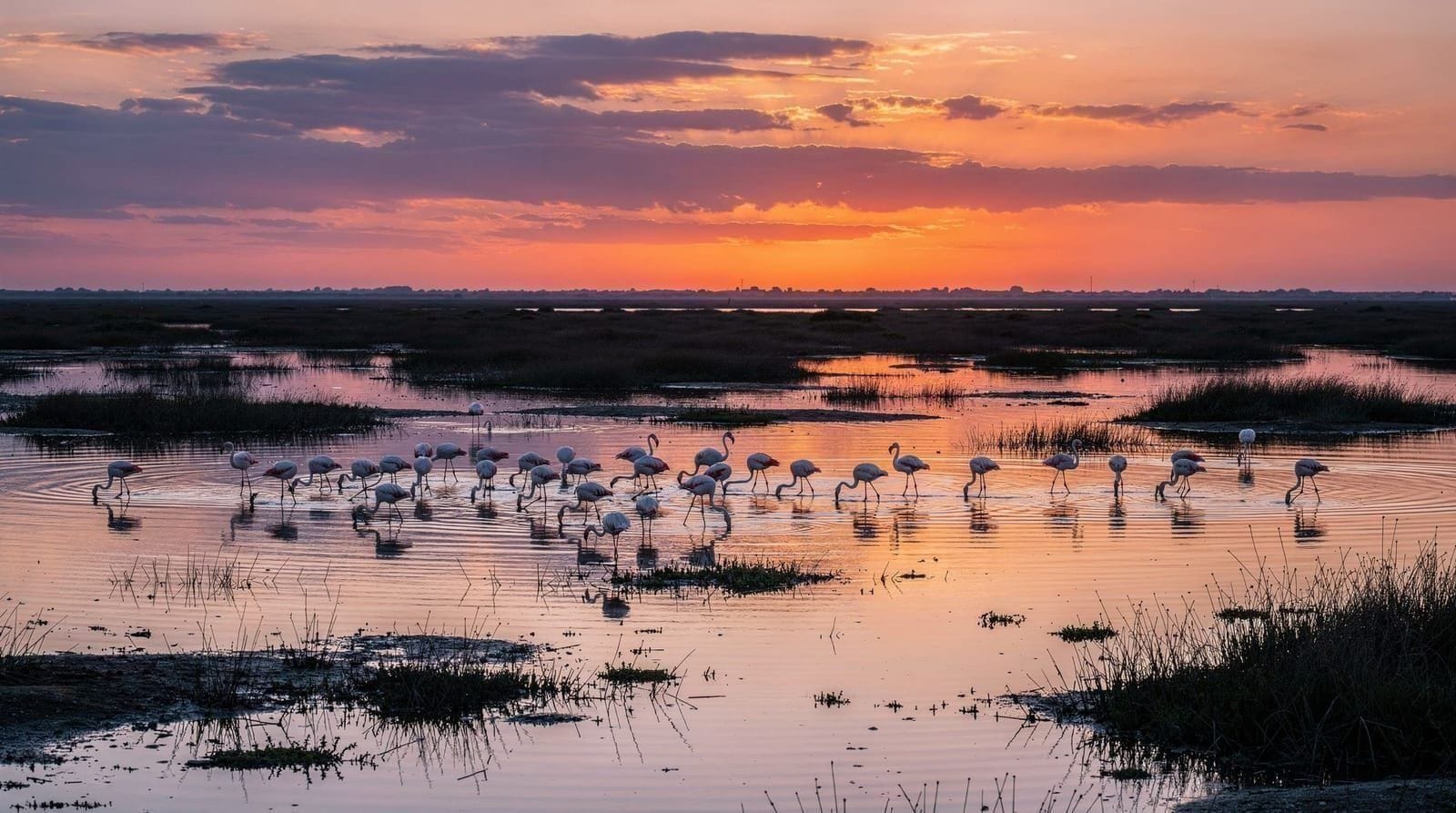
The Guadalquivir forms the southern border of Doñana National Park. From Bajo de Guía, you can take a boat tour into the park that approaches from the river — a different perspective from the 4WD tours that enter from the Almonte/El Rocío side. The Real Fernando riverboat (operated by Viajes Doñana) runs morning departures (book in advance in spring and autumn). See the Doñana National Park guide for how this compares to the overland routes.
Cádiz and Jerez day trip from Seville — covers the Sherry Triangle areaCombining Sanlúcar with other destinations
Sanlúcar works well combined with Jerez (30 km, easy car or taxi) or as part of a Sherry Triangle loop with El Puerto de Santa María. For Doñana, Sanlúcar gives river access to the park’s western edge; the main 4WD safari entrances are at Almonte, closer to El Rocío. If you would rather organise the whole Sherry Triangle and Doñana region into a single multi-day plan, see the Andalusia week from Seville itinerary or the general best day trips from Seville guide for how Sanlúcar fits alongside Jerez and Cádiz.
Shaping your day in town
The easiest way to enjoy Sanlúcar is to let the day follow the town’s own rhythm. Start in the upper town, where the historic streets and the bodegas sit, and book your cellar visit for the first part of the day while the guides are fresh and the tasting rooms are quiet. Walk down toward the river after the tour, so that lunch in Bajo de Guía comes naturally rather than as a rushed afterthought. Spaniards tend to eat late, and the seafood restaurants fill up accordingly; arriving a little ahead of the main lunch crowd gets you a better table and calmer service.
If you are building this into a wider plan, the Seville in three days itinerary leaves little slack for a river-mouth detour, whereas the Seville day trips itinerary treats a half-day out of the city as a normal rhythm. Travellers who have already ticked off the big monuments in the capital often find that Sanlúcar is exactly the change of pace they were missing.
What the river mouth feels like
Part of Sanlúcar’s appeal is simply the setting. The Guadalquivir is a wide, slow, brown river by the time it reaches the Atlantic, and the light over the water in the late afternoon is the reason many visitors linger longer than planned. Across the river the Doñana marshes stretch out as a low, empty horizon, a reminder that you are standing on the edge of one of Spain’s great wild landscapes. If you have already seen the river in the city, our Guadalquivir river cruise guide shows how different the water looks upstream, among the monuments of Seville, and a kayak outing in the capital gives a closer feel for the same river before you see where it ends.
The town also carries its maritime history lightly. There is no theme-park treatment of Magellan or Columbus here; the past is simply present in the street layout, the old port atmosphere and the names you spot on plaques. Visitors who enjoy that kind of quiet context will also like Cádiz, the oldest city in the region, or the Cádiz day trip guide if you want to compare the two coastal towns before choosing.
Pairing Sanlúcar with a sherry education
Manzanilla makes more sense once you understand how it fits into the wider sherry world. Before you go, the Jerez bodegas guide explains how the larger cellars operate, and the Jerez day trip guide shows how to reach them. If you would rather have the whole region organised for you, a guided Cádiz and Jerez tasting day trip is the option to compare against doing it yourself. A wine tours from Seville overview also lays out the choices for people who want a guide rather than a bus timetable.
When you taste, take your time and let the glass tell you something. A Manzanilla served properly chilled, alongside something salty from the sea, is a very different drink from a heavy dessert sherry, and the staff in Sanlúcar are usually happy to explain the difference if you ask. Do not be shy about asking for a recommendation; the local bars are proud of their wine and will pour you something suited to what you are eating.
Practical tips for a smoother visit
- Carry a bit of cash for small bars and kiosks, even though larger restaurants take cards.
- Wear comfortable shoes: the upper town has gradients and uneven paving, and the beach walk is soft underfoot.
- Bring a light layer even in warm months, since breezes off the Atlantic can feel cooler than the temperature suggests.
- Confirm bodega opening arrangements before you travel, as smaller producers may handle visits differently from the big names.
- Plan the return bus before lunch, not after, so that a second glass of Manzanilla does not turn into a missed departure.
Travelling with a mixed group? Sanlúcar suits families and non-drinkers better than people expect, thanks to the beach and the open-air seafood culture, and the Seville with kids guide offers ideas for balancing a quieter trip. For an overview of where this town sits among the region’s options, the which Andalusian city to visit guide and the Seville travel tips for first-timers are useful companions. Readers who prefer first-hand accounts can also browse our Jerez, sherry and horses trip report and the Doñana safari write-up.
Frequently asked questions about Sanlúcar de Barrameda
What makes Manzanilla different from regular Fino sherry?
Manzanilla can only be produced in Sanlúcar de Barrameda. The town’s coastal microclimate — high humidity, salt air from the Atlantic — promotes a specific variant of flor yeast that gives the wine a distinctly salty, briny character. It is typically slightly lighter and drier than Jerez Fino.
When are the beach horse races in Sanlúcar?
The Carreras de Caballos take place on 3 race days in August (dates shift each year based on tide tables — races happen at low tide on wet sand). Check with the Real Club de Fútbol Bahía de Cádiz for 2026 dates.
How long should I spend in Sanlúcar?
Half a day covers a bodega tour, lunch in Bajo de Guía, and a walk through the upper and lower towns. A full day allows a second bodega, more thorough exploration of the historic centre, and potentially a boat trip toward Doñana.
Is Sanlúcar de Barrameda worth visiting if I don’t drink sherry?
Still worthwhile for the seafood (the langostinos are genuinely excellent), the Bajo de Guía beachfront atmosphere, and the historical interest of the Magellan and Columbus connections. The town has real character and is not overrun with tourists.
Can I visit Doñana National Park from Sanlúcar?
Yes. The Real Fernando riverboat runs morning excursions from Bajo de Guía along the Guadalquivir into the park’s western fringes. This is an entirely different experience from the 4WD safaris that depart from El Rocío/Almonte — it is slower and less deep into the park but gives good bird watching.
Is Sanlúcar de Barrameda a day trip from Seville or an overnight stop?
Most visitors do it as a day trip — the bus round-trip plus a bodega visit and lunch fits comfortably into an afternoon. It rewards an overnight stay if you want to catch a horse-race evening in August or add a full day toward Doñana, but for most itineraries a half-day out of Seville is enough.
Do I need a car to visit Sanlúcar de Barrameda?
No. The Comes bus from Seville’s Plaza de Armas runs directly to Sanlúcar several times a day and drops you within walking distance of the bodegas and Bajo de Guía. A car only helps if you plan to combine Sanlúcar with Jerez or El Puerto de Santa María in the same day.
Top experiences
Bookable activities with verified prices and instant confirmation on GetYourGuide.