Doñana National Park
Europe's largest national park. Lynx, flamingos, and Atlantic dunes. Day-trip logistics from Seville: 4WD tours, El Rocío, and what to expect.
From Seville: Doñana National Park 4WD day trip
Quick facts
- Best for
- Iberian lynx, flamingos, Atlantic dunes, birdwatching
- Days needed
- 1 full day
- Getting there
- Car or guided 4WD tour from Seville, 1h drive
- Peak crowds
- Romería del Rocío (May–June), summer beach season
- Currency
- EUR
Doñana is one of Europe’s most significant wetland ecosystems — a UNESCO World Heritage Site and Ramsar wetland covering approximately 1,063 km² at the mouth of the Guadalquivir. The park contains three main ecosystems: the marismas (marshes), the cotos (scrubland and pine forests), and the Atlantic coast dunes. It is the most important overwintering site for migratory birds in Western Europe and one of the last strongholds of the critically endangered Iberian lynx.
| Where | Guadalquivir estuary, ~80 km southwest of Seville |
| Cost | Official 4-hour 4WD tour from El Acebuche from €35 per person; private and combined tours cost more |
| Time needed | Full day |
| Getting there | Car to El Acebuche (~1h), or a guided tour with transport included |
| Best time | October–April for birds; May–June for the Romería del Rocío atmosphere (very crowded) |
What you will (and might) see
Iberian lynx (lince ibérico): Doñana is one of the two main breeding populations (the other is in Jaén). Sightings are not guaranteed but the park has the highest lynx density in Spain. Dawn and dusk are the best times. 4WD tours into the protected core area have a reasonable chance of a sighting, particularly October–April when lynx are more active.
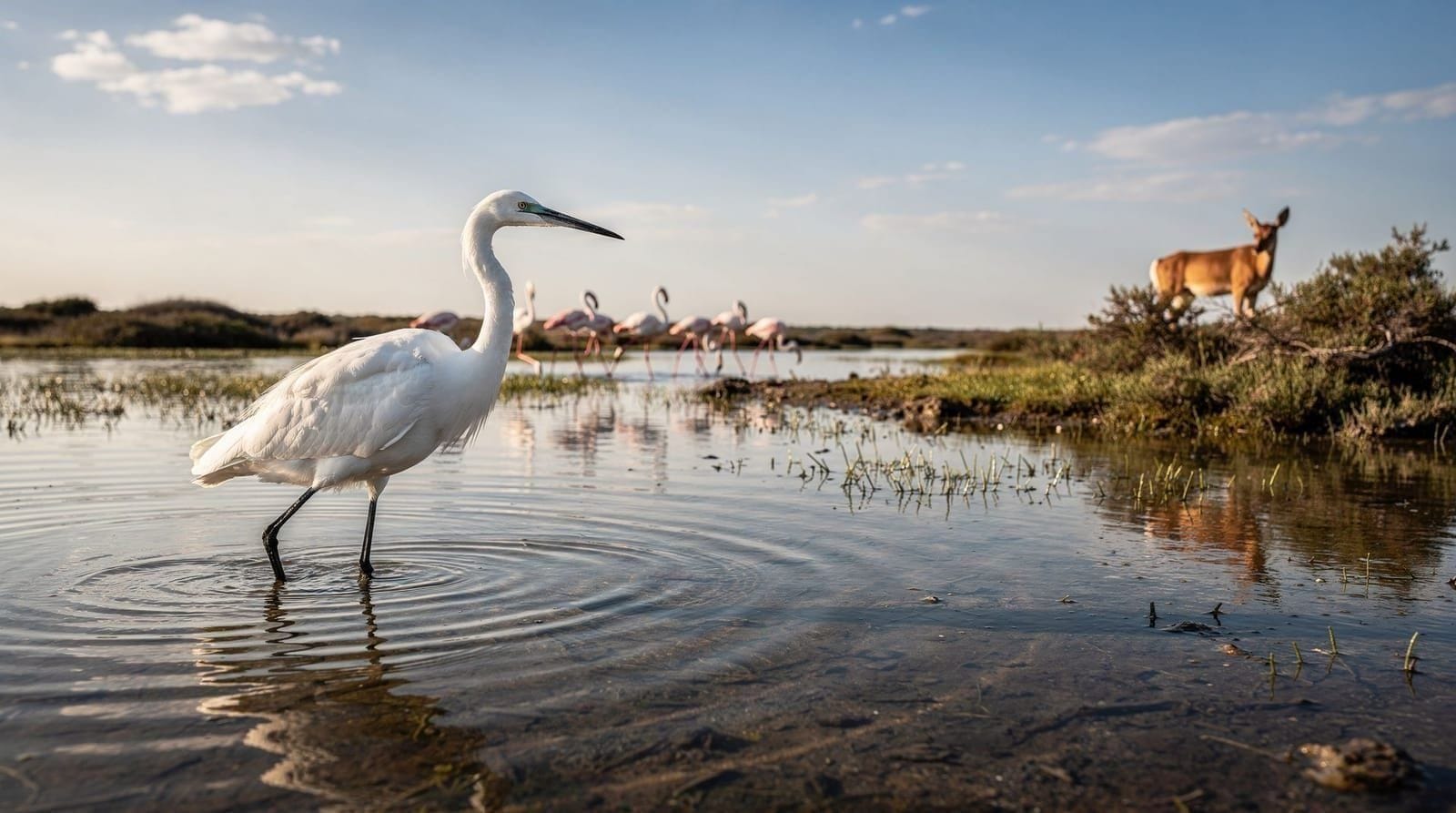
Birds: over 360 species recorded. Key species include greater flamingo (flamingo rosado), European white stork (cigüeña blanca), black-winged kite, Spanish imperial eagle (águila imperial ibérica — critically endangered), and huge flocks of migratory ducks, waders, and herons. October–March brings peak diversity.
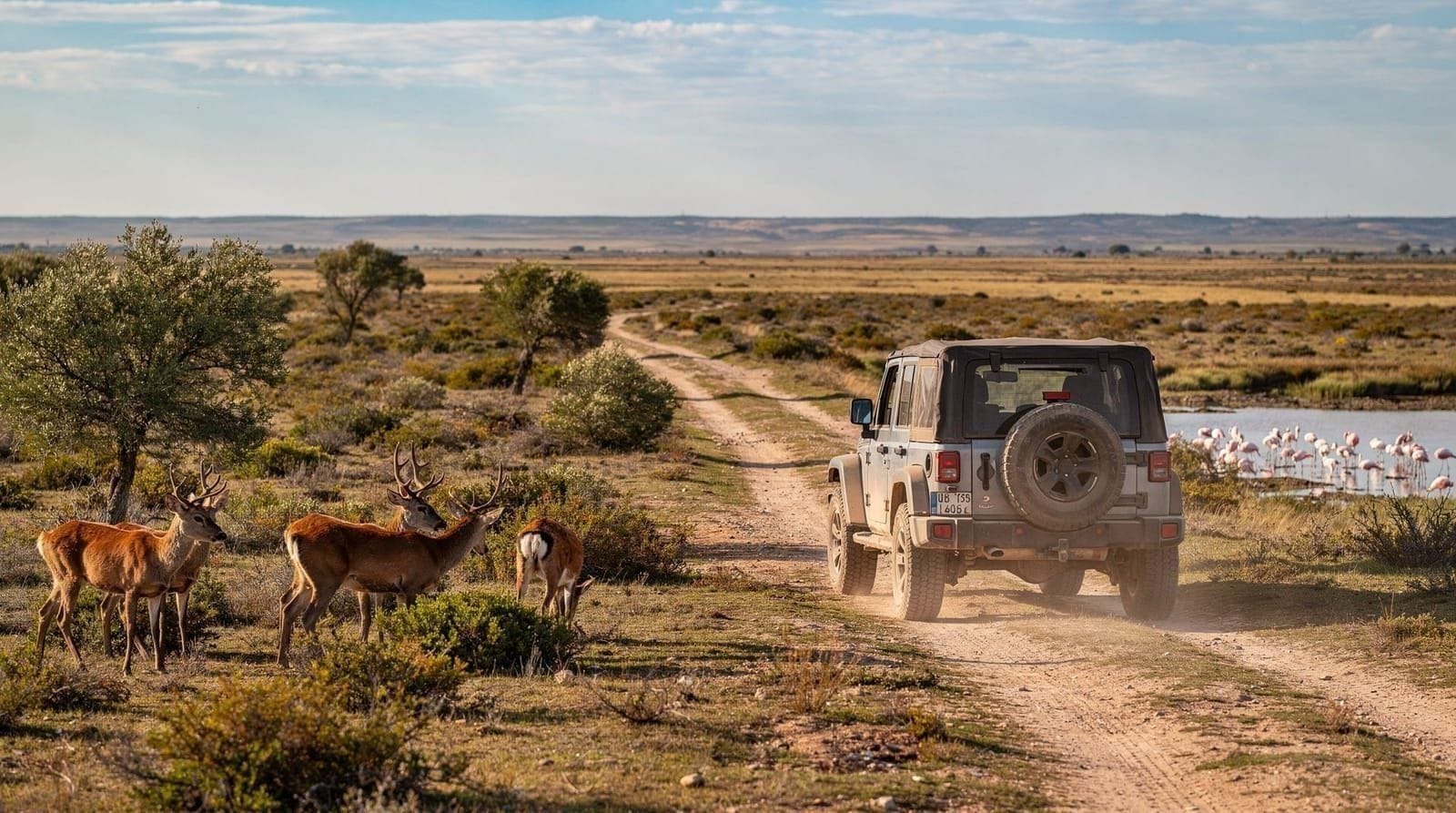
Fallow deer and red deer: common throughout. Wild boar visible.
Atlantic dunes: the Coto Donana coastal dune system moves inland at approximately 6 metres per year, burying pine forest in its path. The scale is disorienting — a vertical wall of sand 30 metres high in some sections.
Access rules — this is important
The core of the national park (Parque Nacional de Doñana) has strictly controlled access — you cannot enter independently by car. Authorized access is via:
- Licensed 4WD jeep tours run by official concessionaries from the El Acebuche reception centre or from Matalascañas beach.
- Guided boat tours on the Guadalquivir from Sanlúcar de Barrameda (seasonal).
- The visitor centre viewing hides and the marked trails in the buffer zone (Parque Natural).
The surrounding natural park buffer zone is more accessible for independent walking and birdwatching.
Tours from Seville
The Doñana National Park 4WD day-trip from Seville is the standard option: transport from Seville, 4WD entry into the protected core, English-speaking guide, and return to Seville in the evening.
The off-road Doñana full-day tour from Seville focuses on the broader natural park with more off-road vehicle access to the dune landscape.
The Doñana, El Rocío and Matalascañas beach tour combines the park with the extraordinary white village of El Rocío and the Atlantic beach at Matalascañas — a good option if pure wildlife watching is not the primary interest.
El Rocío
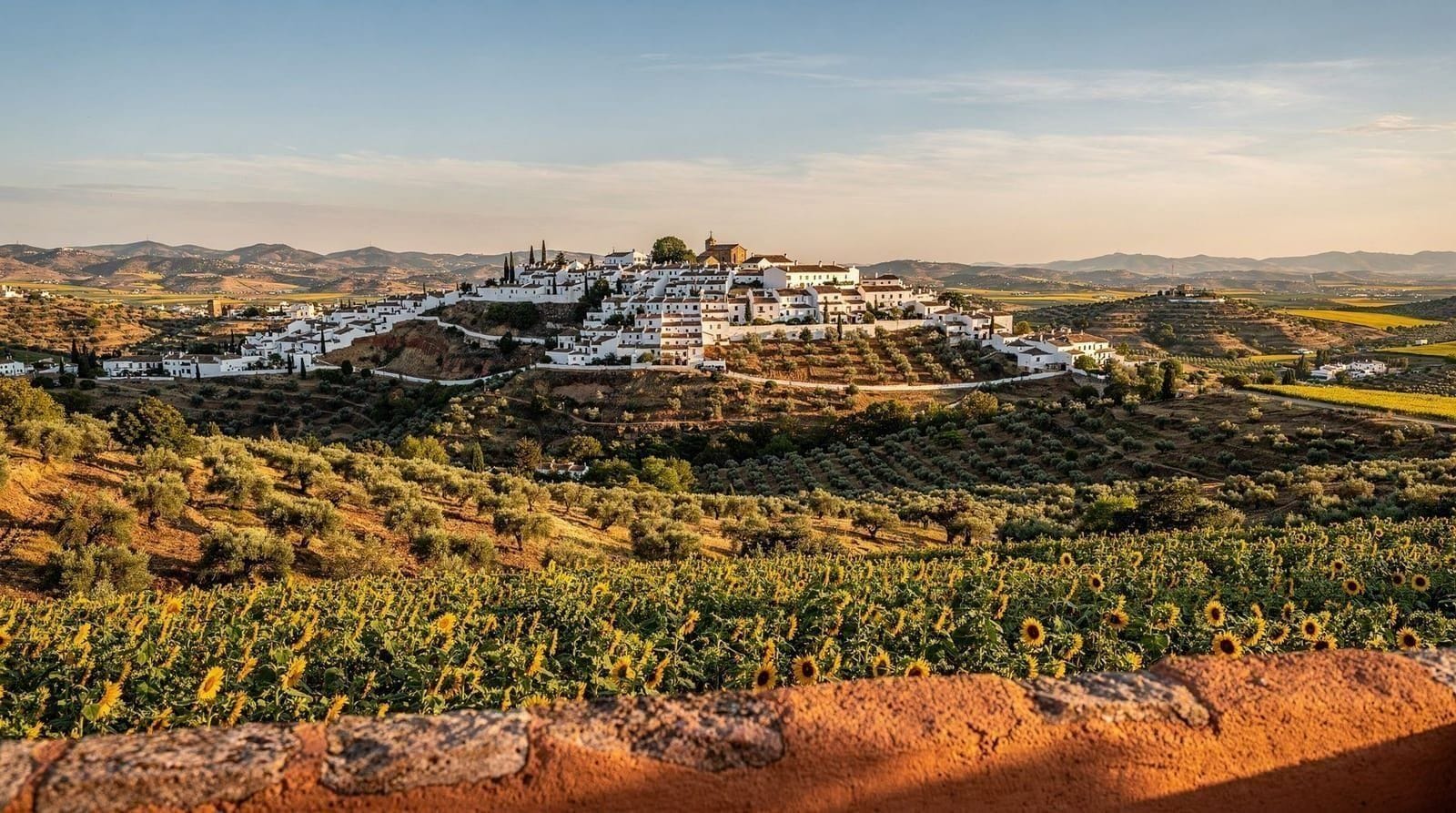
El Rocío is one of Andalusia’s stranger villages. About 1,500 people live here year-round, in low white houses on sandy streets (no paving) — horses and donkeys are the practical transport. The village exists essentially for one purpose: the Virgen del Rocío shrine, which draws the largest pilgrimage (Romería del Rocío) in Spain every Pentecost (May/June). Approximately one million pilgrims travel by foot, horseback, ox-cart, and car from across Andalusia.
Visiting on any day outside the Romería, El Rocío is eerily quiet — the church, the sandy streets, the birdwatching hides on the marshes edge, and the flamingos visible from the village perimeter. It is genuinely unusual.
El Acebrón Palace (Palacio del Acebrón): a 20th-century hunting lodge in the park’s buffer zone with an interesting permanent exhibition on Doñana’s ecosystem. Free entry. Accessible by a woodland trail from El Acebuche.
Getting to Doñana independently
By car from Seville: the main access point is El Acebuche visitor centre, about 80 km southwest via the A-49 and A-483. Journey: approximately 1 hour. The visitor centre has hiking trails, hides, and organises the official jeep tours (book at the centre or in advance — peak season fills quickly).
Matalascañas beach is 5 km further along the coast from El Acebuche — a standard Atlantic beach town with holiday apartments and beach bars, pleasant in summer.
Practical notes
The park is at its best October–April for wildlife. Summer (June–August) is extremely hot and many species retreat to shade. But summer dusk walks around the marismas for flamingo and stork concentrations can still be excellent.
Bring binoculars — essential for serious birdwatching, useful even on the 4WD tours.
Romería del Rocío 2026: 22–25 May (Pentecost Sunday is 24 May; the main procession is in the early hours of Whit Monday, 25 May). The village and roads are inaccessible for a week before and after. Book any Doñana visit well clear of this date if you want a calm experience.
The ecology of Doñana in depth
Doñana sits at the mouth of the Guadalquivir, where the river delta creates the marismas — a seasonally flooded wetland that fluctuates enormously between winter (maximum flooding) and summer (maximum drying). This annual flooding cycle creates the food-rich conditions that support the extraordinary bird concentrations.
The marismas in winter (October–March): hundreds of thousands of ducks, geese, and waders. European white stork roosts in numbers not seen elsewhere in Spain. Greater flamingo colonies — up to 4,000 individuals — visible at close range from the El Acebuche hides.
The cotos in spring: the scrubland (monte) of stone pine, cork oak, halimium, and rosemary supports the breeding pairs of Spanish imperial eagle (approximately 25 pairs within the park), Iberian lynx (approximately 100 individuals), and red kite.
The dune system: the mobile coastal dunes (the Corrales and Navazo areas) are unique in the Iberian Peninsula — a moving landscape of active dunes migrating inland, with seasonal freshwater lakes (corrales) forming behind them in winter.
The Atlantic beach (Playa de Doñana): a 27 km stretch of completely undeveloped Atlantic beach accessible only by 4WD. No services, no infrastructure. Accessible on guided 4WD tours from Matalascañas.
The Iberian lynx: context
The Iberian lynx (Lynx pardinus) is the world’s most endangered cat species. In 2002, fewer than 100 individuals remained in the wild. The combination of road casualties, rabbit myxomatosis (which decimated its prey base), and habitat loss brought it to the edge of extinction.
Conservation programs — removing road hazards, restoring rabbit populations, and captive breeding — have brought numbers back to approximately 1,100 individuals as of 2024. Doñana and the Sierra Morena (Jaén province) are the main populations.
Spotting probability on a guided 4WD tour in Doñana: approximately 30–50% chance of a sighting (higher October–April, lower in summer). Dawn and dusk departures from El Acebuche give the highest probability. The guides know the current home ranges of identified individuals.
The El Acebuche visitor centre
El Acebuche (the holm oak tree) is the main visitor hub, about 5 km from Matalascañas on the H-612. The centre has:
- Exhibition on Doñana’s ecosystems (free, good quality)
- The official 4WD tour departure point
- Bird hides overlooking the marismas ponds — free access, open all hours
- A café and small shop
The hides at El Acebuche typically show greater flamingo, spoonbill, purple heron, and glossy ibis from the benches without paying for a tour. This is the best free wildlife watching in the area.
Matalascañas
Matalascañas is a beach town at the southern edge of the park — a standard summer resort of apartment blocks and beach bars. It is not architecturally interesting, but the Atlantic beach here is excellent (clean water, significant surf in autumn/winter, essentially empty in the off-season). The beach immediately adjacent to the park boundary is among the most pristine in mainland Spain.
Planning a Doñana day-trip
Best combination: leave Seville at 8:00. Arrive El Acebuche 9:00. 4WD tour (3.5–4 hours). Lunch at Matalascañas or El Rocío. Afternoon at El Rocío village and marisma hides. Return to Seville by 19:00.
Photography note: a 200–400mm telephoto lens is the minimum useful for bird photography. Binoculars are essential for any wildlife watching. The 4WD tours do not provide optics — bring your own.
Doñana compared with Seville’s other nature day trips
Doñana is the clearest wildlife-focused choice among Seville’s day-trip options, but it is not the only nature escape within reach. Aracena trades wetlands and lynx for cool sierra forest and cave temperatures — a better fit if birdwatching interests you less than escaping Seville’s summer heat. The Costa de la Luz overlaps geographically at Matalascañas, right on the park’s southern boundary, so a beach afternoon can realistically follow a morning 4WD tour if timed carefully. For a broader sense of how Doñana ranks against Seville’s other classic excursions, see the best day trips from Seville guide; the dedicated Doñana day trip guide has fuller hour-by-hour planning, and a first-hand account of what a 4WD safari actually turns up is in the Doñana safari blog post.
Choosing between the Doñana tours
The three tours listed above are not interchangeable, and the right pick depends on what you want from the day. If the lynx, the flamingos and the dune landscape are the reason you are coming, the 4WD day trip is the straightforward answer: the time is spent inside the protected core rather than on the road or at a restaurant table. If you care more about the vehicle access and the wider natural park scenery, the off-road tour fits better. If your group is split between people who want wildlife and people who want a beach and a village, the El Rocío and Matalascañas combination keeps everyone reasonably happy, at the cost of less time with the animals.
Whichever you choose, the sensible habit is to read what is included before booking — transport from Seville, the guide’s language, and how much of the day is spent inside the core versus on the coast. Those details change the experience far more than the headline title does.
Doñana as part of a wider Andalusian trip
Doñana works best as a deliberate change of pace, not an add-on squeezed between monuments. A first visit to the city is covered in the Seville destination page, and a day in the marshes balances days of palaces and tapas nicely. If you are still deciding how long to stay overall, the how many days in Seville guide helps you see where a wildlife day fits. The Seville day trips itinerary shows how to sequence excursions so that you do not stack two long driving days back to back, and the Andalusia week from Seville itinerary places Doñana alongside the larger names of the region.
Travellers who are weighing wildlife against heritage often compare Doñana with the classic city excursions. The Córdoba day trip guide is the natural counterpart if you would rather spend a day among mosque arches than marshland. If Córdoba and Granada are both competing for the same free day, the Seville vs Granada vs Córdoba guide can help you decide, and Doñana is best chosen when nature is the priority and not simply because it is different.
Villages and towns around the park
The park edge is dotted with places that make the day richer. El Rocío deserves its own time rather than a rushed stop, particularly for the quiet sandy streets and the view over the marshes. Matalascañas gives you the Atlantic and an easy lunch. On the other side of the estuary, Sanlúcar de Barrameda is where the river meets the sea and where the seasonal boat tours depart. Further west, the province’s capital Huelva lies beyond the park and is more a base for a longer stay than a stop on a single day.
Practical preparation for the day
Doñana rewards a little planning. Wear layers: mornings in the marshes and on open vehicles can feel cooler than the weather you left behind in the city, and the dunes offer no shade. Closed shoes are better than sandals for the walking sections, and a hat and sun protection matter in every season. Our Seville packing list covers the basics for the region, and if you are travelling in the hottest months, the Seville summer heat guide explains how to pace outdoor days.
Getting to the park is simple with a tour, since transport from the city is included. If you prefer to drive yourself to El Acebuche, the getting around Seville guide gives a sense of the transport options on the Seville side, and it is worth confirming the departure time of your tour before you decide how early to start. Bring water and some food, as services inside the protected area are limited and you should not count on finding a shop at the moment you need one.
Is Doñana right for children and non-specialists?
Doñana is not a zoo, and the pace is that of waiting and watching. Older children who enjoy animals often love the jeep ride and the dunes, while very young ones can find the long sitting hours tiring. If you are travelling as a family, the Seville with kids guide offers other ideas for balancing the more demanding days. For adults with only a passing interest in birds, the combined El Rocío and beach tour is usually the gentler choice, because the day has more variety and less pressure to spot any particular species.
Set expectations before you leave. The best Doñana days are those where you accept the marshes on their own terms: a distant eagle, a line of flamingos in the haze, a deer crossing the track. Anything more, a lynx included, is a gift.
Frequently asked questions about Doñana National Park
Do I need to book a Doñana tour in advance?
Yes, especially October–April and around the Romería del Rocío in May/June. The protected core has limited daily capacity for licensed 4WD tours, and popular departure times sell out.
Can I see the Iberian lynx on a Doñana day trip?
There is a genuine chance — guides estimate roughly 30–50% on a guided 4WD tour, higher October–April and at dawn or dusk — but it is never guaranteed. Come for the broader wildlife and landscape experience, with a lynx sighting as a bonus rather than the sole reason to visit.
Top experiences
Bookable activities with verified prices and instant confirmation on GetYourGuide.