El Puerto de Santa María
The sherry capital's port city: Fernando III's favourite, fresh seafood, and easy ferry access from Cádiz. 1h50 from Seville by train.
From Seville: Cádiz and Jerez de la Frontera day trip
Quick facts
- Best for
- Sherry bodegas, seafood, historic centre
- Days needed
- ½–1
- Getting there
- Train to Cádiz + ferry, or bus, ~1h50
- Currency
- EUR
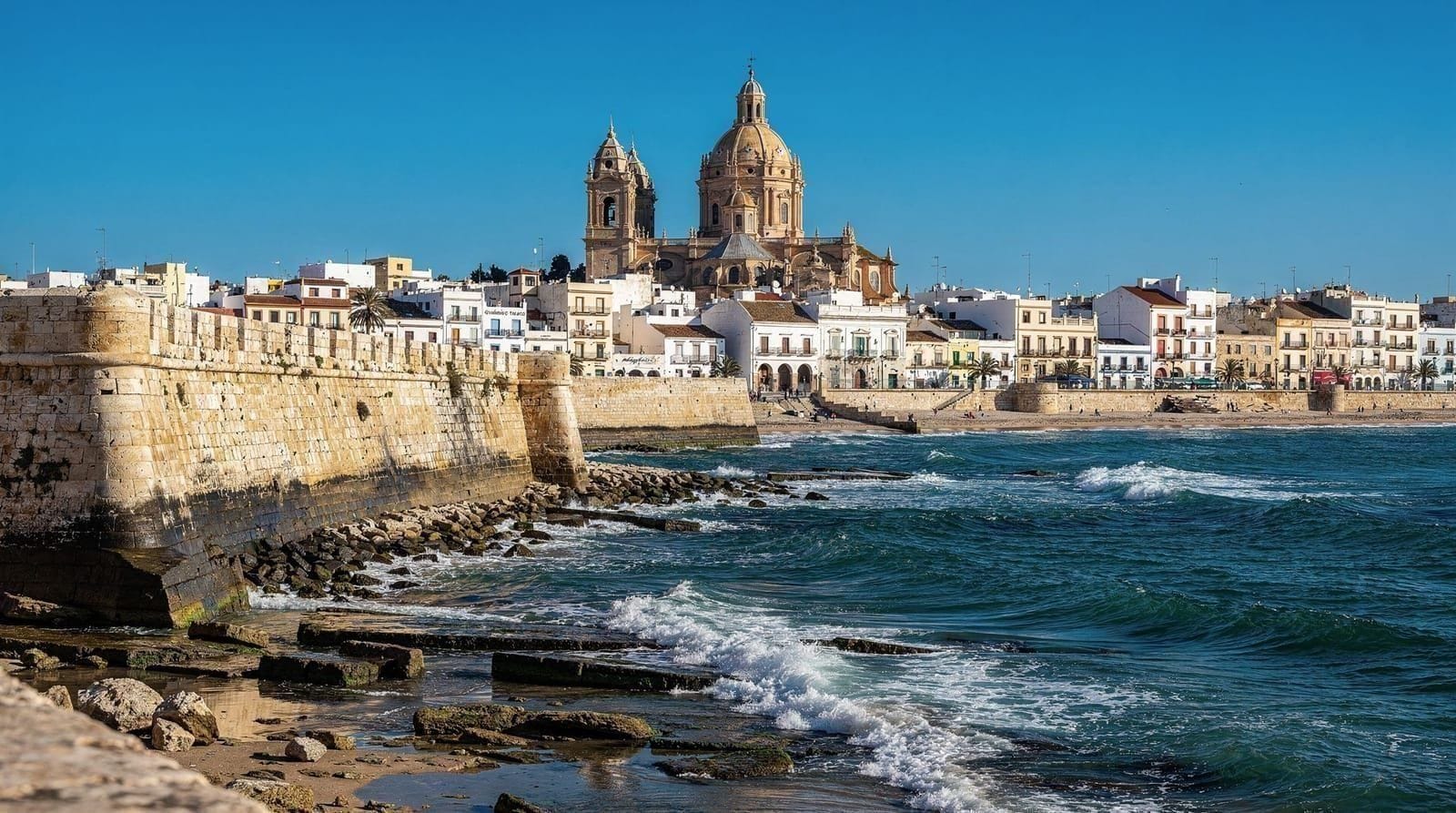
El Puerto de Santa María is the third vertex of the Sherry Triangle, alongside Jerez de la Frontera and Sanlúcar de Barrameda. Where Jerez is grandly monumental and Sanlúcar has its Manzanilla reputation, El Puerto is more relaxed: a working port and beach town that happens to have some of the finest seafood restaurants in Andalusia and several serious sherry bodegas within walking distance of the ferry dock.
| Where | Bay of Cádiz, ~1h50 from Seville |
| Cost | Castillo de San Marcos from €8; bodega tours from €15 |
| Time needed | Half day; a full day with a beach stop |
| Getting there | Train to Cádiz + catamaran ferry (most scenic), or direct bus |
| Best time | April–June and September–October |
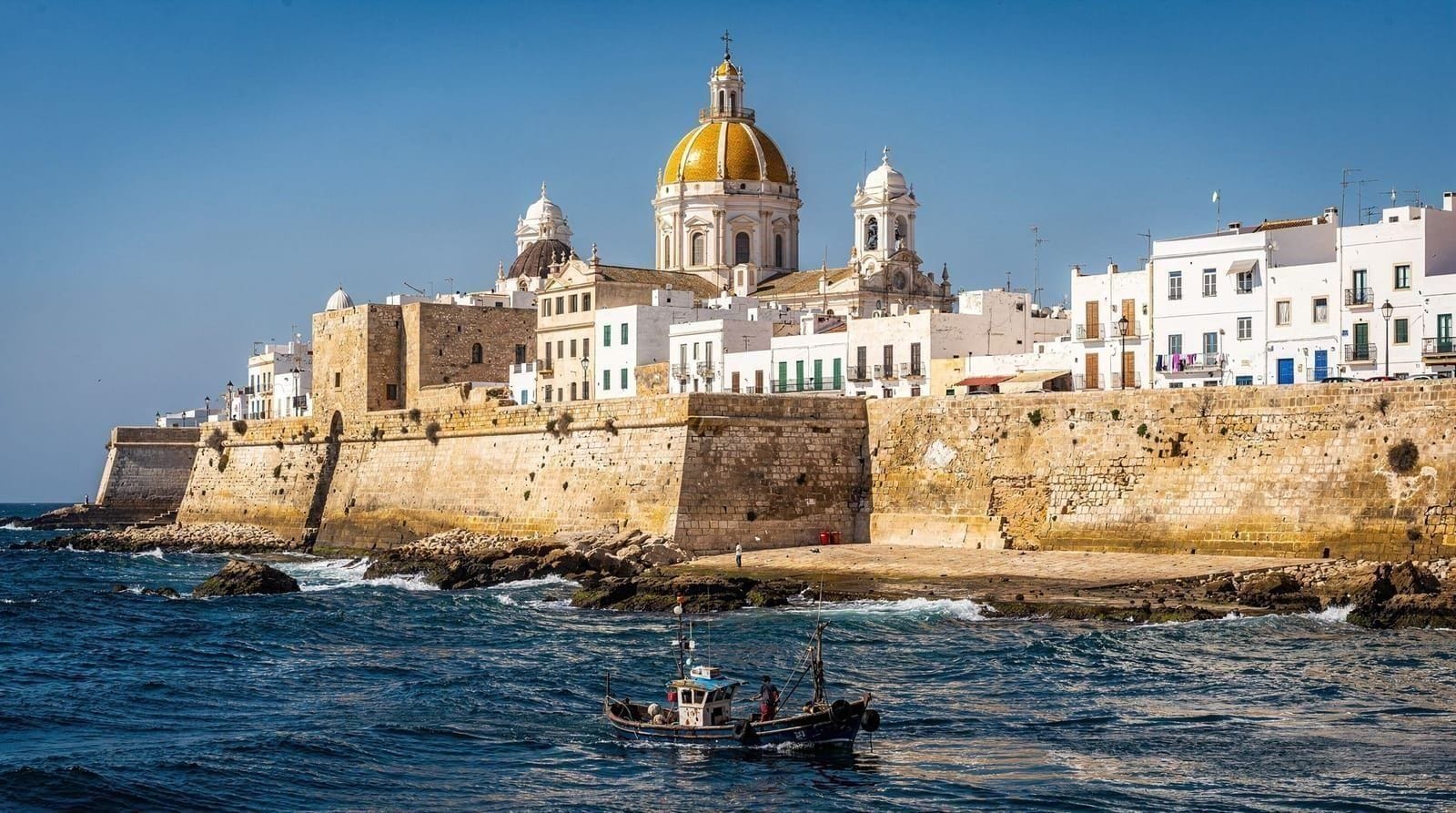
Columbus came here to recruit sailors before his second voyage to America. The town supplied ships and provisions to the Indies trade for two centuries. The castle at the centre of the old town (Castillo de San Marcos) was built by Alfonso X on the site of a mosque in the 13th century and remains in remarkably good condition.
What to see and do
Castillo de San Marcos is the starting point. Built in 1264 on the foundations of an earlier mosque, it incorporates a mosque’s mihrab into what became the castle chapel — an unusual fusion you can still see inside. Osborne family (yes, the sherry dynasty) owned it for much of the 20th century. Open daily (10:00–16:00; 10:00–20:00 in July and August); visits from €8 with an audioguide.
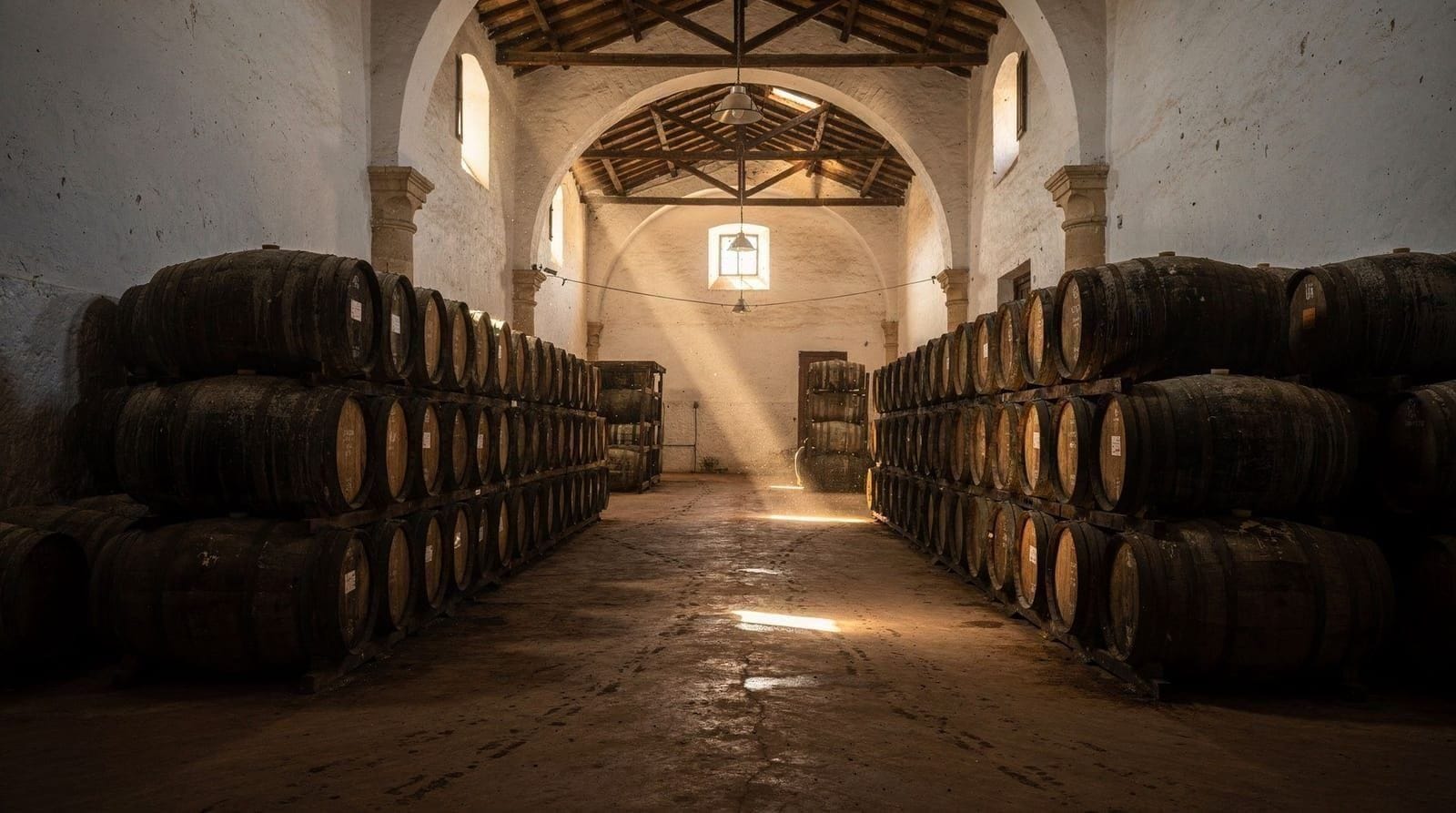
Bodegas Osborne is the most visible commercial winery in the area — the giant black bull silhouettes you see on hilltops across Spain are their advertising. Tours run daily at €26.50 per person, covering production, ageing, and a tasting. Book in advance at the bodega website.
Bodegas Gutiérrez Colosía is smaller, family-run, and situated directly on the Guadalete riverbank. The bodega has been in operation since 1838 and offers tours that include a proper tasting of Fino, Amontillado, and Pedro Ximénez. More personal than Osborne. Tours from €15.
The seafood market and restaurants around Ribera del Marisco and the port area: El Puerto is famous for langostinos de Sanlúcar (large prawns) and ortiguillas (sea anemones, a local delicacy usually battered and fried — try them if you see them on a menu). Casa Flores (Calle Ribera del Rio 9) is consistently recommended for traditional grilled fish at non-tourist prices. Romerijo is the famous long-standing marisquería — quality is reliable but the place is enormous and fills with weekend crowds.
Playa La Puntilla is the beach at the river mouth, suitable for a swim after lunch if you are combining a half-day explore with beach time.
Getting there from Seville
Option 1 — Train + ferry (most scenic): Take the Avant train from Seville Santa Justa to Cádiz (1 hour 40 minutes, several daily; check fares on the Renfe website). From Cádiz, the Catamaran ferry crosses the Bay to El Puerto de Santa María in 30 minutes (see the Bay of Cádiz transport consortium for current fares). This is the classic approach and much more enjoyable than the bus.
Option 2 — Direct bus: Comes buses run from Seville to El Puerto (~1h50). Less frequent than the train-ferry option.
Option 3 — Combine with Cádiz and Jerez on a tour: Operators offering the Cádiz-Jerez day trip from Seville sometimes include El Puerto as a stop.
Cádiz and Jerez de la Frontera day trip from SevilleIf you are combining El Puerto with Cádiz, the ferry makes this straightforward: arrive in El Puerto by train-ferry in the morning, explore for 2–3 hours, then ferry back to Cádiz for the afternoon. The Cádiz page covers what to do there.
The sherry context
El Puerto produces primarily Fino and Amontillado under the Jerez-Xérès-Sherry DO. The proximity to the sea gives local Finos a slightly more saline character than those from inland Jerez — a difference that sherry enthusiasts notice and others may not.
Jerez, Cádiz and Andalusian horses day trip from SevilleIf you want to go deeper into the Sherry Triangle, Jerez de la Frontera (25 km away) has the most concentrated density of large bodegas and the famous Real Escuela Andaluza del Arte Ecuestre (equestrian show). See the Jerez guide for details on booking.
Honest planning notes
El Puerto is less visited than Jerez and Cádiz, which works in its favour: restaurants are less tourist-oriented, prices are lower, and you are less likely to share bodegas with large tour groups. The downside is fewer organised English-language tours.
The town is most alive at weekends and during summer, when it operates as a beach destination for Sevillanos. If you visit on a quiet Tuesday in November, some restaurants will be closed.
A half-day is sufficient to see the castle, one bodega, and have a proper seafood lunch. A full day gives you time to add the beach and a second bodega. There is no strong reason to stay overnight unless you are specifically interested in doing an in-depth sherry route.
Building a Sherry Triangle day from Seville
El Puerto works best as one stop of two or three rather than a solo destination for most Seville-based visitors. A car-based day covering El Puerto and Jerez (25 km apart) lets you compare bodega styles directly — the coastal-influenced Finos of El Puerto against the drier, more classically aged sherries of inland Jerez. Without a car, the train-plus-ferry route via Cádiz is genuinely enjoyable in its own right and keeps the day simpler: Cádiz in the morning, ferry to El Puerto for lunch and a bodega, ferry back. See the Cádiz day trip guide and the Jerez day trip guide for how each piece fits together, and the Jerez destination page for the equestrian show and larger bodega tours.
How a relaxed day here unfolds
The best way to enjoy El Puerto is to let it set the pace. Arrive from the ferry dock and walk into the old town without a rigid plan: the streets around the castle are compact, the squares are shaded, and the town rewards wandering far more than ticking off sights. Start with the castle while your energy is high, then drift towards the river for a bodega visit, and leave the seafood lunch for the moment your appetite and the local lunch hour coincide. Spanish lunch runs late, so arriving at a restaurant early can mean a half-empty room and a kitchen that is still warming up.
If you are building a wider trip, El Puerto slots naturally into the rhythm of the province. The Cádiz and Jerez day trips itinerary shows how to pair coastal and inland stops, and the broader list of best day trips from Seville helps you decide whether this corner of the bay deserves a full day or only a few hours.
Eating and drinking like a local
Seafood here is simple and best when it is. Grilled fish, fried fish and shellfish by weight are the staples, and the quality comes from freshness rather than elaborate cooking. Order a few things to share, ask what came in that day, and pair the food with a chilled Fino rather than a heavy red. The same logic applies throughout the province: sherry is a food wine first, and the Fino or Manzanilla you drink with fried fish is the whole point of the Sherry Triangle. Our sherry guide to Andalusia explains the styles in more depth, and the traditional Andalusian dishes guide is a useful primer on what to order.
Prices at the marisquerías are usually quoted by weight or by portion, so ask before you commit to a platter. This is the same habit that saves money across Seville, where the difference between standing at a bar and sitting on a terrace can change the bill noticeably; the barra versus terrace pricing guide explains the pattern, and it applies on the coast too. If you would rather have a guide handle the tasting side, the sherry tasting in Seville guide covers what to expect from a structured session before you ever head south.
Who this town suits, and who should skip it
El Puerto suits travellers who like their destinations lived-in rather than polished. If you enjoy sitting at a counter, watching the port work, and talking over a glass of wine with no schedule, you will probably love it. If your priority is monuments, museums and a long list of famous sights, Cádiz or Seville itself will give you more for your time. Families can enjoy the beach and the open waterfront, but there is little here designed specifically for children, so treat it as a relaxed outing rather than an attraction-led day; our Seville with kids guide has better ideas for younger travellers.
Couples and friends who love food will get the most out of it, particularly when they let lunch run long. Solo travellers will find the bar culture welcoming, since eating small plates at a counter is a natural way to start a conversation.
Pairing El Puerto with the rest of Andalusia
Because the town sits on the Bay of Cádiz, it works as a bridge between the coast and the interior. Travellers who have already seen the big Seville sights can use it as a calmer second-week outing, while those planning a longer loop can fold it into the week in Andalusia from Seville itinerary. If you are still deciding where to spend your limited days, the which Andalusian city to visit guide compares the options honestly, and the Costa de la Luz destination page is worth reading if the beach side of the bay appeals more than the bodegas.
For something different on the same coast, Sanlúcar de Barrameda offers a more rugged riverside atmosphere and is the natural next stop for anyone who wants to complete the Sherry Triangle. Seeing all three towns, even over separate trips, gives you a real feel for how the wine, the sea and the history of the region connect. When you are back in the city, our Seville first-time travel tips and Seville common mistakes guide help you avoid the small errors that cost time on any Andalusian trip.
Practical habits that make the day smoother
Carry a little cash for small bars and market stalls, wear comfortable shoes for the old town’s cobbles, and bring sun protection because the bay can be bright and exposed even outside high summer. Check return times before you settle into a long lunch, especially if you are relying on the ferry and train combination, so that a second glass of sherry does not turn into a rushed dash for the last connection. Finally, keep your plans flexible: the best moments in El Puerto tend to be the unplanned ones, such as a bar you stumble into or a bodega courtyard that happens to be open.
Frequently asked questions about El Puerto de Santa María
How do I get from Seville to El Puerto de Santa María?
The most pleasant route: train from Seville to Cádiz (1h40), then catamaran ferry from Cádiz to El Puerto (30 min). Alternatively, direct bus from Seville (1h50).
Is El Puerto de Santa María worth visiting as a day trip from Seville?
Yes, particularly if you combine it with Cádiz on the same day. As a standalone destination it works best for sherry enthusiasts who want to do bodega visits. For most visitors, half a day here and half in Cádiz makes more sense than a full day in either.
What is El Puerto de Santa María famous for?
Three things: sherry production (it is one of the three towns of the Sherry Triangle), seafood (particularly langostinos), and its historical role in the Spanish Indies trade. Columbus departed from here on his second voyage.
Do I need to book bodega tours in advance?
For Bodegas Osborne, yes — it is the most popular and fills up, especially on weekends and summer. For Gutiérrez Colosía, advance booking is recommended but you may find space on the day.
Can I combine El Puerto de Santa María with Jerez?
Yes. Jerez is 25 km away (30 minutes by car or local bus). A car day trip could comfortably cover both in one day, with bodega visits at each. Without a car, the logistics are more complex — buses run between the two towns but are infrequent.
How does El Puerto de Santa María compare to Jerez and Sanlúcar de Barrameda for a sherry visit?
Each vertex of the Sherry Triangle has a different character. Jerez has the largest, most famous bodegas and the equestrian show — see the Jerez bodegas guide for the full picture. Sanlúcar de Barrameda is the Manzanilla specialist with a distinctive coastal-aged style. El Puerto sits between the two in scale, with a more relaxed, less touristed feel and genuinely excellent seafood alongside the sherry. The general sherry guide to Andalusia explains how the three towns and their wine styles differ.
Top experiences
Bookable activities with verified prices and instant confirmation on GetYourGuide.