Matalascañas
Atlantic beach resort at the edge of Doñana National Park. 1h30 from Seville. Best combined with El Rocío. What the beach is actually like and when to go.
From Seville: Doñana, El Rocío and Matalascañas beach tour
Quick facts
- Best for
- Beach, Doñana coast, family swimming
- Days needed
- 1
- Getting there
- Bus ~1h30 from Seville, or car via A-49
- Currency
- EUR
Matalascañas is the closest Atlantic beach to Seville: 110 km by road, about 1 hour 30 minutes by bus. It sits at the southwestern corner of Huelva province, where the developed beach resort ends and Doñana National Park’s protected coastline begins — a boundary that is visible and stark. On one side of the line, holiday apartments and beach bars; on the other, undeveloped Atlantic dunes stretching northwest for 30 km.
The resort itself is functional rather than charming: a strip of apartment blocks, beach bars, and a long shallow-gradient sandy beach. What makes it worth the trip from Seville is not the town but the combination with Doñana — particularly the El Rocío lagoon and the park’s southern coastal fringe.
| Where | Southwestern Huelva province, edge of Doñana National Park |
| Cost | Beach free |
| Time needed | 1 day, or half day combined with El Rocío |
| Getting there | Bus ~1h30 from Plaza de Armas, or car via A-49 (~1h15) |
| Best time | June–September for the beach; April–May for birdwatching |
The beach
The beach at Matalascañas is approximately 4 km long, with fine sand and shallow entry — good for families with young children. The Atlantic water is cooler than the Mediterranean and the swell is generally manageable. On calm summer days the water is clean; after storms or strong winds it picks up sand and loses clarity.
Beach bars (chiringuitos) operate from June through September, serving beer, fresh fish, and the usual beach food. Most are unremarkable; the ones closest to the tower remnants (Torre de la Higuera) have a slightly better position.
The beach has Blue Flag status in most years. Facilities in July and August include lifeguards, water safety flags, showers, and sunbed rental.
Outside summer: From October through May, the resort is largely closed — most bars and restaurants shut for the season. The beach is open but facilities are minimal. This is actually a pleasant time to visit if you want the coast without any crowds, though you will need your own food and drink.
The Doñana connection
Matalascañas exists on the edge of one of Europe’s most important wildlife reserves. The boundary is the Punto del Asperillo — the high dune complex that marks the start of the national park — accessible on foot from the northern end of the resort.
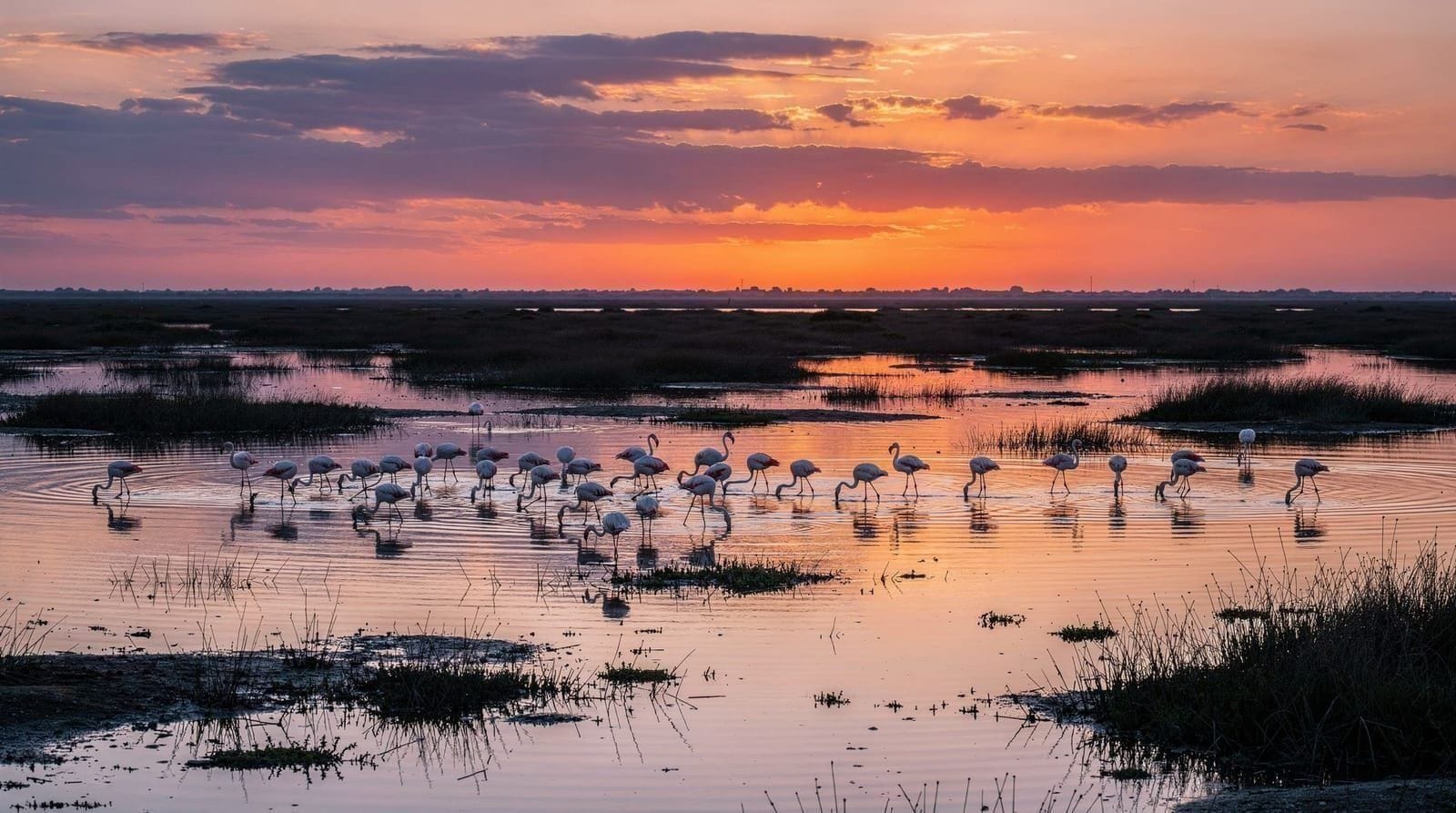
The Doñana coastal zone has flamingos, spoonbills, black kites, marsh harriers, and during spring migration, a remarkable diversity of waders and passerines. This is not zoo wildlife — it requires patience and early mornings — but the density of birds is extraordinary by European standards.
Doñana, El Rocío and Matalascañas full day from SevilleThe most practical way to combine Matalascañas with a Doñana nature experience is to take the guided tour that combines El Rocío village, the Las Rocinas visitor centre, and the beach at Matalascañas. This covers the most accessible sections of the park without requiring your own 4WD vehicle.
Doñana, El Rocío and Matalascañas beach tour from SevilleGetting there from Seville
By bus: Casal runs buses from Seville’s Plaza de Armas to Matalascañas via Almonte, approximately 1 hour 30 minutes. Services are more frequent in summer than winter. Check current timetables on the Casal website or the Junta de Andalucía transport portal.
By car: A-49 west from Seville toward Huelva, then south via Almonte (A-483) to Matalascañas. About 1 hour 15 minutes. Having a car makes it easy to stop at El Rocío (20 km away) en route — the village is on the main road and requires 30–60 minutes.
By organised tour: The combined Doñana-El Rocío-Matalascañas tour from Seville is the most coherent option if you want to see the wildlife side and the beach in one trip.
Andalusia full-day beach excursion from SevilleCombining with El Rocío
El Rocío is 20 km from Matalascañas and deserves a stop on the same day. The village (population: several hundred permanent residents, several hundred thousand during the May pilgrimage) is unlike anything else in Andalusia — a frontier settlement with sand streets, a whitewashed hermitage, and the famous flamenca pilgrimage concentrated around the Virgen del Rocío. See the El Rocío guide for details on what to do there and when to avoid it.
The combination of El Rocío in the morning and Matalascañas beach in the afternoon is exactly what the guided tours do, and it works well as an itinerary.
For the wider Doñana picture — including the more specialist 4WD safaris into the park’s interior — see the Doñana National Park guide and the Doñana day-trip planning guide. If beach and wildlife are less of a draw than history and industrial heritage, Huelva city is 50 km north and covers different ground entirely.
Shaping the day
A beach day from Seville works best when you decide in advance what the day is for. If the beach is the point, leave early, claim a spot on the sand before the resort fills up, and stay through the afternoon. If Doñana is the point, treat the beach as the reward at the end rather than the main event. The two goals pull in different directions, and trying to give both equal weight usually leaves you rushed at each.
Bring more than you think you need. Shade on the open sand is limited unless you rent an umbrella, the sun off the Atlantic is strong, and the walk between the beach and the nearest shop can be longer than it looks on a map. A hat, plenty of water, sun protection and a light layer for the evening breeze all earn their place in the bag. Sandals you can walk in are more useful than flip-flops if you plan to wander towards the dunes.
Plan your return before you settle in. Whether you are on a bus, in a hire car or on a guided tour, the trip back to Seville is the fixed point of the day, and it is easy to lose track of time on a beach. Check the last departure when you arrive rather than when you are already tired and sunburnt. If you are driving, remember that the roads back toward the city fill up on summer weekends as everyone leaves at once.
Choosing between bus, car and tour
Each way of getting here suits a different traveller. The bus is the cheapest and simplest if you only want the beach and are happy to be tied to a timetable. The car gives freedom to stop at El Rocío, linger at a viewpoint, or eat away from the resort, and it is the better choice for a family carrying a lot of gear. The guided tour removes the logistics entirely and is the only straightforward way to get a real sense of the park’s wildlife without arranging separate transport and permits.
If you are weighing these options against other excursions, the best day trips from Seville guide sets them side by side, and the Seville day trips itinerary shows how a coastal day can sit alongside inland ones in a longer stay. Travellers who want a lot of variety in a week can also look at the Andalusia week from Seville itinerary, which places the Atlantic coast within a wider loop.
Making the most of the Doñana coast
The coastal fringe rewards slow, quiet travel. Birds are most active in the cooler hours, so an early start gives you the best chance of seeing something before the heat and the crowds arrive. Move gently, keep your voice low, and bring binoculars if you own a pair; even a modest set transforms a walk through the pines. Stay on marked paths, take your rubbish with you, and keep clear of nesting areas, since the whole point of the protected boundary is that the wildlife is left alone.
Spring suits travellers who care about birds more than swimming, while summer suits those who want warm sand and a day in the sea. Few people get both at once, so be honest about which you are chasing. The Doñana National Park day trip guide goes deeper into how the park is visited and which approach fits which kind of traveller, and the Doñana safari trip report gives a first-hand account of what a day in the park can look like.
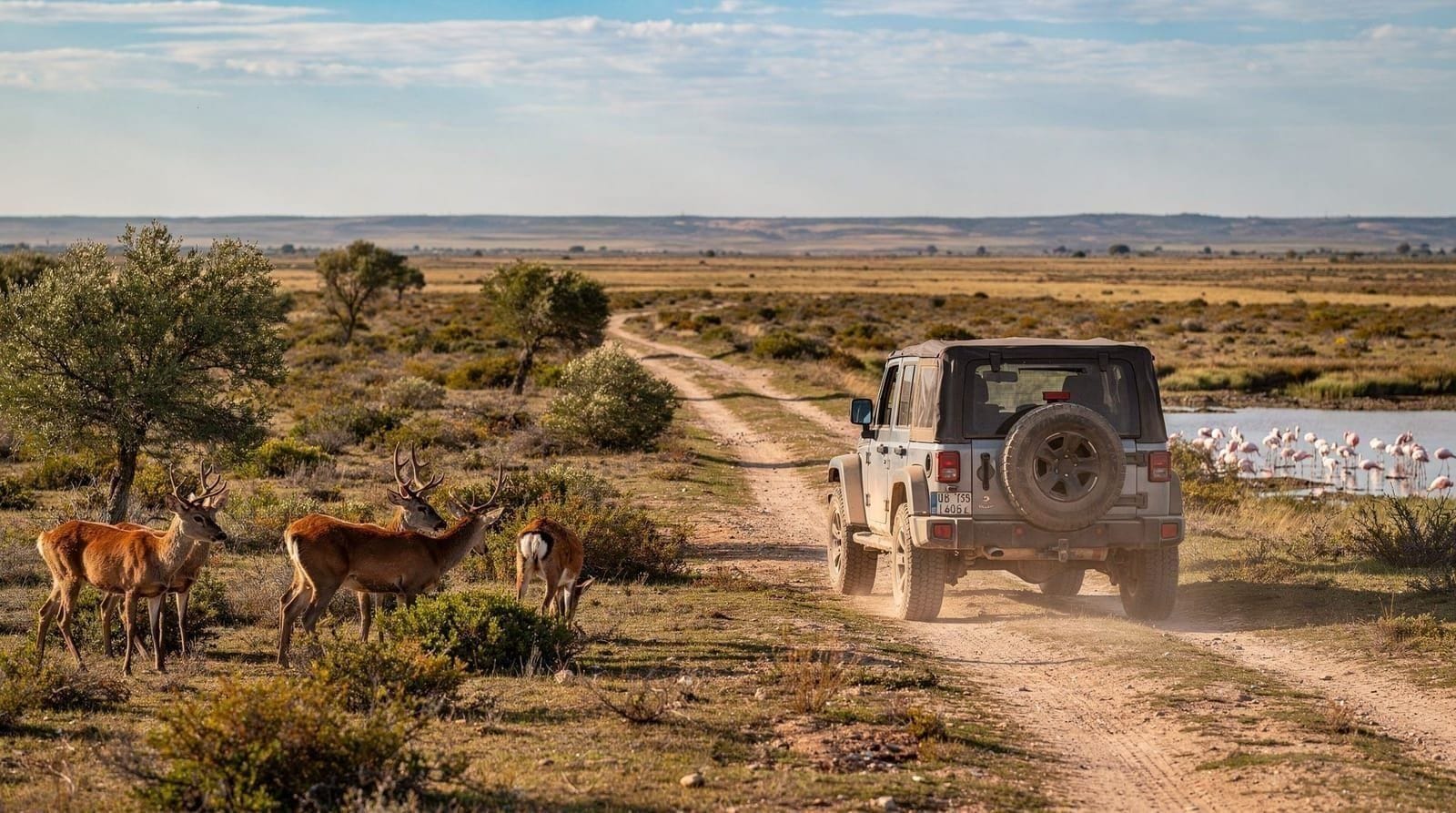
For those who want a more demanding wildlife experience than the coastal fringe offers, the park’s interior is reached by specialist vehicles rather than on foot from the beach.
a 4WD day trip into the heart of Doñana National ParkFamilies, couples and solo travellers
Families are the natural audience for Matalascañas. The shallow entry, the lifeguards in season, and the simple facilities mean small children can paddle without much worry, and parents can keep things relaxed. Pairing the beach with a short stop at El Rocío gives older children something unusual to look at, with its sandy streets and its hermitage, before they return to the water. For wider planning ideas, the Seville with kids guide covers how to pace a trip when younger travellers are involved.
Couples tend to prefer the quieter ends of the beach and the shoulder months, when the sea is calmer on some days and the sand is less crowded. Solo travellers will find the guided tour a comfortable way to meet other people and avoid the awkwardness of arranging transport alone. In every case the resort works best as a base for a single day rather than as a place to stay for a week; for a longer stay, where to stay in Seville is a better starting point, with the coast kept as an excursion.
How it fits with the rest of Andalusia
Matalascañas is a change of pace from the monuments and tapas bars of the city. After days among palaces and cathedrals, an afternoon with nothing to look at but sea and sand can be a welcome reset. It also sits comfortably alongside other coastal destinations in the region, so if you enjoy this kind of day, take a look at Costa de la Luz for more Atlantic scenery and Cádiz for a city that combines sea and history.
If you are still deciding how to spend your time, the Seville itinerary planning guide helps you place a beach day among the sights you most want to see. A coastal day usually fits best on a rest day in the middle of a trip, when your feet need a break from cobbles and your head needs a break from queues. Starting from the Seville destination page you can see how everything connects.
What to eat in Matalascañas
The resort restaurants are mostly geared to package holidaymakers — generic Spanish-international menus at inflated summer prices. Better options:
Venta La Rata (Almonte road, 5 km from resort): Local Andalusian cooking, popular with Spanish day-trippers, more honest prices. Worth the short detour.
If you are eating in the resort itself, pick whatever chiringuito has the freshest-looking fish board rather than going by name — quality varies by day depending on what has come in.
Frequently asked questions about Matalascañas
How far is Matalascañas from Seville?
About 110 km by road, 1 hour 15 minutes by car, 1 hour 30 minutes by bus from Plaza de Armas.
Can I visit Doñana National Park from Matalascañas?
The national park boundary begins at the northern end of the beach (Punto del Asperillo dunes). You cannot enter the protected core zone on foot — that requires an authorised guided 4WD tour departing from El Acebuche or Almonte. However, the Doñana coastal fringe and the pine forests north of the resort are accessible and have good bird watching.
Is Matalascañas worth visiting for something other than the beach?
Yes, specifically in combination with El Rocío and the Doñana marshes. As a pure beach destination it is entirely functional but unremarkable compared to other Atlantic beaches in Andalusia. The value is the Doñana ecosystem right on the doorstep.
Is the beach safe for swimming?
Generally yes in summer. The Atlantic at this point has a gentle slope and manageable swell. In autumn, winter, and spring the sea can be rough and cold. Check the daily flag status — red means no swimming, yellow means caution.
Is Matalascañas open in winter?
The beach is accessible year-round but the resort largely closes from October through May. Most restaurants, bars, and facilities shut for the off-season. If you visit outside summer, come prepared with your own supplies.
Should I visit Matalascañas or Huelva city from Seville?
They serve different purposes. Matalascañas is the choice for a beach day, ideally combined with El Rocío; Huelva city is the choice for Columbus history and the Río Tinto mines. If you have limited time and want the coast plus wildlife, Matalascañas is the more efficient single trip — see the best day trips from Seville overview for how both compare against the rest of the province.
Top experiences
Bookable activities with verified prices and instant confirmation on GetYourGuide.