Costa de la Luz
Andalusia's Atlantic coast: wilder, windier, and less crowded than the Mediterranean. Cádiz, Tarifa, Huelva beaches. Honest guide to the best stretches.
From Seville: Andalusia full-day beach excursion
Quick facts
- Best for
- Uncrowded beaches, Atlantic surf, Doñana coast
- Days needed
- 1
- Getting there
- Car recommended; Cádiz by train 1h40, Tarifa by bus 2h15
- Currency
- EUR
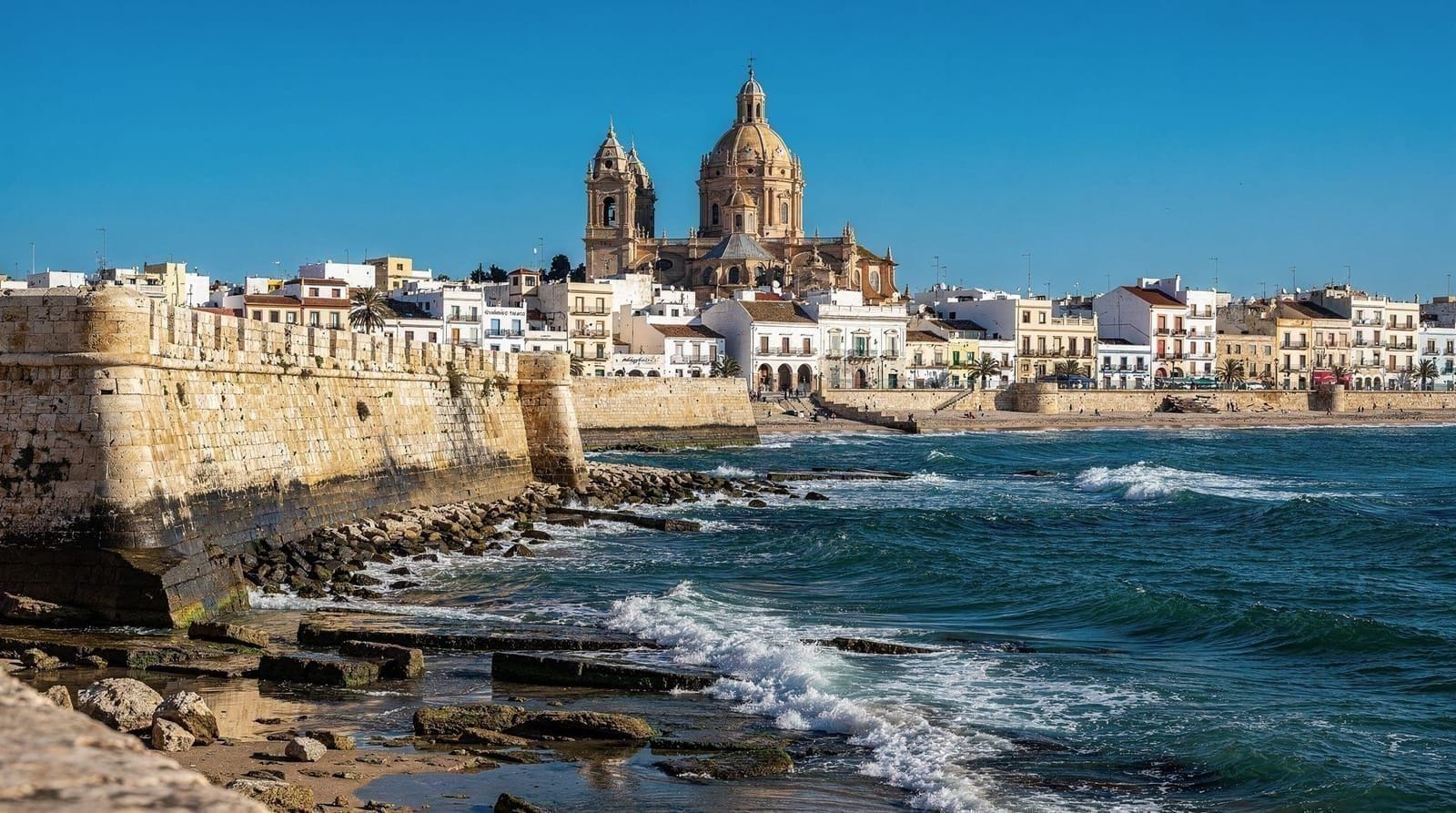
The Costa de la Luz is the Atlantic-facing coastline of southern Spain, running from the Portuguese border south through Huelva province, past Cádiz, and down to Tarifa. Unlike the Mediterranean Costa del Sol (dense, built-up, sheltered), the Costa de la Luz faces the open Atlantic: constant wind, stronger waves, cooler water, and — in most stretches — dramatically fewer buildings.
The coast does not exist as a single destination you visit. It is a descriptor for 200+ km of coastline with very different characters. This guide covers the sections most practically accessible from Seville, and is honest about the trade-offs.
| Where | Atlantic coast, Huelva to Cádiz provinces |
| Cost | Free beaches; a beach-day tour from Seville is the main paid option |
| Time needed | Full day per area; a car is needed to combine multiple beaches |
| Getting there | Car (most flexible), train to Cádiz, bus to Matalascañas or Tarifa |
| Best time | June–September for swimming; April–May and June/September for calmer wind |
Costa de la Luz beaches compared
| Beach area | Character | Distance from Seville | Reachable without a car |
|---|---|---|---|
| Matalascañas | Long sandy beach, Doñana pine backdrop | 110 km (~1h30 by bus) | Yes, direct bus |
| Mazagón | Quieter, more sheltered resort | 95 km | Difficult, no direct bus |
| Cádiz (Playa Victoria) | City beach, 3 km of sand | ~125 km (1h40 by train) | Yes, train + local bus |
| Conil de la Frontera | White-village beach town | ~150 km (~1h30 by car) | Limited, bus via Cádiz |
| Bolonia | Dune and Roman ruins, wildest scenery | ~185 km | Very difficult, car needed |
| Tarifa | Kite/windsurfing capital, whale watching | ~205 km (2h15 by bus) | Yes, direct bus |
The Huelva coast (north section)
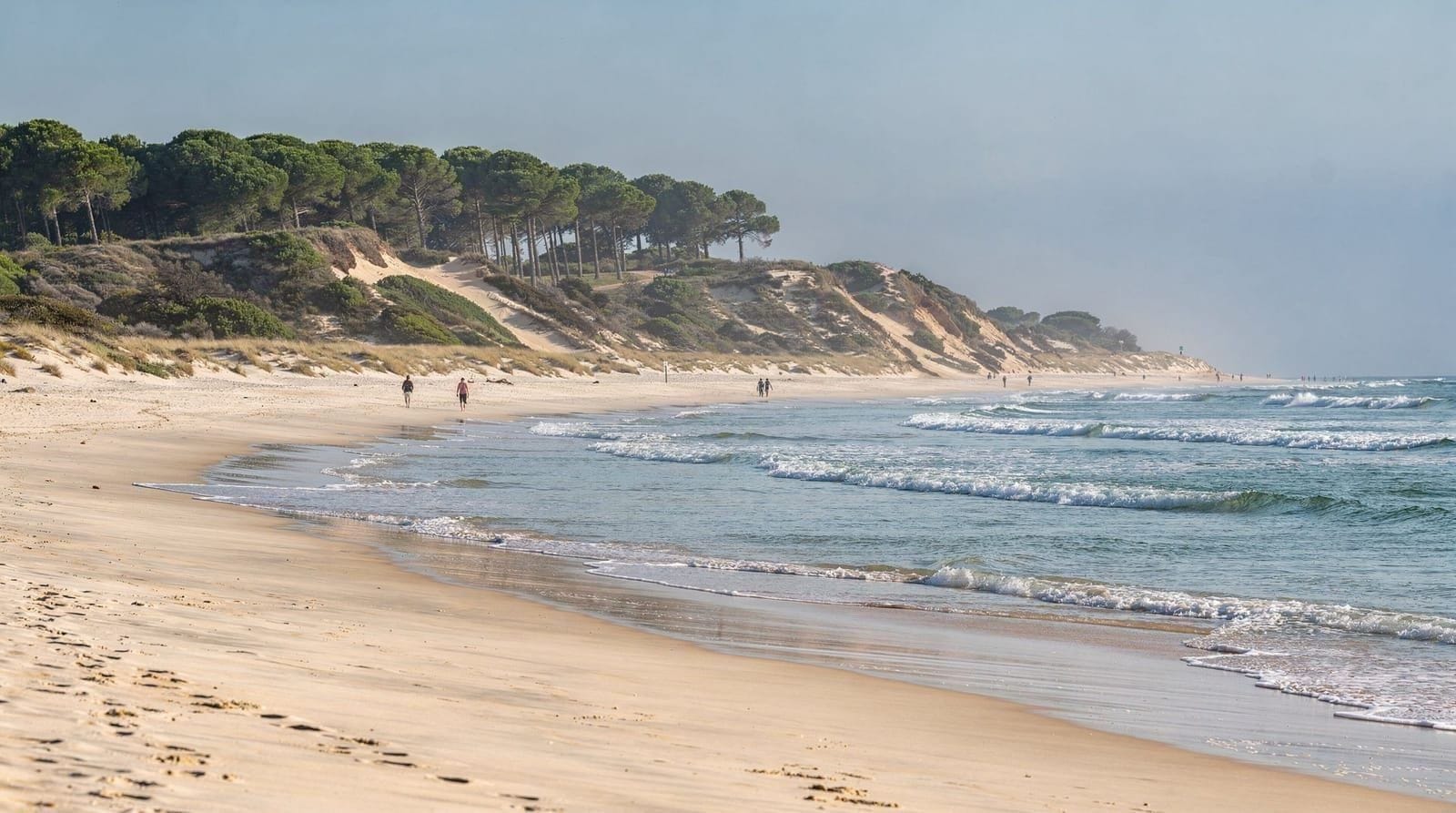
Matalascañas is the closest Atlantic beach to Seville (110 km) and the most convenient for a day trip without a car. The beach is long, sandy, and backed by Doñana’s pine forests on the north end. See the Matalascañas guide for full logistics.
Mazagón (15 km west of Matalascañas): A quieter resort with a more sheltered beach. Popular with Sevillanos, less developed than Matalascañas. No regular direct bus from Seville; a car makes this easier.
Punta Umbría: Small resort near the Huelva estuary. Fine for a day trip if you are already in Huelva, not particularly special enough to justify the journey from Seville independently.
The Cádiz coast (central section)
Bolonia: 22 km from Tarifa, this is widely considered one of the best beaches on the Costa de la Luz — 3 km of fine sand backed by pine forest and the 30-metre dune of Duna de Bolonia, with the Roman ruins of Baelo Claudia at the north end. Getting here without a car is difficult; from Tarifa there is a summer bus service but it is infrequent. The beach has one restaurant and basic facilities. Worth the effort for the combination of scenery and Roman archaeology.
Playa de los Lances (Tarifa): The main Atlantic beach running north from Tarifa town, excellent for kitesurfing and wind sports. See the Tarifa guide for full details.
Conil de la Frontera: A white village and beach town with several coves and a long main beach. Considerably more attractive as a town than Matalascañas or Mazagón — a proper village with its own character, good fish restaurants, and beaches that work in both calm and moderate wind conditions. About 1h30 from Seville by car via Cádiz.
El Palmar: A smaller beach settlement between Conil and Vejer de la Frontera, known for good waves and a low-key surf scene. No development beyond a few hostels and restaurants. Requires a car.
Caños de Meca and Barbate: Further south toward Tarifa. Barbate is a working tuna fishing town (almadraba tuna traps are set here in May–June). Caños de Meca has a more bohemian beach scene.
Getting there from Seville
By car: The most flexible option for the Costa de la Luz. The A-4 south reaches Cádiz in 1h45; from there the AP-4 and A-48 run along the coast. For specific beaches like Bolonia or El Palmar, a car is effectively required.
By train: Seville to Cádiz (1h40, several daily; check fares on the Renfe website). From Cádiz, local buses reach some beaches. This works for a Cádiz + beach day but limits which beaches are accessible.
By bus: Seville to Tarifa (2h15) covers the southern stretches. Seville to Conil de la Frontera is possible via Cádiz with a connection. Matalascañas is served by direct bus (see the Matalascañas guide).
By organised tour: The Andalusia beach excursion from Seville covers a beach day within reach of the city, typically including Cádiz and a beach stop.
Andalusia full-day beach excursion from SevilleThe wind issue
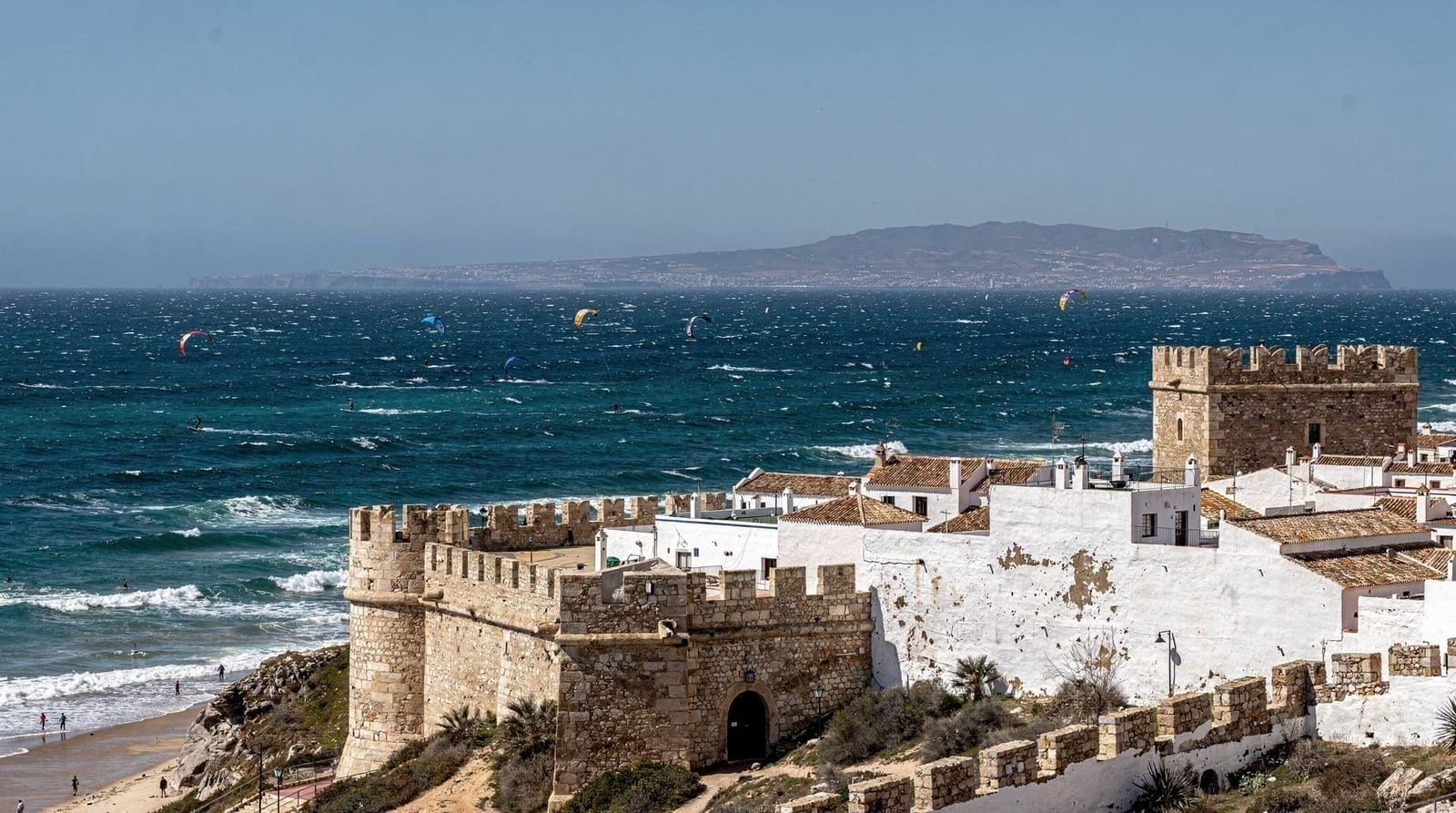
The Strait of Gibraltar is one of the windiest stretches of European coastline. Tarifa and the beaches south of Cádiz get consistent Levante (east) and Poniente (west) winds that make them world-class for kitesurfing and windsurfing. The same winds make them uncomfortable for sunbathing on bad days.
The Huelva coast (Matalascañas, Mazagón) is slightly more sheltered and has less consistent wind — better for casual beach days. The Cádiz-Tarifa stretch offers more dramatic scenery but more wind exposure.
Calmer months: June and September are statistically the calmest months. July and August are wind season proper.
Cádiz full-day guided excursion from SevilleChoosing between the stretches
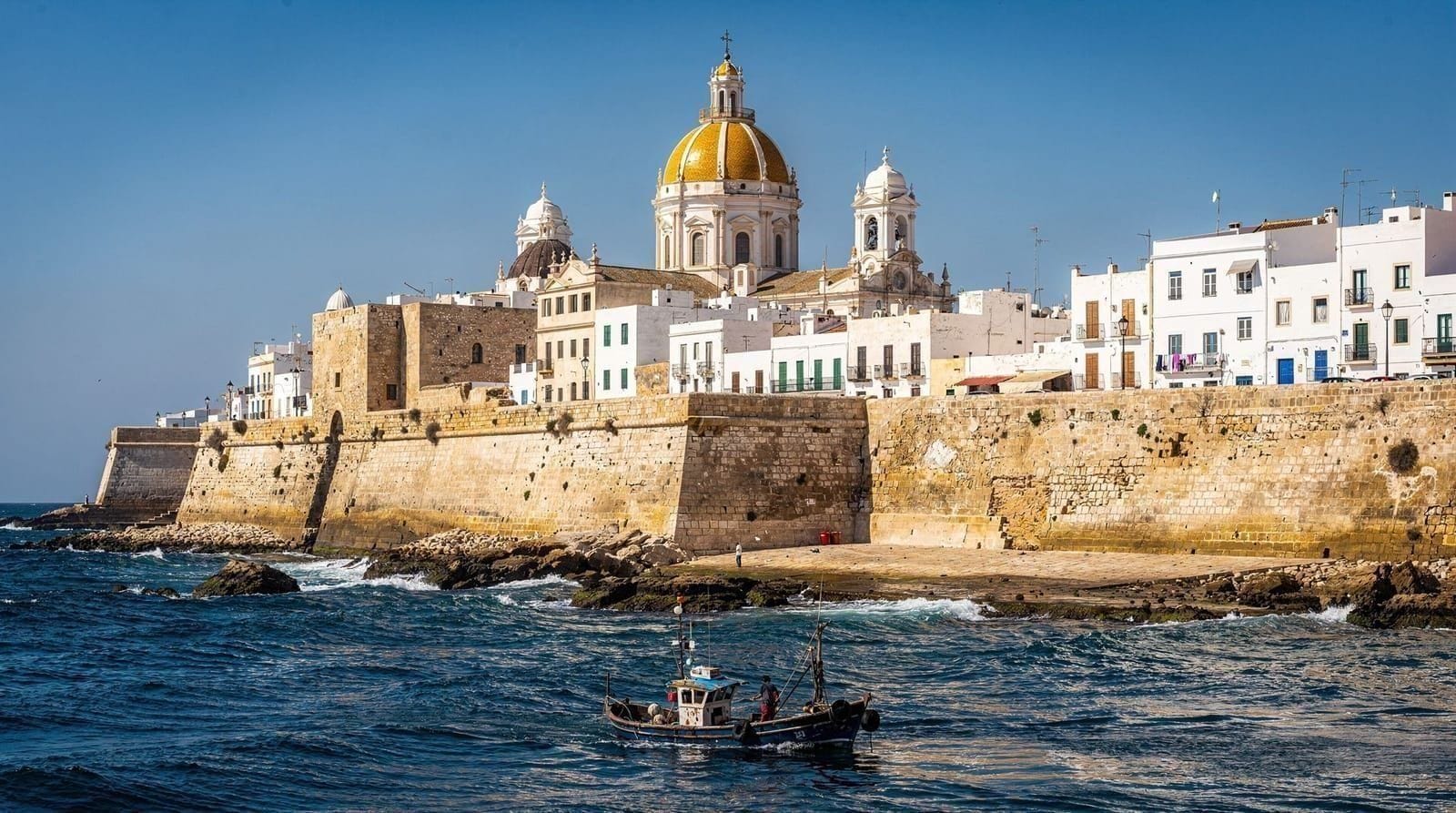
The simplest way to decide is to start from what you want the day to feel like. If you want a long, easy beach with little logistics, the Huelva end is the natural pick, and it pairs well with the wildlife of Doñana National Park and the village of El Rocío if you have a car and an appetite for a slower day. If you want a real town around the beach, with a proper plaza, fish restaurants and an evening, the Cádiz side is the better bet, and the Cádiz day trip from Seville is the easiest way to see how that works in practice.
If your interests lean toward water sports, wind and open horizons, head for Tarifa and read the Tarifa whale watching and Gibraltar day trip notes before deciding how to split your time. Travellers who like their coast with a side of history will find that the stretch near Bolonia rewards the extra effort, while those who simply want a swim and a cold drink are better served closer to Seville.
A realistic day on the coast
Whatever stretch you pick, a good beach day here starts earlier than you might expect. Leaving Seville in the morning means you reach the sand before the busiest part of the day and leave yourself time for a long lunch rather than a rushed sandwich. Atlantic beaches tend to be wide and open, so there is rarely a scramble for a spot, but shade is scarce on the wilder stretches. Bring your own umbrella or a light cover-up, plenty of water, and a windbreak if the forecast is blustery.
Lunch is part of the experience. Fish and seafood are the obvious choice along this coast, and the habit of eating at a bar counter rather than a terrace table is as useful here as it is in the city; the barra vs terrace pricing guide explains the logic. For a wider sense of what to order, the traditional Andalusian dishes guide is a good primer before you go.
Plan the return with some slack. Public transport back to Seville is less frequent in the evening, and a day that stretches into sunset is lovely only if you have already checked the last departure. If you are driving, remember that sun, wind and swimming are tiring, and a rested driver makes a better trip home.
Combining the coast with other day trips
The Costa de la Luz works best as one ingredient in a longer stay, not as a stand-alone expedition. Many visitors pair a coastal day with a city-focused one: a morning in Cádiz, then an afternoon on the sand, for instance, or a day in the sherry towns such as Jerez de la Frontera and El Puerto de Santa María before a swim. Sanlúcar de Barrameda sits where the Guadalquivir meets the Atlantic and gives a different, more relaxed flavour of the coast.
For a broader view of how the beach fits into a trip, the best day trips from Seville guide compares the options side by side, and the Seville day trips itinerary shows one way to string several of them together. If you have a full week, the Andalusia week from Seville itinerary leaves room for a beach day without cutting into the major sights.
Beach days with children and in different seasons
Families often do well on the Costa de la Luz because the beaches are broad and uncrowded, giving children room to play. The Atlantic can be rougher than a Mediterranean cove, so keep young swimmers close to shore and respect any flags and lifeguard advice. For more ideas on keeping a family trip manageable, see the Seville with kids guide.
Outside high summer the coast takes on a different mood. Spring and early autumn are good for long walks, birdwatching and quiet meals, and the crowds that fill the coast in July and August are largely absent. If you are choosing your dates, the best time to visit Seville guide helps you weigh the weather against the city’s own seasonal highlights, and the Seville in summer heat guide explains why a day at the coast is such a welcome escape from the inland temperatures.
Honest planning notes
The Costa de la Luz is genuinely beautiful in a way the Costa del Sol is not — less built-up, cleaner water, more dramatic scenery. The trade-off is access: without a car, you are limited to Matalascañas (good for a beach day near Doñana), Tarifa (good for whale watching and watersports), and Cádiz (great city, adjacent beach).
If your primary goal is a beach day from Seville, the simplest answer is: take the bus to Matalascañas or the bus to Tarifa. If you want to explore the most scenic stretches (Bolonia, Conil, the area between Cádiz and Tarifa), rent a car.
For Cádiz specifically, the Cádiz destination guide covers what to do in the city beyond the beach.
Frequently asked questions about the Costa de la Luz
What is the difference between the Costa de la Luz and the Costa del Sol?
The Costa de la Luz is the Atlantic coast (facing west/southwest), the Costa del Sol is the Mediterranean coast (facing south/southeast). The Costa de la Luz has stronger winds, cooler water, less development, and more dramatic scenery. The Costa del Sol has more consistent sunshine, warmer water, and better infrastructure for mass tourism.
Which beach on the Costa de la Luz is closest to Seville?
Matalascañas (Huelva province), approximately 110 km and 1h30 by bus. The second-closest by public transport is Cádiz’s main beach (Playa de la Victoria), accessible by train in 1h40.
Is the water warm enough for swimming in summer?
Yes, though cooler than the Mediterranean. Atlantic sea temperatures at Cádiz and Tarifa in July–August run 18–22°C. The Huelva coast is slightly warmer. Cold-water-sensitive swimmers may find it bracing; most people adapt quickly.
Is the Costa de la Luz suitable for surfing?
Yes, particularly around Conil de la Frontera, El Palmar, and the Barbate area. The Atlantic swells are consistent. Tarifa and Playa de los Lances are better for kite and windsurfing due to the constant Strait wind.
Can I visit multiple beaches on the Costa de la Luz in one day?
With a car: yes, the coastal road between Cádiz and Tarifa is 80 km with multiple stops possible. Matalascañas and Bolonia, for example, are completely different directions from Seville and cannot be combined without a car and significant driving. Without a car, focus on one area per day.
How does the Costa de la Luz relate to Doñana National Park?
Matalascañas sits at the southern edge of Doñana National Park, so a Costa de la Luz beach day and a Doñana wildlife visit can, in principle, share the same drive from Seville — though combining a full 4WD tour with real beach time in one day is ambitious. Most visitors choose one focus per day: wildlife via a guided Doñana tour, or beach time at Matalascañas.
Should I base myself in Cádiz or Jerez to explore the coast?
Cádiz is the more practical base for the coast itself — it has train access from Seville and sits at the northern end of the most scenic stretch toward Tarifa. Jerez de la Frontera is better if sherry and equestrian culture matter as much as the beach, with the coast a short onward drive.
Top experiences
Bookable activities with verified prices and instant confirmation on GetYourGuide.