My afternoon at a Triana ceramics workshop
A last-minute booking turned into one of the best afternoons of the trip. Here’s the practical shape of it before the full account.
| Duration | 2 hours |
| Cost | around €40–55 per person |
| Where | Calle Alfarería area, Triana |
| Minimum age | Around 10 (varies by studio) |
| Collect finished tile | 3+ days later, or pay for postal delivery |
When I almost walked past the studio
We were halfway across the Puente de Triana, heading back from the market, when my partner spotted a woman pressing a wooden stamp into raw clay through a ground-floor window. That was enough. Twenty minutes later we’d booked a slot at Taller Cerámica Triana for the following afternoon — 2:30 pm, just as the worst of the June heat was easing off.
Triana has been the ceramic heart of Seville for centuries. The neighbourhood sits on the west bank of the Guadalquivir, and if you walk down Calle Alfarería — literally “Pottery Street” — you’ll understand why. The tiles that line the stairwells of the Alcázar, the azulejos on the walls of the Hospital de las Cinco Llagas, the glossy panels at Santa Cruz metro station: much of this came from workshops within a ten-minute walk of where I was standing.
The workshop I’d booked was a small, family-run studio tucked behind a shuttered 19th-century factory. No big sign, just a hand-painted ceramic plaque with the address. Inside: four long wooden tables, shelves of bisque-fired blanks, and a smell of damp clay that I found immediately calming.
What the two-hour session actually involves
The instructor, a woman in her 50s named Marisol, started by handing each of us a white ceramic tile about 15 cm square — pre-fired and ready for the oxide paints she’d lined up in small earthenware pots. She explained (in Spanish, translated into serviceable English) the history of azulejo design: the geometric interlocking patterns introduced by Moorish craftsmen, the cobalt and white of Portuguese influence, the vivid polychrome of the Seville school.
Then she showed us three traditional patterns — a simple eight-pointed star, a looping vine motif, and a more complex medallion — and said we could adapt any of them or combine elements. No freehand drawing required unless you wanted to try; stencils and stamps were available.
I chose the vine motif. My partner, who has steadier hands than me, attempted the medallion and largely succeeded. Over the next hour and forty minutes we painted, wiped back mistakes with a damp sponge, repainted, and listened to Marisol’s occasional corrections. The atmosphere was genuinely relaxed — no pressure, no hovering, just music from a small radio and the sound of tourists occasionally peering in from the street.
The tiles go into a kiln after the session. You can pick them up in person three days later, or pay €8 extra to have yours posted anywhere in Europe. We opted for the postal option, and our tiles arrived in Madrid six days later in good condition, wrapped in bubble film inside a cardboard box.
Pricing and booking logistics
The workshop I attended cost €45 per person for the two-hour session, materials included. That’s in line with similar workshops in other Spanish cities — not cheap, but not tourist-trap pricing either. The studio runs sessions at 10 am, 12:30 pm, and 2:30 pm most days except Sundays.
You can also book ceramic tile workshops through GetYourGuide, which gives you the flexibility of instant confirmation and free cancellation up to 24 hours before:
Seville: Ceramic tile workshop in TrianaThat tour runs on a similar format — about two hours, all materials provided — and is consistently well-reviewed. The advantage of booking through a platform is the cancellation flexibility, which matters if June weather changes your afternoon plans (it usually doesn’t, but the principle stands).
What Triana looks like when you’re not in a workshop
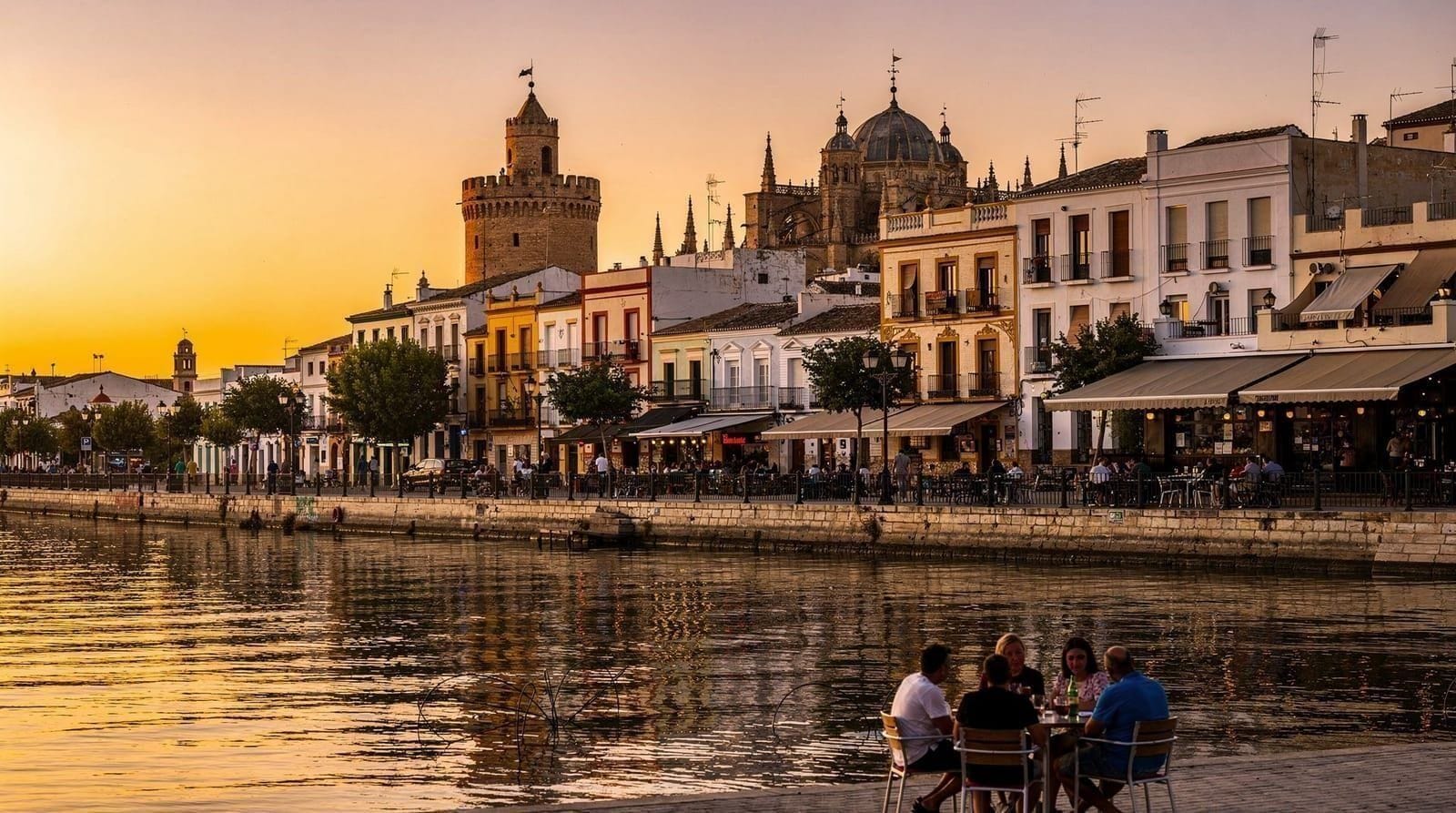
The neighbourhood rewards a couple of hours of wandering before or after your session. Calle Betis, running along the river, has some of the best views of the Seville skyline you’ll find anywhere — the Torre del Oro and the Giralda lined up perfectly at golden hour. The Mercado de Triana, a covered market inside a converted 19th-century castle, is worth 30 minutes for the produce alone. I bought a small jar of miel de caña — sugar cane molasses — that I’m still using.
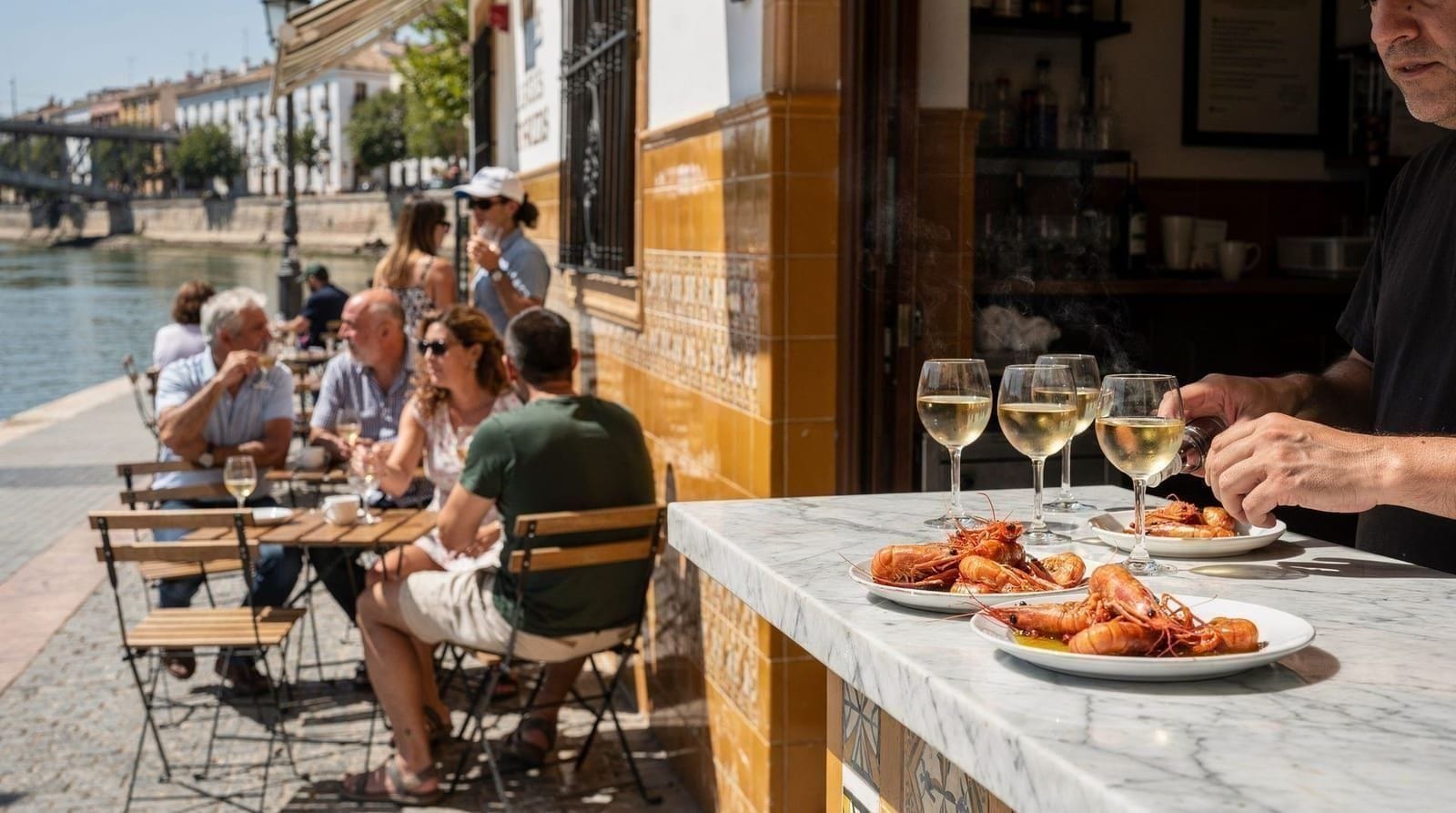
For a post-workshop drink, I’d go to Bar La Plazuela on Calle Pelay Correa rather than any of the more obvious riverside terraces. Local pricing (€1.80 for a draft beer), decent montaditos, and a genuine neighbourhood crowd rather than the usual Santa Cruz tourist mix.
If you want to extend your Triana time, the Triana neighborhood guide has everything you need on what to see, eat, and skip.
The ceramic shops: what to buy and what to avoid
Calle Alfarería has at least fifteen shops selling Triana ceramics, and the quality varies enormously. A few things I learned:
Look for handmade pieces. The giveaway is slight irregularity in the glaze, small variations in the pattern repeat, visible brushstrokes. Mass-produced ceramic imported from China or Portugal — and yes, some shops sell exactly that — looks too perfect, too uniform, and is usually priced the same as or higher than the genuine article.
Small tiles are the most portable souvenir. Individual 10-cm azulejos run €5–12 each for handmade pieces. A set of four in a traditional pattern, boxed, is around €30–40. Decorative plates are beautiful but expensive to ship home.
Caution on “antique” ceramics. A few shops sell pieces described as antique Triana tiles, priced at €40–80 each. Some are genuine fragments from demolished buildings; many are not. Unless you know what you’re looking at, the new handmade stuff is a safer buy.
The shop attached to the Taller Cerámica Triana studio had good quality at honest prices. I bought two additional tiles as gifts — a geometric star pattern and a small oval panel with a flamenco dancer — for €28 total.
How this fits into a broader Seville itinerary
If you’re spending three or four days in Seville, an afternoon in Triana is an obvious way to see a genuinely different side of the city. The neighbourhood doesn’t feel like a tourist attraction in the way Santa Cruz does — there are local bars, a functioning market, and a real community.
You could pair the ceramic workshop with a cooking class, since several Triana cooking schools run morning sessions. The cooking classes Seville guide compares the main options. Or combine it with a food tour that starts in the Triana market and works east through the tapas bars.
If you’re visiting Seville with children, the ceramic workshop is appropriate for ages ten and up, in my estimation. Marisol had one couple bring a 12-year-old during our session; she was fully engaged and produced a tile that was, honestly, better than mine.
If the tile bug bites, the same eye for pattern pays off elsewhere in the city. The azulejo work at the Plaza de España and the tilework inside the Real Alcázar make far more sense once you have spent an afternoon mixing oxide pigments and fighting a wobbly line. Doing the workshop early in your stay means you see those places with different eyes. For a wider view of how the days can fit together, the Seville in 3 days itinerary and the guide to planning a Seville itinerary show where a slow Triana afternoon sits best.
Slow, hands-on afternoons also suit travellers who want a break from monument queues. If that is you, the skip-the-line decoder helps you keep the busy sights short, which leaves room for a workshop like this one. Our first-time flamenco experience is a good companion read for the evening side of a Triana day, and the seville-with-kids guide is worth a look if younger travellers are coming along.
A note on what the experience is not
I should be clear: this is not a pottery class. You are not throwing clay on a wheel. You are painting pre-fired ceramic tiles using traditional oxide pigments and, if you want, stamps and stencils. The artistic skill required is modest. The satisfaction — especially when the finished tile arrives in the post a week later — is real but not the satisfaction of having created something from scratch.
If you want a more hands-on clay experience, some studios in Triana offer separate wheel-throwing sessions, usually 90 minutes for €55–65. These are less common and book out faster; enquire directly with the studios on Calle Alfarería rather than looking online.
For everything else Triana has to offer, from its flamenco roots to the best spots to eat, the Triana neighborhood guide is the place to start.
Combining ceramics with the rest of Triana in one afternoon
A ceramic workshop pairs naturally with other Triana experiences without feeling rushed:
| Pairing | Approximate time | Notes |
|---|---|---|
| Ceramic workshop + Mercado de Triana | Half day | Market is 10 minutes’ walk, best before noon |
| Ceramic workshop + tapas crawl | Full afternoon/evening | See the best tapas bars in Triana guide |
| Ceramic workshop + flamenco in Triana | Full day into evening | Workshop afternoon, flamenco in Triana show at night |
| Ceramic workshop + cooking class | Full day | Cooking class morning, ceramics afternoon, or reverse |
We did the market-plus-workshop version and it worked well — produce shopping in the morning, lunch at a market bar, then the studio at 2:30 pm once the worst of the heat eased. The Triana market food guide covers the market stalls worth seeking out if you build a similar day.
Triana market and tapas tour with drinksIs it worth it if you’re not into crafts generally?
I went in with genuinely no artistic background and no strong interest in ceramics as a hobby, and it still worked — the appeal isn’t really about producing a masterpiece, it’s the slow, tactile two hours in a genuine working studio, in a neighbourhood that still makes the thing it’s known for. If you’re the kind of traveller who finds “experience” activities forced or twee, this one earns its place because it’s rooted in a real, functioning craft tradition rather than staged for tourists.
Frequently asked questions about Triana ceramics workshops
Do I need any artistic skill to take a ceramic tile workshop in Triana?
No. Stencils, stamps, and pattern guides are provided. The instructors are accustomed to total beginners. If you can hold a brush, you can paint a tile.
How long does a typical workshop last?
Most run two hours. That includes the introduction, the painting session, and time to clean up. The tile then goes into the kiln — you don’t leave the workshop with a finished piece on the day.
Can I take my finished tile home the same day?
No. The tile needs to be kiln-fired after the session, which takes at least 24–48 hours. You can collect in person or pay extra for postal delivery to most European destinations.
What is the typical cost?
Around €40–55 per person for a two-hour session, materials included. Most studios charge extra (€6–10) for postal delivery.
Are the workshops suitable for children?
Most workshops accept children aged 10 and up. Check with the specific studio, as some have a minimum age requirement of 12. Younger children tend to find the detail work frustrating.
Is Triana worth visiting for ceramics alone?
Yes, though you’ll likely stay for other reasons too. The neighbourhood has good tapas bars, a river-view promenade, and a market that’s considerably less tourist-oriented than the Mercado de la Encarnación. Allow at least half a day.
Should I book online or just walk in?
Booking ahead — either directly with the studio or through a platform like GetYourGuide — is safer, especially in spring and around Semana Santa. Small studios have limited daily sessions and can sell out.
Can I combine the workshop with a flamenco show the same evening?
Yes, comfortably. A 2:30 pm workshop finishes by 4:30 pm, leaving plenty of time for dinner and a Triana flamenco show later that night.