Semana Santa in Seville: what to actually expect
We went into Semana Santa expecting a colourful festival and came out having witnessed something older and stranger. Here’s the practical shape of the week before the account below.
| When | Palm Sunday–Easter Sunday (2026: 29 March–5 April) |
| Best free viewing | Side streets off the Carrera Oficial |
| Tribuna seats | sold by the Consejo as week-long subscriptions |
| Book accommodation by | 6+ months ahead for good options |
| Climax | Holy Thursday night into Good Friday |
What Semana Santa is not
It’s not a tourist festival. That’s the first thing to understand. Semana Santa — Holy Week — is a deeply serious religious observance that Seville has been practising in broadly the same form since the 16th century. The processions are organised by hermandades, brotherhoods that have existed for centuries, whose members train for the processions year-round. The nazarenos (penitents) in conical hoods walking in silence are not performers; they’re carrying out a religious practice of public penance.
The city opens this up to observers, and hundreds of thousands come every year. But you’re attending something that is not designed for you, and carrying that understanding changes how you experience it.
The structure of the week
Semana Santa runs from Palm Sunday through Easter Sunday (for 2026: 29 March through 5 April). Each day has multiple processions from different hermandades, most leaving their home churches in the afternoon and returning in the early hours of the morning. Holy Thursday night into Good Friday is the climax — processions run continuously through the night.
The route of every major procession passes through a fixed point: the Carrera Oficial on Calle Campana, along Calle Sierpes, through the Cathedral area. This is where the decorated viewing stands (tribunas) are erected and where tickets are sold for assigned seats. Carrera Oficial seats are sold by the Consejo de Hermandades y Cofradías as week-long subscriptions; check the Consejo for current prices.
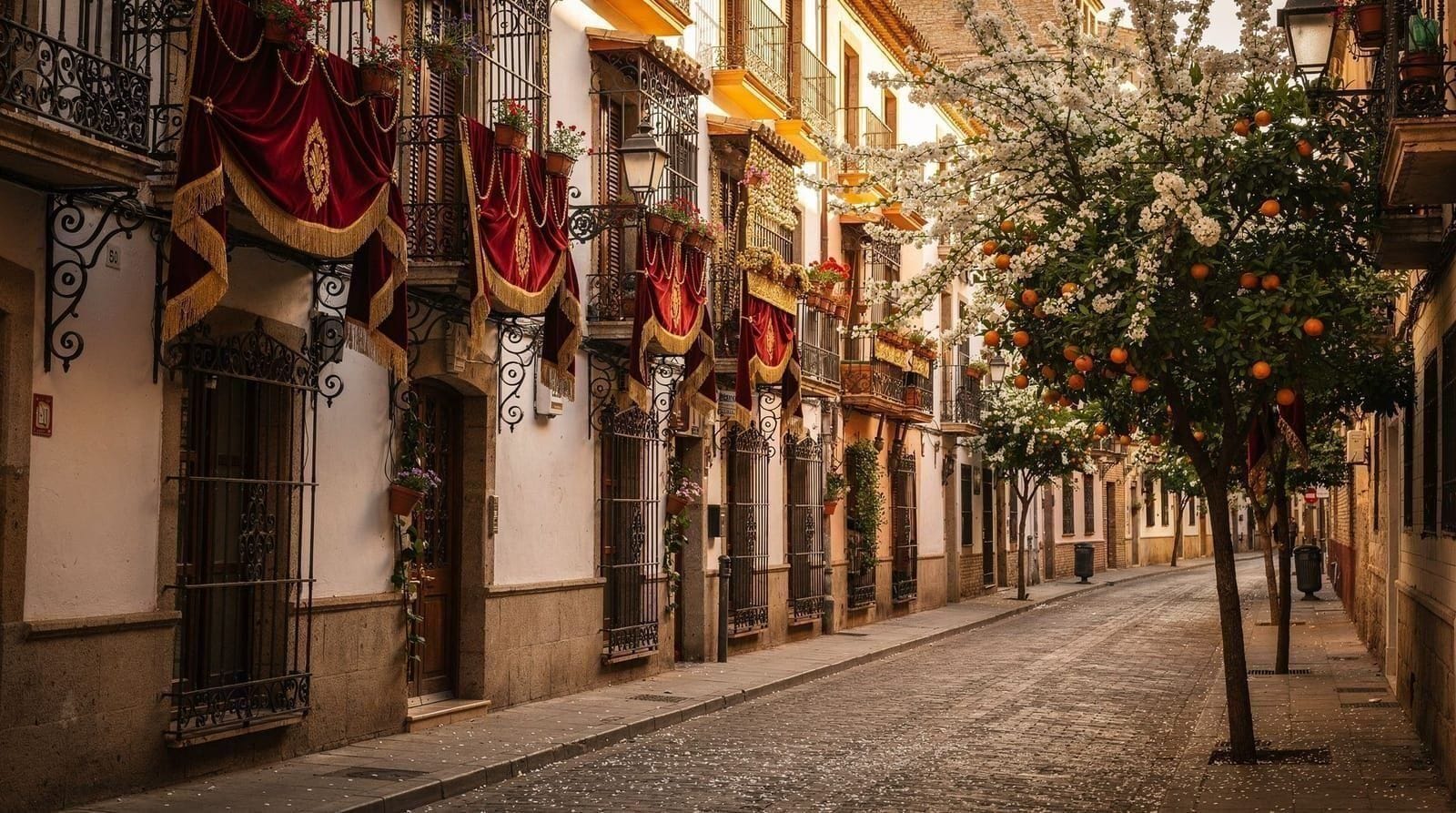
You don’t need tribuna seats to experience the processions. Standing on a side street as a procession turns a corner at midnight is, in many ways, more affecting.
The sensory experience
No video footage prepares you for the sound. Forty thousand candles produce a specific smell — hot wax, incense, and something underneath that I can only describe as stone and antiquity. The brass bands that accompany some processions play marchas procesionales, a particular form of music written specifically for these occasions; some of the most famous pieces are recognised instantly by Sevillanos the way classical pieces are elsewhere.
The pasos — the massive floats carrying religious sculptures — weigh up to five tonnes and are carried on the shoulders of costaleros, workers hidden beneath the float who navigate using only shouted instructions from a capataz (foreman) who walks with them. A good costalero team moves the paso with liquid smoothness; the pause between a forward movement and a rest is called a levantá, and when a particularly skilled team executes it on a famous paso — the Esperanza Macarena, the Jesús del Gran Poder — the crowd response is one of the stranger experiences I’ve had: religious devotion and something that functions like artistic appreciation, simultaneously.
What I didn’t expect
The emotion. I am not Catholic. I do not have a specific personal connection to any of the iconography. I watched the Virgen de la Macarena pass at around 1 am on Holy Thursday night, on a narrow street near the Macarena basilica, and the woman standing next to me was quietly weeping. The paso was covered in flowers and candles. The band behind it played a saeta — an improvised devotional song — and the singer’s voice echoed off buildings that have been standing since before the Americas were colonised by Europeans.
I was not prepared for how much it affected me.
Practical logistics
Accommodation: Book as early as possible. Hotels in Seville during Semana Santa fill completely and raise prices significantly. If you’re planning for 2027, you should be booking by October 2026 at the latest. Many visitors stay in nearby towns — Carmona, Italica — and commute in, though this limits your ability to be present for late-night processions.
Crowds: This is the most crowded Seville gets all year. The Carrera Oficial area is essentially impassable without a tribuna seat during major processions. The counter-strategy is to find a position on a secondary street and wait for the procession to come to you — more intimate, less theatrical, often more moving.
Restaurants: Most restaurants require reservations during Semana Santa, and many locals are abstaining from meat on certain days (though this is observed inconsistently). Book dinner in advance. Expect higher prices at tourist-facing restaurants.
Money: Seville during Semana Santa is an expensive week. Midrange hotels often triple their rates. Budget €150–180 per person per night for a decent central hotel. Street food and bar eating remain reasonably priced.
What to wear: Comfortable shoes with grip — the streets get covered in candle wax by the second night, which is genuinely slippery. Layers in late March (Seville nights can be cold). A waterproof layer for uncertainty.
Where to stand if you don’t book a tribuna seat
We tried both approaches. The Carrera Oficial with a paid seat gives you the “official” version — comfortable, guaranteed sightlines, but slightly removed from the emotional charge of a neighbourhood crowd. Our better nights were on smaller streets near the home churches: the Calle Feria area for the Macarena basilica processions, the streets around the Iglesia del Gran Poder before it departs, and Calle Sierpes after 11 pm when the crowd thins. Arrive at least 45 minutes before a paso is due — the good standing spots fill fast.
If Semana Santa itself isn’t your travel dates, Feria de Abril two to three weeks later is the total inversion — bright, secular, and joyful rather than solemn.
How this compares to visiting Seville the rest of spring
Semana Santa is the most intense week of Seville’s calendar, bookended by two of the best ordinary weeks to visit. The Seville in spring guide covers weather and crowd patterns either side of Holy Week — generally milder and normally priced a fortnight before or after. Our first-timers itinerary and the best time to visit Seville guide help decide whether to bookend the week with quieter days or fly in specifically for the processions.
Filling the daytime hours
Processions dominate the evenings, which leaves the mornings open. We used them for the quieter parts of the city: the Santa Cruz neighbourhood is lovely before the crowds build, and a walk through El Arenal or La Macarena lets you see the home churches the hermandades leave from, which helps you plan where to stand later. If you like context with your sightseeing, a guided walk through the old Jewish quarter is an easy way to spend a morning before the night shift begins.
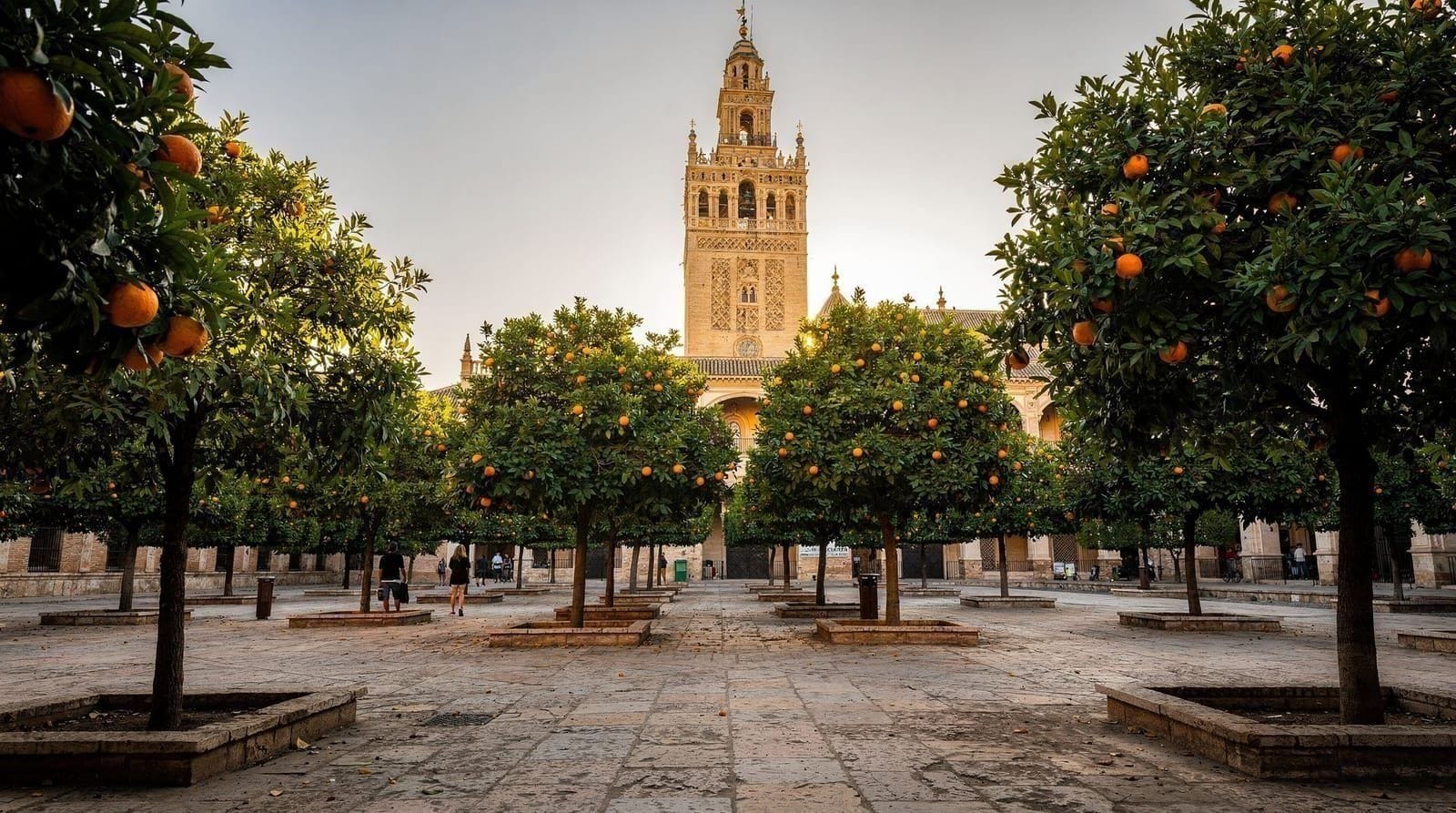
Sights such as the Cathedral and Giralda and the Real Alcázar are affected by the festivities, so check opening arrangements before building a day around them, and read our skip-the-line decoder if you plan to book tickets in advance.
Getting around during the week
Streets along the processional routes close and reopen according to the schedule, so a short journey can turn into a detour. Our getting around Seville guide explains the options, and in practice walking is the most reliable choice in the centre. If you’re arriving by train or flying in, the airport to city centre guide will help you plan the first leg before the crowds peak.
Eating well between processions
Bar eating is the natural rhythm of the week: a few tapas, then back to the street. Our best tapas in Seville guide and the post on hidden tapas bars locals love are good starting points, and the barra vs terrace pricing guide explains why standing at the bar usually costs less than sitting outside when the city is full.
What we’d do differently next time
Book a tribuna seat for exactly one procession — ideally the Madrugá (the Holy Thursday–Good Friday night sequence) — and spend every other night on the streets, which is where the real atmosphere lives. We’d also allow a rest day mid-week; the emotional and physical intensity of nightly crowds adds up faster than a normal sightseeing trip.
Seville guided walking tour, historic centre highlightsThe experience in one sentence
I came for the spectacle and left feeling like I’d witnessed something much older and stranger than I had any right to see. If you want to compare it with our other first-visit experiences, our Feria de Abril first-timer story shows the same city in a completely different mood, and the 3 days in Seville trip report covers an ordinary visit.
Our detailed Semana Santa Seville guide covers the schedule of hermandades, the most important pasos, and how to position yourself on specific streets. If you’re going to Seville during this period, read it before you book your position.
Frequently asked questions about Semana Santa in Seville
Do I need to book a tribuna seat to see the processions well?
No. Free viewing on side streets, especially near the hermandades’ home churches, is often more atmospheric than a paid seat on the Carrera Oficial. Arrive early for the best free spots.
Is Semana Santa suitable for a first visit to Seville?
Yes, but understand it’s not a typical relaxed sightseeing week — expect crowds, higher prices, and restaurants that need advance booking. If you want a calmer introduction to the city, visit outside Holy Week and consider Feria de Abril instead for festival atmosphere with less intensity.