Italica from Seville: the Roman ruins 30 minutes away
From Seville: Italica Roman ruins city tour
How do you get from Seville to Italica?
Take the Damas bus from Plaza de Armas bus station (line M-170A) to Santiponce. Journey: 30 minutes. The Roman ruins of Italica are a 5-minute walk from the Santiponce bus stop. No tour required — straightforward independently.
Most visitors to Seville spend three or four days exploring the Alcázar, the Cathedral, Triana, and the neighbourhood tapas bars — and then leave without realizing that one of the largest and best-preserved Roman archaeological sites in the Iberian Peninsula is 9 kilometres away. Italica can be reached in 30 minutes from Seville’s Plaza de Armas bus station, costs €1.50 to enter (or is free for EU citizens), and takes 2-3 hours to explore. It is the easiest half-day excursion from Seville and one of the most undervisited.
| Where | Santiponce, 9km from Seville |
| Cost | Free for EU citizens; €1.50 non-EU |
| Time needed | 1.5–3 hours on site, half-day total |
| Getting there | Damas bus M-170A from Plaza de Armas, 30 min |
| Best time | Early morning or late afternoon (shadeless site) |
Getting there: bus to Santiponce
The Damas bus line M-170A runs from Seville’s Plaza de Armas bus station to Santiponce. The journey takes 30-35 minutes. Check the current fare with the Consorcio de Transportes del Área de Sevilla. Buses run regularly (approximately every 30-45 minutes during the day).
At Santiponce, exit at the main bus stop on Avenida de Extremadura. The entrance to Italica is a 5-minute walk. Signs are visible from the bus stop.
Return: Buses back to Seville run throughout the day. Last bus is in the early evening — check current schedules at the bus stop or damas.es.
Alternative — guided tour: Multiple operators run half-day tours to Italica from central Seville, with or without the Game of Thrones angle. These include transport, a guide, and Italica entry. Useful if you want archaeological commentary. The bike tour to Italica (cycling along the Guadalquivir) is an excellent option for active visitors.
From Seville: Game of Thrones and Roman empire Italica tourThe history of Italica
Italica was founded by the Roman general Scipio Africanus in 206 BC, shortly after the Roman victory over Carthaginian forces at the Battle of Ilipa nearby. It was one of the first Roman settlements in what became Hispania — a colony for veterans of the Italian legions (hence the name Italica: the city of the Italians).
The city grew to prominence in the 1st-2nd centuries AD. Two Roman emperors were born here: Trajan (53 AD, first emperor born outside Italy) and Hadrian (76 AD, builder of Hadrian’s Wall in Britain, known for the Pantheon and his travelling court). Hadrian in particular had strong sentimental ties to Italica and lavished resources on the city — the massive amphitheatre and many of the urban amenities date from his reign.
At its peak, Italica had a population estimated at 8,000-10,000. By the 4th-5th centuries, however, the city had declined, and its stone was gradually quarried for other buildings. The site was partially excavated from the 18th century onwards and remains under active archaeological investigation.
The amphitheatre
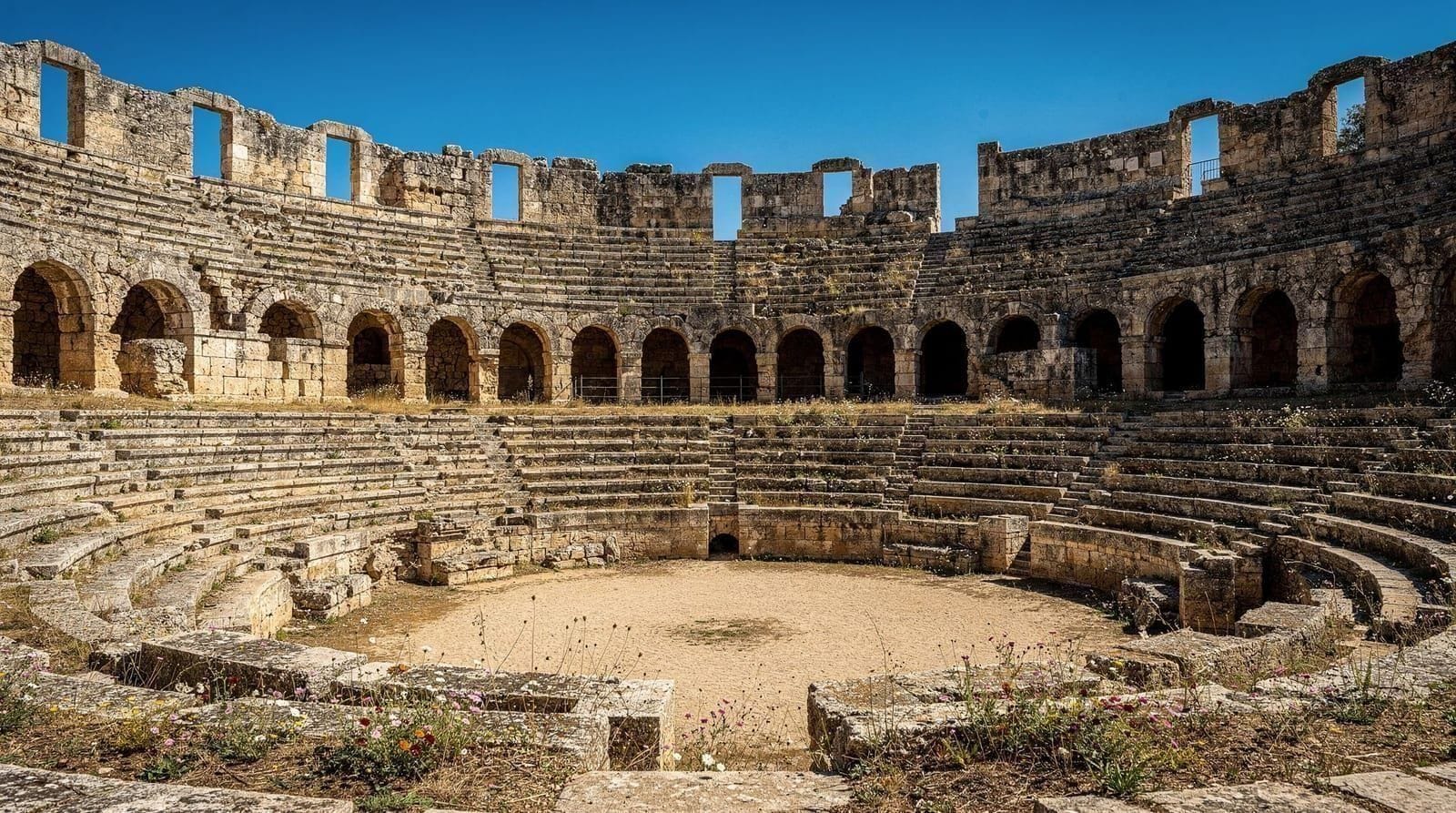
The amphitheatre of Italica is the third largest in the Roman world (after the Colosseum in Rome and the amphitheatre at Capua), with an estimated capacity of 25,000-30,000 spectators. It was built in the late 1st or early 2nd century AD, likely during Hadrian’s reign.
The current state: the arena floor and underground passageways (used for animals and condemned prisoners before their release into the arena) are visible and accessible. The seating banks have largely eroded, but the scale of the oval — 160 metres by 137 metres — is still imposing. Standing on the arena floor and looking up at the surrounding hillside gives a clear sense of the spatial experience for ancient spectators.
Game of Thrones context: The arena was used in Season 7 as the Dragon Pit — the meeting place south of King’s Landing where the alliance against the Night King was negotiated. The camera angles in the show minimize the modern surroundings; in person, the location is immediately recognizable to fans of the series.
From Seville: Italica 3-hour Game of Thrones guided tourThe Roman town: streets and mosaics
Beyond the amphitheatre, the excavated urban sector of Italica reveals one of the best-preserved Roman street grids in Spain. The nova urbs (new city) built during Hadrian’s expansion is laid out in an orthogonal grid, with large insulae (city blocks) containing domus (townhouses) organized around interior courtyards.
The mosaics: Several of the domus have in-situ mosaic floors. The most impressive are:
-
Casa de los Pájaros (House of the Birds): A central courtyard mosaic depicting approximately 40 species of birds, each in a separate panel. The ornithological accuracy is remarkable — species are identifiable by feather patterns and body shape.
-
Casa del Planetario: Mosaic representing the seven planets of ancient astronomy (Sol, Luna, Mars, Mercury, Jupiter, Venus, Saturn) as gods, with associated symbols.
-
Casa de Neptuno: Fragment of a marine mythological scene with Neptune and sea creatures.
The mosaics are protected by simple roofing structures. Some have been removed to museums; what remains on-site is the original in-situ floor surface.
Street infrastructure: The cardines and decumani (main and cross streets) are defined by stone curbing, with original column bases and door thresholds visible at house entrances. Drainage channels running beneath the streets are exposed in sections.
The baths: The suburban thermae (public baths) at the western end of the site preserve the floor plan of the hot-room (caldarium), warm-room (tepidarium), and cold-room (frigidarium) with hypocaust (underfloor heating) channels visible.
The Monastery of San Isidoro del Campo
On the main road through Santiponce, 500 metres from the Roman ruins, the Monastery of San Isidoro del Campo was founded in 1301 by Alonso Pérez de Guzmán (“El Bueno”) and his wife. The Gothic church contains significant Mudéjar elements and a remarkable set of 15th-century frescoes in the chapter house (Sala Capitular) depicting scenes from the life of St Jerome.
The monastery has a complicated history: it was a Cistercian house that later became associated with radical reformers. In the 16th century, Cipriano de Valera (who translated the Bible into Spanish with Casiodoro de Reina) was a monk here before fleeing to England during the Inquisition.
Opening hours vary — check santiponce.es for current schedule. Free or minimal entry.
Practical notes for a visit
What to bring: Water (the site is largely open and unshaded), sun protection in summer, comfortable shoes (uneven stone surfaces). The underground passages of the amphitheatre can be dark — phone torchlight useful.
Best time of day: Early morning (9-11 AM) before heat builds, or late afternoon (4-6 PM). Midday in summer is very hot in the open arena.
Combined with Carmona: Italica (morning) + Carmona (afternoon via Casal bus from Seville, or direct from Santiponce by car) makes a Roman-themed full day. Both destinations are half-day visits; combining them works well. See Carmona day trip guide.
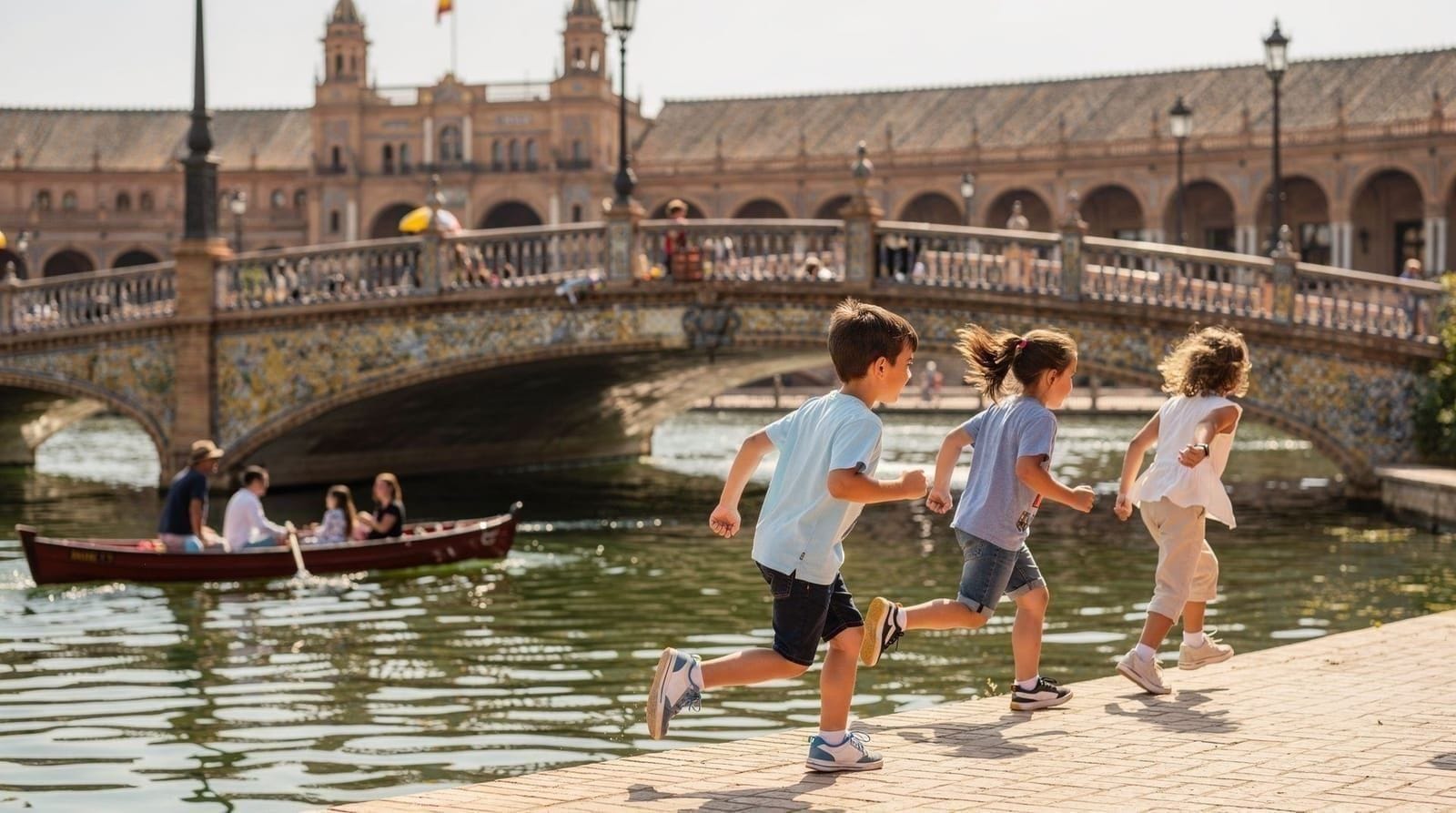
Children: Italica works well for families with older children (8+). The GoT connection makes it relevant to young viewers. The underground amphitheatre passages are interesting for children. The open space allows freedom of movement. See Seville with kids for broader family travel tips.
Planning the half-day around your energy
Italica suits travellers who like to wander at their own pace. Because the site is open and mostly flat, the best plan is simple: go straight to the amphitheatre while you are fresh, walk the arena floor and the underground passages, then climb back out and spend the rest of your time on the street grid and the mosaic houses. Leaving the baths for last works well, since they sit at the far end of the excavated area and make a natural turning point before you head back towards the exit.
If you are staying in the centre, the logistics are easy. Our guide to getting around Seville explains how the city’s own transport fits together, and the public transport guide is useful for reaching the bus station in the first place. Once you are on the Damas bus, the trip needs no further planning.
Making the most of the mosaics and the street grid
Take your time over the houses rather than rushing from one mosaic to the next. The roofed structures protect the floors, but they also make the light uneven, so a slow walk around each courtyard lets your eyes adjust and reveals details you would miss at a glance. In the House of the Birds, look at the individual panels one at a time; in the House of the Planetarium, try to match each deity to the symbols around it.
The street grid rewards the same patience. Follow a single street from one end to the other and notice the thresholds, column bases and drainage channels. It is the everyday infrastructure, more than any single monument, that makes it easy to picture how ordinary residents lived here. Photographers will find the low-angle morning and late-afternoon light flattering on the stone, which is another reason to avoid the middle of the day.
For a similar sense of layered history inside the city itself, the Real Alcázar complete guide and the Seville Cathedral guide show how later eras built on top of what came before.
Visiting on your own or with a guide
Italica is one of the few day trips where going independently is genuinely comfortable. The bus is direct, the entrance is close to the stop, and the site is easy to read from the path. A guide mainly adds interpretation: someone who can explain what you are looking at in the amphitheatre or point out the stories behind the domus.
If that appeals, a guided cycling trip out to the ruins combines the transfer and the commentary in one outing, and suits visitors who would rather pedal than sit on a bus. If you enjoy cycling in general, our Seville by bike guide covers what to expect on the city’s routes.
For a travel diary account of the Game of Thrones side of the visit, see our blog post on the Italica Game of Thrones locations.
Combining Italica with the rest of your trip
Because the excursion is short, it slots into almost any itinerary. On a first visit, it fits well on a day when you want a break from the busiest monuments; the Seville day trips itinerary shows how to stack excursions without exhausting yourself. If you are building a longer stay, the 3 days in Seville itinerary leaves room for a half-day outside the city, and the week across Andalusia uses Italica as an easy warm-up before the longer journeys.
Heat is the main factor that should shape the timing. If you are visiting in the warmer months, read our Seville in summer heat guide before choosing your slot, and consider the cooler seasons if your dates are flexible; the spring guide describes why that season is so popular.
Comparing Italica with Seville’s other Roman-era and history day trips
Italica is unusual among Seville’s day trips for how little time it demands — most visitors are back in the city by early afternoon, which makes it easy to combine with something else or simply treat as a half-day rather than committing a whole one. For a longer Roman-history focused day, Córdoba offers the Mezquita and a very different (Islamic-era) architectural tradition on top of its own Roman remains. For a shorter, closer alternative with its own Roman and medieval layers, Carmona is 30 minutes from Seville by bus and pairs naturally with Italica if you want two ancient sites in one day, provided you start early.
What Italica does not have
Manage expectations: there is no on-site restaurant, only a small kiosk with basic drinks near the entrance at busier times, and shade is limited across most of the excavated area. Bring your own water and, if you plan to stay the full 2-3 hours, snacks. There is also no dedicated visitor centre with extensive exhibits — the museum context is sparse compared to sites like the Alcázar or Real Alcázar in Seville itself; Italica rewards visitors who already have some interest in Roman history rather than those looking for an interpretive museum experience.
For an overview of day trips, see best day trips from Seville. For the Italica destination page, see Italica.
Frequently asked questions about Italica from Seville
What is Italica and why does it matter?
Italica was one of the first Roman cities founded in the Iberian Peninsula, established around 206 BC. It was the birthplace of two Roman emperors — Trajan and Hadrian — making it historically significant in the wider Roman world. The archaeological site contains one of the largest surviving Roman amphitheatres, well-preserved mosaics, and street layouts.Did Game of Thrones film at Italica?
Yes. The Italica amphitheatre served as the Dragon Pit of King's Landing in Season 7, Episode 7 (The Dragon and the Wolf). The meeting of all the main characters — Jon Snow, Daenerys, Cersei, Tyrion — was filmed in the arena. It is visually recognizable without much imagination required.How long does a visit to Italica take?
1.5 to 3 hours depending on interest level. A focused visit covering the amphitheatre and main mosaics takes 1.5-2 hours. A thorough exploration of the street grid, the suburban baths, and the less-visited areas of the excavation takes 2.5-3 hours.What is the admission cost for Italica?
EU citizens: free. Non-EU visitors: €1.50. Opening hours vary by season — typically Tuesday-Saturday 9 AM-6 PM (winter) or 9 AM-3 PM (21 June-20 September), Sunday and public holidays 9 AM-3 PM. Closed Mondays.Can I combine Italica with other sites in Santiponce?
Yes. The Monastery of San Isidoro del Campo (14th century, with significant frescoes) is on the main road through Santiponce, 5 minutes' walk from the ruins. The monastery has a complex history — it was later associated with the 16th-century humanist and Bible translator Cipriano de Valera. Check opening hours separately.Is Italica worth visiting if I'm not a Game of Thrones fan?
Yes. The amphitheatre, mosaics, and Roman street grid are genuinely significant on their own historical merits — Italica was the birthplace of two Roman emperors and one of the best-preserved Roman urban sites in Spain. The Game of Thrones connection is a bonus for fans, not the reason the site matters.Can I do Italica by bike from Seville?
Yes, a cycling route along the Guadalquivir connects central Seville to Santiponce, though it involves riding on some shared roads outside the city's dedicated cycle paths. Guided bike tours to Italica handle the route and pacing for visitors who don't want to navigate independently.
Top experiences
Bookable activities with verified prices and instant confirmation on GetYourGuide.