Best time to avoid crowds in Seville: when to go for fewer tourists
Seville: VIP exclusive early access tour of the Alcázar
When is Seville least crowded?
October and November are the least crowded months with good weather. January and February are quieter still but winter. The most crowded periods: Semana Santa (29 March–5 April 2026), Feria de Abril (21–26 April 2026), and the high summer tourist season of July–August. Midweek is always less crowded than weekends year-round.
Seville’s tourism is seasonal in a specific way: it peaks hard in spring (thanks to Semana Santa, Feria, and spring-break tourism) and then peaks again in September–October. Summer (July–August) is actually less crowded than spring in the historic centre because the 40°C heat drives away many tourists — though the city still sees significant visitor numbers. This guide maps the crowding calendar and gives you specific timing strategies for the main monuments.
| Quietest months | October, November, January, February |
| Busiest months | March-May (Semana Santa + Feria), September-October events |
| Quietest time of day | First entry slot (09:30) at any timed monument |
| Cruise-day risk | 10:00-15:00, when Cádiz-docked cruise coaches arrive |
| Best weekday | Tuesday-Thursday, any month |
The crowding calendar
January–February (low season, low crowds)
The least touristy months. The Alcázar can be entered walk-up on some days (though advance booking is still recommended). The Cathedral has no queue. Prices are lower. Weather is cool (11–17°C) with occasional rain. This is when Seville feels closest to a city rather than a monument park. The compromise is the weather: grey days are possible and evening restaurant terraces close early.
March (rising, Semana Santa peak)
Crowds build rapidly as spring approaches. By the last week of March, Semana Santa transforms the city completely. For 2026: Semana Santa runs 29 March–5 April. The week before and during Holy Week is the most crowded, most expensive, and (for the festival itself) most extraordinary time to visit.
April–May (spring peak, then Feria peak)
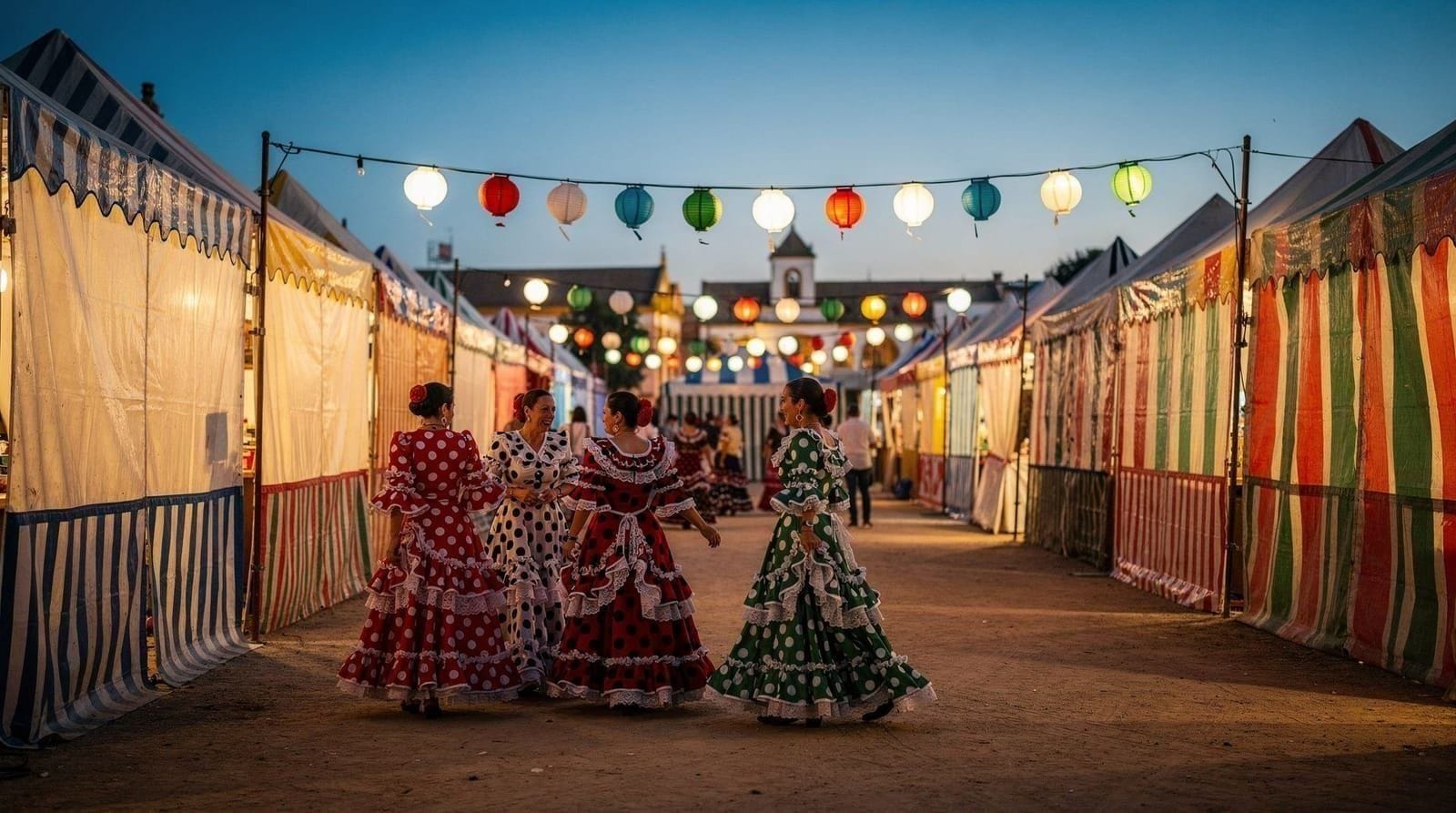
April is Seville’s most visited month, combining post-Semana Santa tourism with Feria de Abril (21–26 April 2026). Accommodation is expensive and monuments are crowded. Late April through May settles somewhat after Feria but remains busy with spring-break travellers.
June (still busy, heat arriving)
June is transition month. Crowds are moderate and the heat (32–38°C) begins to reduce spontaneous tourism. Still a popular month with international visitors.
July–August (heat-deterred, but still significant)
Paradoxically, summer in Seville has fewer tourists than spring — the 40–42°C heat puts off a significant portion of would-be visitors. Those who do visit are more committed and tend to be heat-prepared. The monuments are less crowded in absolute terms. The practical challenge is managing the heat.
If you’re visiting in summer, monument queues are short. The Alcázar at 09:30 in late July is far less crowded than the Alcázar at 09:30 in April. But by 11:30, outdoor activity is effectively impossible.
September–October (sweet spot for crowds + weather)
September and October represent the best balance of weather (20–28°C), lower crowds than spring, and pleasant evenings. October is the genuine sweet spot — enough of the summer visitors have gone, not yet winter quiet. September 2026 has the Bienal de Flamenco (9 September–3 October), which adds flamenco-tourism but is not a crowds-everywhere event.
November–December (low crowds, cooler)
Tourist numbers drop significantly in November. The Alcázar and Cathedral can sometimes be visited without advance booking (though still advisable). Christmas in December brings some visitors; the city’s Christmas markets and their dates change every year, so check the official tourist office website (visitasevilla.es). Weather: 14–20°C, increasing rain risk from November onwards.
Monument-specific timing
Royal Alcázar
Worst time: Weekends in March–May, any Saturday in April, Semana Santa week. First available morning slot fills within days or weeks.
Best time: First entry slot (09:30) on a weekday in October, November, January, or February. The garden is spectacular in morning light and you’ll have significant sections nearly to yourself.
Within-day crowding: 09:30–11:30 is quietest. 12:00–15:00 is peak (day-tripper groups from cruise ships). 15:00 onwards quieter but the last entry is around 18:30 (hours vary seasonally — check the website).
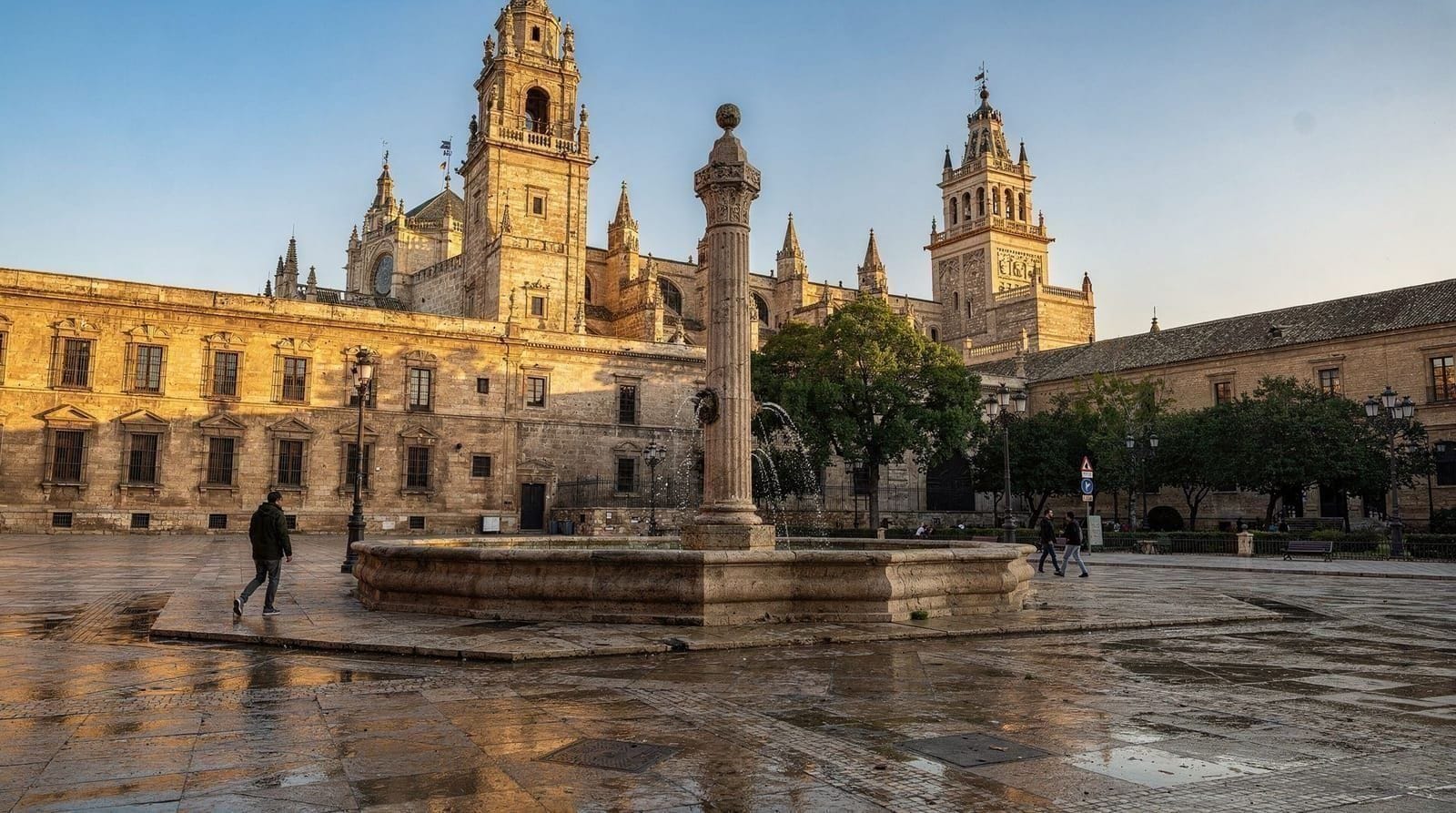
Cathedral and Giralda
Worst time: Any day from 10:00 to 15:00 in spring. Cruise ship days (check port arrivals for Cádiz — tour coaches bring passengers to Seville 10:00–14:00).
Best time: Weekday late afternoon (15:30–17:30) year-round, or early morning first ticket (10:45) in low season. Sunday free entry (from 17:00) is actually reasonably uncrowded because tourists often don’t know about it.
Note on booking: The Cathedral doesn’t use timed-entry slots in the same way as the Alcázar — you book for a general period, not a specific minute. But online booking gives you access to a faster-moving queue.
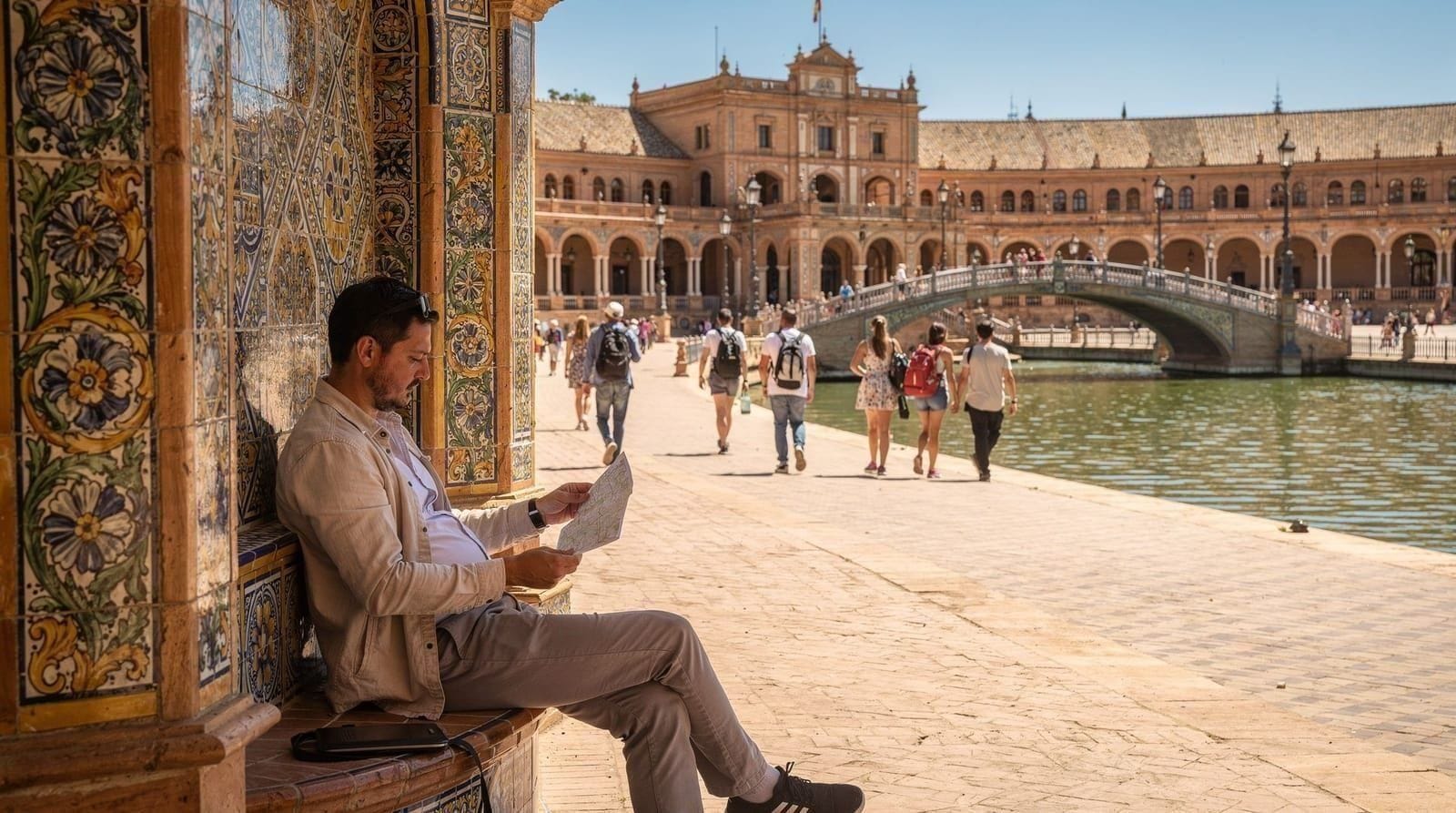
Plaza de España
Worst time: 10:00–14:00 on weekends and holidays in spring.
Best time: Before 09:30 (the plaza is open 24 hours) or after 19:00 when most tour groups have left. Golden hour light on the tiled alcoves in late afternoon is exceptional and the crowd has thinned.
No booking needed: Plaza de España is free and has no queuing system. The only management tool is arrival time.
Metropol Parasol (Las Setas)
Worst time: Weekends from 11:00 in spring and autumn.
Best time: Weekday mornings 09:30–10:30, or late afternoon 18:30–19:30 for golden hour views.
Other places worth timing
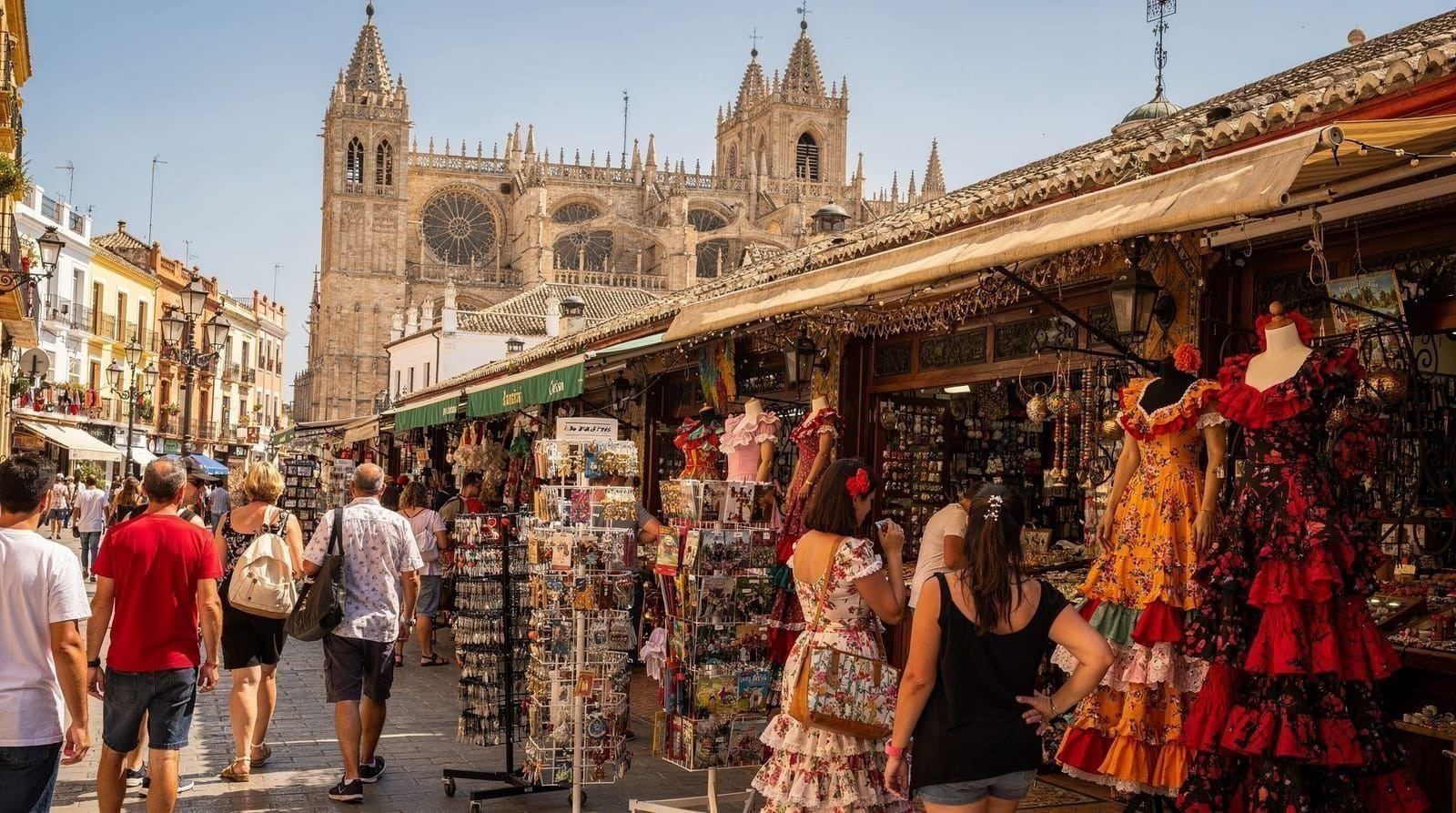
The big three are not the only spots where the crowd changes your visit. The Santa Cruz neighbourhood is a maze of narrow lanes, and a handful of tour groups can make it feel full; wandering it early or late, when the groups are elsewhere, gives you the whitewashed streets and small squares as they are meant to be seen. The Casa de Pilatos and the Palacio de las Dueñas are far quieter than the Alcázar in any season, so they make good fallback visits when the headline monuments are overrun. The María Luisa Park rarely feels crowded at all, and it is a natural pairing with the Plaza de España.
If you do want to go inside the Cathedral with some context rather than shuffling through with the flow, a guided Cathedral and Giralda visit is worth considering in the busier months, because a guide tends to pick a sensible route through the building instead of following the main stream. For a closer look at what the building offers, the complete Cathedral guide lays it out.
Practical anti-crowd tactics
Book the first slot at any timed monument: First entry is always the least crowded. The gap between the 09:30 slot and the 11:00 slot at the Alcázar in peak season is the difference between a quiet royal palace and a guided-tour gridlock.
Avoid Seville on cruising days: Check whether cruise ships are docked at Cádiz (60–80 minute drive from Seville). Major cruise lines dock at Cádiz and run coach tours to Seville. The Cathedral and Alcázar receive the bulk of these groups between 10:00 and 15:00.
Midweek over weekends: A Tuesday visit to any Seville monument has fewer visitors than a Saturday in the same month, with lower accommodation prices and fewer restaurant queues.
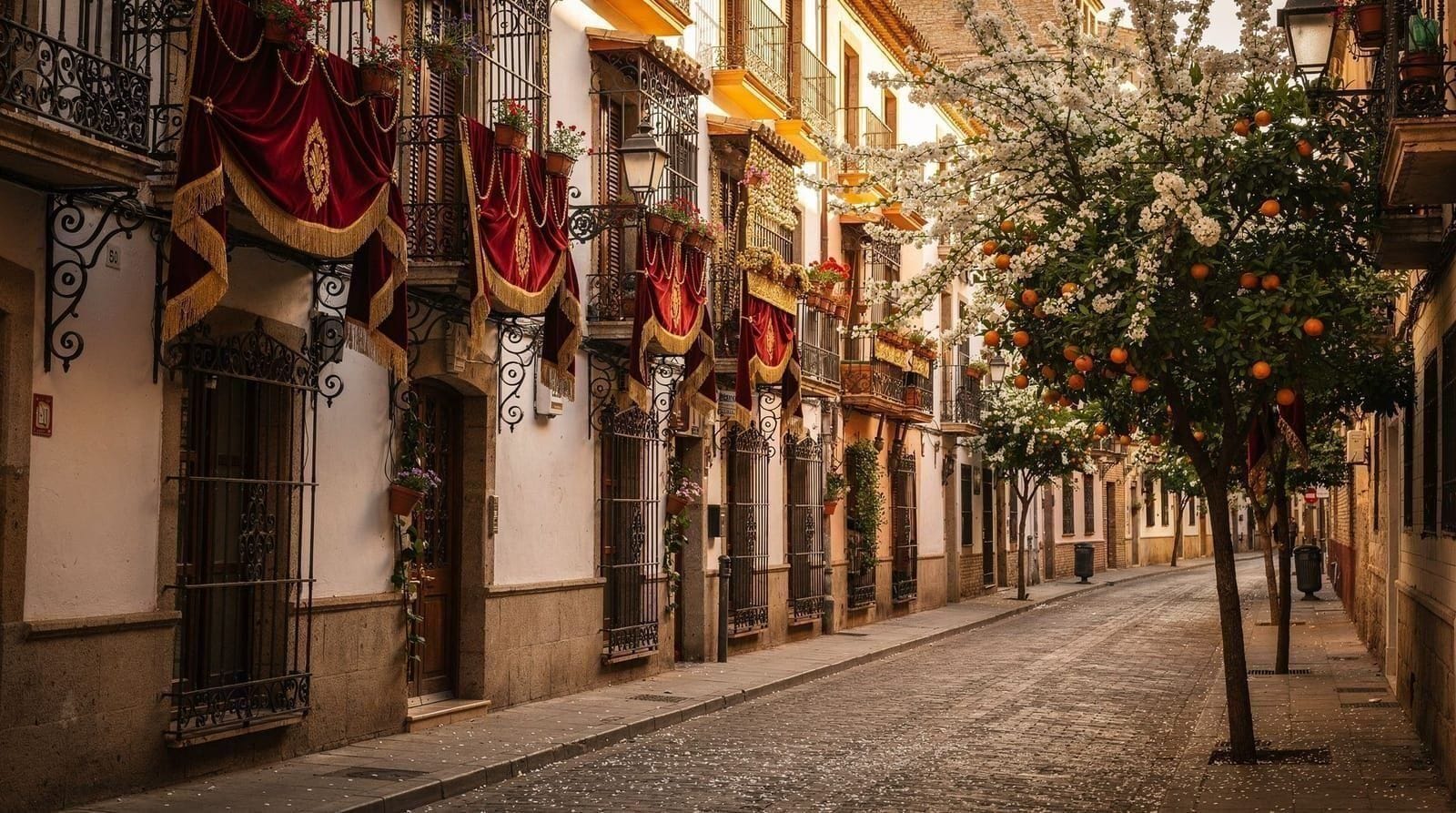
Use the shoulder of Semana Santa: The week before Palm Sunday (the week before 29 March 2026) and the week after Easter Sunday (week of 6 April 2026) have the decorations and atmosphere of Semana Santa with significantly fewer people. Many of the altarpieces in church doorways are still on display the week after.
Explore outside the historic triangle: Most of Seville’s tourist volume concentrates in the triangle Cathedral–Alcázar–Triana. La Macarena, Nervión, and Alameda de Hércules are consistently less crowded than the historic core and have more local character.
Spread the famous sights across different days: Trying to do the Cathedral, the Alcázar and the plazas in one rushed day means meeting every crowd at its worst. Giving each its own slot, at the quiet end of the day, makes the city feel far less busy. Our first-time Seville itinerary and the two-day plan are built with this kind of pacing in mind.
Leave the city for a day: Day trips take you out of the historic centre entirely while the crowds are at their height. The best day trips from Seville are a good way to spend a spring day when the centre is packed, and Córdoba is the classic choice.
Eat on local time: Restaurants fill at the usual meal hours, and the places closest to the monuments are the busiest and the most likely to be tourist traps. The guide to avoiding tourist-trap restaurants and where to eat in Seville will help you find calmer tables away from the main sights.
For planning your full trip around optimal timing, see Planning a Seville itinerary and How many days in Seville? An honest planning guide.
Month-by-month crowd levels at a glance
| Month | Crowd level | Weather | Notes |
|---|---|---|---|
| Jan-Feb | Low | Cool, 11-17°C | Quietest monuments of the year |
| March | Rising | Mild | Semana Santa builds toward late March/early April |
| April-May | Peak | Warm | Feria de Abril, spring-break tourism |
| June | Moderate-high | Hot, rising | Transition month |
| July-Aug | Moderate | Very hot, 40°C+ | Heat deters volume despite high visitor totals |
| Sep-Oct | Low-moderate | Warm, 20-28°C | Best crowd/weather balance |
| Nov-Dec | Low | Cool, 14-20°C | Christmas brings a small bump |
Skipping the queue when you can’t avoid the season
If your travel dates fall in Semana Santa, Feria, or peak spring and can’t be moved, the main lever left is skip-the-line access rather than timing. A combined Alcázar-Cathedral ticket or a priority-access booking removes the ticket-counter wait, even if the interior itself is still busy with other visitors.
Alcázar VIP early access — enter before general opening hoursFor the Alcázar specifically, see best time to visit the Alcázar for a monument-by-monument breakdown, and for the wider question of when to visit Seville overall — not just for crowds but weather and events together — see best time to visit Seville. If your dates coincide with Seville’s summer heat rather than its spring crowds, the Seville in summer heat guide covers how to structure days around it.
Choosing your dates when you have some flexibility
Even a few days of flexibility can change how crowded your trip feels. If you are free to pick, aim for October or November and anchor the days that matter most, such as the Alcázar, on a weekday. If your only window is in spring, move the monument visits to the early slots and keep the rest of the day for quieter corners of the city.
Think about what you actually want from the trip. A traveller who wants processions and the festival atmosphere accepts the crowd as part of the experience, and the Semana Santa guide and the Feria de Abril guide explain how to plan around those weeks. A traveller who wants quiet courtyards and short queues should read the Seville in spring and Seville in winter guides side by side before deciding, since each season trades something different.
Your accommodation matters too. Staying slightly outside the busiest streets keeps your mornings calm and your evenings easy; the where to stay in Seville guide and the best neighbourhoods guide compare the options. Finally, the common mistakes in Seville page lists the planning errors that most often put visitors in the thickest crowds.
If your dates fall in a busy week and you want the palace itself with fewer people around you, a small-group Alcázar tour or an guided visit in a small group keeps the pace calmer than a large party following a flag. It will not empty the palace, but it gives you a guide who sets the rhythm, someone to explain what you are looking at, and a group small enough to move through the rooms and gardens without constantly waiting behind others. Pair it with the timing advice above, and a busy week becomes far more manageable than it first looks.
Whatever the season, build some slack into your days. A plan with one major sight in the morning, a long lunch away from the monuments, and an unhurried walk in the evening copes with crowds far better than a packed schedule, because a delay at one stop does not ruin the rest.
Frequently asked questions about Best time to avoid crowds in Seville
Which months have the fewest tourists in Seville?
January and February have the fewest tourists and very short monument queues — but temperatures are cool (11–17°C) and rain is possible. October and November offer the best combination of low crowds and comfortable weather (20–26°C in October). These are the locals' preferred visiting months.When is the Alcázar least crowded?
Weekdays in January, February, October, or November. First entry slot (09:30) or last entry slot (before closing) are the quietest times within any given day. Avoid weekends year-round and all of spring (March–May) when spring break and festival tourism peaks.Is it worth visiting Seville during Semana Santa despite the crowds?
Yes — if you've planned for it and booked in advance. Semana Santa is extraordinary. 'Crowds' in this context means processional streets are packed and accommodation is scarce and expensive. But the event itself is the reason to be there. It is the wrong time to visit if you primarily want to see monuments quietly.What time of day should I visit major Seville monuments to avoid crowds?
Alcázar: first slot at 09:30 is always the least crowded. Cathedral: late afternoon (16:00–17:00) is typically less busy than midday. Plaza de España: before 10:00 or after 18:00. Metropol Parasol: early morning (09:30–10:30) for the views. Triana: any time — it is less crowded than the historic centre throughout the day.Are tour groups a problem in Seville?
Cruise ship passengers arrive in significant numbers, particularly in spring (Mediterranean cruises that call at Cádiz often include a Seville excursion). These typically arrive between 10:00 and 14:00 and concentrate at the Cathedral and Alcázar. Arriving at 09:30 before the tour buses or after 15:00 significantly reduces your overlap with cruise groups.Is October or November the better crowd-avoidance choice?
Both are good, but October edges out November on weather (20-28°C versus 14-20°C with rising rain risk) while November edges out October slightly on crowd levels, since it's further from the September-October event season. For most travellers, October's warmer evenings make it the better overall pick despite marginally busier days.Do skip-the-line tickets actually help during Semana Santa or Feria?
They help with the ticket-counter wait but not with the interior crowd itself — the Alcázar and Cathedral are simply busier with visitors during these weeks regardless of how you booked. What skip-the-line access genuinely saves is the outdoor queuing time, which can otherwise run 45-90 minutes in peak spring weeks.