Alcázar vs Alhambra: comparing Seville and Granada's great palaces
Seville: Royal Alcázar entry ticket
Is the Alcázar in Seville or the Alhambra in Granada better?
The Alhambra is architecturally superior in scale and ambition — the Nasrid Palaces are the finest surviving Islamic palace complex in Europe. The Alcázar is more accessible: walk-up tickets available, no overnight journey required, and the Mudéjar craftsmanship rivals anything in Granada. Both are worth seeing; your trip logistics usually determine which you visit.
Both palaces are among the most extraordinary buildings in Europe. Both were built by Islamic rulers and later adapted by Christian kings. Both require advance booking to avoid frustrating queues or outright exclusion. And comparing them is not as simple as ranking one above the other — they represent different architectural traditions, different scales, and serve completely different roles in a trip to Andalusia.
| Where | Alcázar: central Seville. Alhambra: Granada, around 2.5hrs by train or tour |
| Cost | €15.50 Alcázar; €22.27 Alhambra general ticket (Nasrid Palaces included) |
| Time needed | 2-3 hours Alcázar; 4-6 hours Alhambra full visit |
| Booking window | 1-3 weeks Alcázar; 3-6 weeks Alhambra in peak season |
| Best for a day trip | Alcázar if based in Seville with limited time; combine both if staying a week+ |
The buildings themselves
Real Alcázar of Seville
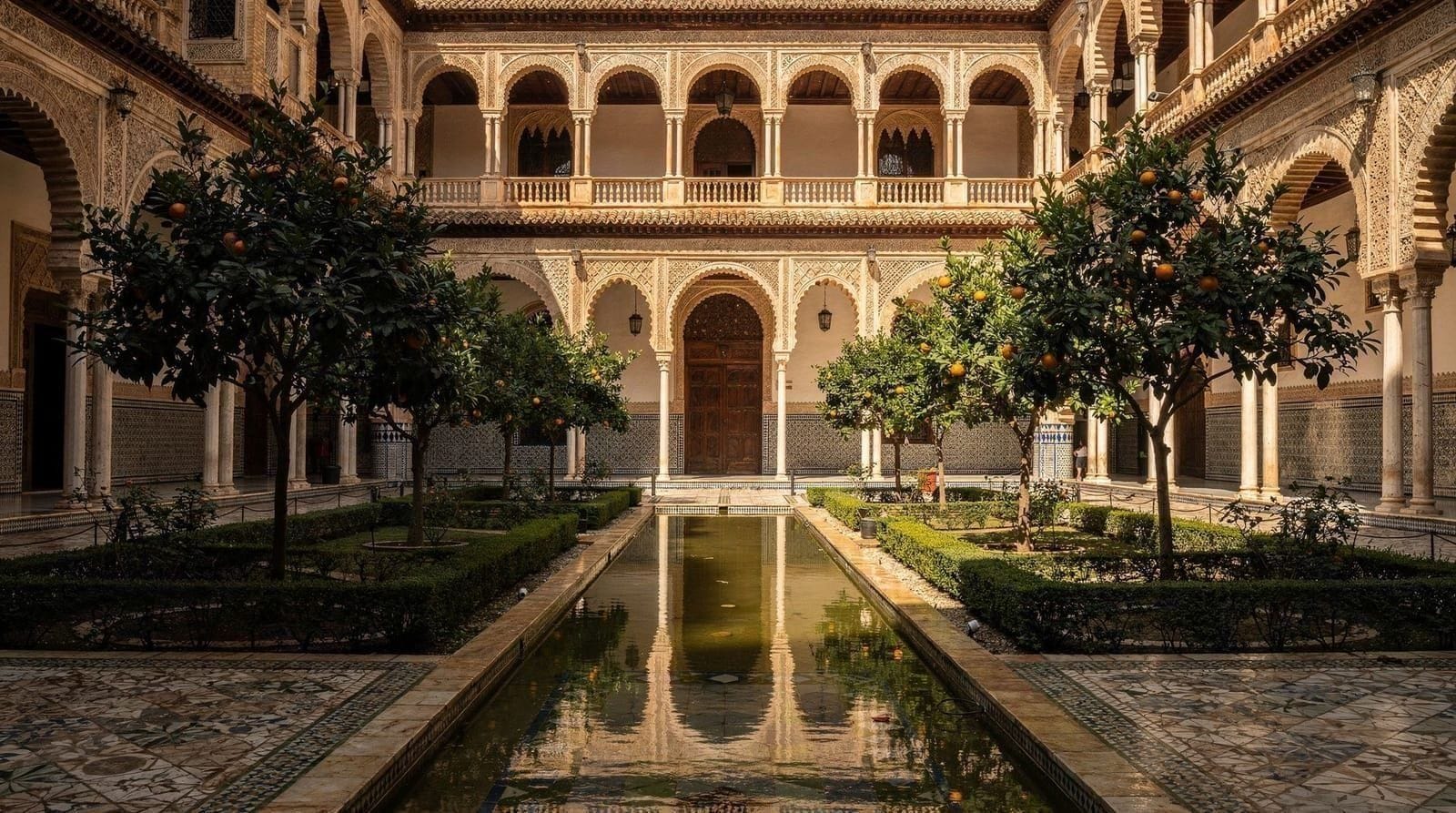
The Alcázar is a complex of successive palaces built and rebuilt over nine centuries on the same site in central Seville. The oldest surviving sections date from the 10th century (Almohad period). The most celebrated palace — the Palace of Pedro I, also called the Palacio Mudéjar — was built in 1356-1366 by Pedro I of Castile, who employed artisans from Granada and Toledo to produce something that looks, at first glance, like an Islamic palace built by a Christian king. That is exactly what it is.
The Mudéjar aesthetic is one of the most distinctive in European architecture: Arabesque plasterwork (yesería), elaborate tile dados (azulejos), intricate geometric cedar ceilings (artesonados), and horseshoe arches. The Alcázar’s Hall of the Ambassadors — a domed throne room with a geometric wooden ceiling of extraordinary complexity — is the most celebrated interior. The extensive palace gardens are among the finest in Spain.
Alhambra of Granada
The Alhambra complex covers 13 hectares on the Sabika hill above Granada. Its construction spans the 13th-16th centuries. The Alcazaba (military fortress, 13th century) offers the best views. The Generalife (summer palace and gardens, 14th century) is the most serene space. The Nasrid Palaces — the residential complex of the Nasrid sultans — are the architectural centrepiece.
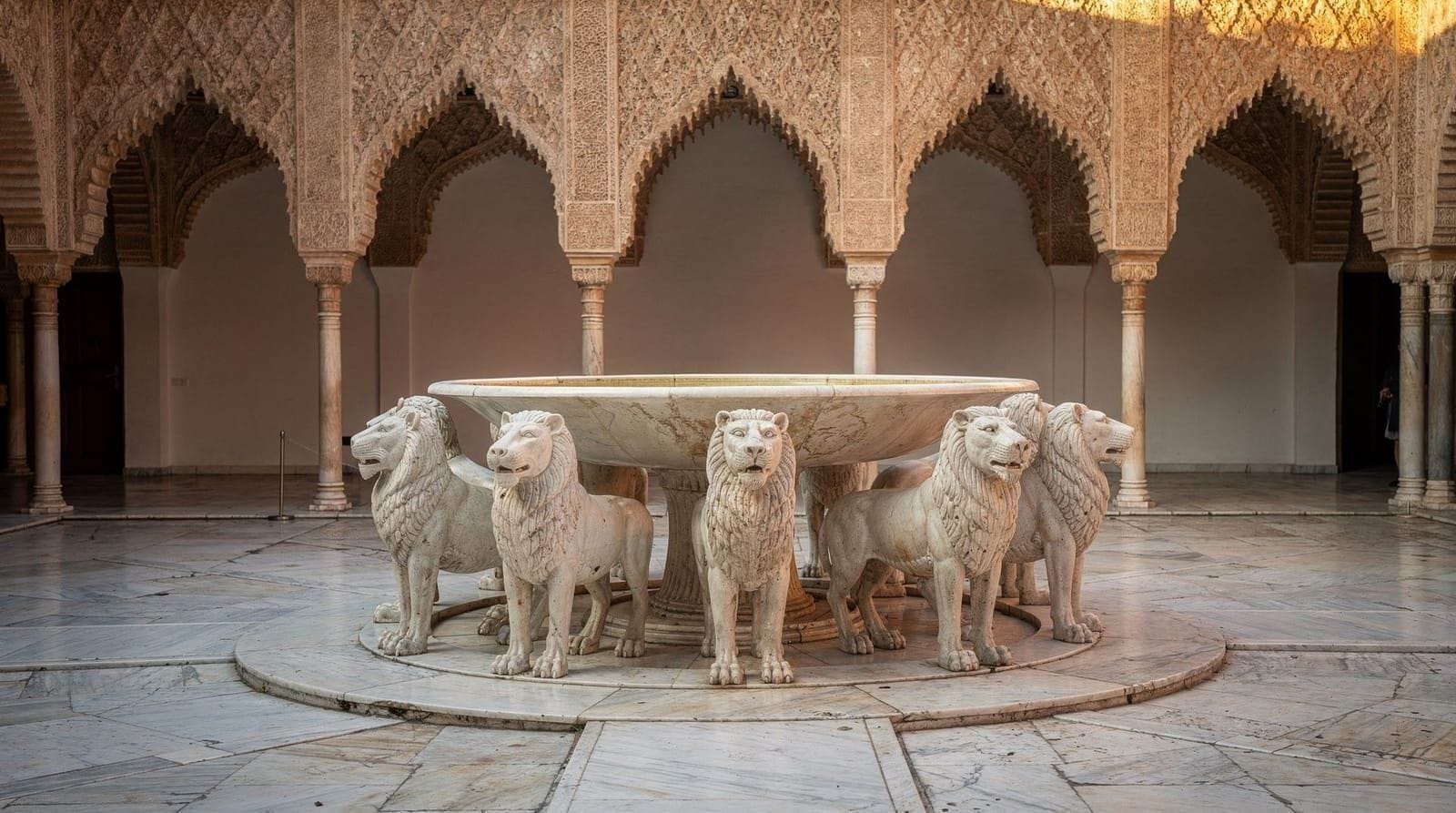
The Nasrid Palaces comprise three successive palaces built by different sultans. The Mexuar (audience chamber), the Comares Palace (throne room in the Torre de Comares), and the Palace of the Lions (named for its famous central fountain). The craftmanship — particularly the stucco muqarnas (honeycomb vault decoration) in the Hall of the Two Sisters and the Hall of the Abencerrajes, and the carved plasterwork of the Patio de Comares — represents the absolute peak of Nasrid artistic achievement.
Side-by-side comparison
| Factor | Real Alcázar | Alhambra |
|---|---|---|
| Location | Central Seville (Santa Cruz) | Granada (requires travel) |
| Scale | Compact (3-4 hours) | Large (4-6 hours full visit) |
| Architectural style | Mudéjar (14th-century peak) | Nasrid Islamic (14th century) |
| Ticket price | €15.50 general | €22.27 general ticket (Nasrid Palaces included) |
| Booking urgency | 1-3 weeks peak season | 3-6 weeks peak season (critical) |
| Sell-out risk | Moderate | Very high (Nasrid Palaces) |
| Game of Thrones | Yes (Dorne) | No |
| Gardens included | Yes | Yes (Generalife) |
| Night visit | Not standard | Yes (Nasrid only, sells out fast) |
Architectural verdict
Architectural historians generally place the Alhambra’s Nasrid Palaces above the Alcázar in the hierarchy of Islamic palace architecture. The Alhambra was built for a Muslim sultan; the Alcázar’s Mudéjar masterpiece was built for a Christian king who admired and emulated Islamic aesthetic. The difference is subtle but real: the Alhambra has a coherence and purity of vision that the Alcázar — which contains Renaissance additions, Gothic elements, and centuries of modification — cannot quite match.
That said, the Alcázar’s Pedro I palace is genuinely extraordinary on its own terms. The Hall of the Ambassadors is one of the great rooms in Spain.
Practical advice: booking and visiting
For the Alcázar:
- Book online at entradas.alcazarsevilla.es or via third-party booking platforms
- Morning slots (9am, 9:30am) are most popular — book these early in peak season
- The Alcázar closes one day per week; check current schedule before booking
- The royal apartments (upper floor) are sometimes open to additional ticket-holders; worth checking
- See the full logistics guide at Alcázar tickets and skip-the-line guide
For the Alhambra:
- Official booking: alhambra-patronato.es (opens 3 months in advance)
- Nasrid Palaces entry is timed (30-minute window) — arrive on time or you lose your slot
- If official tickets are sold out, an organised tour from Seville is the best alternative — operators pre-purchase entry for their groups
- The Alhambra complex is large: allow 4-6 hours for the full visit including Alcazaba and Generalife
- Night visits (Nasrid Palaces only, 10pm-11:30pm) are a different and spectacular experience — book these even faster
Which should you prioritise?
Prioritise the Alcázar if:
- You’re based in Seville (it’s in the city — see it regardless)
- You have limited time and can’t commit to a Granada day trip
- Game of Thrones filming locations are part of your motivation
- You’re travelling with younger children (more manageable scale)
Prioritise the Alhambra if:
- Islamic architecture and Nasrid history are your primary interest
- You’re spending 6+ days in Andalusia with time for a Granada visit
- You can book Nasrid Palaces tickets with sufficient lead time
- The scale and completeness of the Alhambra complex — including the Generalife gardens — is what you want
Visit both if:
- You’re spending a week or more in Andalusia
- Both architectural traditions interest you
- You want to compare the two most significant Islamic palace sites in Europe
The most common visitor regret is arriving in Granada without Nasrid Palaces tickets. If there’s any chance you’ll want to visit the Alhambra, book the moment you know your travel dates.
What a Seville-based visitor actually gains from adding Granada
If you’re weighing whether the Alhambra is worth the extra logistics on top of an already full Seville itinerary, the honest answer depends on how the rest of your Andalusia trip is structured. A same-day round trip from Seville (roughly 2.5 hours each way by high-speed train, or a full-day guided tour) is workable but long — you’ll spend more hours travelling and queuing than actually inside the Nasrid Palaces. It works better as part of a longer Andalusia loop that also takes in Córdoba, so the Alhambra isn’t squeezed into a single exhausting day. For a broader comparison of how Granada, Córdoba and Seville stack up against each other, see Seville vs Granada vs Córdoba.
If your itinerary can’t stretch to Granada at all, that’s not a real loss — the Alcázar alone, paired with the Cathedral and Giralda, gives most visitors a complete and satisfying dose of Andalusian palace architecture.
How the two palaces feel on the day
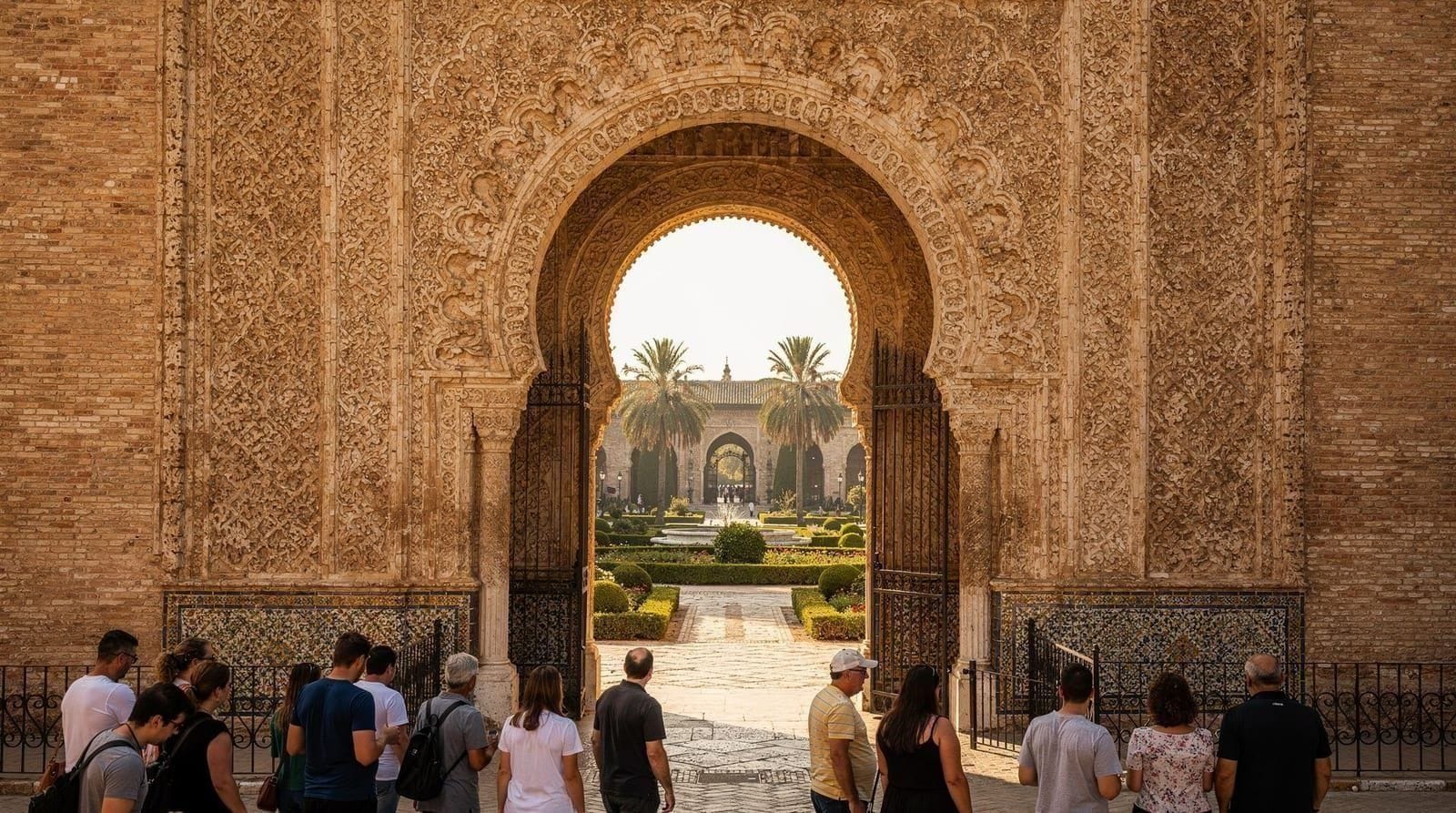
Numbers and architectural labels only go so far, so it helps to picture the experience itself. The Alcázar sits in the middle of Seville’s old centre, so a visit slots naturally into a walking day through Santa Cruz: you step out of a narrow lane, pass through the gate, and within minutes you are standing in a courtyard that looks nothing like the street you just left. The pace is easy to control. You can linger in the gardens, step into the shade, sit down, and leave when you feel like it, with no train to catch and no coach waiting.
The Alhambra asks for a different kind of commitment. You arrive on a hill above the city, move through the complex in a rough sequence, and have to respect the timed entry to the Nasrid Palaces. That structure is not a flaw, since it protects the interiors from overcrowding, but it does mean you plan around the slot rather than around your mood. Many visitors find the effect more concentrated and more dramatic as a result. The detail in the plaster, the water running through the courts, and the views back over the city reward people who arrive rested and unhurried.
Making the most of each visit
At the Alcázar
- Start with the Palace of Pedro I while your attention is fresh, then take the gardens afterwards. The reverse order tends to leave people tired by the time they reach the finest rooms.
- Look up as often as you look around. The ceilings, domes and carved cedar work are where much of the craftsmanship lives.
- If the Mudéjar period is a real interest, a guided visit adds context that signs and an audio guide cannot always match; a guided palace tour with priority access is the option to look at.
- Pair it with a second sight nearby rather than stacking several palaces in a single day. The Seville Cathedral complete guide covers the obvious companion, and Casa de Pilatos is a quieter palace if you want more of the same tradition without the crowds.
At the Alhambra
- Treat the Nasrid Palaces slot as the fixed point of the day and arrange everything else around it.
- Wear shoes that cope with slopes and uneven stone, and carry water, as much of the visit is outdoors.
- Leave time for the Generalife gardens rather than rushing straight out after the palaces. They are the calmest part of the complex.
- If you would rather not organise transport and entry yourself, a guided option from Seville handles both, though you should check what each tour actually includes before booking.
Choosing by travel style
If you like to wander without a fixed plan, the Alcázar suits you better. It can be added to a morning or evening on a whim, and it pairs well with a relaxed lunch and an afternoon in the neighbourhood. If you prefer one big, well-prepared day out that feels like an expedition, the Alhambra delivers that, provided you accept the planning it demands.
Travellers on a tight budget or a short city break should lean towards the Alcázar and use the savings in time for the rest of Seville. Our Seville in 3 days itinerary shows how it fits alongside the other big sights, while the 2-day Seville itinerary shows how much you can realistically fit when time is short. Those with a longer window can build Granada in deliberately, and the Seville, Córdoba and Granada trip lays out one way to link the three cities without turning the journey into a race.
Combining palaces with other Andalusian stops
A palace-focused trip does not have to be limited to these two. Córdoba adds the Mezquita, a very different monument that shows how Islamic and Christian building traditions layered over one another, and it makes an easier outing from Seville than Granada. If that appeals, a guided option such as a Córdoba day trip with a guided tour can sit alongside your Seville days, and the Córdoba destination page and the Granada destination page give more background on each city. If you are still undecided about where to go beyond Seville, the guide to choosing an Andalusian city helps you weigh the options.
For a first-hand account that complements this comparison, read what we noticed on our own visit in best time we visited the Alcázar.
For the complete Alcázar visit guide, see Real Alcázar complete guide. For Granada logistics, see Granada day trip from Seville. For full ticket-buying logistics on the Alcázar side, see the Alcázar tickets and skip-the-line guide.
Frequently asked questions about Alcázar vs Alhambra
Which is more impressive — the Alcázar or the Alhambra?
The Alhambra is generally considered the greater monument architecturally. Its scale (13 hectares), the completeness of the Nasrid Palaces interiors, and the Generalife gardens make it the more comprehensive experience. The Alcázar's Pedro I palace is the finest example of Mudéjar architecture in existence, but it is smaller in scope.How far in advance should I book Alcázar tickets?
Book 1-3 weeks ahead in peak season (March-May, September-October), or earlier for the most popular morning slots. The Alcázar is less prone to sell-out than the Alhambra but popular time slots (9am-11am) do go. Late afternoon (4pm-5pm) often has more availability.How far in advance should I book Alhambra tickets?
Alhambra Nasrid Palaces timed-entry tickets go on sale 3 months in advance at alhambra-patronato.es. In March-May and September-October, morning slots sell out within hours of release. Book as soon as your travel dates are confirmed. Night visit tickets sell out even faster.What is the Alcázar famous for beyond its architecture?
The Alcázar served as a real royal residence for Spanish monarchs for centuries and is still technically a royal palace — King Felipe VI uses the upper floors when in Seville. It is famous internationally as the filming location for Dorne in HBO's Game of Thrones (Seasons 5 and 6).Can you visit the Alcázar without a guided tour?
Yes — and for most visitors, independent exploration with the free audio guide (included in some ticket types) is the better option. The rooms and gardens are clearly signposted. A guided tour adds historical and architectural context worth having if the Mudéjar period is your specific interest.Is the Alhambra worth visiting without the Nasrid Palaces?
Barely. The Alcazaba fortress and Generalife gardens are beautiful, but the Nasrid Palaces are the reason people come to Granada. Visiting the Alhambra without a Nasrid Palaces ticket is like visiting Seville's Alcázar and only being allowed into the garden.Which palace is better for children?
The Alcázar is better for younger children — shorter visit (2-3 hours vs 4+ hours for Alhambra), smaller scale, and the gardens with ducks and peacocks hold children's attention. The Alhambra's Nasrid Palaces interiors are harder to appreciate without context. For teenagers interested in Game of Thrones or Islamic history, either works well.Are there skip-the-line options for both?
For the Alcázar, skip-the-line tickets (online purchase) avoid the queue at the door but you still enter at your timed slot. Guided tours also skip queues. For the Alhambra, all Nasrid Palaces tickets are timed-entry — there is no skip-the-line option beyond what is built into the booking system.
Top experiences
Bookable activities with verified prices and instant confirmation on GetYourGuide.