Huelva
Columbus's departure point, Rio Tinto blood-red mines, and Iberian ham country. by train from Seville. Not a tourist city — an honest Andalusian
From Seville: Aracena and Río Tinto mines full-day tour
Quick facts
- Best for
- Columbus history, Río Tinto mines, Aracena base
- Days needed
- 1
- Getting there
- Train from Seville (Renfe)
- Currency
- EUR
Huelva is the provincial capital of the westernmost province of Andalusia, on the Odiel estuary where the Atlantic begins. It is not a tourist city — no Alhambra, no Alcázar, no Instagram-worthy historic centre — and most visitors pass through it on the way to Aracena, the Río Tinto mines, or the beaches of Matalascañas. That underappreciation is partly accurate (the city centre is unremarkable) and partly unfair: the Columbus connection here is the real thing, not a theme park.
| Where | Westernmost Andalusia, Odiel estuary — by train from Seville |
| Cost | Muelle de las Carabelas around €3.60; Parque Minero €11–26 |
| Time needed | 1 day, more if combining with Río Tinto and Aracena |
| Getting there | Renfe train, or car via A-49 (1h, 90 km) |
| Best time | October–May; summer heat is severe this far west |
The Columbus connection
Columbus did not depart from Palos de la Frontera — 14 km east of Huelva — by accident. He recruited his crew from the villages of the Odiel and Tinto estuaries, and the Monasterio de La Rábida (4 km south of Huelva city) is where he spent three years planning the 1492 voyage, with Franciscan friars who helped fund and advocate for his project.
Monasterio de La Rábida: Entry €4, open Tuesday–Sunday (closed Monday). The church contains original murals from Columbus’s period. The adjacent garden has a replica of the Santa María. It is a 15-minute taxi from Huelva city or accessible by local bus.
Muelle de las Carabelas (Palos de la Frontera, 14 km from Huelva): Full-scale replicas of the Niña, Pinta, and Santa María moored in the Tinto estuary. Entry €3.60. Takes about 2 hours with the interactive museum. Reaches a level of historical reconstruction that is better than expected.
Palos de la Frontera town: The actual departure point, with a small church (Iglesia de San Jorge) where Columbus and his crew received their final blessing before sailing on August 3, 1492. The town is quiet and entirely unlaboured about its role in history.
Huelva city itself
The city centre was largely rebuilt after a devastating flood in 1961 and again damaged in a fire in 1969, so the historic fabric is limited. The Gran Teatro and the Barrio Reina Victoria (a colony of English-style terraced houses built by the British-owned Río Tinto company for its workers in the early 20th century) are curiosities. The Museo de Huelva (Alameda Sundheim) has a good archaeology section with Tartessian and Phoenician finds from the region.
The Muelle Río Tinto pier, built in 1874 by Gustave Eiffel’s engineering firm for loading copper ore onto ships, is a 1 km-long Victorian iron structure still standing at the port. Not dramatic, but the industrial heritage is genuine.
Río Tinto mines
The Rio Tinto mines are 80 km from Huelva city, in the foothills of the Sierra Morena. They have been mined continuously for at least 5,000 years — the Phoenicians, Romans, Moors, and eventually the British-owned Río Tinto Company all extracted copper, gold, and silver here. The acid mine drainage has turned the river a striking blood red, a colour it has had for millennia (NASA has studied the site as an analogue for early Mars).
The Parque Minero de Riotinto includes a mining museum, a Victorian colonial settlement (the English settlement built by the Río Tinto Company for its British managers), open-pit viewpoints, and a heritage steam railway that runs through the mining landscape. Entry to the full Parque Minero experience costs €11–26 depending on which components you include.
Aracena and Río Tinto mines full-day tour from SevilleGetting to the Río Tinto mines from Huelva without a car requires a bus to Nerva or Minas de Riotinto (about 1h30 each way, infrequent services). A car or organised tour is significantly more practical.
Combining Huelva with Aracena
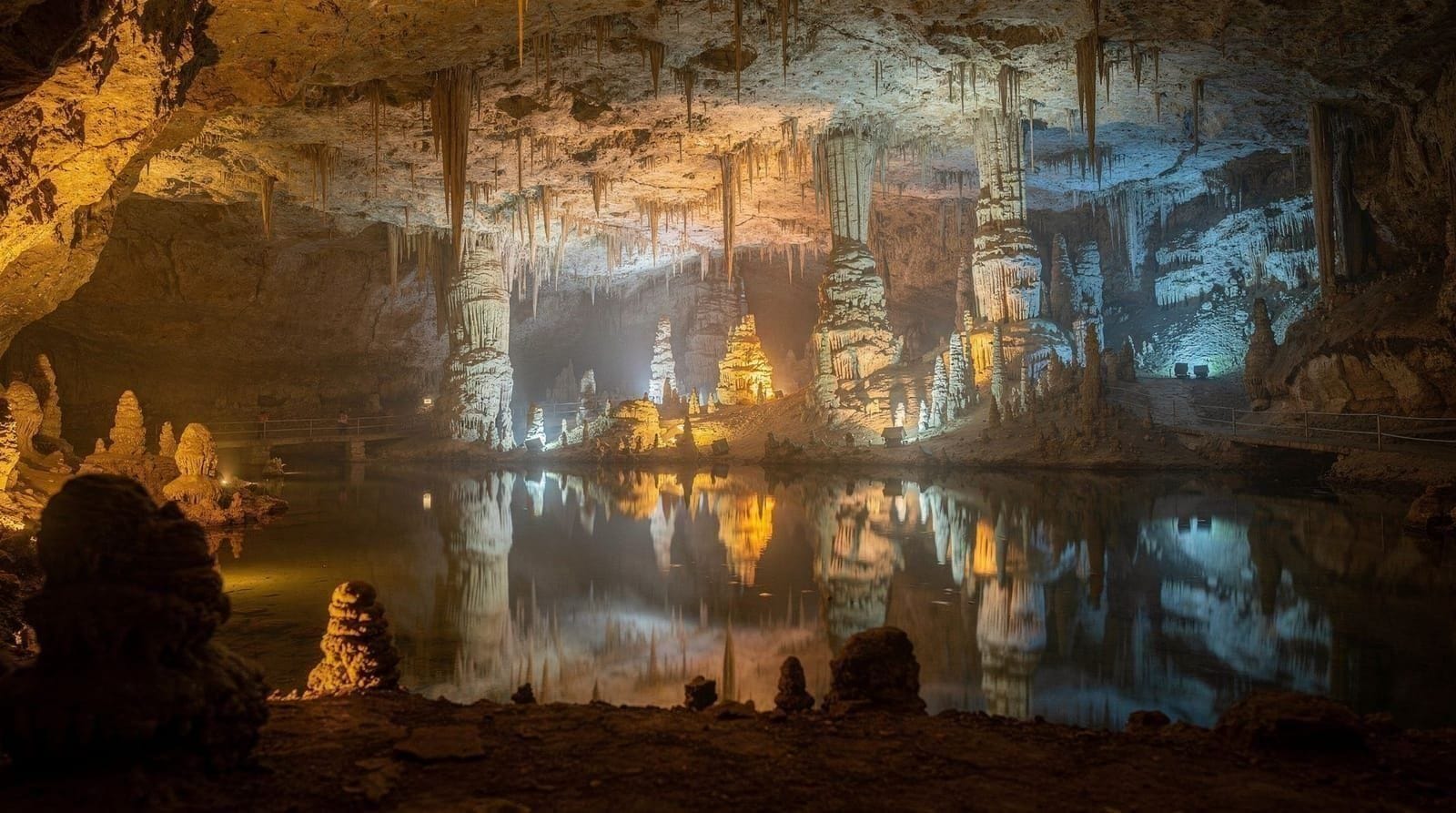
Huelva and Aracena (80 km north) are logical stops on the same itinerary. The Río Tinto mines lie between them. By car: Huelva in the morning, mines at midday, Aracena in the afternoon, return to Seville by evening. This makes for a dense but rewarding day.
See the Aracena destination guide for what to do in the Sierra de Aracena, and the Aracena day-trip planning guide for a full itinerary that includes the mines.
Shaping the day from Seville
The honest way to plan Huelva is to decide first what you actually came for. If the answer is Columbus, the day revolves around La Rábida and the Muelle de las Carabelas, with the city itself as a lunch stop and a short wander. If the answer is the mines, Huelva city becomes little more than a logistical starting point, and you are better off treating the whole outing as a tour that happens to pass through the province. Mixing the two ambitions is possible, but only with a car and an early start, and it leaves little room for lingering anywhere.
For travellers who want a slower pace, a good compromise is to give Huelva its own day and leave the mines for another. That way La Rábida and Palos de la Frontera can be seen without watching the clock, and you are not trying to squeeze a mining landscape into the tail end of an afternoon. If you are still deciding how many days to give the wider region, the Seville day trips itinerary shows how excursions like this one can be spaced out, and the Andalusia week itinerary places the west of the region alongside the better-known cities.
It also helps to be realistic about comparisons. Huelva will not give you the monuments that make Córdoba or Granada such easy day trips, and the Córdoba versus Granada comparison is a useful reminder of what a headline excursion looks like. Huelva is the quieter alternative: fewer crowds, less polish, and a stronger sense that you are somewhere people simply live and work. For a broader view of where this kind of trip fits among the other options, the guide to choosing an Andalusian city to visit is worth a look before you commit.
What to expect on the ground
Do not expect the infrastructure of a major tourist centre. Signage in English is limited at the smaller sites, staff are friendly but not always used to international visitors, and a few words of Spanish go a long way at the Muelle de las Carabelas, at the monastery and in the bars. Opening arrangements at smaller sites can change, so it is sensible to check the day before rather than assume.
Come with comfortable shoes and sun protection even outside summer, because much of the experience is outdoors: the estuary, the quays, the monastery garden and the open-pit viewpoints at the mines all offer little shade. A light layer is useful too, since the Atlantic influence this far west can make mornings and evenings feel different from Seville.
Photography is one of the pleasures here. The red river, the iron pier and the replica caravels at their moorings all reward a slower look, and the quieter crowds mean you rarely have to wait for a clear view.
Huelva as part of a bigger Andalusian trip
Because Huelva sits at the western end of the region, it pairs naturally with other outings that head west or north from Seville rather than east. The Doñana day trip guide covers the wetlands that touch the province, and the Aracena day trip guide adds caves, hill villages and cured ham. If you enjoy hearing how other travellers experienced this side of Andalusia, the Doñana safari trip report gives a first-hand account, and the Andalusia week-long planning story shows how a longer route can be stitched together.
Travellers based in Seville for several days often find that one slower, less glamorous excursion balances the busier sightseeing days in the capital. Huelva fits that role well. After the crowds at the main monuments, a day among estuaries, replica ships and mining heritage is a genuine change of scene, and it gives a rounder picture of the region than the postcard cities alone. Back in town, the Seville city guide can help you decide how to spend the evening once you return.
Huelva’s beaches and the coast
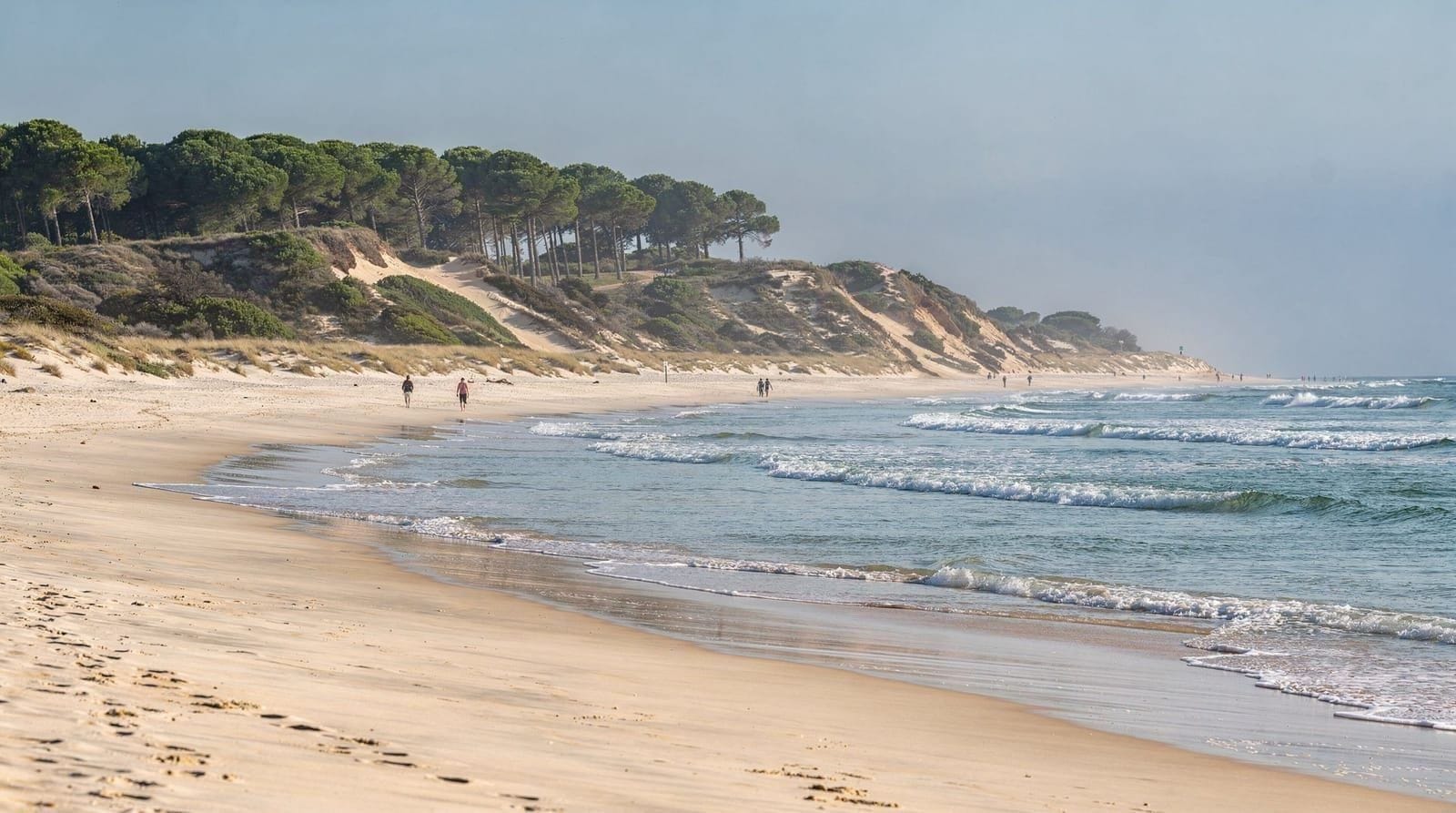
Huelva province has a long, largely undeveloped Atlantic coastline south and west of the city — Punta Umbría, the closest beach town, is a 20-minute drive or ferry crossing from Huelva and popular with locals rather than international tourists. Further south, Matalascañas sits at the edge of Doñana National Park and is the more commonly visited beach for day-trippers from Seville, since it pairs naturally with El Rocío and the Doñana wetlands. If beach time is the priority rather than city or mining history, Matalascañas is the better single destination. Huelva province also borders Doñana National Park on its eastern edge, and several Doñana tours depart from or pass through the province.
Getting there from Seville
By train: Renfe runs trains from Seville Santa Justa to Huelva; check current durations, departures and fares on the Renfe website. The train station in Huelva is central. This is the most practical option for the city itself.
By car: A-49 west from Seville, about 1 hour, 90 km. Necessary if you want to reach La Rábida, Palos de la Frontera, and the Río Tinto mines in one day.
Hot air balloon over Doñana and Huelva
An unusual experience based out of the Huelva province is balloon flight over the Doñana marshes and the Atlantic coast. These departures happen in the early morning, typically from near Almonte, and offer aerial views of the Guadalquivir delta and Doñana protected areas that are genuinely unlike anything accessible on the ground.
Hot air balloon over Doñana and Huelva from SevilleFlights typically run from October through May (summer heat makes early-morning balloon conditions problematic). They operate weather-permitting only, with same-day cancellation possible.
Where to eat in Huelva
Taberna El Condado (Calle Vázquez López): Solid local tapas, good range of Huelva-province products (jamón ibérico from Jabugo, local fish, salt cod preparations). Not tourist-oriented.
Restaurante El Paraíso (near Muelle Río Tinto): Fish and shellfish focus, good for fresh langostinos and chipirones (small squid). Lunch only.
The covered Mercado del Carmen (near the bus station) has a section of bars and stands for a quick lunch among locals.
Honestly, is Huelva worth visiting?
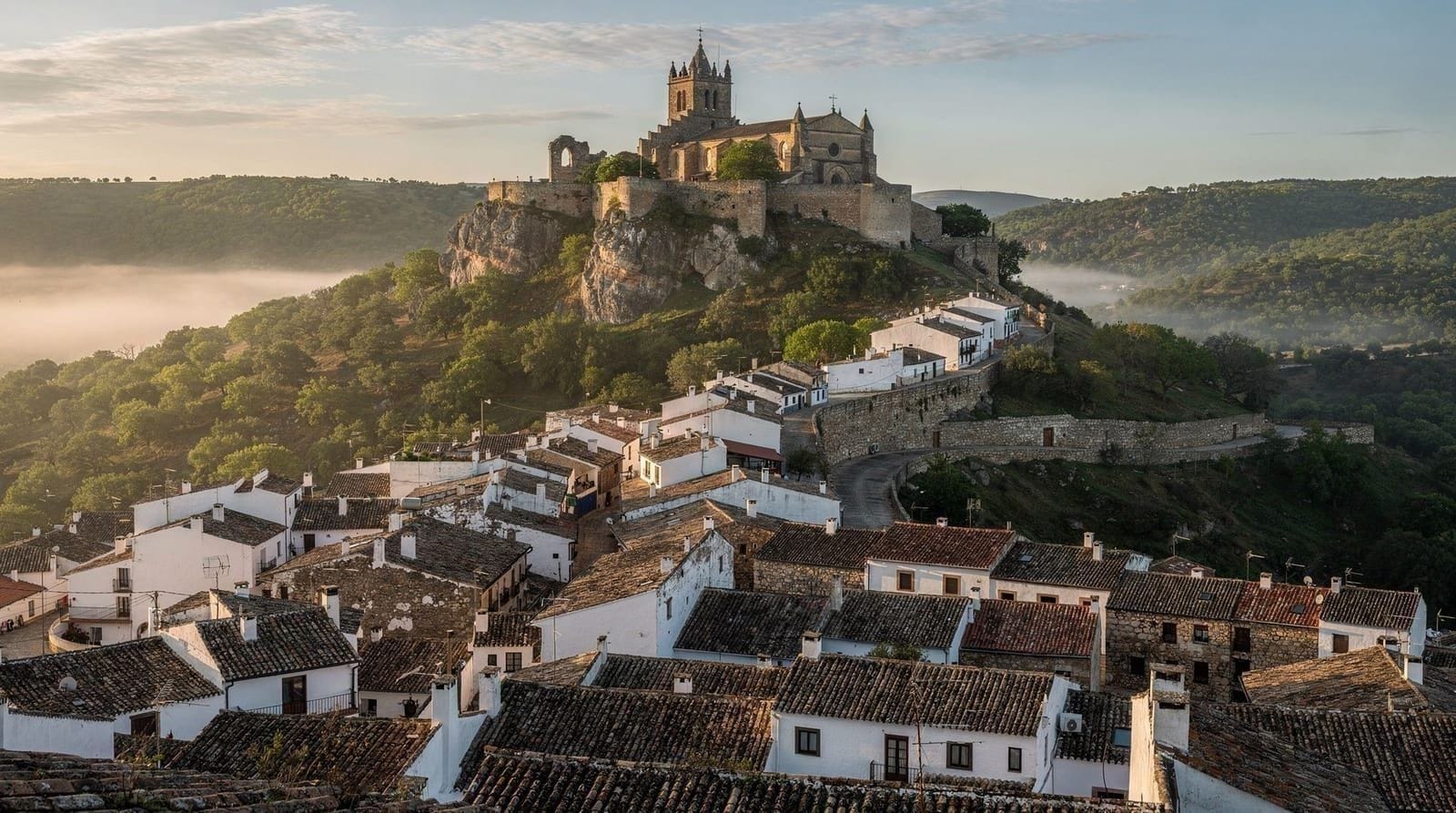
As a standalone city, Huelva is a working Andalusian provincial capital without major visual appeal. Its value lies in what surrounds it: the Columbus history at La Rábida and Palos is genuinely significant and undervisited; the Río Tinto mines are one of the most remarkable industrial and geological landscapes in Europe; and the drive north to Aracena passes through excellent Sierra Morena landscapes.
If you are already doing Aracena or the mines, stopping in Huelva city adds modest value. As the sole destination of a day trip from Seville, the claim is harder to make unless you have a specific interest in Columbus history or industrial heritage.
Frequently asked questions about Huelva
What is Huelva famous for?
Three things: the Columbus connection (he departed from Palos de la Frontera, 14 km away, in 1492), the Río Tinto copper mines (5,000+ years of mining history, blood-red river), and Iberian ham (the Jabugo village near Aracena is considered the benchmark for Spanish jamón ibérico).
How far are the Río Tinto mines from Huelva city?
About 80 km by road, 1 hour by car. By bus the journey takes 1h30 each way with infrequent services. A car or organised tour is significantly more practical for visiting the Parque Minero.
Is the Monasterio de La Rábida worth visiting?
Yes, if the Columbus history interests you. The monastery is well-preserved, and has a genuine connection to the 1492 voyage. The murals in the church are 15th-century originals. Allow 1 to 1.5 hours. It is 4 km from Huelva city by taxi.
How do I get from Seville to Huelva?
Renfe runs trains from Seville Santa Justa to Huelva; check current durations, departures and fares on the Renfe website. This is the most practical option for the city itself.
Can I combine Huelva and the Río Tinto mines in one day from Seville?
By car: yes. Train to Huelva, La Rábida, then drive (car rental in Huelva) to the mines and back is a full but manageable day. Without a car, the mines are difficult to reach from Huelva conveniently. The organised tour option (Aracena + Río Tinto from Seville) covers the mines without needing your own transport.
Is Huelva better for a day trip than Matalascañas or Aracena?
It depends on your interest. Huelva city is the pick for Columbus history and industrial heritage; Matalascañas is the pick for a beach day; Aracena is the pick for hiking, caves, and jamón ibérico country. Many visitors combine Huelva with one of the other two rather than treating it as a standalone destination — see the best day trips from Seville overview for how they compare.
Top experiences
Bookable activities with verified prices and instant confirmation on GetYourGuide.