Is Seville worth visiting? An honest assessment
The question people actually mean when they ask this
When someone asks “Is Seville worth visiting?”, they’re usually asking one of three more specific questions:
- Is Seville worth visiting compared to Barcelona or Madrid?
- Is Seville worth the detour if I’m already in Andalusia?
- Is Seville worth the effort and cost given that it’s extremely hot in summer?
I’ll address all three, because the answer to each is different.
| Best for | Architecture, food, flamenco, crowd-averse travellers |
| Minimum time | 2 full days; a week if using it as an Andalusia base |
| Cost level | Moderate — cheaper than Barcelona if you eat at bar counters |
| Toughest season | July–August, regularly above 40°C |
| Best season | Spring (March–May) or autumn (September–October) |
Against the major Spanish cities: yes, unreservedly
Seville has one of the most concentrated collections of significant architecture in Spain. The Real Alcázar is a UNESCO World Heritage Site and one of the finest examples of Mudéjar architecture in Europe — still used as a royal residence, still containing working gardens, still capable of making experienced travellers stop and stare.
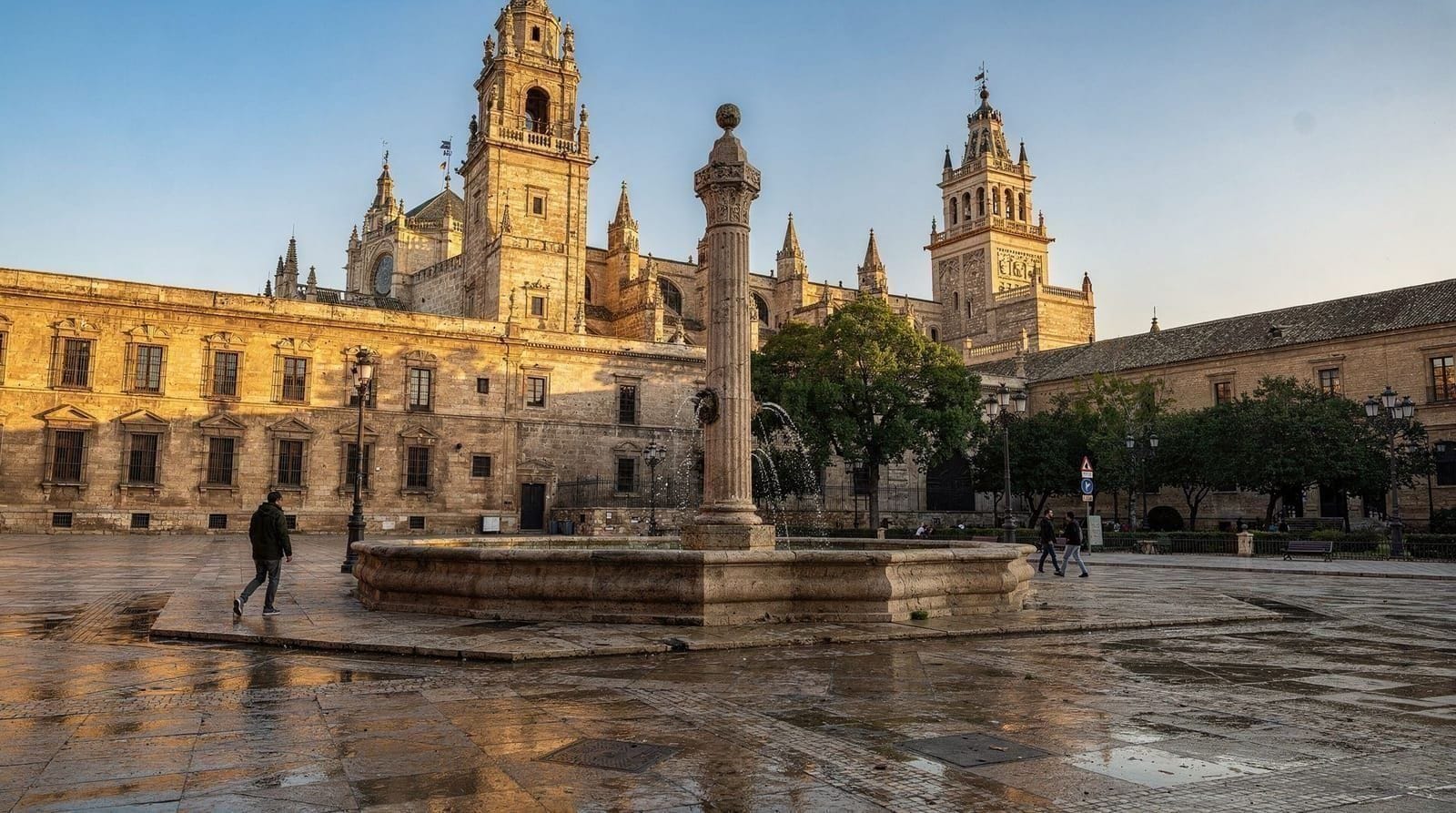
The Seville Cathedral is the third largest church in the world (after St Peter’s in Rome and St Paul’s in London) and contains the tomb of Christopher Columbus. The Giralda tower, the surviving minaret of the mosque the Cathedral replaced, is the original of a design type that influenced architecture across the western hemisphere.
Neither Barcelona’s Sagrada Família nor Granada’s Alhambra is objectively more important than the Alcázar-Cathedral complex in Seville. They’re different kinds of extraordinary.
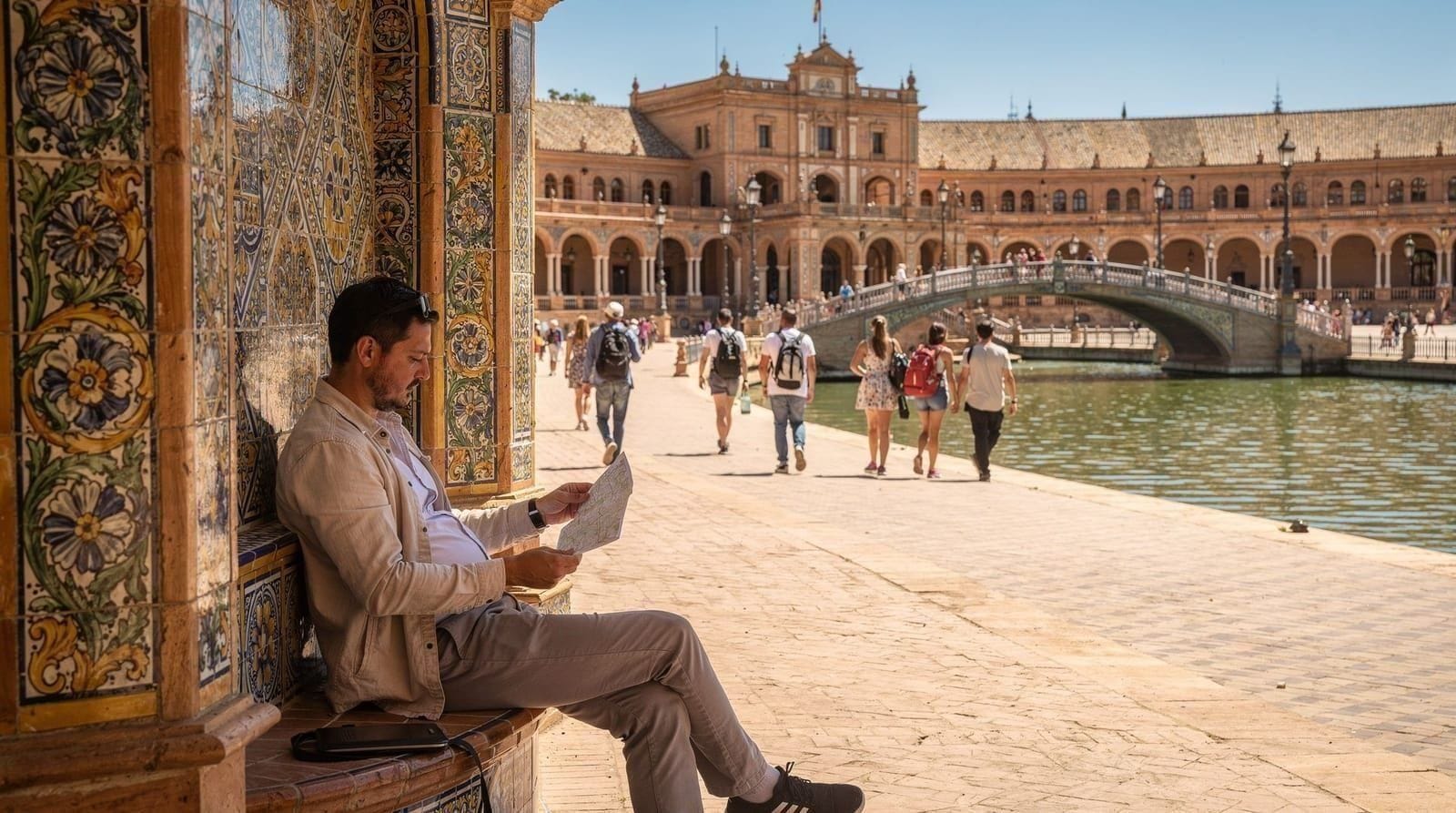
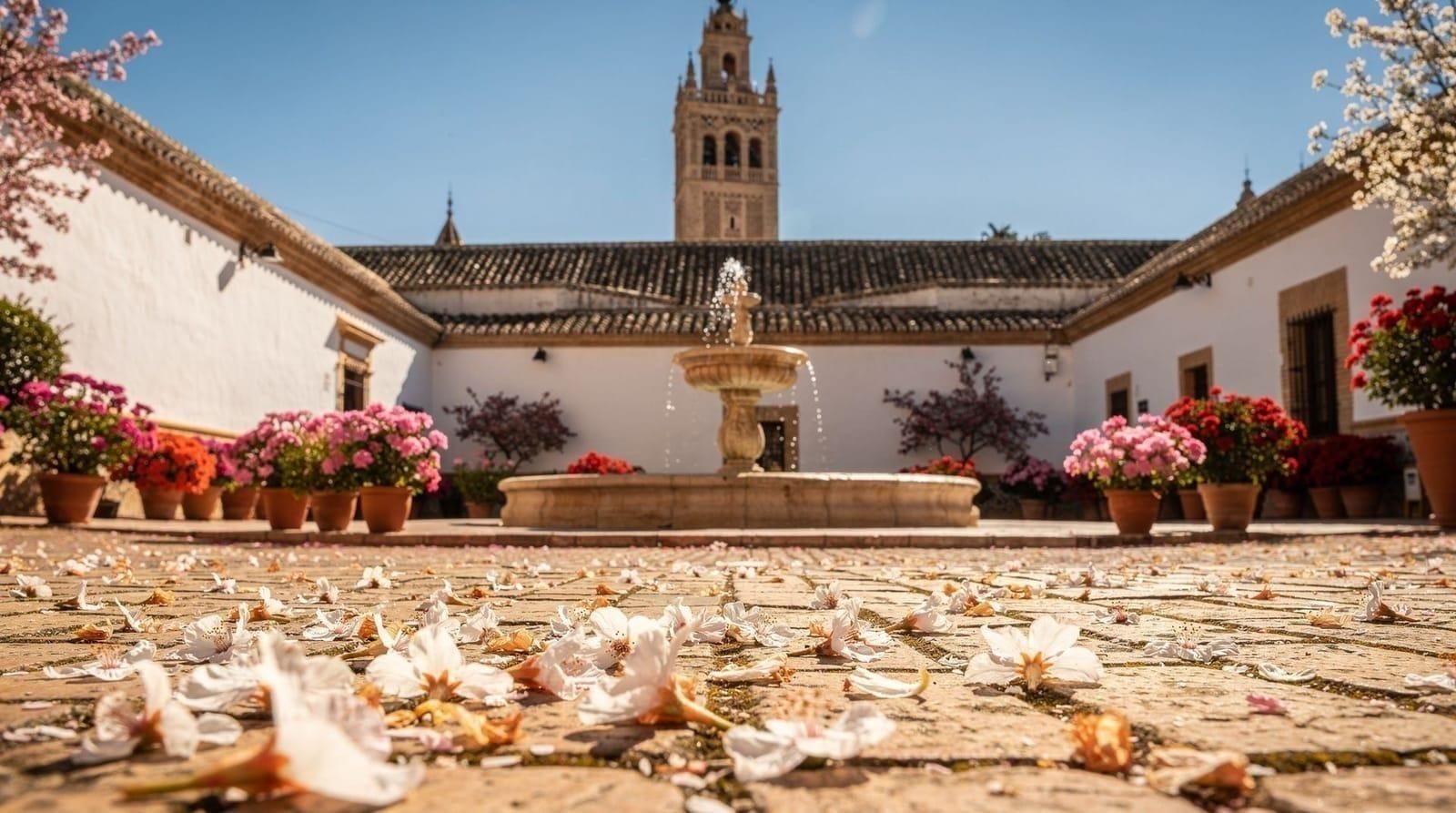
Beyond the monuments: the barrio of Santa Cruz has the genuine, undeceiving quality of old Moorish urban planning — narrow streets that turn corners to reveal small plazas, tiled walls, orange trees. Triana across the river is a functioning neighbourhood with a specific cultural identity (flamenco tradition, ceramics, locally-owned bars) that feels nothing like a tourism zone. The food culture — tapas at the counter, menú del día at lunch, cold fino sherry before dinner — is legitimately good and legitimately priced if you eat where locals eat.
Seville is absolutely worth a dedicated trip from anywhere in Western Europe, and from further if you have the budget. Our Real Alcázar complete guide covers exactly what makes that specific building worth prioritising if you only book one paid attraction.
Book combined Alcázar, Cathedral and Giralda skip-the-line ticketsAs a detour within Andalusia: it depends on your route
If you’re spending a week in Andalusia and trying to choose between adding Seville or adding another day in Granada, the calculus is harder.
My honest take: Seville needs at least two full days to do justice to — one for the Alcázar and Santa Cruz, one for the Cathedral, Triana, and the wider city. If you’re spending a week in the region, Seville should be a base rather than a stop. The AVE train connections make it efficient as a hub: Córdoba in 45 minutes, Cádiz in 1h40, Málaga in 2 hours.
If you can only spend one day in Seville as part of a longer trip, you’ll see enough to understand what you missed and wish you had more time. That’s either a recommendation or a warning, depending on your tolerance for itinerary regret.
If you would rather not manage connections yourself, a Córdoba day trip with the Mezquita by high-speed train keeps the logistics simple, and a guided Granada day trip with the Alhambra and the Albaicín is the easiest way to taste the region’s other great monument without changing hotels. Our Córdoba day trip guide and Granada day trip guide explain how each option works.
In summer specifically: with caveats
This is where the honest assessment gets complicated. July and August in Seville are genuinely extreme — temperatures regularly exceed 40°C, and in 2022 the city recorded 43°C for four consecutive days. I visited in August of that year and spent two afternoons essentially unable to function before I adapted to the siesta schedule.
Summer Seville rewards visitors who are willing to reorganise their day around the heat: sightseeing from 7–11 am, retreat and rest from noon to 5 pm, evening exploration from 5 pm onward. If you travel with children under ten or anyone with heat sensitivity, consider very carefully. The city infrastructure handles the heat through architecture and scheduling, not through the kind of air-conditioned indoor entertainment options that make summer in, say, Madrid or Paris manageable with kids.
For most adults willing to adapt, summer is not a reason to avoid Seville — just a reason to plan differently. Our Seville in summer heat guide covers the specific scheduling and hydration strategies that make July and August workable rather than miserable.
Who benefits most from a trip to Seville
History and architecture enthusiasts: The Alcázar alone justifies a trip. The Islamic-influenced architecture visible throughout the city is genuinely different from anything in northern Spain, France, or elsewhere in western Europe. There is nowhere else in Europe with this density of surviving Mudéjar and Moorish-influenced architecture accessible to visitors.
Food and drink travellers: Andalusian cooking is not the same as Spanish cooking from Madrid or Barcelona. The local specialities — espinacas con garbanzos, pez espada a la plancha, bienmesabe, the sherry wine culture radiating out from Jerez — are distinct and excellent. Eating well at local prices is straightforwardly achievable in a way that’s less so in Barcelona or San Sebastián.
Flamenco enthusiasts or the culturally curious: Seville and Jerez are the two cities where flamenco has the deepest roots. Seeing flamenco here is different from seeing it in Madrid, not because Madrid’s performers are worse, but because the cultural context is present in a way it isn’t elsewhere.
Travellers who dislike crowds: Seville has significant tourism, but it’s considerably less saturated than Barcelona, Rome, or Prague. Outside of Semana Santa and the Feria de Abril, the city is genuinely manageable.
The honest counterarguments
It’s very hot in summer. This is real and it matters. If you have no flexibility on travel dates and can only go in July or August, factor in genuine discomfort and schedule restriction.
Transport connections depend on which direction you’re coming from. Seville doesn’t have motorway-accessible daytrip reach to the kind of beach resorts that make an Andalusia trip easier to sell to a mixed group. The coast is accessible from Seville (Cádiz in under 2 hours by train) but requires planning.
The tourist trap density is high near the Cathedral and Alcázar. The rosemary scam, overpriced restaurants, fake flamenco reviews — Seville has all of this concentrated in the Santa Cruz and Cathedral zone. None of it is dangerous, all of it is avoidable with research, but the first-time visitor without preparation will be targeted. Our rosemary scam guide and tourist traps to avoid guide cover the specifics so you’re not caught out on your first afternoon.
Seville against its two closest rivals
| Seville | Granada | Córdoba | |
|---|---|---|---|
| Signature sight | Real Alcázar + Cathedral | Alhambra | Mezquita |
| Minimum time | 2 full days | 1–2 days | Half to full day |
| Nightlife & food scene | Extensive | Moderate | Limited |
| Crowds | High near monuments, manageable elsewhere | High, especially Alhambra | Lower |
| Best paired with | A week-long Andalusia base | Alhambra-focused trip | Day trip from Seville or Madrid |
If you’re deciding between the three rather than choosing whether to visit Seville at all, the which Andalusian city to visit guide walks through the decision in more depth than a single table can.
The verdict
Seville is worth visiting — in spring (March–May) or autumn (September–October) unreservedly, in summer with planning and realistic expectations, in winter as an underrated quiet option with mild temperatures and empty monuments.
The best time to visit Seville guide covers the seasonal trade-offs in detail, and our how many days in Seville guide helps with the duration question. For the Andalusia routing question specifically, the Córdoba vs Granada vs Seville comparison lays out the decision tree. If cost is the deciding factor, our Seville on a budget guide shows it’s genuinely achievable without cutting the experience short, and first-timers should also skim the first-time travel tips guide before booking anything.
Frequently asked questions about visiting Seville
Is Seville worth visiting in summer?
Yes, with planning. Reorganise your day around the heat — sightseeing early and late, resting through the hottest hours — rather than trying to sightsee on a northern-Europe schedule. If your dates are flexible, spring or autumn avoids the issue entirely.
How many days should I spend in Seville?
Two full days covers the essentials (Alcázar, Cathedral, Santa Cruz, Triana). Three to four days lets you add day trips or explore at a slower pace without feeling rushed.