Doñana safari — what we actually saw
Managing expectations before the 4WD even starts
Doñana is one of Europe’s most important wetland ecosystems — 543 square kilometres of marshes, dunes, scrubland, and Mediterranean forest at the mouth of the Guadalquivir, protected since 1969 and a UNESCO World Heritage Site. It’s also a place where what you see depends enormously on the season, the time of day, and a degree of chance that no guide can fully control.
We went in early November, which I can now say with confidence is an excellent time to visit. The summer heat — which can make the marshes difficult for large mammals during the dry season — had broken. The autumn rains had filled the marismas (wetlands). And the migratory birds were in residence in numbers that were, frankly, staggering.
I say this because I’ve spoken to people who did the same tour in July and came back mildly disappointed — some wildlife, yes, but much of it retreated from the heat, the marshes partly dried out, and the dune landscapes dominant. November Doñana is a different animal (literally).
If you are still deciding when to travel at all, our guide to the best time to visit Seville lays out the year month by month, and the pages on Seville in winter and Seville in summer heat explain why the same city feels so different at either end of the calendar. The safari follows the same logic: the park rewards the quieter, cooler months.
| Where | Doñana National Park, ~65–80 km from Seville |
| Cost | Around €60–70 per person, transport + guide + lunch included |
| Time needed | Full day, about 8 hours from Seville |
| Best months | October–March for birds and mammals |
| Access | Core zone requires a guide and official vehicle |
Seasonality: what you’ll actually see
Doñana changes dramatically by season, more than most day trips from Seville. Here’s the honest comparison based on our November visit and accounts from people who’ve done other seasons:
| Season | Water levels | Wildlife highlights | Verdict |
|---|---|---|---|
| Winter (Nov–Feb) | High, marismas flooded | Flamingos, storks, migratory birds in huge numbers | Best for birdlife |
| Spring (Mar–May) | Receding | Wildflowers, breeding activity, deer | Good all-round |
| Summer (Jun–Aug) | Low, marshes dry | Dune landscapes dominate; large mammals retreat | Least reliable |
| Autumn (Sep–Oct) | Refilling | Transition period, improving conditions | Solid, less crowded |
The tour logistics
We booked through GetYourGuide and were picked up from the centre of Seville at 8 am:
From Seville: Doñana National Park 4WD day tripThe pickup took us and nine other tourists to a base near El Rocío, a small village on the edge of the park famous for its white-washed buildings and the extraordinary pilgrimage to the Hermitage of El Rocío every spring. From El Rocío, we boarded two Land Cruisers with guide-drivers who knew the park with the ease of people who’ve spent years reading it.
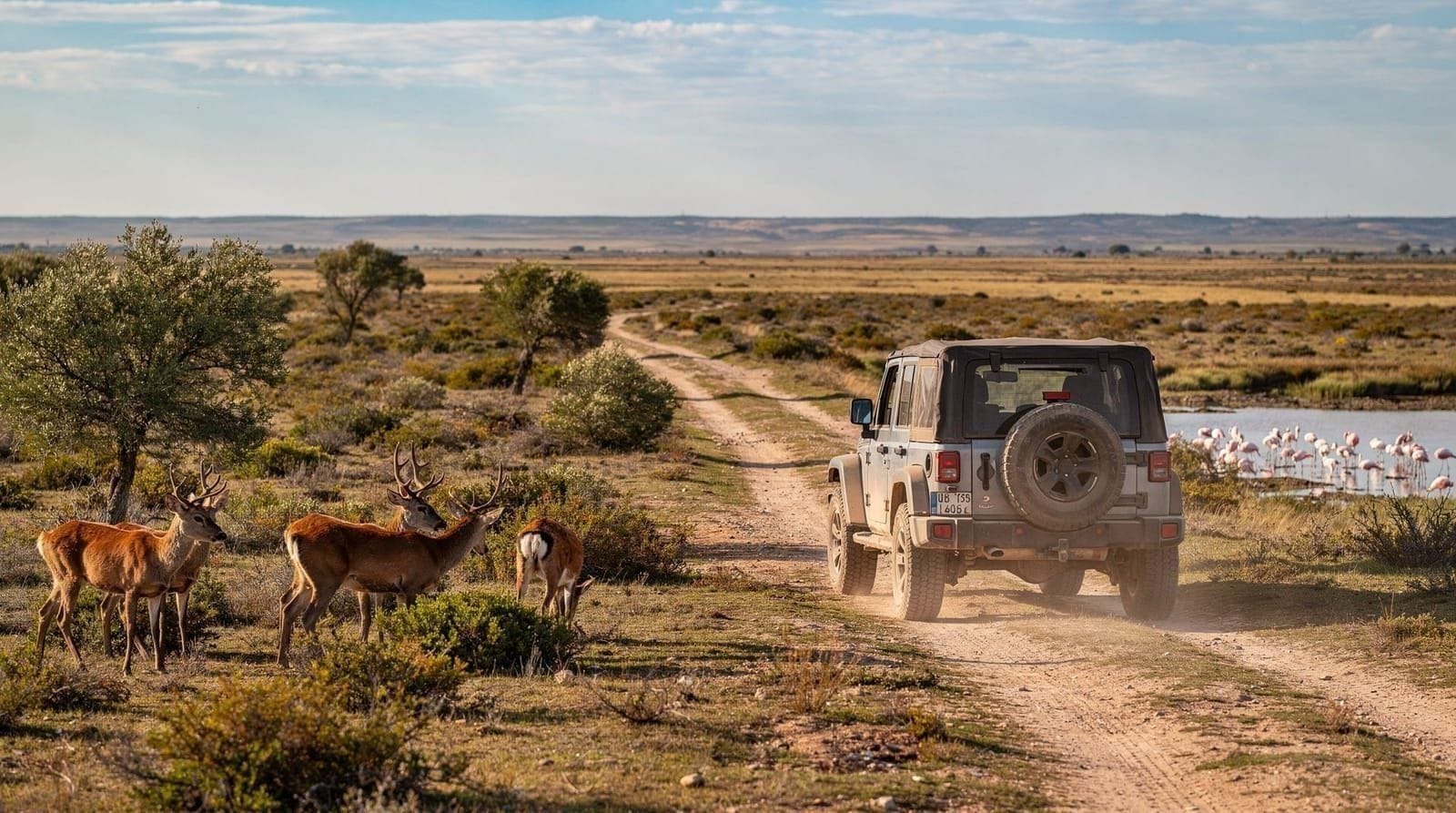
The 4WD section of the tour covers about 80 km of tracks through the different ecosystem types: the marismas (flooded marshland), the monte negro (scrub with heather and lavender), and the coastal dunes along the Atlantic. You are not driving on marked roads — this is off-road in genuine soft sand, through water, across terrain that would be inaccessible to a standard vehicle.
The tour lasts approximately 8 hours total (including transport from Seville), with time for lunch at a restaurant in El Rocío included in the price.
Because the pickup is early, it helps to know where you are standing and how you will get there. Our guide to getting around Seville covers the practicalities, and if you are choosing a base that makes early departures painless, the where to stay in Seville guide is a good place to start. For background on the park itself, the Doñana National Park destination page gives the wider picture.
What we saw: the November list
The guide kept a running count in his notebook. By the time we returned to El Rocío for lunch, we’d recorded:
Birds: Hundreds of greater flamingos — a genuine surprise in terms of sheer numbers, standing in the shallow flooded fields in flocks that stretched to the horizon. White storks in their thousands (many Doñana storks no longer migrate and overwinter in the park). Greater spotted eagles (at least three, which our guide said was a good sighting). Purple herons, grey herons, spoonbills, various duck species including shoveler and teal. Marsh harriers hunting low over the reeds. A single Montagu’s harrier at a distance. Little egrets and great white egrets in the waterways.
Mammals: Red deer — several groups, including a large stag that stood on a dune ridge watching our vehicles for a full two minutes before deciding we weren’t interesting. Fallow deer in the monte negro. A family of wild boar rooting at the edge of the scrub. And — the sighting that made the day — a Spanish lynx footprint in the mud beside a waterway. Not the lynx itself, but fresh tracks. The guide was quietly excited about this.
What we didn’t see: The Iberian lynx itself. Red kite (they’d moved further south). The rare Spanish imperial eagle. A significant number of reptiles, which are less active in November than in summer.
The lynx tracks are worth saying more about. There are thought to be around 1,200–1,500 Spanish lynx in total in Spain and Portugal, with a significant population in and around Doñana. Actually seeing one on a day trip is unlikely (the premium lynx tours that involve stationary hides and several days of waiting give better odds), but our guide pointed out that the evidence of their presence — tracks, scrapes on bark, the characteristic latrines they use to mark territory — is itself meaningful.
El Rocío: the village worth knowing
Lunch in El Rocío gave us 75 minutes in one of Spain’s strangest and most beautiful villages. El Rocío has a population of around 2,000 permanent residents but is designed for several hundred thousand — the hermitage at its centre is the destination of one of the world’s largest religious pilgrimages (Pentecost weekend), with estimates ranging from 700,000 to one million pilgrims arriving over a few days.
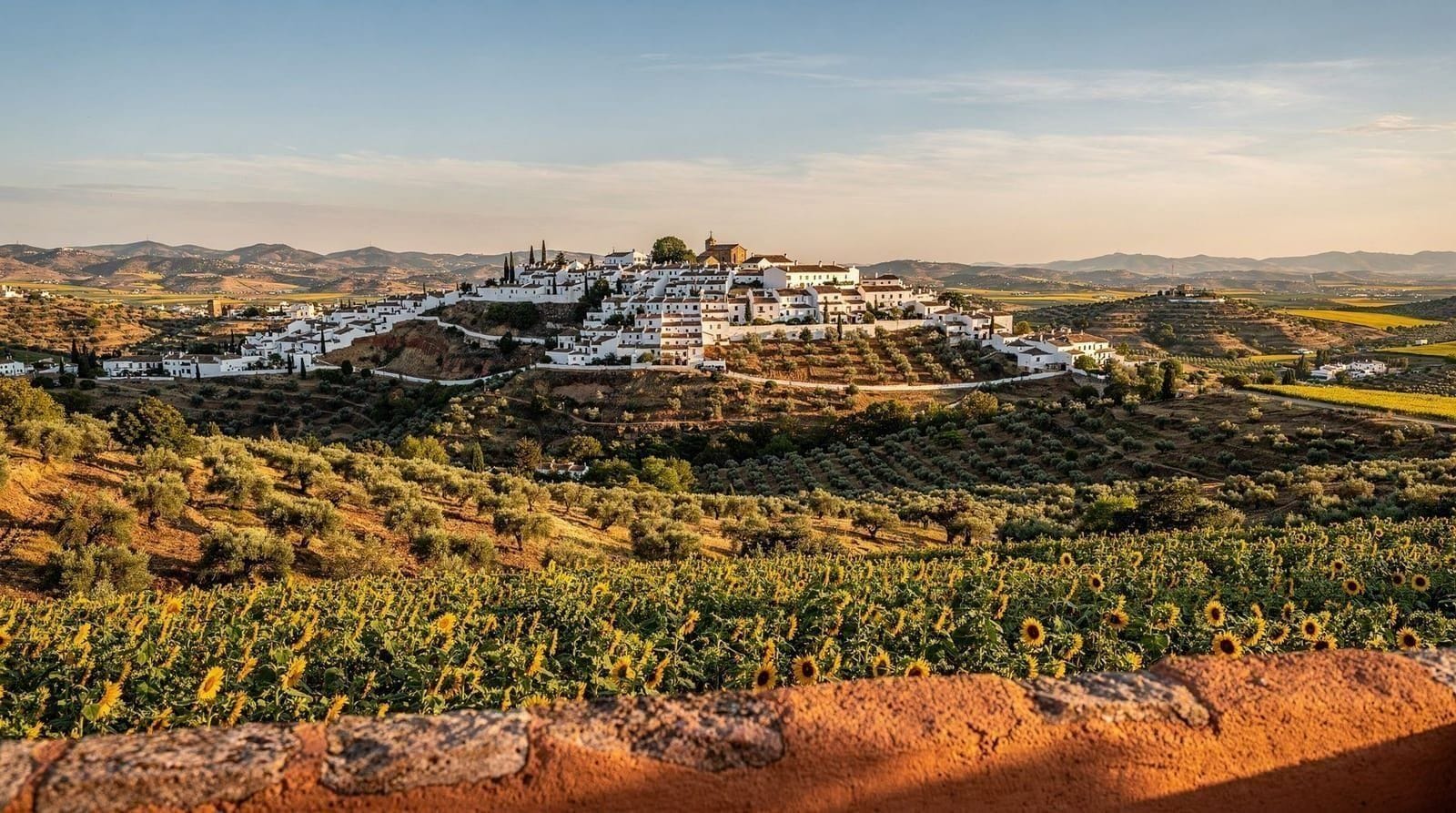
Outside pilgrimage time, the village is very quiet. The main street is unpaved sand (horses still outnumber cars in El Rocío). The hermitage sits at the end of a long straight street, gleaming white, with flamingos visible in the marisma just behind it. There is a single restaurant on the square that does adequate fish and excellent Manzanilla. November prices: menú del día €14, glass of Manzanilla €2.20.
If the village appeals to you, the El Rocío destination page goes deeper on its history and layout. The coast beyond the park is also worth a look on a longer stay: Matalascanas and Sanlúcar de Barrameda both sit in the same corner of Andalusia and make natural companions to a Doñana day.
Was the tour worth a full day and the cost?
Yes, unequivocally for November. The tour costs approximately €60–70 per person including transport from Seville, guide, park entry, and lunch. That’s a full day out of Seville, one of the genuinely great wildlife reserves in western Europe, and — in November — an almost guaranteed extraordinary bird experience.
The caveats: in summer, results vary more. The park is genuinely wild and wildlife sightings are never guaranteed. If you have a specific animal on your list (lynx in particular), a specialist wildlife tour with multiple days and proper hides is a different and more expensive undertaking than a day trip.
For context on how this compares to other day-trips from Seville, the day trips from Seville guide ranks all the major options. Doñana is less commonly chosen than Córdoba or Granada but I’d argue it’s more unique — you can visit Roman ruins in many places, but Doñana is irreplaceable.
If you only have room for one or two excursions, it helps to see the alternatives side by side. The Córdoba day trip guide and the Granada day trip guide cover the two classics, while Córdoba vs Granada and our own account of why Córdoba beats Granada for a day trip help you choose between them. Doñana suits travellers who have already done the monuments and want something open, quiet and wild.
Practical notes for Doñana
Best months: October–March for birds and large mammals. Spring (April–May) for wildflowers and breeding activity. Summer is the hardest season.
What to bring: Binoculars (essential — many visitors who don’t bring them regret it). Long lens if you photograph birds. Layers — the marisma can be cold in the morning even in October. Sunscreen and hat regardless of season.
Can you visit Doñana independently? The core zone of the park (Reserva Biológica) requires a guide and official vehicle — private cars are not permitted. The buffer zones around the park can be explored independently, but the full wetland access requires the guided tour format.
The El Rocío pilgrimage: If you’re visiting around Pentecost (late May or June), be aware that accommodation and transport in the entire region is completely booked out weeks in advance, and the roads around El Rocío are impassable. Either plan around it or plan for it.
A note on the flamingos
The flamingos are the thing nobody expects. I’d seen flamingos in the Camargue and in Namibia, but the Doñana marisma in November had flocks of 500–800 birds in single groups, spread across the flooded fields in every direction. The pink against the flat grey sky of a November morning is one of the more surprising landscape effects I’ve encountered in Spain.
Our guide told us the flamingo population uses Doñana differently from the Camargue — Doñana is primarily a wintering ground rather than a breeding site, and the birds move between the two (and between other sites in southern Spain and Morocco) depending on water levels and food availability. November puts them in the park in their largest numbers.
Fitting Doñana into a wider Andalusia trip
A safari day works best when it is placed deliberately. Because it is a long day that ends tired and sandy, we would not schedule it right after a heavy sightseeing morning or just before an early train. The Seville day trips itinerary shows how to space excursions between city days, and the Andalusia week from Seville itinerary slots a nature day alongside the big cities. For our own thinking on pacing a longer stay, see planning a week in Andalusia.
Wildlife is also not the only way to get outdoors near the city. If the river appeals, kayaking the Guadalquivir and the Guadalquivir river cruise guide show gentler ways to meet the same waterway that feeds the marshes. Travelling with children? Read Seville with kids alongside our family trip report before deciding whether a long 4WD day suits them.
If you specifically want to see the Iberian lynx
Our tour gave us tracks, not the animal itself, which is the realistic outcome for a standard day trip. If seeing an actual Iberian lynx matters more to you than the broader Doñana experience, a specialised premium tour with stationary hides and a smaller group gives meaningfully better odds, at a higher price and with less certainty of other wildlife along the way:
Doñana Iberian lynx premium tour from SevilleWe’d only recommend this to visitors for whom the lynx specifically is the goal — for a broader wildlife day covering birds, deer and landscape, the standard 4WD safari we did remains the better value. Either way, the Doñana day trip guide covers both formats side by side if you’re deciding between them.
Frequently asked questions about Doñana safari
Is seeing the Iberian lynx realistic on a day trip?
Unlikely, though footprints and other evidence of their presence is possible. For a reasonable chance of actually seeing a lynx, dedicated multi-day hides with specialist operators give far better odds than a day trip.
What time does the tour start?
Most tours from Seville pick up between 7–8:30 am and return by late afternoon (4–6 pm depending on the route). The early start is important for optimal wildlife conditions.
Is the tour suitable for children?
Yes, for children who can manage a long 4WD session (several hours in a vehicle on rough terrain). Younger children (under 6 or 7) may find the sitting difficult. The wildlife sightings are engaging for older children.
How far is Doñana from Seville?
The park entrance is approximately 65–80 km from Seville (around 1 to 1.5 hours by road, depending on the specific access point). The tours factor in the drive time.
Is the park open year-round?
Yes. The park itself doesn’t close, but the access routes for vehicles change with seasonal flooding. The 4WD tours operate year-round, with guides adjusting routes based on water levels and conditions.
What’s the best month specifically for flamingos?
November through February, when the marismas are flooded and the wintering flamingo population is at its largest. We saw flocks of 500–800 birds in single groups in November.