Zahara de la Sierra
Zahara de la Sierra: a hilltop white village above a turquoise reservoir, with a Moorish castle and views across the Sierra de Grazalema.
From Seville: Ronda, Setenil and Zahara viewpoint
Quick facts
- Best for
- Moorish castle views, reservoir swimming, white village scenery
- Days needed
- Half day
- Getting there
- Car from Ronda 35 km, or guided tour from Seville
- Peak crowds
- Summer (lake swimming), spring weekends
- Currency
- EUR
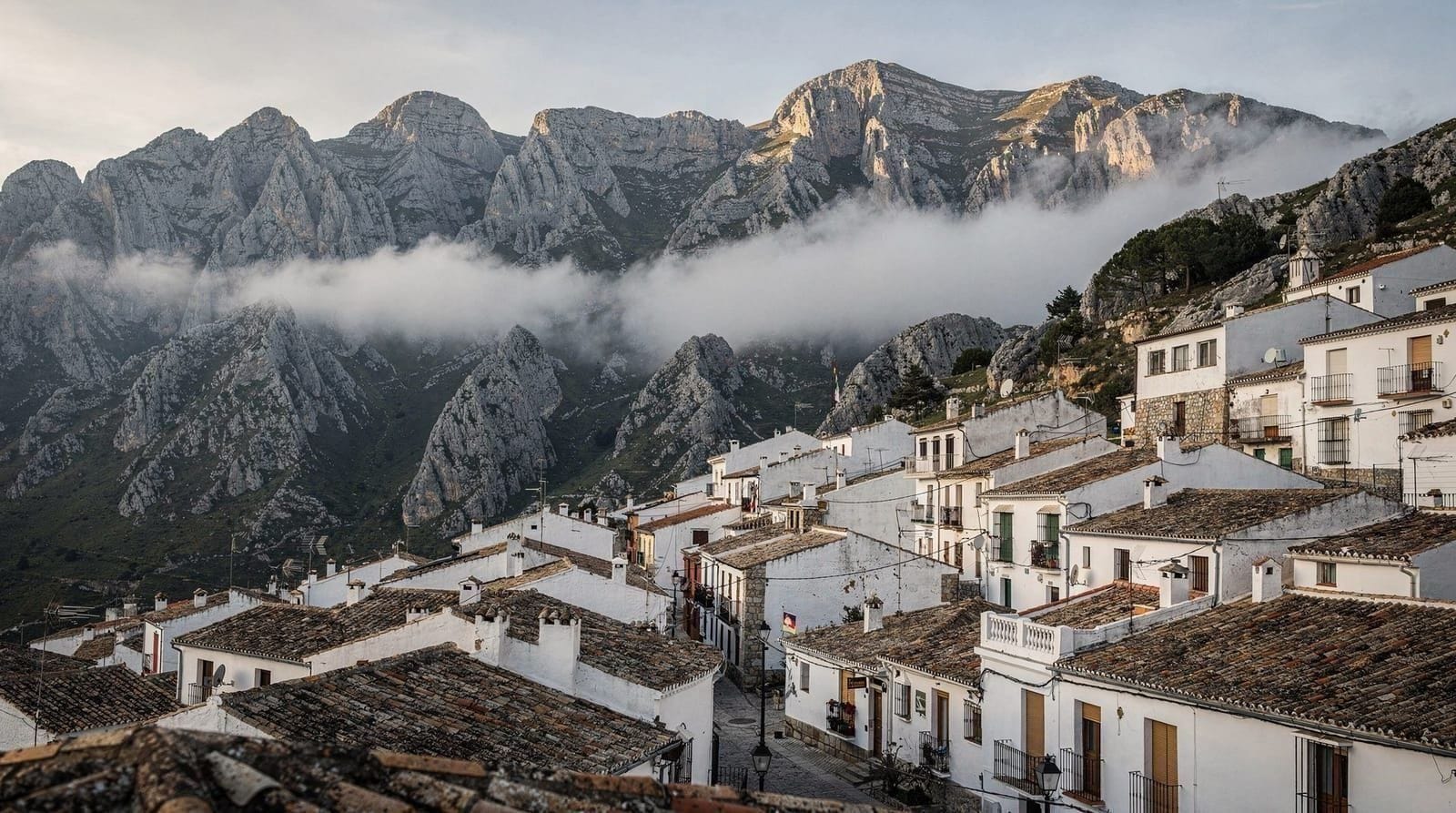
Zahara de la Sierra is the most visually arresting of the white villages for a simple reason: the combination of white walls, Moorish castle tower on a cliff, and the turquoise-green Embalse de Zahara (reservoir) in the valley below creates a layered landscape that photographs exceptionally well and looks even better in person.
| Where | Sierra de Grazalema Natural Park, Cádiz province |
| Cost | Free castle entry; lunch €11–16/person; olive oil €6–12/litre |
| Time needed | 1–2 hours, half a day with the Zahara-Grazalema drive |
| Getting there | Car from Ronda (45 min) or guided tour from Seville (~2h20) |
| Best time | October–November for quiet; July–August for lake swimming |
The village itself is small (around 1,500 people), quiet, and essentially free of tourist infrastructure beyond a few restaurants and a small hotel. It has not been packaged for mass tourism, which is part of its appeal. It is most often visited alongside Ronda, Grazalema, and Setenil de las Bodegas as part of a wider white villages circuit — see the Ronda vs white villages guide for how to weigh a single-town day against the fuller loop.
The castle and the views
The Torre Árabe (Moorish tower) at the summit of the village is all that remains of the Moorish alcázar that made Zahara a strategically contested frontier town between the Nasrid emirate of Granada and the Christian kingdoms. The tower is free to visit; the climb via the marked path from the village takes about 15 minutes.
From the tower, the view encompasses the entire embalse below, the village cascading down the hillside, and the Sierra de Grazalema behind. This is one of the finest views in the white villages region.
The reservoir
The Embalse de Zahara was created by damming the Río Guadalete in the 1970s. In summer, the water turns a distinctive turquoise-green from the limestone minerals. Swimming is allowed in designated areas at the shore below the village. The access road to the shore is about 2 km from the village.
The contrast between the turquoise water, the white village above, and the grey limestone sierra is the defining image of this area.
Getting to Zahara
By car: the most practical option. From Ronda: 35 km via the A-376 and MA-7402, about 45 minutes. From Grazalema: 20 km, about 25 minutes (the Zahara-Grazalema road is excellent). From Seville: about 2h20.
Guided tour from Seville: The Ronda, Setenil and Zahara tour from Seville covers all three villages in one day — the most efficient option without a car. A broader pueblos blancos circuit is also available:
Ronda and white villages full-day tour from SevilleThe Zahara-Grazalema road (A-372 connecting the two villages): a mountain pass road through the natural park, passing between the Grazalema massif and the Sierra del Endrinal. One of the most scenic short drives in Andalusia.
The olive oil
Zahara produces extra-virgin olive oil from Aloreña (manzanilla de Sevilla) and Lechuguín olive varieties. Several local producers sell directly — look for signs marked “aceite ecológico” near the village entrance. Prices are €6–10/litre, significantly below supermarket extra-virgin olive oil quality equivalents.
Where to eat
Bar Restaurante Los Tadeos (Paseo de la Fuente): straightforward Andalusian kitchen with views. Porra antequerana (similar to gazpacho but thicker, from nearby Antequera), grilled local pork. Budget €12–16.
Mesón Los Naranjos (Calle San Juan 3): reliable menú del día at €11–13.
The village has a small daily bar life concentrated around Calle San Juan; for a village of 1,500 people, it punches reasonably well for a lunch stop.
Circuit planning
Zahara sits between Grazalema (20 km) and Olvera (25 km) on the eastern white village route. Combined with Setenil de las Bodegas and Ronda, it forms the core of the classic white villages day-trip. See the white villages guide for sequencing advice, or the best day trips from Seville guide if you’re still deciding between the white villages and other options like Córdoba or Cádiz.
Zahara’s frontier history
Like Arcos, the “de la Sierra” suffix distinguishes this Zahara from other towns with the same name. The mountain position was strategically contested for two centuries during the Reconquista. In 1481, Nasrid forces from Granada launched a surprise raid on Zahara and captured the castle — an act that triggered the Catholic Monarchs to launch the final campaign that ended with Granada’s fall in 1492. Zahara’s vulnerability to a single surprise raid, despite its cliff position, was due to insufficient watch on the northern approach.
The castle tower (Torre Árabe) that survives is from this period — 15th century Moorish construction on earlier Almohad foundations. The views from the tower are genuinely panoramic in all directions: reservoir and valley to the south, the Grazalema sierra to the north and east, the rolling olive country toward Arcos to the west.
The village in detail
Zahara has approximately 1,500 permanent residents. The seasonal population swells in summer with people arriving for the lake. The village economy rests on olive oil, tourism, and goat farming.
Street layout: the village climbs from the main road (A-2300) up the hillside in terraces, with the castle at the summit. The main street (Calle San Juan) runs through the middle. The church (Iglesia de Santa María de la Mesa) has a Baroque portal and a small bell tower.
Olive oil cooperative: Zahara’s main agricultural product. The Cooperativa Oleícola de Zahara de la Sierra (on the access road) sells local extra virgin olive oil directly to visitors. €6–8/litre for the cooperative standard; €10–12 for the premium Picual selection.
Almendros (almond trees): the terraced hillsides above the village are planted with almond trees that flower white in February — one of the earliest harbingers of spring in the region.
The Zahara to Grazalema road
The road between Zahara and Grazalema (the CA-531 and A-372) crosses the Puerto de las Palomas pass at about 1,350 metres. The road itself is one of the most scenic in the province: hairpin turns, rocky outcrops, occasional snow in winter, and views across the Grazalema Natural Park on both sides. Griffon vultures are visible most mornings, circling on the thermal updrafts.
This pass is the main reason to drive the Zahara-Grazalema circuit rather than going directly: the road is the attraction as much as either village.
Practical information for Zahara
Accommodation: Zahara has a small number of rural hotels and casas rurales. Hotel Arco de la Villa (Calle Ronda 3): basic, central, from €55–75/night. For a longer stay exploring the Natural Park, the village is a good quiet base.
Timing: the village is best visited as part of the white villages circuit rather than alone. A stop of 1–2 hours is enough to climb to the castle, walk the main street, and have lunch. The reservoir swimming in summer adds value for beach-oriented visitors who want to combine scenery with a swim.
Zahara’s natural environment in detail
The Embalse de Zahara sits within the Sierra de Grazalema Natural Park buffer zone. The reservoir was formed by damming the upper Guadalete — the same river that passes through Arcos de la Frontera and meets the Atlantic at El Puerto de Santa María.
The water colour: the turquoise-green colouration results from calcium and magnesium carbonates leaching from the limestone bedrock — the same chemistry that creates the famous blue water of karst lakes in Croatia and Turkey. The colour is most intense in early summer before the water level drops.
Flora and fauna around the reservoir: golden eagle (águila real) and Bonelli’s eagle (águila perdicera) nest in the cliffs above the reservoir. Otter (nutria) is present along the reservoir shores — most visible at dawn and dusk in autumn. Egyptian vulture (alimoche) is seasonally present April–September.
The shores of the reservoir have walking tracks and informal picnic areas. Swimming is free.
The Andalusian village formula: what Zahara exemplifies
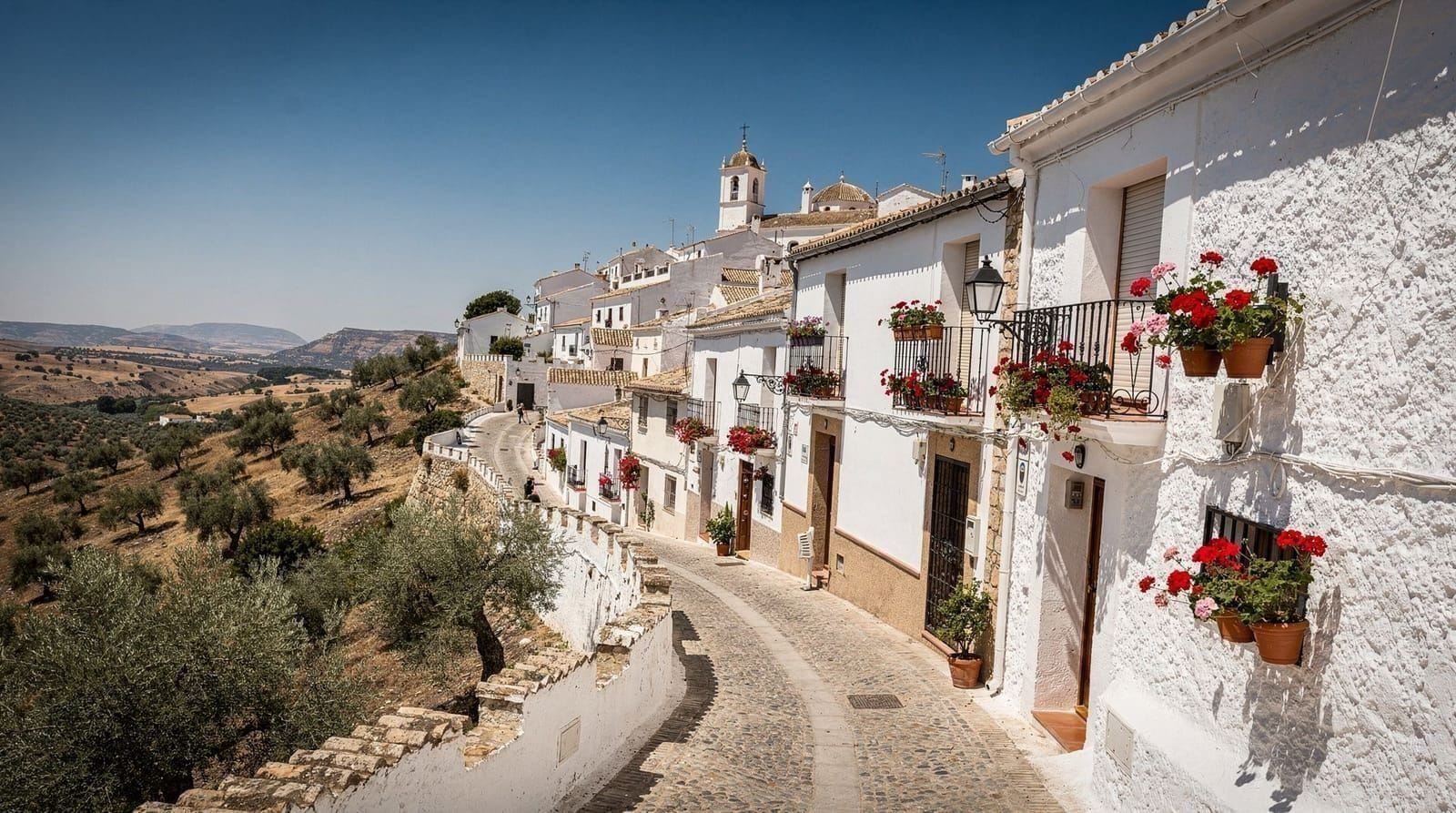
Zahara de la Sierra is, in many ways, the most “textbook” pueblo blanco — the characteristics that define the category are all present in concentrated form:
- White walls (mandatory by local ordinance since the Moorish period, maintained both for heat reflection and aesthetic identity)
- Hilltop position (defensive geography)
- Moorish castle (Reconquista-era frontier)
- Baroque church (post-Reconquista Catholic imposition)
- Narrow streets (designed for donkeys, not automobiles)
- Flower pots (geraniums, carnations — intensely maintained as civic pride)
- Panoramic view (the reason for the hilltop position)
The white villages tradition is most concentrated in the provinces of Cádiz and Málaga. Zahara, with its lake backdrop, is one of the most photographed representatives of the type.
Getting the most from a Zahara visit
The village rewards unhurried exploration. The castle climb (15–20 minutes from the village) is the mandatory item. After that:
- Walk Calle San Juan from end to end (10 minutes)
- Find a bar with a terrace and order a cold fino or manzanilla (€1.50–2.50)
- Look for the Payoya cheese at local shops
- If you have a car, drive the Puerto de las Palomas road toward Grazalema (30 minutes there and back to the pass)
A second, often overlooked, viewpoint: stand at the base of the castle hill and look south across the reservoir from water level. The village rising from the cliff above the water with the sierra behind is the inverse of the classic castle-view photograph and is equally striking.
Frequently asked questions about Zahara de la Sierra
Is Zahara de la Sierra worth visiting on its own, or only as part of a circuit?
It rewards 1–2 hours on its own for the castle climb and the reservoir views, but most visitors get better value combining it with Grazalema via the Puerto de las Palomas pass, or with Ronda and Setenil de las Bodegas as a full white villages day.
Can I swim in the reservoir at Zahara de la Sierra?
Yes. Swimming is allowed and free in designated areas at the shore, about 2 km from the village. It’s most popular in July and August, when the turquoise water and hot inland temperatures make it a genuine draw rather than just a scenic backdrop.
Do I need a car to visit Zahara de la Sierra?
Effectively yes, unless you take a guided tour from Seville. There is no practical direct public transport link, and the best experience — the Zahara-Grazalema mountain road over the Puerto de las Palomas — requires your own vehicle or a tour that includes it.
Top experiences
Bookable activities with verified prices and instant confirmation on GetYourGuide.