Grazalema
Grazalema is Spain's wettest town and a base for the Sierra de Grazalema Natural Park. Hiking, cheese, wool crafts, and white village scenery.
From Seville: Pueblos blancos and Ronda full-day trip
Quick facts
- Best for
- Hiking, natural park, cheese, village atmosphere
- Days needed
- Half day or overnight
- Getting there
- Car from Ronda 30 km, or from Seville 2h15 by car
- Peak crowds
- Summer hiking season (July–August) and spring
- Currency
- EUR
Grazalema has a particular distinction among the pueblos blancos: it is the rainiest place in Spain. Precipitation exceeds 2,000 mm annually (more than Bergen, Norway) due to the Pinsapar mountain ridge trapping Atlantic moisture. The result is that everything here is strikingly green, and the natural park surrounding the village has an unusual ecology for southern Spain — pinsapo firs (a relic ice-age species found only in this area and Morocco), griffon vultures, and Iberian ibex.
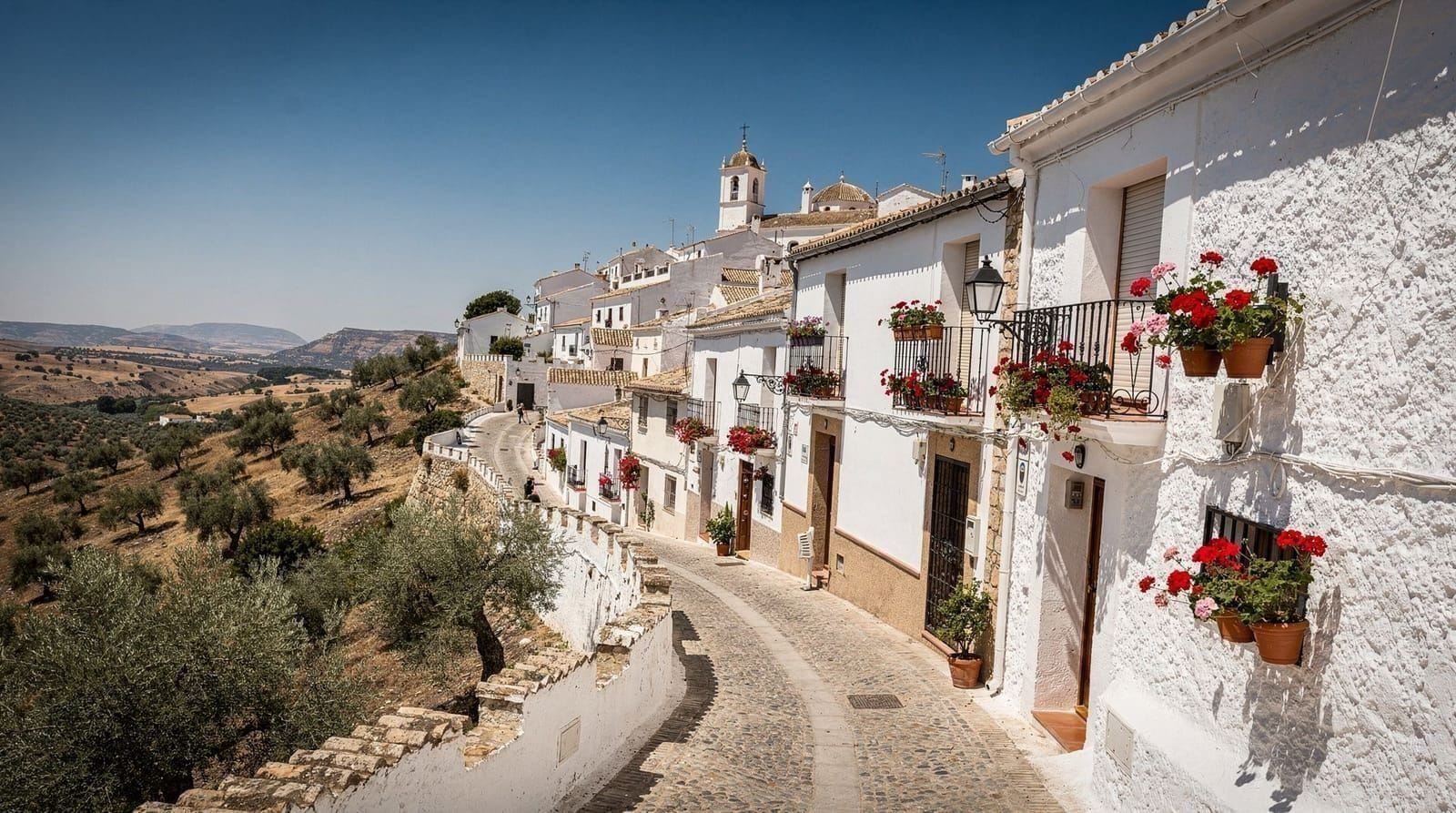
The village itself is a classic plaza mayor, whitewashed houses, and ceramic-tiled streets — attractive but not exceptional. The reason to come here is the landscape and the products it generates.
| Where | Sierra de Grazalema Natural Park, Cádiz province — 30 km from Ronda |
| Cost | Village and viewpoints free; Pinsapar permit free but limited, book ahead |
| Time needed | Half day for the village and a short walk; overnight for serious hiking |
| Getting there | Car from Ronda (30 km) or Seville (2h15); guided pueblos blancos tour |
| Best time | May–June and September–October for hiking; green year-round |
Sierra de Grazalema Natural Park
The park covers approximately 51,695 hectares across the Cádiz and Málaga provinces. The Pinsapar (pinsapo fir forest) above Grazalema is a protected reserve requiring a permit to enter — permits are free and requested online or at the El Bosque visitor centre. The number of daily visitors is limited, and spots run out weeks ahead in spring and autumn, so apply well in advance.
Key hiking routes (no permit required unless specified):
- Sendero del Torreón (to the park’s highest peak, 1,654 m): strenuous, 10 km round trip.
- Ruta del Pinsapar: the pinsapo fir forest walk (permit required).
- Sendero Llanos del Rabel: moderate 7 km circuit from Grazalema, excellent vulture-watching.
Griffon vultures (buitre leonado) nest in the limestone cliffs above Buitreras gorge. They are visible from the village on most mornings, circling in large numbers.
Local products
Queso de Grazalema: a Protected Designation of Origin (PDO) cheese made from the milk of Merino sheep. Creamy, slightly tangy, with a characteristic round shape. Available in the village shops at €10–15/kg. This is genuinely good cheese, not tourist-label product.
Lana de Grazalema (wool): the village has a wool blanket and textile tradition dating to the 18th century. Artesanía Grazalema (Calle Las Piedras 2) sells blankets, ponchos, and bedspreads made on traditional looms. Not cheap — a full blanket is €80–200 — but the quality is genuine.
Honey and local liqueurs: acorn honey, thyme honey, and patxarán (sloe liqueur) are available in village shops.
Getting to Grazalema
By car: the most practical option. From Ronda: 30 km via the A-372, about 40 minutes. From Seville: 2h15 via the A-376 and A-372. The approach from Zahara de la Sierra (the Zahara-Grazalema road) is one of the most scenic drives in Andalusia — a mountain pass with views across the Sierra.
Guided tour from Seville: The pueblos blancos and Ronda tour from Seville typically passes through the Grazalema area, though the itinerary varies by operator.
Public transport from Seville: no direct service. Buses run to Ronda; from Ronda there is an infrequent service to Grazalema. Not practical for a day-trip without a car.
Where to eat
El Torreón (Calle Agua 44): local restaurant with game meats (venado — venison, jabali — wild boar) from the sierra. Generous portions. Budget €15–20.
La Maroma (Calle Corrales 29): casual tapas bar. The Grazalema cheese with local honey is the thing to order here. Budget €8–12.
Combining Grazalema with nearby villages
The classic circuit from Seville (by car) is: Arcos de la Frontera → Grazalema → Zahara de la Sierra → Ronda, returning to Seville via the A-376. This covers the best of the western white villages in one full day. See the white villages guide for detailed sequencing.
Planning a visit from Seville
Grazalema sits well beyond the usual Seville day-trips, so it helps to decide early how you want to approach it. If you only have a single day and no car, the realistic route is a guided circuit, and our white villages day trip guide explains how those itineraries are sequenced. If you would rather not rush, a two-day format changes the experience completely: a two-day trip through the white villages and Ronda leaves time to see the mountains in the softer light of early morning and late afternoon instead of squeezing everything into the middle of the day.
Visitors who want to compare options before committing can start with the best day trips from Seville, which puts the mountain villages next to Córdoba, Cádiz and the others. For a wider plan that strings several days together, the Andalusia week itinerary from Seville and the day trips itinerary both show where a stop in the sierra fits.
If you are driving, the village rewards an unhurried pace. Park on the edge, walk the lanes, sit on the plaza with a coffee and look up at the ridges. The mood is quieter than at the big-name stops, which is exactly why many travellers prefer it. Bring layers whatever the season, because the weather in the sierra changes faster than it does on the plains around Seville.
Best months to visit, by what you want
| Months | Rainfall & hiking | What it’s like |
|---|---|---|
| December–February | Wettest, coolest, some trails closed after storms | Dramatic, empty, genuinely cold at altitude |
| March–April | Rain easing, wildflowers starting | Green, good light, moderate crowds |
| May–June | Best hiking window, orchids and wildflowers peak | Warm days, cool evenings, Pinsapar permits available |
| July–August | Dry, hot, permit demand highest for shaded trails | Busiest with Spanish hikers, book Pinsapar ahead |
| September–October | Second-best hiking window, rain returning late | Warm, clear, fewer crowds than spring |
The pinsapo fir: an ecological relic
The Abies pinsapo (Spanish fir, pinsapo) is a Tertiary period relict tree that survived the Pleistocene glaciations in isolated mountain refugia. It exists naturally only in the Sierra de Grazalema and in the Moroccan Rif mountains — genetic and geographic evidence of the land bridge that once connected southern Iberia and North Africa. The forest above Grazalema is one of the largest remaining pinsapar groves.
The trees grow at 1,000–1,800 metres altitude, requiring the specific micro-climate created by Atlantic moisture trapped by the Grazalema ridge. They are distinctly different from other Spanish firs — short, dense, blue-grey needles arranged radially around horizontal branches, giving the tree an appearance somewhere between a fir and a cedar.
Permits to enter the pinsapar forest: free, requested online or at the Centro de Visitantes El Bosque (in the town of El Bosque). Daily visitor numbers are capped in the restricted zone and run out weeks ahead in spring and autumn, so book well in advance.
Grazalema village in detail
The village has a population of about 1,900 people. The main square (Plaza de España) has the church, several cafés and bars, and the tourist office. The streets are standard whitewashed Andalusian — narrow, flower-decorated, clean. The specific character comes from the mountain context: the surrounding ridges are visible above the rooflines, the air noticeably cooler and cleaner than the Guadalquivir valley.
Casa de las Artesanías (Calle Agua 2): the main outlet for Grazalema wool products — the thick hand-woven blankets (mantas) that the village has produced since the 18th century. The blankets are made in the Fábrica de Tejidos and are genuinely distinctive. A travel blanket or scarf is an honest souvenir rather than a tourist item.
Queso Payoyo: a goat and sheep mixed milk cheese from the Payoya breed goats native to the Serranía. Look for it at the market and at Bar El Torreón. Different character from the straight Grazalema sheep cheese — more complex, slightly stronger.
Hiking trails from Grazalema
The park provides a trail map at the visitor centre. The main routes accessible from the village:
La Garganta Verde (Green Gorge): a canyon trail leading to a large griffon vulture colony. Stunning geological landscape. Permit required (included in the trail description at the park office). Moderate difficulty, 4 km.
El Torreón: the highest peak in Cádiz province (1,654 m). Strenuous 10 km round trip. Good visibility required — check weather before going. Snow is possible November–April.
Sendero de los Llanos del Rabel: circular route through the scrubland around the village. Good for birdwatching without a permit. 7 km, moderate.
Staying in Grazalema
Grazalema offers an alternative base to Ronda or Arcos for exploring the Natural Park and white villages circuit.
Hotel Fuente Hondo (Calle Blas Infante 1): the main village hotel. 30 rooms, pool, central location. From €70–100/night.
Casa de las Piedras (Calle Las Piedras 32): pension in the village centre. Economical and reliable. From €45–65/night.
Rural houses and cortijos: several rural houses in the surrounding countryside, suitable for groups or families. The park information office has a list.
A sample day in the sierra
A good day here starts early. Watch the vultures from the village while the cliffs catch the first light, then walk one of the unrestricted trails before the day warms up. Back in the village, a long lunch built around local cheese and sierra game is the natural reward, followed by an unhurried look at the wool shops. If you have the energy, the afternoon suits a gentle wander through the lanes rather than another big hike.
Travellers who want a bigger regional picture can pair this stop with the neighbouring towns. Setenil de las Bodegas and Zahara de la Sierra both sit on the same mountain road network, and the Ronda day trip guide covers the town that most visitors use as their starting point. Those who prefer a base closer to the coast can look at Cádiz or Jerez de la Frontera for contrast, since the landscape and pace there are very different from the green hills around Grazalema.
Whatever you choose, treat the park as the main attraction and the village as the comfortable place to rest between walks. That mindset makes the trip feel generous rather than rushed.
Grazalema vs Ronda: which to prioritise
The question for limited-time visitors is whether to prioritise Ronda (more accessible, higher tourism infrastructure, dramatic gorge) or the smaller villages including Grazalema (harder to reach, more authentic village life, better natural environment).
The honest answer depends on your interests:
- If you want dramatic scenery and good food, Ronda.
- If you want hiking and natural environment, Grazalema area.
- If you want an authentic Andalusian village experience with minimal tourist impact, Grazalema over Ronda without question.
The ideal, with a car and 2 days, is both. See Ronda vs the white villages: which day trip is right for you? for the full comparison.
Grazalema’s annual rainfall: context
The 2,153 mm average annual rainfall at Grazalema (the highest in Spain) is explained by the orographic effect: westerly Atlantic air masses loaded with moisture rise when they meet the Grazalema ridge, cool adiabatically, and deposit their moisture as rain and snow. The lee side of the ridge (toward Ronda) is significantly drier.
The effect on the landscape is striking: Grazalema is surrounded by green deciduous forest, while the hills toward Jerez — visible in the distance — are dusty and brown. In spring, the wildflower diversity in the park is extraordinary by southern Spain standards — orchids (at least 30 species), narcissus, rockroses, and lavender.
Frequently asked questions about Grazalema
Do I need a permit to hike in Grazalema?
Only for the restricted zones — the Pinsapar fir forest and La Garganta Verde gorge require a free permit requested online or at the El Bosque visitor centre, with daily visitor numbers capped. Most other routes, including the Sendero Llanos del Rabel, need no permit. Apply well in advance: quotas run out weeks ahead in spring and autumn.
Is Grazalema worth visiting without a car?
It is difficult. There is no direct bus from Seville, and the infrequent Ronda–Grazalema service makes a day-trip impractical without your own transport. A car, or a guided pueblos blancos tour that includes the area, are the realistic options.
How does Grazalema compare to Ronda for a day-trip?
Ronda has the dramatic gorge, more restaurants and infrastructure, and is easier to reach. Grazalema has a quieter, more authentic village feel and is the better base for genuine hiking and wildlife. With a car and two days, visiting both is the ideal combination — see the Ronda vs white villages guide.
Top experiences
Bookable activities with verified prices and instant confirmation on GetYourGuide.